SpaceX has signed a binding commitment for roughly $40 billion of GPU financing, structured as a lease with an entity managed by Apollo Global Management. The company disclosed it on October 26, 2026, and Apollo described it in a press release as the largest committed GPU financing. The deal is the third distinct way a large AI builder has paid for hardware in a single week, after Meta's equity program and Broadcom's reported debt talks, and it is the first of the three where the buyer of the chips is not the user of them.
 NVIDIA
 Grok
What SpaceX and Apollo disclosed
According to Apollo's press release and TechCrunch's report, the main terms are:
| Term | What was disclosed |
|---|---|
| Structure | Master finance lease; an Apollo-managed entity buys the chips and server hardware and leases them to SpaceX |
| Size | Roughly $40 billion |
| Hardware | Nvidia's next-generation Vera Rubin chips, for SpaceX's terrestrial compute buildout |
| Lease length | About 5 to 5.25 years, starting at delivery of each tranche |
| Timing | Closing expected by year-end 2026, subject to conditions; first lease schedules expected in the first half of 2027 |
| Financing parties | Apollo and Goldman Sachs lead the group; Goldman is sole structuring agent; BlackRock-managed funds, Goldman Sachs Asset Management and KKR-advised accounts made anchor commitments |
Interest rates, payment schedules and other pricing terms are not in the press release, which points readers to SpaceX's Form 8-K. We did not retrieve the 8-K itself, so we do not state those terms here.
One wrinkle: when the Financial Times first reported the talks in early October, one summary described the package as roughly $10 billion of bank loans and $30 billion of investment-grade bonds (Inside). The disclosed deal is a lease, so the structure changed or the early reports were incomplete. We covered the early reporting in our look at the Broadcom, Oracle and SpaceX credit talks.
Why the numbers around it matter
SpaceX reported third-quarter results on October 20. Its AI segment, which includes Grok, the Cursor coding tool and cloud compute, produced $7.6 billion of $14.6 billion in revenue, and capital expenditure was close to $20 billion against $6.9 billion a year earlier. The company expects $35 billion to $40 billion of capex in the fourth quarter alone (TechCrunch). Our Q3 earnings breakdown covers the segment in more detail.
CFO Bret Johnsen said the lease diversifies funding sources, and that SpaceX is seeing less than one year payback periods on its AI infrastructure investments.
Apollo press release and TechCrunch
Our arithmetic, not a company figure: the upper end of Q4 capex guidance is about the same size as the entire lease. The lease therefore addresses a large share of the near-term buildout, though Apollo's release says only that it covers a significant share of funding needs, and the lease starts in 2027, after Q4 spending.
Lease, debt and equity: the financing menu
Three recent deals show three different answers to the same question of how to pay for AI hardware.
| Meta | Broadcom | SpaceX | |
|---|---|---|---|
| Instrument | Equity (forward sale, mandatory convertible, planned ATM) | Debt (senior and junior tranches, reported) | Master finance lease |
| Headline size | $35B launched, up to $60B more planned | Up to $100B reported | About $40B |
| Status | Launched; ATM has no agreement | Talks, not closed | Binding commitment |
| Who holds the chips | Meta | Financing vehicle leases compute to AI labs | Apollo-managed entity, leased to SpaceX |
Three ways to fund AI hardware: equity, debt and lease
Headline size in billions of US dollars. Green bars are launched or binding; grey bars are reported or planned and not yet agreed. The bars are not like for like: they mix instruments, purposes and stages.
Sources: Apollo press release and TechCrunch (Oct 26, 2026); CNBC and MLQ.ai on Meta; Bloomberg via SiliconANGLE on Broadcom. Hover a bar for details.
Sources for the other two columns are our posts on Meta's $95 billion equity plan and Broadcom's reported $100 billion debt talks. The chart is not like for like, and we caution against ranking the bars: one is a purchase of shares by investors, one is a loan to a chipmaker, and one is a lessor buying hardware for a named user.
The trade-offs, as general finance rather than anything the filings state:
- Equity costs the most in ownership but carries no fixed repayment, so it suits a company whose cash flow is uncertain or whose leverage is already a concern.
- Debt keeps ownership but adds fixed interest and covenants, and the AI bond and loan market has been described as stretched in coverage we have cited before.
- A lease ties the obligation to specific hardware over a fixed term. The user does not own the chips at the start, and a lessor can price the deal off the lessee's credit and the equipment together. Whether it appears as debt on SpaceX's balance sheet depends on the lease terms and accounting rules, which we have not seen.
CFO Bret Johnsen framed the lease as diversifying beyond traditional debt markets (TechCrunch). Elon Musk, for his part, argued in a Sunday post on X that SpaceX's investment-grade status and steady Starlink and launch cash flow set it apart, and that debt markets have largely shut out companies without major revenue beyond AI data centers (TechCrunch). Those are Musk's claims and not independent analysis.
What less-than-one-year payback would imply
The payback claim is the central assumption behind the lease, and it is a management statement with no independent verification that we could find. The definition is not given: payback on hardware cost, on cash margin or on something else.
Taking it at face value, here is an illustration with our own arithmetic, not company data. If hardware cost is recovered in under 12 months and the lease runs about five years, then for roughly four years or more the chips would be generating cash after they have repaid their purchase price. A lessee with that return profile has strong reason to prefer a lease over waiting for cash to accumulate. The risk is the mirror image: lease obligations are fixed, so if utilization, pricing or the hardware's useful life fall short of the assumption, the obligation does not shrink. Chip generations also turn over faster than five years, which we discussed in the depreciation section of our private-credit post.
Neocloud implications
Musk also predicted what TechCrunch quoted as "guppy-level death and consolidation" among the more than 200 neocloud companies that rent out GPUs, with few surviving. That is a forecast, and it is made by a company that, per our report on SpaceX's compute leasing to other labs, also sells compute capacity.
The structural point is separable from the forecast. If a lessor will fund a large buyer at scale on lease terms, smaller GPU renters compete with an owner-operator that has its own financing, its own demand and, in SpaceX's case, other businesses producing cash. Our earlier piece on neocloud vendor financing describes how many of them depend on supplier-linked funding. Whether the financing market stays open to them is the question to watch, and one data point from one deal does not answer it.
What to watch
- The Form 8-K terms: payment schedule, fixed or floating pricing, purchase options and end-of-lease treatment.
- Closing by year-end: the deal is subject to conditions.
- First-half 2027 deliveries: the lease only starts as Vera Rubin hardware arrives.
- Payback evidence: whether later filings show returns consistent with the less-than-one-year claim.
- Copycats: whether other buyers move from debt or equity toward leases.
For teams building on AI models rather than financing them, the useful signal is that model providers' cost bases are now shaped by capital markets as much as by chips. A model-agnostic workspace such as Metir keeps your work portable if any single provider's pricing or capacity changes.
Sources:
- Apollo: SpaceX Secures $40 Billion in the Largest GPU Financing Ever
- TechCrunch: SpaceX locks in $40B GPU financing deal with Apollo
- Inside: FT-based report on the early SpaceX financing talks
- CNBC: Meta launches plan for $95 billion stock offering
- SiliconANGLE: Broadcom reportedly seeking up to $100B in debt financing
Image credits
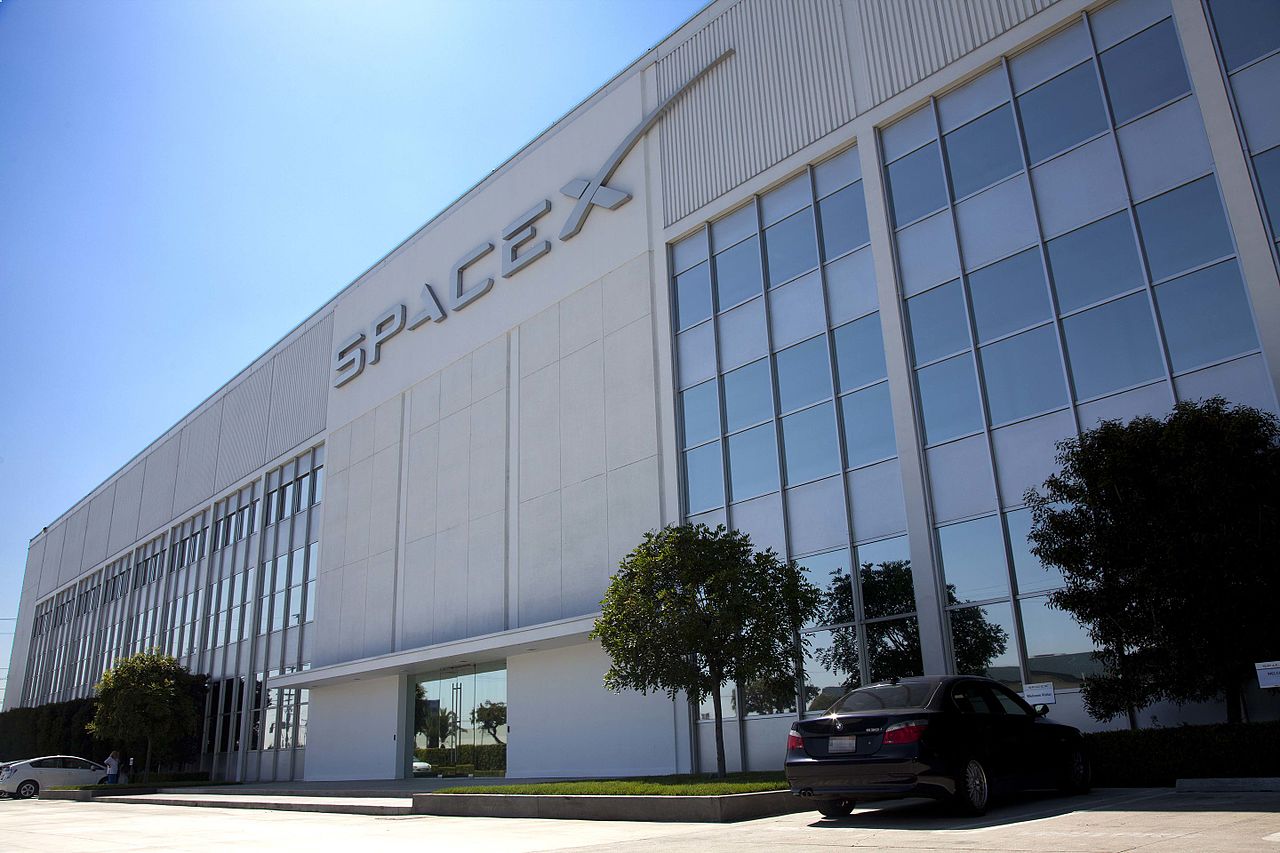
- Hero: SpaceX headquarters building, Hawthorne, California. Author SpaceX, CC0, via Wikimedia Commons. Reviewed visually before use.
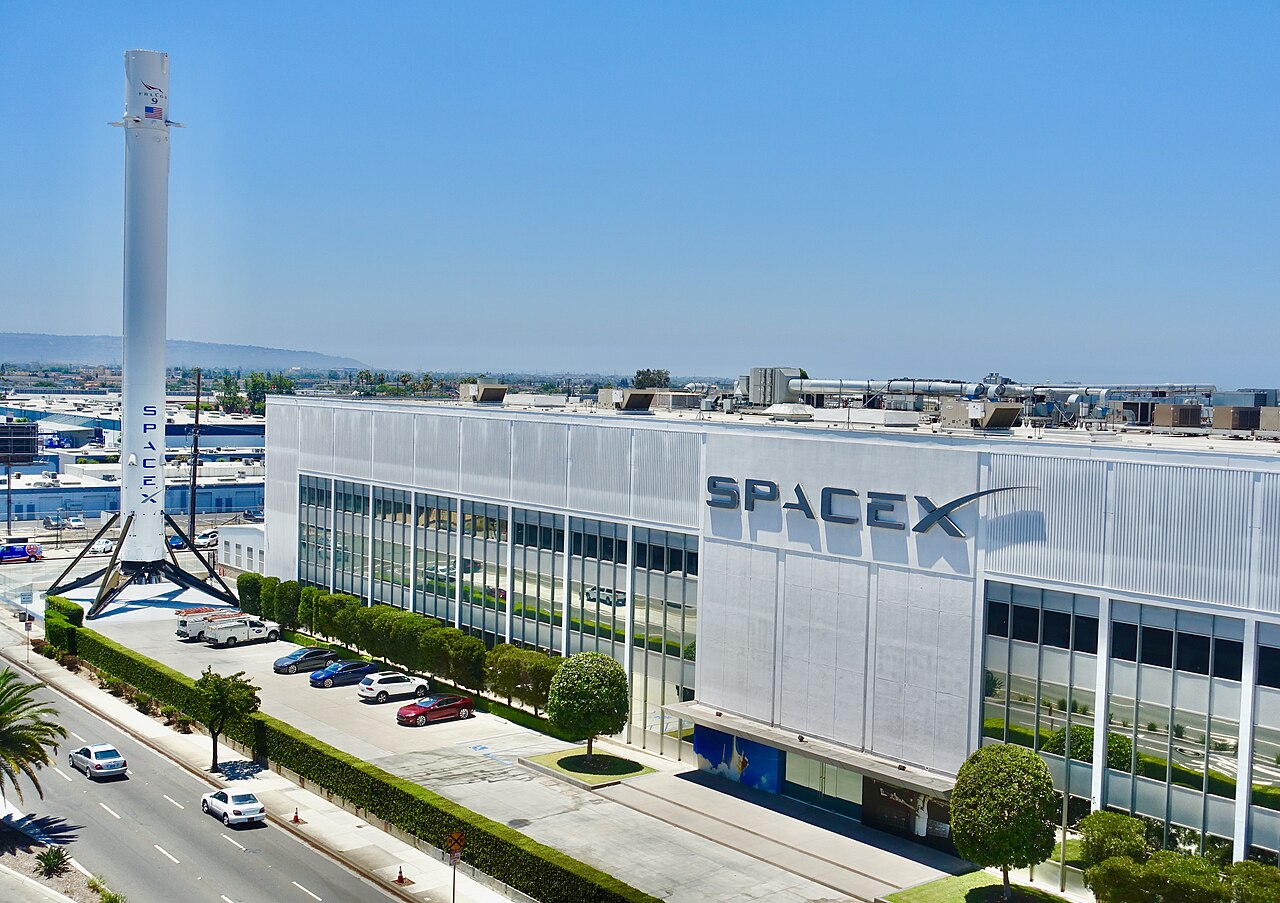
- In-body: SpaceX factory in Hawthorne with a Falcon 9 stage outside. Photo by Steve Jurvetson, CC BY 2.0, via Wikimedia Commons. Reviewed visually before use.