Meta Platforms announced on Monday, October 26, 2026 a financing program of up to $95 billion in equity to help pay for its AI infrastructure, according to CNBC and Reuters coverage. Only about $35 billion of that was launched immediately. The other $60 billion is a planned program that, per the company's filing as summarised by MLQ.ai, has no signed agreement and is not expected to begin before the first quarter of 2027. Reading the headline number as a single raise overstates what has happened so far, and understating it misses what Meta has signalled about how it intends to fund the buildout.
What was announced
Based on the offering summary reported by MLQ.ai and the CNBC report, the program has three parts:
| Piece | Size | Instrument | Status |
|---|---|---|---|
| Class A common stock | About $22.5 billion | Sold through forward sale agreements with Morgan Stanley Capital Services and Goldman Sachs | Launched October 26 |
| Mandatory convertible preferred | About $12.5 billion | 250 million depositary shares, each a one-twentieth interest in a Series A mandatory convertible preferred share | Launched October 26 |
| Class C at-the-market (ATM) program | Up to $60 billion | Non-voting Class C shares sold over time | No agreement signed; not expected before Q1 2027 |
$35 billion launched, $60 billion still a plan
The three pieces of Meta's up-to-$95 billion equity program, in $ billions.
Source: Meta offering announcement, as reported by CNBC and MLQ.ai (Oct 26, 2026).
Final pricing, the preferred dividend rate and the conversion rate were not disclosed in the coverage and are set when the offerings price, so dilution cannot yet be calculated.
How a forward sale differs from an ordinary share sale
In a standard offering, the company issues shares and receives the cash at closing. A forward sale agreement separates the two. According to the MLQ.ai summary, Meta does not expect cash up front. It can deliver the shares on dates it chooses, through November 19, 2027, and receives cash based on the offering price, less underwriting discounts and contractual adjustments.
For a company spending at Meta's pace, that structure has a specific consequence: the market prices the shares now, while Meta decides when to issue them and when the cash arrives. That gives timing flexibility, though it also leaves the share count and the final proceeds dependent on the delivery schedule. Neither is stated in the sources.
The preferred stock piece
The $12.5 billion tranche is a mandatory convertible preferred. Such an instrument pays a fixed dividend and converts automatically into common shares on a set date. The summary says conversion is expected around August 15, 2029, into a variable number of Meta shares. The dividend rate and conversion ratio were not given.
| Feature | Common stock (forward) | Mandatory convertible preferred |
|---|---|---|
| Cash to Meta | On delivery, by November 19, 2027 | Set at the offering |
| Return to holder | Share price change | Fixed dividend, then conversion |
| End state | Common shares | Common shares, around August 2029 |
| Open terms | Final price | Dividend rate, conversion rate |
 Meta
 NVIDIA
 AMD
The chipmaker interest
Nvidia, AMD and Broadcom indicated non-binding interest in buying up to $5 billion of Class A shares combined, on the same terms as other buyers, according to the offering summary. Underwriters may allocate them more, less or none, and no per-company amounts were disclosed.
This matters analytically because all three are suppliers to Meta's AI buildout. When suppliers hold equity in a customer, part of the customer's spending can flow back as investment. The same circularity question has been raised about other AI arrangements, including Nvidia's Ohio data center agreement with OpenAI and Nvidia's wider Wall Street financing programs. With interest that is non-binding and capped at $5 billion against a $35 billion launch, the scale here is modest, and any allocation would be disclosed only after pricing.
Why Class C is the long-dated part
The $60 billion ATM program would sell non-voting Class C shares. We analysed the structure when Meta first described it on its earnings call in our Class C coverage. Per the filing as summarised, the shares would not dilute voting power for Class A and Class B holders, including Mark Zuckerberg, but they would dilute economic ownership, and the filing warns they could trade at a discount to Class A shares.
An ATM program sells shares gradually into the market rather than in one block. That makes the $60 billion a ceiling on capacity and not a forecast of use. Meta has not signed an agreement, and the sources say there is no assurance one will be established.
Putting $95 billion next to capex and cash
All figures below are from the sources cited; the ratios are our arithmetic.
| Measure | Amount | Source |
|---|---|---|
| 2026 capex guidance | $135 to $145 billion | Meta Q3 results, via Fortune |
| Operating cash flow, first nine months | About $97 billion | Offering summary (MLQ.ai) |
| Cash and marketable securities, end of September | About $82 billion | Offering summary (MLQ.ai) |
| Launched equity | $35 billion | CNBC, MLQ.ai |
| Maximum program | $95 billion | CNBC, MLQ.ai |
At the midpoint of capex guidance ($140 billion), the launched $35 billion equals 25% of one year of spending, and the full $95 billion equals about 68%. Those comparisons are context only, since the proceeds are not earmarked line by line and the ATM may never reach its ceiling. Meta's stated plan, per the summary, is to fund the buildout with operating cash flow, investment-grade debt, strategic partnerships and equity. Equity is one leg among several, not a replacement for the others.
Market context
Meta's third-quarter report on October 21 showed revenue up 26% to about $64.6 billion, according to Fortune, alongside a $9.89 billion legal charge. Per MLQ.ai, Meta shares fell 7% on October 22 after the results included a warning about higher AI-related costs, and Nvidia fell 4.4% in a broader AI-stock selloff that day. After the financing announcement, shares were reported higher in premarket trading on Monday, though reports on the size of intraday moves differ, so we do not rely on a single figure.
The offering also arrives while financing conditions for other AI infrastructure players are tightening, as seen in the CoreWeave bond-yield coverage and the rise in AI high-yield issuance. A company with Meta's cash generation has more options than a neocloud, but the shift from debt and leases toward equity is notable on its own, and the reported $825 billion of future commitments shows why.
Analysis: four questions the numbers do not yet answer
1. What price will the market set? Pricing determines dilution. Without it, no share-count estimate is meaningful.
2. When will the forward shares be delivered? Meta controls timing through November 2027, so cash arrival and the share count are both tied to decisions not yet made.
3. Will the ATM ever start? It needs Class C shares to exist and trade first, and no agreement is signed.
4. How does the market treat non-voting stock? The filing itself raises the possibility of a discount to Class A shares.
For readers choosing AI tools rather than trading stock, the practical takeaway is about concentration. The labs and platforms behind frontier models are now funding themselves through public markets at a scale that makes their financing conditions a factor in pricing and roadmap. Using a model-agnostic workspace such as Metir keeps a team's work portable if any one provider's costs or priorities change.
What to watch next
- Offering pricing. The final price, dividend rate and conversion rate.
- Allocation to chipmakers. Whether Nvidia, AMD or Broadcom end up buying any shares.
- Class C listing. The start of trading, which gates the ATM.
- Q4 capex and cash flow. Whether the funding mix shifts further toward equity.
Sources:
- Meta launches plan for $95 billion stock offering to fund AI expansion (CNBC)
- Meta launches $35 billion equity raise for AI as Nvidia, AMD and Broadcom signal interest (MLQ.ai)
- Meta plans $95bn stock offering to bankroll AI expansion (Irish Times)
- Meta's revenue surges 26% to $64.6 billion, but billions in settlements and skyrocketing AI spending turn screws on profit, free cash flow (Fortune)
Image credits
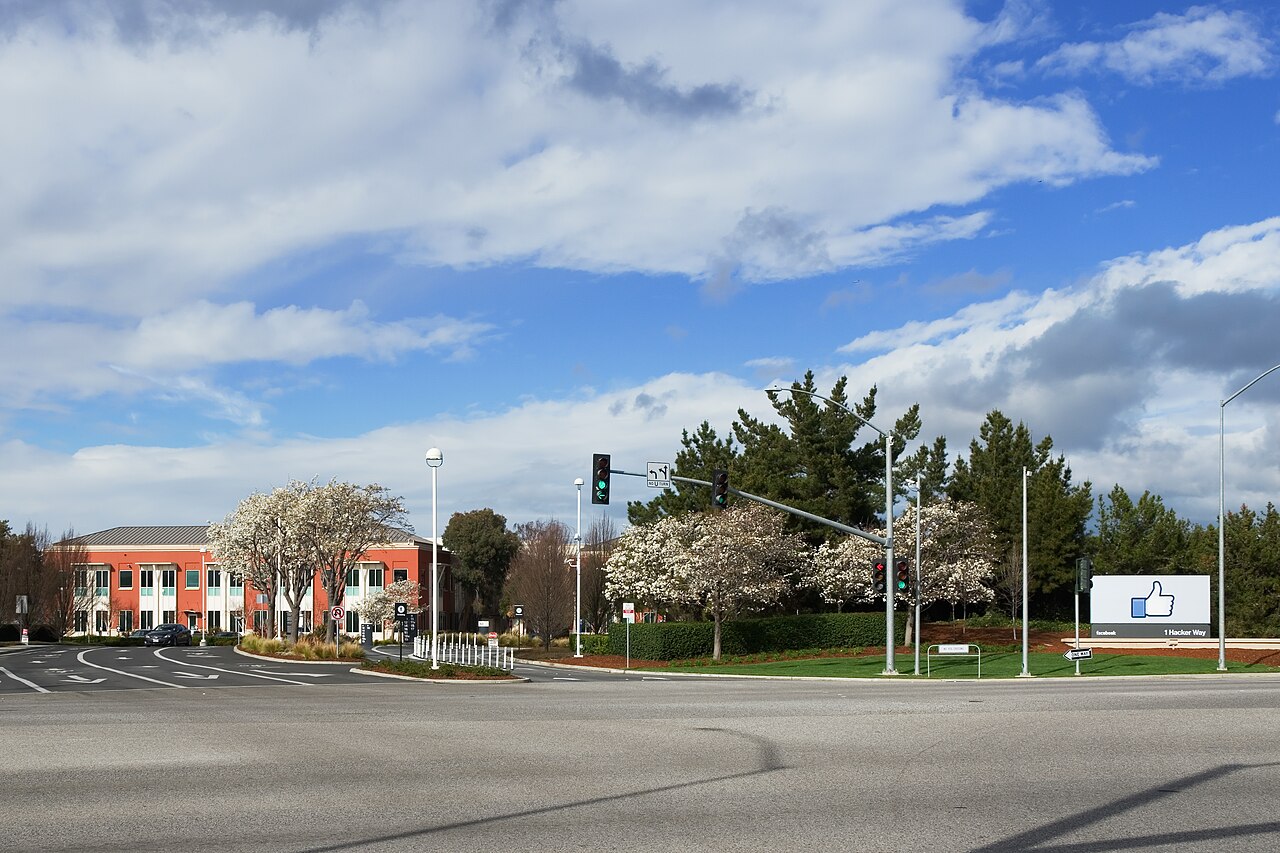
- Hero and in-body photo: Meta's Menlo Park campus entrance, released under CC0, via Wikimedia Commons. Reviewed visually before use.