Nvidia is reportedly weighing a financial guarantee worth roughly $250 billion so that OpenAI can lease a planned 10-gigawatt data center campus in southern Ohio, according to the Wall Street Journal. Nvidia is also said to be discussing a separate arrangement worth up to $350 billion tied to future chip purchases for the same site. Nothing is signed. Both figures come from people familiar with the talks, and the negotiations could still change shape or fall apart before any deal closes.
 NVIDIA
 OpenAI
What's reportedly on the table
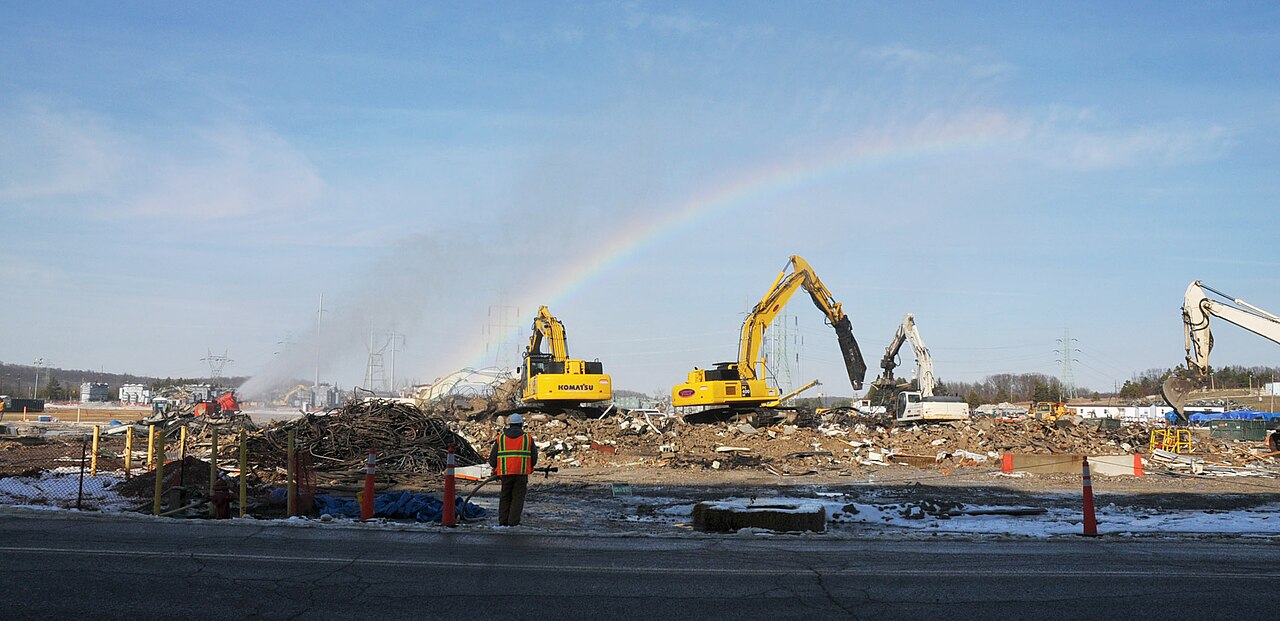
The project at the center of the talks is a planned campus in Pike County, Ohio, near the town of Piketon, roughly 50 miles south of Columbus. It sits on federal land that once housed the Portsmouth Gaseous Diffusion Plant, a Cold War uranium enrichment facility that stopped operating in 2001 and has been undergoing environmental cleanup since. SoftBank's energy subsidiary, SB Energy, is developing the site into what is being called the PORTS Technology Campus, with a first phase of roughly 800 megawatts targeted for around 2028 and an eventual scale of about 10 gigawatts.
The two numbers cover different things. The $250 billion guarantee is reported to back the lease payments and construction debt for the physical campus itself, not the chips that go inside it. The chip financing, reported at up to $350 billion, is a separate discussion about how OpenAI pays for the Nvidia GPUs the site will need. Add the cost of the silicon to the cost of the building and people familiar with the talks put the full project, at full 10-gigawatt scale, at more than $500 billion.
Why OpenAI reportedly needs a guarantor
The reported reason for Nvidia's involvement is straightforward: OpenAI is not yet profitable, and as a private company it does not carry an investment-grade credit rating on its own. Lenders financing a data center of this size typically want that kind of rating, or an equivalent guarantee, before extending debt on favorable terms. Nvidia's own balance sheet, rated and cash-generating, can stand in for the rating OpenAI does not have. If OpenAI cannot make lease or debt payments, Nvidia's guarantee is reportedly what lenders would collect against, while OpenAI keeps use of the building.
The reported financing loop behind the Ohio campus
As reported, unconfirmed and subject to change. Nvidia's balance sheet effectively substitutes for a credit rating OpenAI does not yet have.
If OpenAI cannot cover lease or debt payments, Nvidia's guarantee is what lenders collect against, per the Wall Street Journal's reporting. OpenAI keeps the building; Nvidia would absorb the loss.
The "circular financing" question
The arrangement, if finalized as reported, would be an example of what industry watchers now call circular or vendor financing: a chip supplier helping arrange the money that flows to a customer who then spends much of it buying that supplier's chips. Nvidia would not be writing OpenAI a check directly, but a guarantee that lowers OpenAI's borrowing cost serves a similar function, and the GPUs that get purchased with that cheaper capital are Nvidia's own products. Reporting on the talks noted that Nvidia's own credit default swaps saw one of their largest moves since they began actively trading, a sign that at least some market participants read the structure as adding risk to Nvidia's own credit profile, not just OpenAI's.
If OpenAI fails to make lease payments or service the construction debt, Nvidia steps in and covers the obligation. OpenAI keeps the building. Nvidia absorbs the loss.
Reported deal structure, per the Wall Street Journal
The critique is not new but this deal, if it closes near the reported size, would be among the largest single examples of it. Critics argue that when a supplier underwrites its own demand, reported order books stop being a clean signal of independent customer conviction, and they point to the fact that no major AI lab is yet consistently profitable as a reason to be cautious about debt-funded capacity built on the assumption that today's growth continues uninterrupted. Some have compared the pattern to vendor financing in the telecom buildout of the late 1990s, where equipment makers extended credit to customers who used it to buy that equipment, a structure that held up until demand growth slowed and the debt did not.
The dollar figures reported around the Ohio campus talks
Three separate numbers describe three separate things: what Nvidia would guarantee, what it would separately finance, and what the whole site could eventually cost.
Figures as reported by the Wall Street Journal and cited by Tom's Hardware and Yahoo Finance, July 26 to 27, 2026. Negotiations are ongoing and terms have not been finalized.
The other reading: this is how infrastructure gets built
There is a genuinely competing view, and it is not fringe. Offtake-backed project finance, where a buyer's long-term commitment to purchase output is what makes a lender comfortable funding construction, is the standard model behind power plants, pipelines, and telecom networks, not a novelty invented for AI. A power purchase agreement with a creditworthy buyer routinely turns an unbuilt solar or gas plant into a financeable asset; a guarantee performing the same function for a data center lease is a variation on a well-established structure, not an invention. Seen this way, Nvidia is doing what an experienced counterparty with a strong balance sheet is well positioned to do: absorb the credit risk of a genuinely enormous, long-lived asset in exchange for what it says is roughly $1 trillion of visible AI infrastructure demand through 2027. Whether that demand materializes as billed is the actual question, and the guarantee itself does not answer it either way. The honest position is that both readings remain open until more of the compute in these campuses is running paid workloads rather than backing debt.
Why this matters beyond one deal
Whatever the final terms, an Ohio campus at this scale is being built to run models, not to serve any single vendor's roadmap. A rack of GPUs does not care whether the workload on it is OpenAI's, a rival lab's, or an enterprise's own agent stack; the value it creates depends on who is actually choosing which model handles which job, and increasingly that choice is made above the infrastructure layer entirely. That is the same principle behind giving teams model-agnostic access to leading AI systems in one workspace, the approach Metir AI takes: as compute buildouts like this one scale, the benefit should show up as more capable tools for the people using them, not as dependency on the financing structure of any one campus.
The honest caveats
Every figure here, from the $250 billion guarantee to the $350 billion chip financing to the $500 billion total, is reported and unconfirmed. The Journal's sourcing is people familiar with the talks, not a signed agreement, and terms have not been finalized on either side. The 10-gigawatt full build is a target, not a committed schedule; only the first roughly 800-megawatt phase has a stated timeline, around 2028. Readers should treat this as a live negotiation, not a done deal, and watch for confirmation from Nvidia, OpenAI, or SoftBank directly before treating any of these numbers as final.
Sources:
- Nvidia in talks with OpenAI to guarantee $250 billion financing for data center, WSJ reports | Yahoo Finance
- Nvidia weighs $250 billion guarantee so OpenAI can lease SoftBank's 10-gigawatt Ohio campus, report claims | Tom's Hardware
- OpenAI's $500 Billion Campus Would Run on Nvidia's Balance Sheet | Yahoo Finance
- OpenAI in talks to lease 10GW data center from SB Energy in Ohio | Data Center Dynamics
- Trump officials announce 10-gigawatt data center, gas plants for former Ohio uranium site | AOL
- A Look into SoftBank's $500 Billion Ohio Data Center Hub, the Piketon AI Data Center Complex | Construction Review
- Portsmouth Gaseous Diffusion Plant | Wikipedia
- Nvidia reignites "circular" AI concerns as it weighs OpenAI financing guarantee | Axios
- Nvidia's $250B Guarantee for OpenAI Ohio Campus Proves Debt Markets Said No | Tech Times
- In AI Infrastructure, the Offtake Agreement Is the Asset | Global Data Center Hub
Image credits
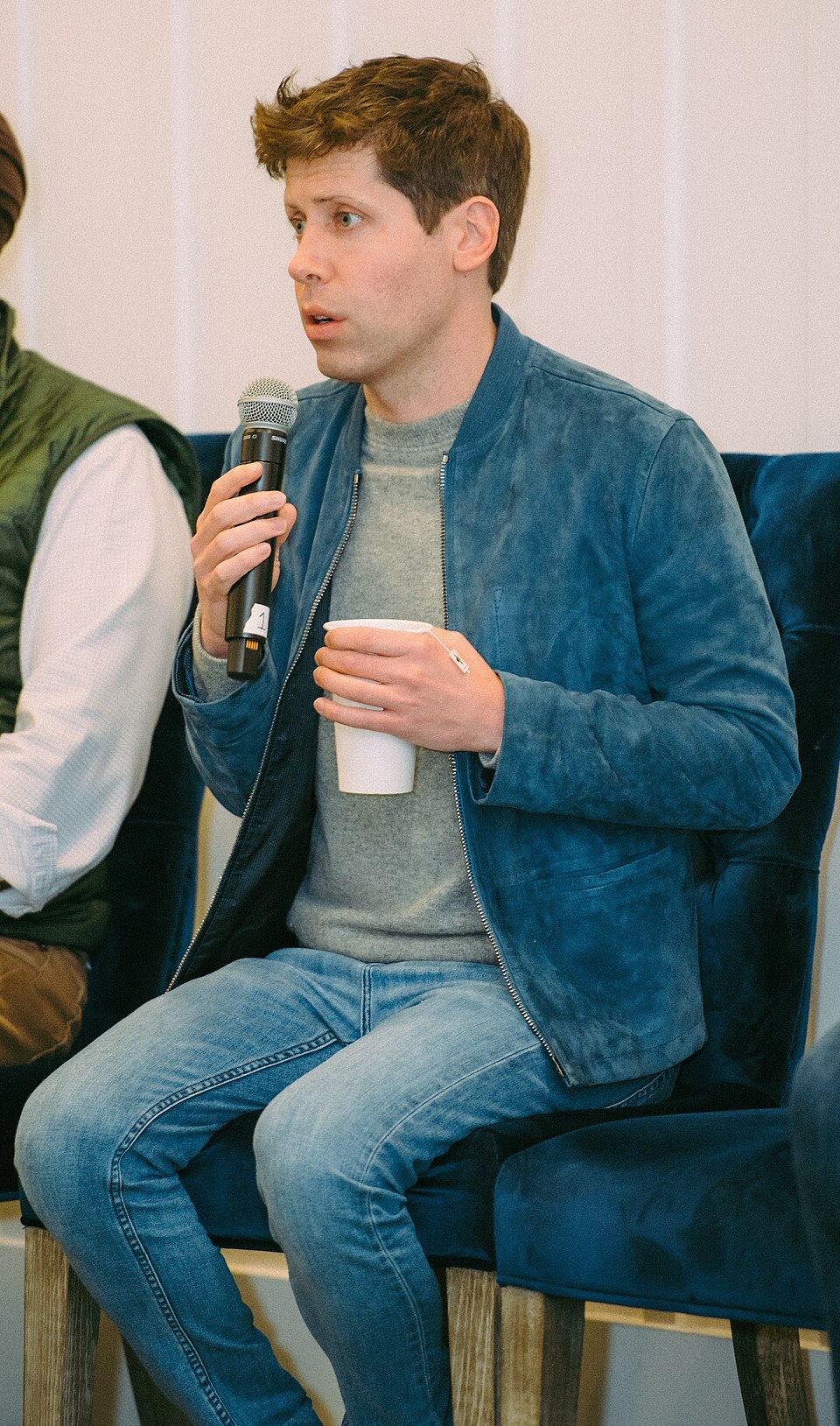
Header image: the former Portsmouth Gaseous Diffusion Plant site near Piketon, Pike County, Ohio, photographed during Department of Energy demolition and cleanup work on the decommissioned uranium-enrichment complex, the same federal site SB Energy is developing into the data center campus discussed in this piece. Photo by the U.S. Department of Energy via Wikimedia Commons, public domain (U.S. government work). In-body photograph: Sam Altman, CEO of OpenAI, in a 2022 portrait unrelated to this specific announcement, by Village Global via Wikimedia Commons, licensed under CC BY 2.0. No public photograph of the unbuilt Ohio campus exists yet, so the header image depicts the underlying site rather than the future data center.