On Monday, August 10, 2026, Nvidia unveiled its $500 billion AI infrastructure financing plan, a coalition with six of the largest names in Wall Street asset management to mobilize more than $500 billion in third-party capital for AI infrastructure. The partners are Apollo Global Management, Blackstone, BlackRock, Brookfield Asset Management, Goldman Sachs, and KKR. The capital is earmarked for data centers, electricity generation, advanced chips, and the equipment that surrounds them, the physical buildout the current AI boom depends on.
 NVIDIA
What Nvidia and Its Wall Street Partners Announced
According to reporting first published by the Financial Times and confirmed by Bloomberg, CNBC, Axios, and Reuters, the coalition is designed to create what the companies described as "dedicated pools of capital at significant scale at attractive rates for Nvidia customers." In practice, that means hyperscalers, frontier AI labs, and large enterprises building AI infrastructure could draw on institutional credit, insurance-fund capital, and private capital arranged by the six partners, rather than financing the buildout entirely from their own balance sheets or cash flow.
How the $500B+ capital pool is designed to flow
Six asset managers supply third-party capital into dedicated pools. Nvidia's customers draw on those pools to buy chips and build data centers, largely without using their own balance sheets.
Simplified structure based on public reporting as of August 10, 2026. Terms of individual pools were not disclosed.
The structure is closer to a standing financing facility that Nvidia and its partners intend to keep drawing on as customers commit to new data center and chip purchases, rather than a single fund. None of the parties disclosed exact terms for individual pools or how the $500 billion figure would be allocated across the six firms.
Turning Compute Into a Financeable Asset Class
The most consistent theme across analyst commentary is that Nvidia is trying to make AI compute behave like an established asset class, one institutional capital already knows how to underwrite. Commercial real estate and toll roads are the comparisons that recur most often: assets with long useful lives and predictable, contracted cash flows that lenders can lend against with confidence.
If GPUs and data centers can be underwritten the way office towers and toll roads are, a far larger pool of institutional capital becomes available to fund the AI buildout, but that also means a far larger pool of investors is exposed if the underlying demand does not hold.
Analysis synthesized from FT, Bloomberg and CNBC coverage of the deal
That reframing matters because it changes who bears the risk of the buildout. Today, much of that risk sits with the hyperscalers and chipmakers directly, visible in their own capital expenditure and debt. If GPUs and data centers become a standard financeable asset class, insurance funds, pension capital, and private credit investors take on a slice of that exposure too, spread across a much wider base of institutional balance sheets.
The Circular Financing Debate
The announcement lands amid an ongoing debate about circular financing in AI infrastructure, where a chipmaker helps finance the very customers who then use that financing to buy its chips. Nvidia has already committed more than $40 billion to direct AI equity investments in the first four months of 2026, including roughly $30 billion directed to OpenAI in late February 2026. Critics argue such arrangements can inflate the appearance of demand, since some portion of a customer's chip purchases is effectively funded by Nvidia itself, whether directly through equity or indirectly through financing facilities.
The Wall Street coalition is structured differently from Nvidia's direct equity bets, since the capital comes primarily from the asset managers' own funds and their institutional clients rather than Nvidia's balance sheet. That distinction matters to the circularity question, but does not eliminate it entirely, since Nvidia is still the party organizing the financing, and the chips those pools ultimately pay for are still its own products. Supporters counter that vendor-arranged financing is a long-established practice in capital-intensive industries, going back to telecom equipment financing in the 1990s and 2000s, and that arranging capital is not the same as guaranteeing demand.
The Bull Case and the Risk Case
Both readings of the deal have real support, and neither has been settled by the market yet.
The bull case: unlocking $500 billion in institutional capital lowers the cost of AI infrastructure buildout industry-wide, since credit-market financing is typically cheaper than equity or corporate cash. It also means hyperscalers and AI labs do not need to carry the full weight of data center construction on their own balance sheets, reducing the risk of any single company overextending itself.
The risk case: concentrating $500 billion of exposure to a single chip architecture, arranged in large part by the vendor itself, creates a concentration risk that traditional project finance for toll roads or real estate does not carry. Data centers and GPUs also depreciate and become obsolete far faster than a toll road, a meaningful complication for lenders used to underwriting decades-long assets. If AI demand growth slows before this capital is repaid, the asset managers and their institutional clients would be the ones absorbing the shortfall.
Market Reaction
Investors did not treat the news as unambiguously positive. Nvidia shares fell about 3% on August 10, 2026, the day of the announcement, even though the deal is designed to expand the pool of capital available to buy Nvidia's products. That reaction suggests part of the market read the sheer scale of the financing effort, and the fact that it was needed at all, as a signal of how much capital the AI buildout now requires, rather than as straightforwardly bullish news.
The Bigger Picture
Whichever reading proves right, the near-term effect is the same: it becomes easier for Nvidia's customers to keep building AI data centers at the current pace. Neither case can be verified yet, since the coalition was only announced on August 10, 2026, and the pools of capital have not been drawn on at scale. The more useful thing to track over the coming quarters is whether AI revenue growth keeps pace with the capital now committed to build the compute behind it.
For teams building on top of whatever compute wins this cycle, the underlying lesson is less about any single financing deal and more about not being locked into one vendor's trajectory. A model-agnostic platform like Metir AI, which works across OpenAI, Anthropic, Google, and xAI models rather than committing to a single provider, is one way to stay flexible as compute becomes an increasingly financialized, commoditized layer.
Sources:
- Nvidia to Team With Wall Street on $500 Billion Package, FT Says | Bloomberg
- Nvidia teams up with Wall Street asset managers on $500 billion AI push | CNBC
- Nvidia, Goldman Sachs, BlackRock team up on $500 billion AI financing push | Axios
- Nvidia, Wall Street firms partner on $500 billion AI financing venture | Kitco
- Nvidia and Wall Street unveil $500 billion AI infrastructure funding package | TNW
- Nvidia embraces AI investor role, topping $40 billion in equity bets in 2026 | CNBC
Image credits
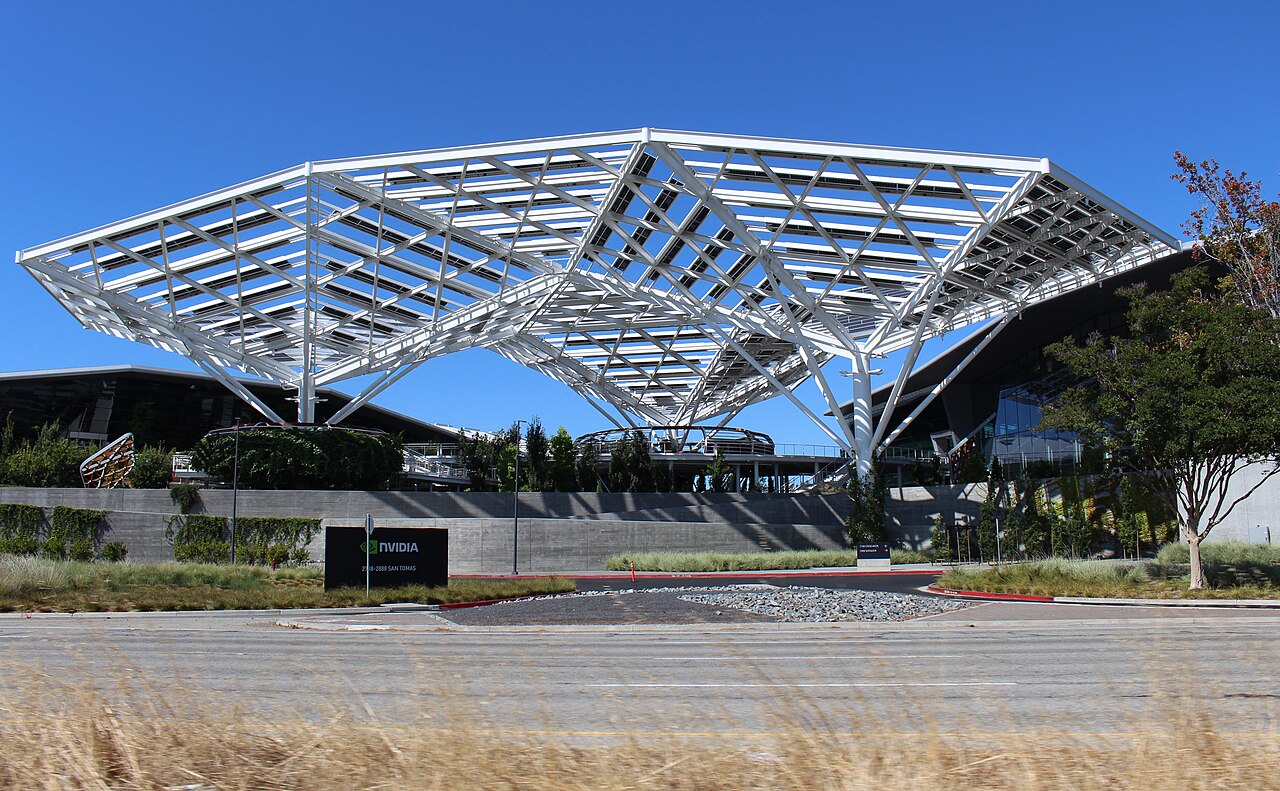
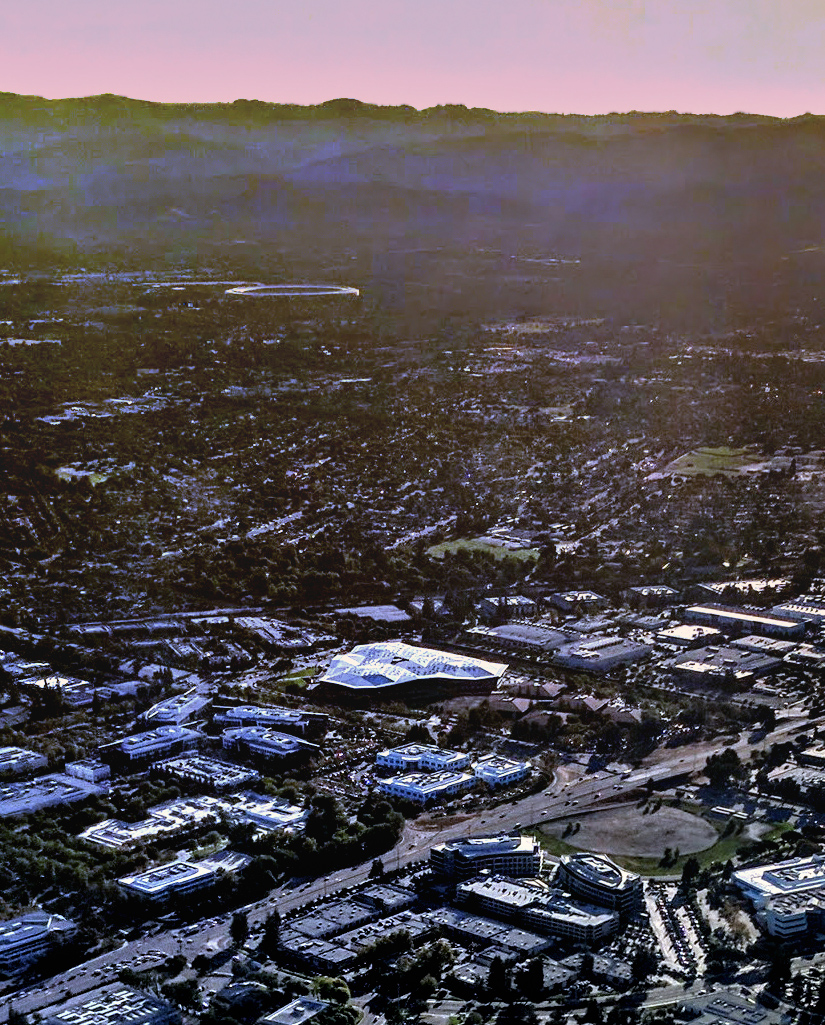
Header image: the main entrance to Nvidia's headquarters at 2788-2888 San Tomas Expressway, Santa Clara, California, by Coolcaesar via Wikimedia Commons, licensed under CC BY-SA 4.0. In-body aerial photograph of Nvidia's Santa Clara campus by Dicklyon via Wikimedia Commons, licensed under CC BY-SA 4.0.