On August 20, 2026, Bloomberg reported that Broadcom is in talks with private lenders for a debt financing package that could reach up to $100 billion, intended to fund custom AI chips and the infrastructure around them for Anthropic and other AI companies. The reporting, since echoed by SiliconANGLE, Yahoo Finance, and several trade outlets, describes a deal still being negotiated rather than one that has closed. If it lands anywhere near that size, it would be one of the largest debt financings ever arranged for a single company's AI chip business, and a further sign that compute is becoming a distinct, heavily leveraged asset class of its own.
 Anthropic
 NVIDIA
What Broadcom Is Reportedly Discussing
According to Bloomberg's sources, the structure under discussion has two layers. A senior secured tranche of roughly $60 billion to $70 billion would sit at the top of the capital stack, repaid first and carrying the lowest risk. A junior, subordinated tranche of around $30 billion would sit beneath it, absorbing losses first if something goes wrong but also commanding a higher return for the investors who hold it. Broadcom may guarantee a portion of the senior debt, a detail that matters because a vendor guarantee is what let a similar, smaller deal earn investment-grade ratings earlier this year. Blackstone and Apollo Global Management are named as the private investment firms in talks to participate. Representatives for Broadcom, Anthropic, Apollo, and Blackstone all declined to comment when contacted by Bloomberg.
Broadcom's AI-chip financing, June 2026 vs. the reported August package
The prior AI XPV vehicle raised $35 billion, all senior debt. The package reportedly in talks with Apollo and Blackstone could reach up to $100 billion, split into a $60-70 billion senior secured tranche and a roughly $30 billion junior tranche. Bars use the midpoint of each reported range.
Green: senior secured tranche. Grey: junior tranche. Figures as reported by Bloomberg; the August package remains in negotiation and could roll out in stages.
The financing is not being described as a single fund written all at once. Reporting suggests it could roll out in stages as chip orders and data center capacity commitments are finalized, tied to the pace at which Broadcom's custom silicon, known internally as XPUs, actually ships and gets deployed.
From a $35 Billion Pilot to a $100 Billion Package
The talks build directly on a smaller transaction from earlier in the year. In June 2026, Broadcom, Apollo, and Blackstone launched what the companies called the AI XPV Platform, a special-purpose vehicle that raised $35 billion. Under that structure, outside investors funded the purchase of Broadcom's custom AI chips and racks, and Anthropic leased the resulting compute capacity rather than buying the hardware outright. The first tranche of that deal was earmarked to support roughly a gigawatt of processing capacity, with the broader ambition, as described by the companies involved, of supporting more than 20 gigawatts of capacity for frontier AI labs by 2028.
The reported $100 billion package would be roughly three times the size of that pilot, and it reportedly widens the pool of intended beneficiaries beyond Anthropic to include other AI companies, with some reporting naming OpenAI as a possible additional customer of the underlying compute. Nothing about who ultimately draws on the facility has been confirmed publicly, and the numbers involved are still described as under negotiation rather than final.
Turning a Lease-to-a-Lab Into a Financeable Asset
The AI XPV structure is a variation on a financing pattern that has become increasingly common across the AI buildout in 2026: bundling chips, networking gear, and long-term customer commitments into a vehicle that institutional capital can lend against, the same basic logic used to finance toll roads, pipelines, and commercial real estate for decades. What makes Broadcom's version distinct is who sits on the other side of the lease. A hyperscaler buying GPUs is typically a large, diversified company with its own balance sheet, multiple revenue lines, and years of credit history. Anthropic, by contrast, is a single AI lab whose revenue, while growing quickly, is newer and more concentrated. That is a meaningfully different credit profile for lenders to underwrite, which is part of why Broadcom's own guarantee on a portion of the senior debt has been structurally important to getting the earlier, smaller deal done at investment-grade rates.
Leasing custom silicon to a single AI lab is a different credit bet than a diversified hyperscaler buying GPUs outright, and the vendor guarantee behind it is doing a lot of the work that makes lenders comfortable.
Analysis based on Bloomberg, SiliconANGLE and Yahoo Finance reporting
The Concentration and Depreciation Questions
Two open questions run through most of the analytical commentary on deals like this one. The first is concentration risk: a financing structure this large, tied to a small number of counterparties (one chip designer, a handful of lenders, and a small number of AI labs on the other end of the leases), creates a web of exposure that is different in kind from the diversified pools of tenants behind a typical real estate or infrastructure loan. If AI demand from any single lab slows, the effects would not stay contained to that one relationship.
The second is depreciation. Toll roads and office buildings hold value over decades. AI accelerators do not; new chip generations from Nvidia, AMD, and Broadcom itself typically arrive every one to two years, and older silicon loses commercial value quickly even when it still functions. Lenders underwriting AI-chip debt over a multi-year term are, in effect, betting that the leases and guarantees behind the deal will keep generating cash flow faster than the underlying hardware ages out of usefulness. That is a newer kind of bet for private credit to make at this scale, and it is one reason a chipmaker guarantee, rather than the hardware's resale value alone, has become a load-bearing part of these structures.
What It Means for the Nvidia Rivalry
Financing on this scale is also a competitive move. Broadcom's custom ASIC business has grown by designing chips tailored to a specific customer's workloads, an approach that trades some of Nvidia's general-purpose flexibility for efficiency gains on a narrower set of tasks. Raising tens of billions of dollars in third-party capital to build out that capacity faster is a way for Broadcom to compete for a larger share of AI compute spending without carrying the entire buildout on its own balance sheet, the same basic playbook Nvidia used when it lined up its own six-firm, $500 billion Wall Street financing coalition earlier in August 2026.
Whichever way the AI capex debate ultimately resolves, the practical effect of deals like this one is to make it easier for AI labs to keep expanding compute capacity without either the lab or the chipmaker fully carrying that cost alone. For teams building AI products on top of whatever hardware and financing structure wins out, the more durable lesson is not to bet on a single chip architecture or provider. A model-agnostic platform like Metir AI, which works across models from OpenAI, Anthropic, Google, and xAI rather than locking into one vendor's stack, is one way to stay flexible as compute itself becomes an increasingly financialized layer underneath the industry.
Sources:
- Broadcom Eyes Up to $100 Billion AI Financing Deal | Yahoo Finance
- Broadcom reportedly seeking up to $100B in debt financing for AI chip deal | SiliconANGLE
- Broadcom seeks more than $60bn in debt to fund AI chips for Anthropic | TheNextWeb
- Broadcom Plans to Raise Over $60 Billion to Boost Anthropic and OpenAI Chip Business | TradingKey
- Broadcom's AI Financing Could Reach $370 Billion. But It's Not as Bad as It Sounds. | The Motley Fool
- Apollo and Blackstone Said to Complete $35 Billion Private Credit Deal for Anthropic's Computing Power Expansion | TradingKey
- Nvidia's $500 Billion AI Infrastructure Financing Deal | Metir AI
Image credits
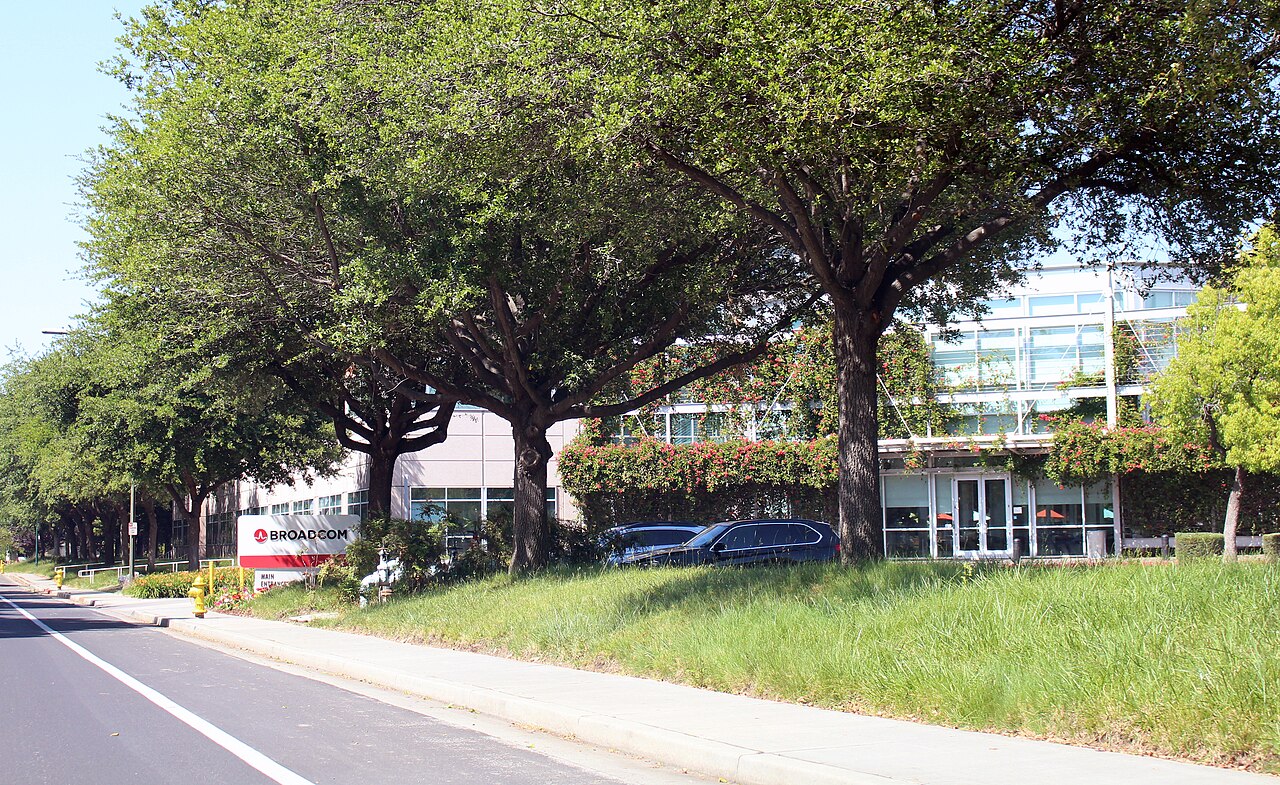
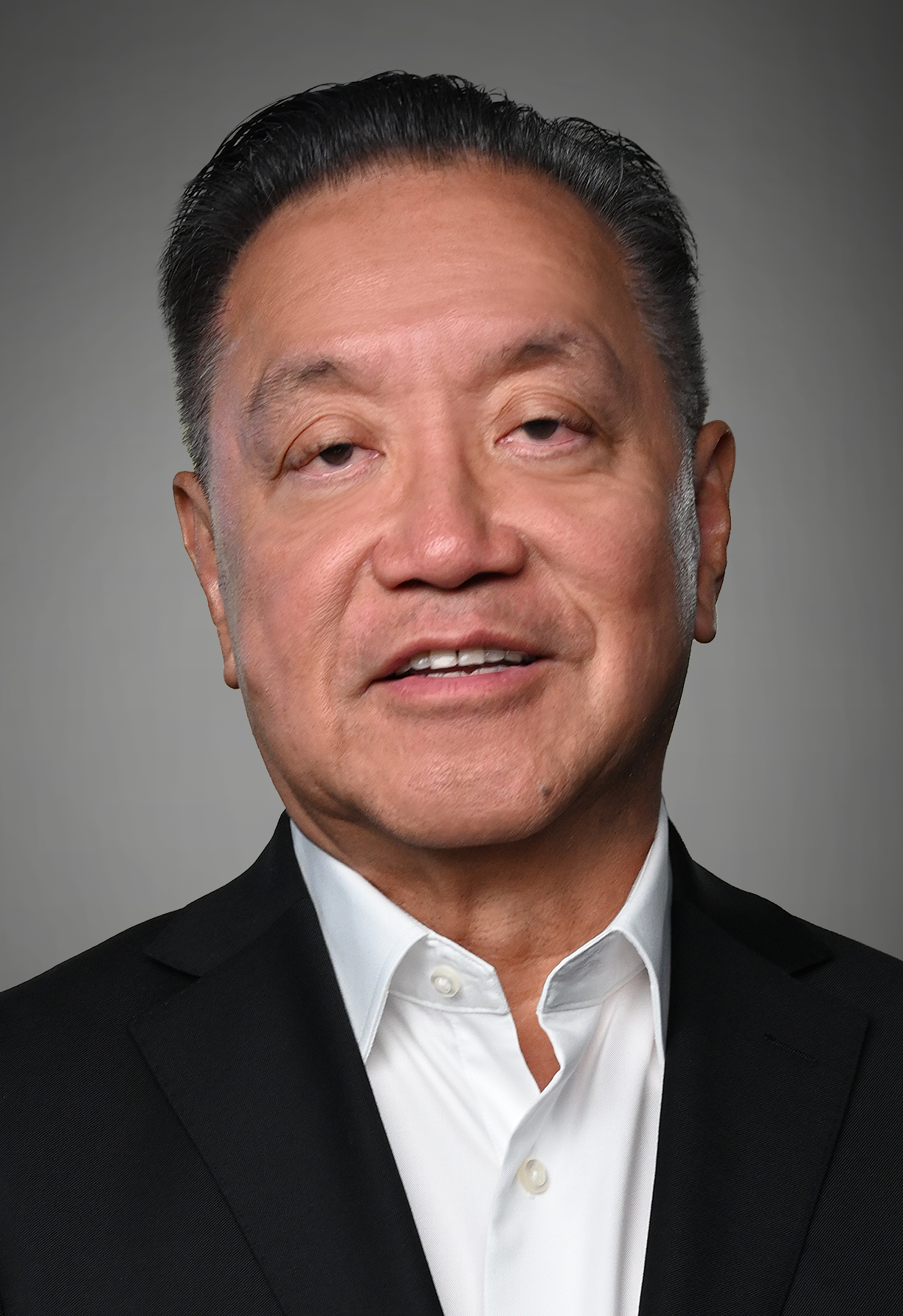
Header image: Broadcom Inc. headquarters entrance and main sign in San Jose, California, by Coolcaesar via Wikimedia Commons, licensed under CC BY-SA 4.0. In-body portrait: official corporate headshot of Hock Tan, President and CEO of Broadcom, photographed by Greg Bezat / Bezat Video Group, provided by Broadcom and VRT-confirmed on Wikimedia Commons, licensed under CC BY-SA 4.0.