SpaceX reported third-quarter 2026 results on October 20, its second earnings report since going public in June. According to Fortune, total revenue was $14.6 billion, up 161% year over year and well above the $12.86 billion analysts expected. The headline for readers who follow AI is the segment mix: the AI business, which includes the former xAI, reported $7.56 billion in revenue and is now larger than Starlink-led connectivity and the launch business.
 xAI
 Anthropic
 Google
 NVIDIA
The quarter in one table of changes
| Metric | Q2 2026 | Q3 2026 |
|---|---|---|
| AI segment revenue | $2.56B | $7.56B |
| Operating income | Loss of $143M | $2.79B |
| Net income | Net loss of $541M | $4.4B |
| Capital spending | about $18.4B | $19.6B |
The Q2 figures come from the prior quarter's report; the Q3 figures come from Fortune's coverage of the October 20 report. Net income of $4.4 billion, or $0.35 per share, replaces a $541 million loss one quarter earlier. Fortune notes the comparison it cites to a year-ago figure of $5.5 billion is ambiguous about whether that was a profit or a loss, so this analysis compares only against Q2.
Segment results against expectations
Every reported segment beat the Visible Alpha consensus cited by Fortune.
SpaceX Q3 2026 revenue by segment vs expectations
Segment revenue in billions of dollars. Expectations are the Visible Alpha consensus cited by Fortune.
Source: Fortune, October 20, 2026, citing SpaceX's Q3 report and Visible Alpha consensus.
The AI segment's beat was the largest in absolute terms: $7.56 billion against $6.47 billion expected, a gap of about $1.1 billion. Connectivity, mostly Starlink, reported $5.25 billion, up 69%, and operating income of $2.37 billion, nearly double. Space revenue was $1.77 billion, up 6%. The three segments sum to roughly the $14.6 billion total.
One data point cuts against a clean beat narrative. Starlink added 1.6 million consumer subscribers in the quarter, below the 2.29 million analysts predicted, so the connectivity revenue beat did not come from faster consumer subscriber additions. The sources reviewed do not say what did drive it.
Every segment beat consensus, but the AI segment alone accounted for about half of quarterly revenue.
Analysis based on Fortune's reporting of SpaceX's Q3 results
What is in the AI revenue
Fortune describes the AI segment, which it says has been renamed Super Intelligence, as including computing capacity leased to Anthropic, Google, Grok and X. That matters for interpretation. Revenue from leasing compute to other labs behaves like cloud infrastructure revenue, with contract terms and utilisation, while revenue from Grok and X products behaves like consumer and advertising revenue. The report as summarised by Fortune does not split these, so readers cannot tell how much of the near-tripling is contracted capacity. SpaceX's earlier compute leasing deals suggest the infrastructure share is significant, but the exact mix is not disclosed in the sources reviewed.
Capex: the figure to watch
Capital spending was $19.6 billion in the quarter, slightly above Q2's roughly $18.4 billion and larger than the quarter's entire $14.6 billion of revenue. SpaceX gave no full-year forecast. Fortune cites Visible Alpha analyst projections that total capex rises from about $70 billion this year to $197.4 billion in fiscal 2028, with connectivity capex growing from $4.2 billion in fiscal 2025 to $22.8 billion in fiscal 2028, and debt rising from $50.7 billion in 2025 to $350 billion in 2029.
These are analyst estimates, not company guidance. They are still useful as a scale marker: if they prove roughly right, SpaceX's balance sheet would carry debt comparable to the largest corporate borrowers, funded by the AI segment's growth and by Starlink's cash generation. The swing to operating profit shows the model can generate operating income at current volumes, but the projections imply spending that grows faster than revenue for several years.
Other items in the report
- Spectrum: SpaceX agreed to buy Grain Management's 800 MHz-band licences to improve indoor Starlink Mobile service, subject to FCC approval. Terms were not disclosed; the Wall Street Journal reported $8 billion.
- Stock gift: Musk said on X that SpaceX stock would be given to "every kid in America" next year. Fortune estimates roughly $10.5 billion using Census figures of about 72 million children under 18.
- Lockup: Musk's shares remain locked up until 2027 under an agreement signed before the June IPO.
How to read it
The report supports two readings that are both defensible. On one, a company that merged a rocket business with an AI lab has found a revenue line that scales faster than almost anything in the sector, with operating profit already positive. On the other, a quarter in which capex exceeds revenue, and in which analysts model several hundred billion dollars of debt, depends on AI demand holding up for years. Neither reading is settled by one quarter. For buyers of AI services the practical takeaway is that more of the world's frontier compute is now supplied by a vendor that also competes with its customers, which is a reason some teams keep their workloads portable across providers and models, as platforms like Metir allow.
Sources:
- Fortune: SpaceX Q3 profit and AI segment (October 20, 2026)
- AI Weekly: AI News Today, October 21, 2026
- Metir: SpaceX's first public earnings (Q2 2026)
Image credits
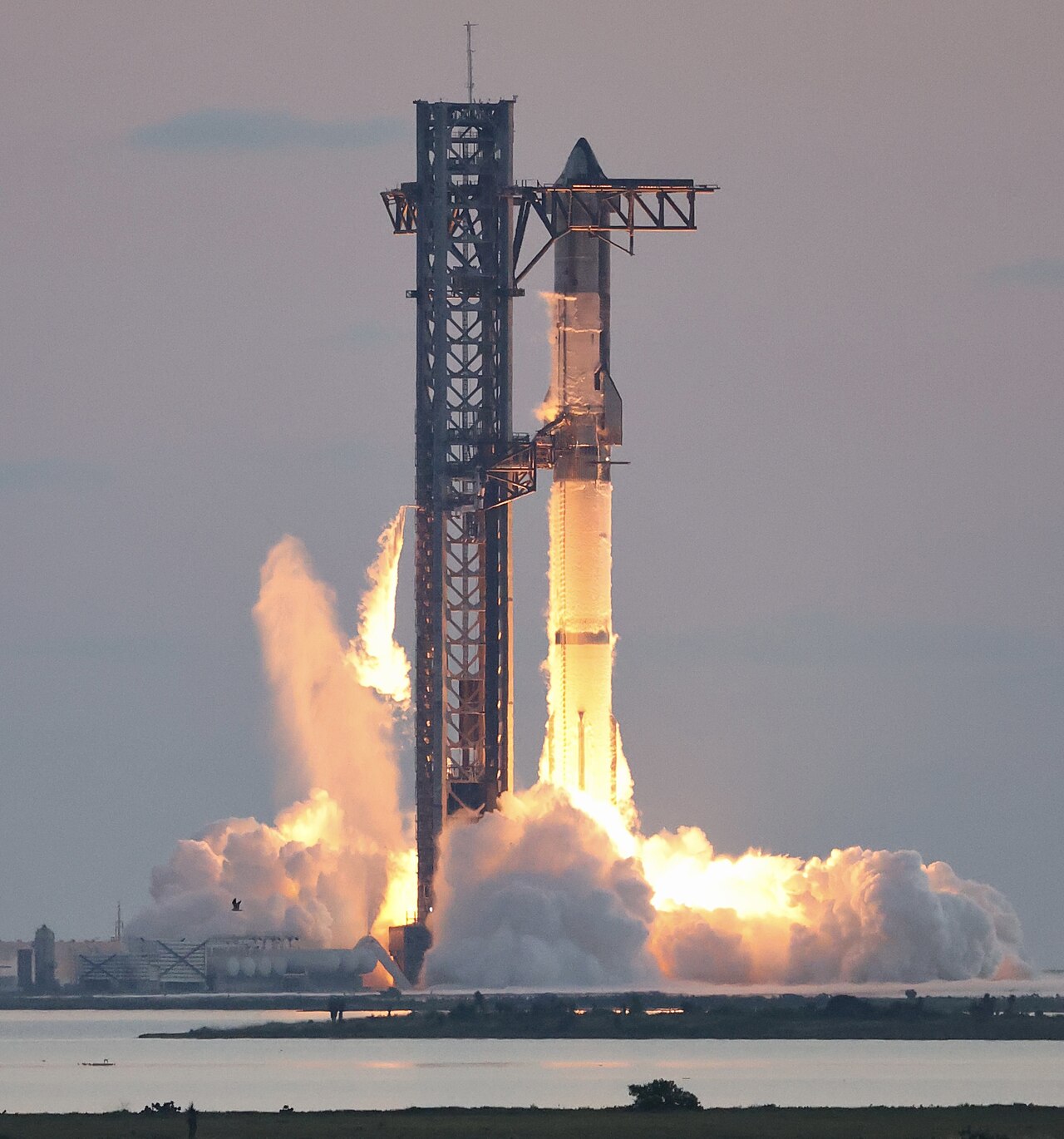
Header and in-body image: SpaceX Starship ignition during IFT-5, via Wikimedia Commons, licensed under CC BY 2.0. It depicts SpaceX's launch business, not its AI data centres.