SpaceX's AI unit held talks over the summer about leasing computing capacity to Microsoft, The Information reported on October 1, 2026, describing a company that has already lined up billions of dollars a month in commitments from compute-hungry AI labs. The report adds one more name to a list that would have seemed implausible a year ago. SpaceX AI compute leasing now spans Anthropic, Google, the open-model startup Reflection AI and an unnamed fourth customer, all renting capacity in the Memphis data centers that xAI originally built to train Grok. This piece verifies the reported figures against SpaceX's own filings, works through the arithmetic they imply, and sets the business against the neocloud market it has quietly joined.
 xAI
xAI Anthropic
 Google
 Microsoft
 NVIDIA
What has actually been reported and disclosed
The Microsoft talks are the softest item on the list. According to The Information's reporting as summarised by Tiger Brokers and MT Newswires, the discussions happened during the summer, and the story framed them as evidence that Elon Musk has embraced a "new cloud" business after initial resistance. No agreement has been reported. Separate coverage of the same story by Finimize, also citing The Information, says the unit aims to deploy about 420,000 Nvidia processors in November and to start a contract worth roughly $1.1 billion a month in December.
The signed contracts are far firmer, because most of them appear in securities filings:
- Anthropic. SpaceX's amended S-1 says that in May 2026 it signed Cloud Services Agreements giving Anthropic access to approximately 325,000 Nvidia GPUs across Colossus and Colossus II, for $1.25 billion per month through May 2029, with a reduced fee during a May and June ramp.
- Google. A free writing prospectus filed with the SEC says Google signed on June 5, 2026 for approximately 110,000 Nvidia GPUs at $920 million per month from October 2026 through June 2029, with capacity ramping through September at a reduced fee.
- Reflection AI. Quartz, via Yahoo Finance, reported a $150 million-a-month deal for Nvidia GB300 capacity in Colossus 2, running from July 1, 2026 through the end of 2029.
- An unnamed customer. CFO Bret Johnsen told the Goldman Sachs Communacopia conference that SpaceX had closed another hosting deal worth about $1.11 billion a month starting December 1, which he described as "another roughly $13 billion of ARR," according to Yahoo Finance.
The run-rate arithmetic
Monthly figures are easy to misread, so it helps to annualize them explicitly. Multiplying each fee by twelve:
- Anthropic: $1.25 billion x 12 = $15.0 billion a year
- Unnamed customer: $1.11 billion x 12 = $13.32 billion a year
- Google: $0.92 billion x 12 = $11.04 billion a year
- Reflection AI: $0.15 billion x 12 = $1.8 billion a year
Together the four contracts add up to $3.43 billion a month, or roughly $41.2 billion a year at full run rate. Anthropic and Google alone come to $2.17 billion a month, about $26 billion a year, which matches the figure Fortune cited in July. For scale, Fortune also reported that SpaceX's entire 2025 revenue was $18.7 billion, with the AI segment contributing $3.2 billion. On paper, the leasing book alone would be worth more than twice what the whole company earned last year.
SpaceX's compute contracts, annualized
Monthly fees multiplied by 12, in billions of US dollars, set against other large AI infrastructure deals and CoreWeave's full-year revenue guidance. Green bars are SpaceX contracts; grey bars are reference points.
Run-rate arithmetic only. SpaceX's contracts can be ended on 90 days' notice after their initial periods, so these figures are not guaranteed revenue. The Oracle figure is an average over a five-year contract that starts in 2027.
The filings already show the leasing business arriving in the income statement. SpaceX's second-quarter earnings release reported AI revenue of $2.56 billion, of which $2.19 billion came from "AI solutions and infrastructure," against $311 million in that line a year earlier. The company said its new agreements contributed $1.6 billion of incremental infrastructure revenue in the quarter and that the AI segment reached positive adjusted EBITDA of $1.1 billion, while AI capital spending was $15.8 billion. Our earlier breakdown of that quarter covers the capex side in detail.
The gap between headline value and contracted value
One line in the same release deserves more attention than it has received. SpaceX said its Cloud Services Agreements totaled $14.1 billion in contracted sales, a far smaller number than the roughly $45 billion implied by the Anthropic contract or the roughly $30 billion implied by Google's. The release does not explain the method. A plausible reading is that only the non-cancellable portion counts as contracted, which would be consistent with the termination terms, but that is an inference rather than a disclosure.
Those terms are what separate SpaceX from a conventional neocloud lease. The S-1 says the Anthropic agreements may be terminated by either party on 90 days' notice after an initial three-month period. Google's filing allows either side to exit on 90 days' notice after December 31, 2026. In May, Musk said publicly that SpaceX had agreed to only a six-month commitment and that "the short term was our request, not Anthropic's," adding that SpaceX might need capacity back "if compute gets super tight," Reuters reported. At the Goldman conference, Johnsen described the deals as structured with "90-day commitments and 90-day exit clauses," according to an Investing.com summary of the session.
SpaceX is selling multi-year prices on what are, contractually, rolling 90-day commitments.
Metir AI analysis
Anthropic's side of the ledger points the same way. Reuters reported on September 29, citing Anthropic's confidential IPO prospectus, that Anthropic has agreements to pay SpaceX up to $84.5 billion through 2029, that most of them can be cancelled with 90 days' notice, and that roughly 80% of Anthropic's at-least-$518 billion in total infrastructure commitments are non-cancellable. In other words, SpaceX is the flexible tranche in Anthropic's compute portfolio.
How it compares with CoreWeave, Oracle and Nebius
Measured by run rate, SpaceX is already a large neocloud. CoreWeave, the category's bellwether, guided to $12.4 billion to $13.2 billion of 2026 revenue and reported a $104 billion backlog at the end of June. Microsoft's 2025 agreement with Nebius was worth $17.4 billion over five years, about $3.5 billion a year. The outlier remains Oracle's contract with OpenAI, reported by the Wall Street Journal as roughly $300 billion over five years starting in 2027, about $60 billion a year.
The comparison flatters SpaceX on size and hurts it on duration. CoreWeave's backlog is built largely on multi-year take-or-pay contracts, and Oracle's deal is a five-year commitment. SpaceX's book is larger than CoreWeave's annual revenue on a monthly-fee basis, yet most of it can walk away on a quarter's notice. That is a different asset for a lender or an equity investor, even when the monthly figure is the same. It also differs from the multi-year capacity Anthropic has been buying elsewhere, such as its $45 billion agreement with Nscale.
Selling compute to Grok's competitors
The strangest part of the business is the customer list. Anthropic's Claude and Google's Gemini compete directly with Grok, and SpaceX's own filing notes that Grok-5 is being trained at Colossus II, the same site that hosts capacity for Anthropic and Reflection. Reporting such as Yahoo Finance's account of Bloomberg's coverage framed the original Anthropic lease of Colossus 1 as following setbacks in SpaceX's own AI efforts.
The S-1 offers the company's own framing: the structure "allows us to monetize a portion of the compute capacity in our infrastructure, while still permitting reallocation of that capacity for our own internal initiatives if needed in the future." Read that way, the short termination windows are not an oversight but the point. SpaceX keeps the option to pull capacity back for Grok, and rivals pay to keep that capacity busy in the meantime. The trade-off is that every GPU rented to a competitor is a GPU not training Grok, and a lab like Anthropic gets to scale on Musk's hardware while keeping its own exit door open.
A Microsoft deal would add another layer. Microsoft runs one of the largest clouds and is, per the same Reuters report, the counterparty to $31.4 billion of Anthropic's own compute commitments. Leasing from SpaceX would put Microsoft in the position of buying capacity from a company whose AI unit competes with Microsoft's own customers and partners.
What it means for the SpaceX story
For SpaceX as a public company, leasing changes what the AI segment is. Before May, it was a cost centre attached to a chatbot. Now it is a capacity business with identifiable customers, and Johnsen has said SpaceX is "on track" to reach $100 billion in annualized recurring revenue by year end. That target only works with the compute contracts included, which is why the Microsoft talks matter for the narrative even without a deal.
The counterweight is quality of revenue. Investors who value SpaceX on its leasing book are valuing contracts that both sides can end on 90 days' notice, concentrated in a handful of AI labs whose own spending depends on continued fundraising. Stocktwits noted that SPCX was down about 8% from its June IPO as of September 29, which suggests the market has not simply capitalised the run rate.
The risks worth watching
- Concentration. Two customers, Anthropic and Google, account for about $26 billion of the $41 billion annualized total. One exit would remove a large share of the book within a quarter.
- Power. TechCrunch reported in July that the Memphis-area sites run on 69 unpermitted gas turbines that will not all be removed until July 2027, with a permanent 41-turbine plant planned. Our Colossus 2 analysis covers why electricity, not chips, sets the ceiling.
- Delivery. Google's contract lets it terminate or take a pro rata fee cut if SpaceX did not deliver the committed GPUs by September 30, 2026. Whether that milestone was met has not been disclosed.
- Unknown terms. The Microsoft talks have no reported size, price or outcome, and the fourth customer remains unnamed.
Conclusion
The verified picture is narrower than the headlines but still notable. SpaceX has turned surplus Colossus capacity into roughly $3.4 billion a month of signed fees, which annualizes to more than double the company's 2025 revenue, and it has discussed adding Microsoft to a customer list that already includes two of Grok's main rivals. What it has not built is the long-dated, take-or-pay backlog that defines CoreWeave or Oracle. For teams building on these models, the episode is a reminder of how fluid compute supply has become: the same racks can serve Grok one quarter and Claude the next, which is part of why model-agnostic tools such as Metir avoid tying a workflow to any single lab's capacity. Whether SpaceX's book hardens into multi-year commitments, or stays a 90-day market, is the question the next few quarters will answer.
Sources:
- SpaceX's AI unit held talks over the summer about leasing computing capacity to Microsoft, reports The Information | Newsquawk
- The Information on X: SpaceXAI held talks with Microsoft about leasing computing capacity
- Sources: SpaceX's AI Unit Once Planned to Lease Computing Power from Microsoft | Tiger Brokers
- SpaceXAI Eyes Microsoft As Demand For AI Compute Grows | Finimize
- SpaceX Form S-1/A | SEC
- SpaceX Free Writing Prospectus on the Google Cloud Service Agreement | SEC
- SpaceX Reports Second Quarter 2026 Results (Form 8-K, Exhibit 99.1) | SEC
- SpaceX signs $6.3 billion compute deal with Reflection AI | Yahoo Finance (Quartz)
- SpaceX signs another AI computing deal, with $100 billion in ARR 'on track,' CFO says | Yahoo Finance
- SpaceX at Goldman Sachs Communacopia + Technology Conference 2026 | Investing.com
- Musk says SpaceX agreed only six-month Colossus AI lease to Anthropic | Reuters via Investing.com
- SPCX Stock Adds 3%: Anthropic's IPO Prospectus Reportedly Shows $84.5B To SpaceX In Compute Agreements | Stocktwits
- SpaceX is quietly building an AI compute business | Fortune
- SpaceX Rents Out Colossus 1 Data Centre To Anthropic After AI Setbacks: Report | Yahoo Finance
- CoreWeave Reports Strong Second Quarter 2026 Results | CoreWeave Investor Relations
- CoreWeave expects $12.4B-$13.2B of 2026 revenue | Seeking Alpha
- Microsoft to use Nebius GPU data centers, in deal worth $17.4bn over five years | DCD
- OpenAI reportedly on the hook for $300B Oracle Cloud bill | The Register
- SpaceX won't remove all of xAI's unpermitted turbines for another year | TechCrunch
Image credits
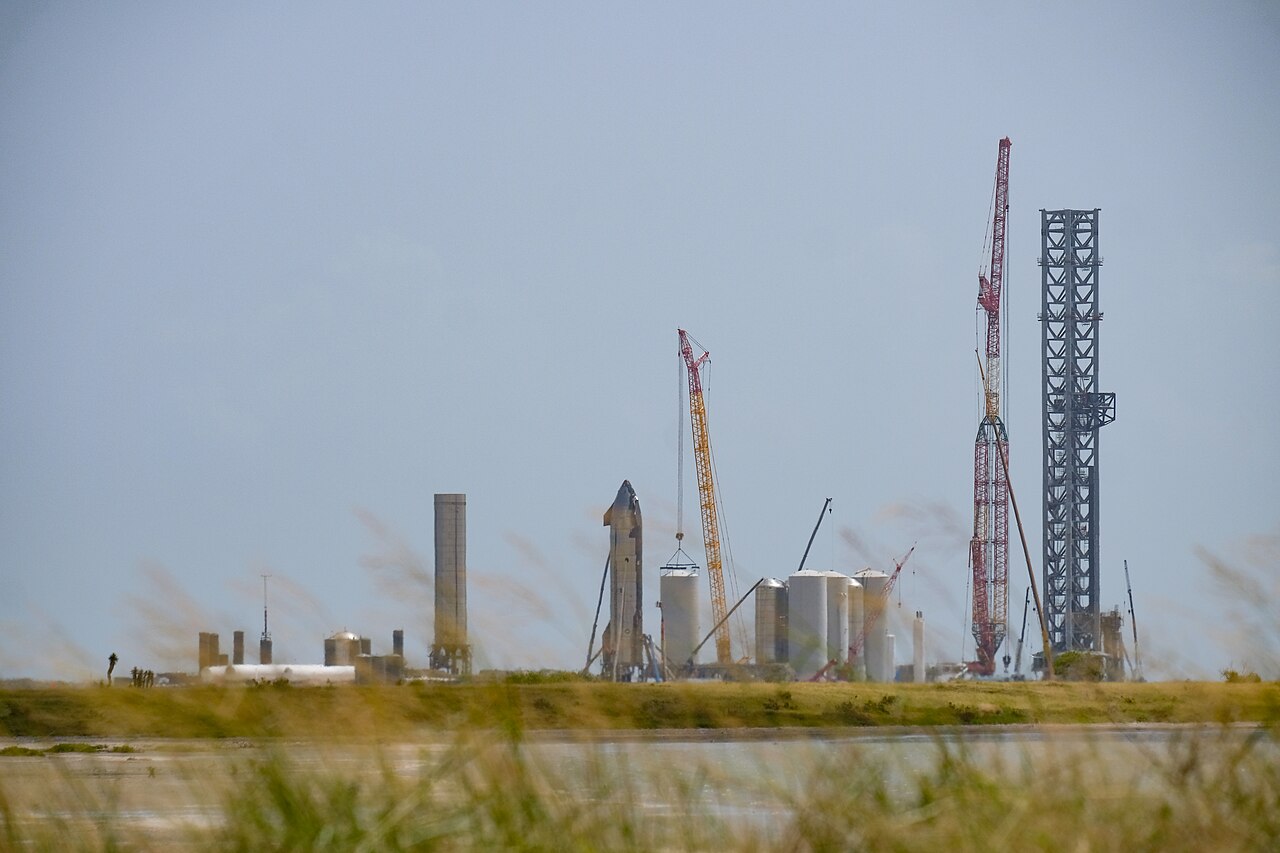
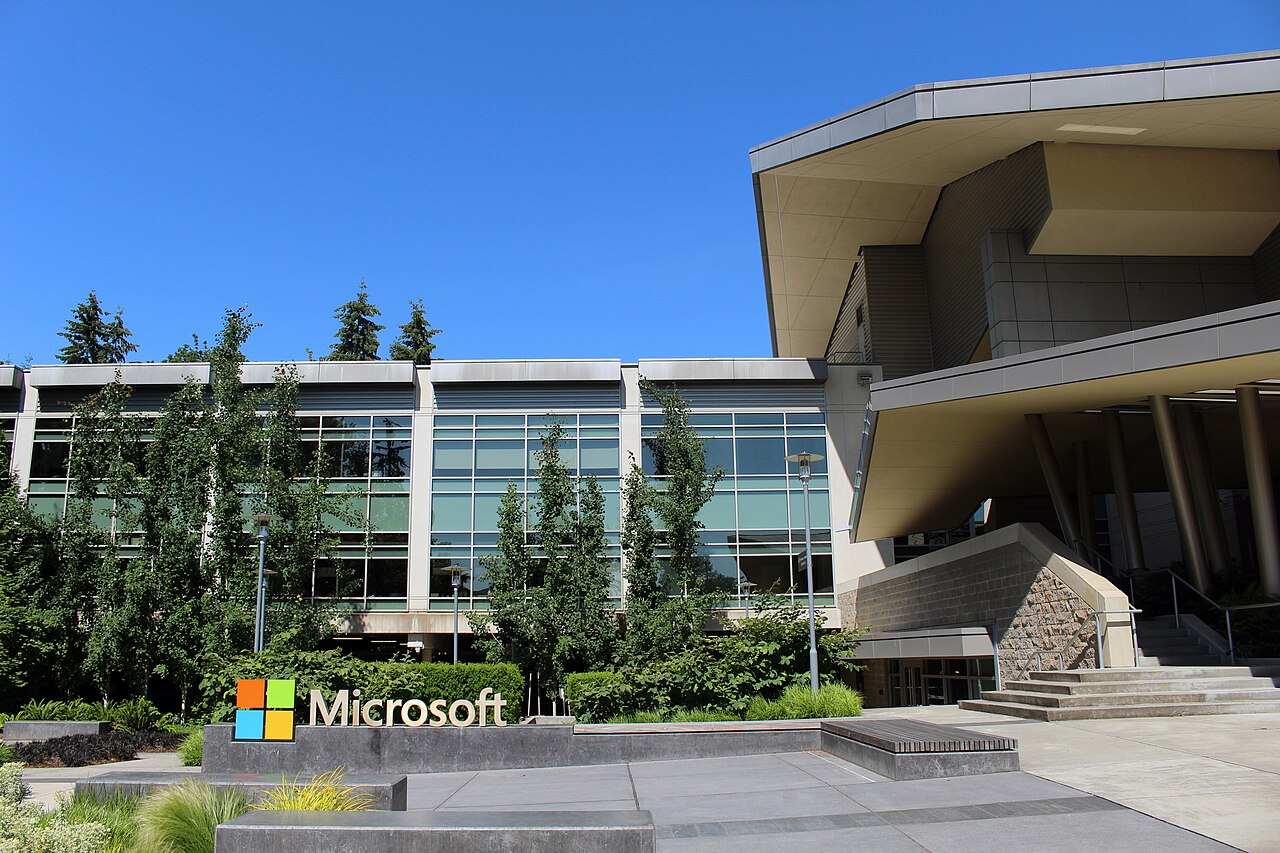
Header image: the SpaceX Starbase launch facility at Boca Chica, Texas, seen from across the bay in September 2021, by Lars Plougmann via Wikimedia Commons, licensed under CC BY-SA 2.0. It shows SpaceX's launch site, not the Colossus data centers in Memphis. In-body photograph of Building 92 at Microsoft's Redmond headquarters, taken in May 2016 by Coolcaesar, via Wikimedia Commons, licensed under CC BY-SA 4.0. Both images were reviewed before use.