In the first days of July 2026, two announcements landed within seventy-two hours of each other and, read together, explain a great deal about how the AI build-out is actually being paid for. Together AI raised an $800 million Series C at an $8.3 billion valuation. NVIDIA introduced a revenue-sharing program that lets cloud providers deploy its GPUs without carrying the full capital cost up front. Both are chapters in the same story: the rise of the "neocloud," and the increasingly circular financing that funds it.
This piece is an attempt to explain that financial architecture plainly and neutrally: what a neocloud is, how the money moves, why critics use the word "circular," and what the genuine risks and counterarguments are.
What a neocloud is
The hyperscalers, Amazon, Microsoft, Google, sold general-purpose cloud computing: storage, databases, web servers, a bit of everything. A neocloud is built for one thing. It exists to buy enormous quantities of AI accelerators, wire them into data centers, and rent that compute to the companies training and serving AI models. CoreWeave, Nebius, Together AI, Lambda and a growing list of others occupy this category.
The economics are brutal in both directions. Demand is real and enormous, but so is the capital required. A single large GPU cluster costs billions, and the chips depreciate on the timescale of a technology cycle rather than a mortgage. That combination, huge upfront cost against fast-moving hardware, is what has pushed neocloud financing into the unusual structures now drawing scrutiny.
Together AI and the open-model neocloud thesis
Together AI's raise is a clean example of investor conviction in the category. The $800 million round was led by Aramco Ventures, with NVIDIA among the participants, and lifted the company to an $8.3 billion valuation. Its pitch centers on serving open-weight models efficiently, and it reported annual bookings surpassing $1.15 billion in the second quarter of 2026.
That last figure is worth pausing on, because it separates Together from pure speculation: real, contracted revenue at meaningful scale. The bull case for neoclouds rests on exactly this, that AI compute demand is not hypothetical but already booked, and that specialised providers can serve it more cheaply and flexibly than general-purpose clouds. The question the skeptics ask is not whether the revenue is real. It is how the capacity behind it is financed.
NVIDIA's revenue-sharing model and the "flywheel"
On July 1, NVIDIA introduced a program that changes how neoclouds acquire chips. Rather than requiring providers to pay the full cost of GPUs up front, NVIDIA offers equity investment and credit support, and in return earns its hardware revenue plus a usage-linked royalty on the same capacity. Early commitments included partners such as Sharon AI and Firmus deploying on the order of 210,000 Grace Blackwell GPUs under the structure.
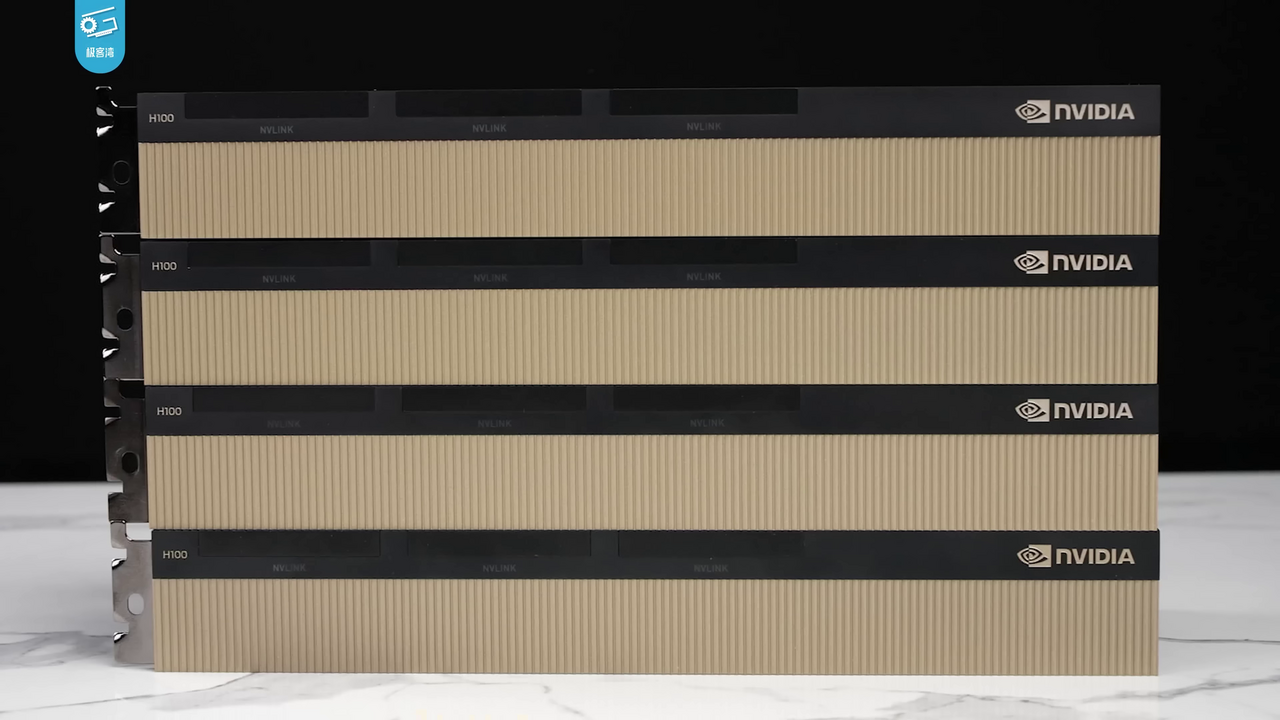
Supporters describe this as a flywheel. NVIDIA lowers the capital barrier for its customers, more capacity gets built, more AI workloads run on NVIDIA silicon, and NVIDIA captures value twice, once on the hardware sale and again on the ongoing usage. For a company sitting on enormous cash flow, deploying some of it to expand its own addressable market is a rational move, and it genuinely does help capital-constrained providers build faster.
Critics describe the same structure differently, and to see why, you have to follow the loop.
Why critics call it "circular"
How the money moves in a vendor-financed build-out
The same dollars can appear as a chipmaker's revenue, a neocloud's capex, and a customer's rental bill. Following the loop is the point of the diagram.
The structure raises real capacity fast. It also concentrates credit risk at the neocloud layer, where debt sits against hardware whose resale value depends on the boom continuing.
The concern is that money is moving in a circle among a small set of interdependent players, and that the same dollar can be recorded as revenue, capex and a rental bill at different points in the loop.
Consider the reported pattern. NVIDIA takes equity stakes in neoclouds, roughly $2 billion into CoreWeave in January 2026 and a parallel $2 billion into Nebius in March. Those neoclouds then combine that equity with large amounts of debt to buy NVIDIA's GPUs. The chips are rented to AI labs and hyperscalers, some of whom NVIDIA has also invested in. The chip vendor's investment helps fund the purchase of the chip vendor's product, whose usage then flows partly back to the chip vendor. Each leg is a normal commercial transaction. Stacked together, they can make aggregate demand look stronger than independent end-demand alone would produce.
The debt layer is where the risk concentrates. Reporting in July put CoreWeave's debt at around $24.9 billion against negative free cash flow, with more than $11 billion lent across neoclouds specifically to buy NVIDIA chips, including GPU-collateralised deals where the hardware itself secures the loan. The hyperscalers, meanwhile, use neocloud rental agreements to expand capacity while keeping the spend off their own cash-flow statements. Microsoft, for instance, has guided to roughly $190 billion of 2026 capital expenditure and separately signed tens of billions in neocloud agreements recognised as operating expenses over time. The capex has not disappeared. It has been transferred down the chain to the neocloud layer.
The risks, stated plainly
A neutral assessment names the specific hazards without predicting a collapse.
- Concentration. A large share of the industry's growth narrative depends on a handful of interlinked balance sheets. Stress at one node can propagate.
- Collateral quality. GPU-collateralised debt assumes the chips hold resale value. If a hardware generation obsoletes faster than expected, or demand softens, the collateral behind the loans weakens precisely when it would be called upon.
- The capex-to-revenue gap. Building capacity ahead of demand is normal in infrastructure. The risk is timing: if end-user AI revenue grows more slowly than the debt-funded buildout assumes, the layer holding the debt, the neoclouds, absorbs the shortfall first.
- Circularity flattering demand. When vendors finance their own customers, reported demand can partly reflect financing rather than pure independent buying, which makes the underlying signal harder to read.
The counterarguments, also plainly
The bear case is not the only case, and the bull case is more than hand-waving.
- The end demand is substantial and contracted. Bookings like Together AI's $1.15 billion, and the hyperscalers' willingness to sign multi-year commitments, reflect real workloads, not only financial engineering.
- Vendor financing is a well-worn playbook. Telecom and earlier computing build-outs used similar structures to accelerate infrastructure. It amplifies both upside and downside, but it is not novel or inherently fraudulent.
- Off-balance-sheet is not the same as hidden. Neocloud agreements are disclosed; moving capex into operating expense is an accounting choice with trade-offs, not a concealment.
- NVIDIA can afford it. Its investments are small relative to its cash generation, so its own solvency is not the question. The question sits with the leveraged players further down the chain.
Why this matters beyond finance
For anyone building on AI rather than investing in it, the practical relevance is indirect but real. The financing structure shapes the price, availability and stability of the compute that every model runs on. A healthy, competitive neocloud layer tends to push inference prices down, which is why model costs have fallen so sharply. A stressed one could do the opposite. Either way, the lesson for builders is to avoid deep dependence on any single provider whose economics they cannot see. Portability, the ability to move workloads across models and infrastructure, is a hedge against exactly the concentration risk this financing creates. Model-agnostic platforms such as Metir AI reflect that instinct at the application layer: treat compute and models as interchangeable inputs, not permanent commitments.
The takeaway
The neocloud boom is being financed by a tightly interlinked set of arrangements in which chipmakers invest in their customers, customers borrow against the chips they buy, and hyperscalers push capex down the chain. Together AI's $800 million raise shows the demand is real and the conviction is high. NVIDIA's revenue-sharing model shows how far vendors will go to keep the flywheel turning. Whether the structure reads as a rational accelerant or a concentration of risk depends largely on one variable that no one can yet observe: whether end-user AI revenue grows fast enough to service the debt built to produce it. The honest position, in July 2026, is that both readings remain open.
Build on infrastructure you are not locked into
When the economics of AI compute are this interlinked, flexibility is a form of insurance. Metir AI keeps your work portable across the leading models in one workspace, so a pricing shift or capacity crunch at any single provider never strands you. Try Metir AI free and keep your AI stack adaptable.
Sources:
- Neocloud Together AI raises $800M, leaps to $8.3B valuation | TechCrunch
- Why The Neocloud Gold Rush Is Now Vendor-Financed | Forbes
- NVIDIA Revenue-Sharing AI Cloud Debuts With 210,000 GPUs | TechTimes
- Nvidia, CoreWeave and Nebius: Inside the Circular Financing of the GPU Boom | io-fund
- Nvidia Circular Financing: $24.9B CoreWeave Debt | TechTimes
- Nvidia offers to take a cut of AI cloud revenue | Tom's Hardware
Image credits
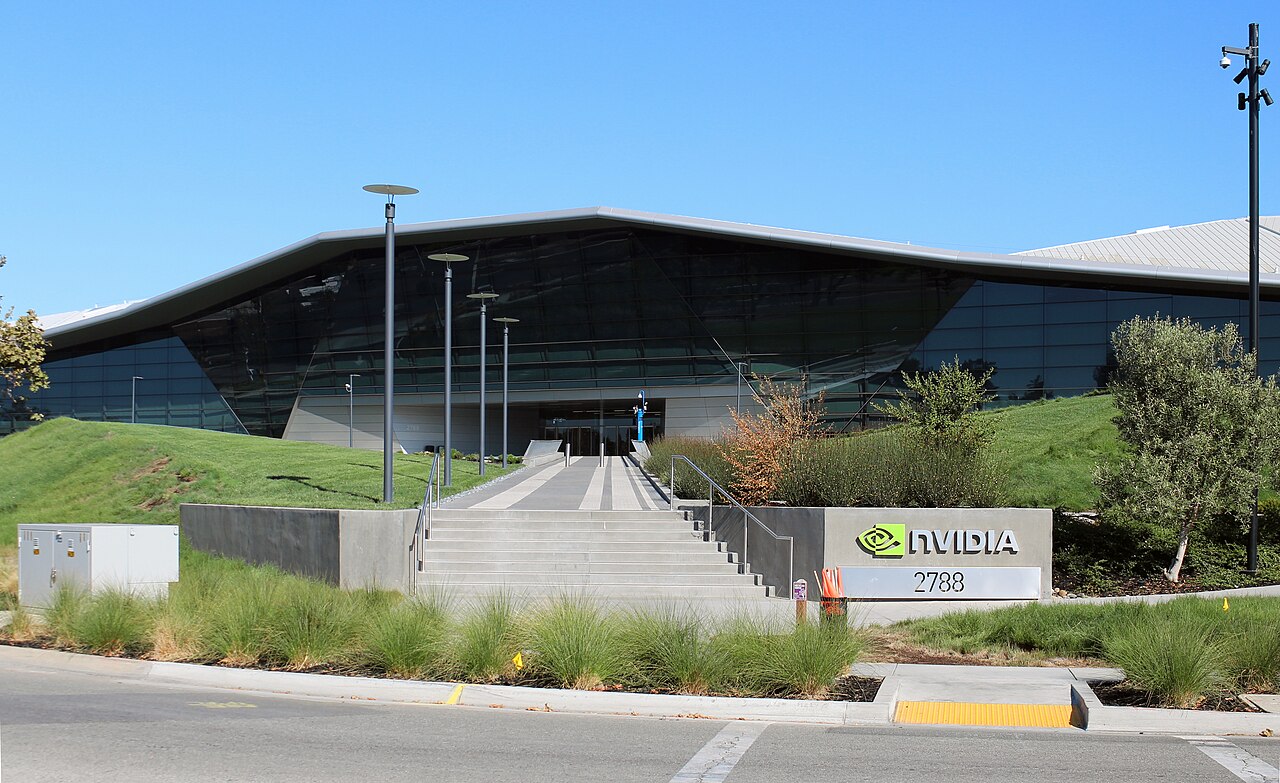
Header image: NVIDIA's corporate headquarters in Santa Clara, California, by Coolcaesar via Wikimedia Commons, licensed under CC BY-SA 4.0. In-body photograph of NVIDIA H100 accelerators by Geekerwan via Wikimedia Commons, licensed under CC BY 3.0.