Lambda, the Nvidia-backed GPU cloud provider, is raising up to $4 billion at a $14.5 billion pre-money valuation in what it reportedly views as its last private round before a planned 2027 IPO, according to a Wall Street Journal report relayed by TechCrunch on October 6, 2026. The Lambda $4 billion raise is led by Coatue Management and Blackstone, and the round had not been reported as closed at the time of writing. This article lays out the reported figures, how to read a valuation set against a backlog, why customer concentration is the central question, and what the path to a public listing looks like.
 NVIDIA
 Anthropic
 Microsoft
What was reported about the Lambda $4 billion raise
TechCrunch, summarising the Wall Street Journal, reports that Lambda is raising up to $4 billion at a $14.5 billion pre-money valuation, with Coatue and Blackstone leading. Pre-money means the valuation before the new money is added, so if the full $4 billion were raised, the implied post-money figure would be up to about $18.5 billion. That sum is our arithmetic, not a reported number, and "up to" means the final amount could be smaller.
The same reporting says Lambda's backlog, meaning contracted but not yet recognised revenue, grew from $15 billion in June to $50 billion in September. Yahoo Finance's summary attributes most of that jump to a roughly $35 billion cloud services contract with Anthropic. The valuation is also a step up from earlier reporting: in late August, Bloomberg reported Lambda was weighing a round of up to $3 billion at a valuation of $12 billion or more, as summarised by Runtime Wire. Comparing the two headlines, the valuation figure moved by about $2.5 billion in roughly six weeks, though the two reports may not describe the same terms.
Lambda has not, in the sources reviewed, published its revenue for 2026, and we did not find a verified revenue figure, so this article does not estimate one. That matters for the analysis below: the only scale measure available is the backlog.
Reading a valuation against a backlog
Backlog is a promise, not income. A cloud provider signs a multi-year contract, then has to buy GPUs, secure power and build or lease data halls before it can bill. Until that capacity is energised, the backlog sits on the order book. Investors therefore tend to look at how much valuation they are paying per dollar of contracted revenue, while remembering that the revenue arrives over years and must be delivered at a cost.
Valuation as a multiple of contracted backlog
Dollars of valuation per dollar of backlog. The inputs are dated differently, so treat this as a rough yardstick rather than a ranking.
Sources: TechCrunch and Yahoo Finance (Oct 6, 2026); Investing.com CoreWeave Q2 2026 slides summary. Ratios are our own arithmetic. Hover a bar for details.
On the reported figures, $14.5 billion against a $50 billion backlog is about 0.29 times, and about 0.37 times on the implied $18.5 billion post-money. For a loose reference, CoreWeave's market capitalisation was about $48 billion in after-hours trading following its second-quarter results, per Investing.com, against a $104.2 billion backlog at June 30, giving about 0.46 times. We covered those results in our CoreWeave Q2 2026 analysis.
Three cautions apply. First, the inputs are not contemporaneous: CoreWeave's market value is a mid-August trading price and moves daily, while Lambda's is a negotiated private price. Second, a lower ratio is not automatically "cheaper", because it depends on contract quality, margins, the debt needed to build, and how quickly capacity goes live. Third, we did not find a sourced current market value for Nebius, so we leave it out; its roughly $40 billion contracted backlog is discussed in our Nebius analysis. Private rounds also carry preferences and structure that a headline valuation hides.
A backlog tells you what customers have promised to pay. It does not tell you what it costs to deliver, or whether the promise survives a change in the customer's own plans.
Metir AI analysis
Customer concentration: how much of the $50 billion is one contract
The reported numbers allow a simple calculation. If Anthropic's commitment is about $35 billion of a $50 billion backlog, it is roughly 70 percent of the total, and the remainder is about $15 billion. Reporting does not itemise that remainder or confirm exactly how the June figure was composed, so the 70 percent is an approximation built from two rounded headline numbers.
Lambda backlog: June vs September 2026
Reported backlog in billions of dollars. The September remainder (about $15B) is our subtraction of the $35B Anthropic commitment from the $50B total.
Sources: TechCrunch (Oct 6, 2026), citing the Wall Street Journal; Yahoo Finance. Hover a bar for values.
Concentration cuts two ways. On one side, a six-year contract with a frontier lab is a strong anchor. As we detailed in our analysis of the Anthropic deal, the capacity is a 350 megawatt build at Hut 8's Texas campus where Nvidia holds the lease, and $35 billion over six years works out to about $5.8 billion a year at an even pace, which is our arithmetic. Long contracts for specific hardware give lenders something to underwrite.
On the other side, one customer carrying most of the backlog means Lambda's outcome depends on that customer's ability to keep paying, its willingness to keep expanding, and its own financing. The Yahoo Finance summary notes the contract involves Nvidia hardware at a Texas facility operated by Hut 8, so delivery also depends on a third party completing the site. TechCrunch frames the issue directly, saying the startup's success hinges partly on maintaining high-value customer relationships and securing affordable debt. Concentration is not unique to Lambda: CoreWeave's backlog, as covered in our earlier piece, also traces to a small number of very large contracts.
How the capital stack fits together
The equity raise sits on top of a growing debt layer. Lambda took a $1 billion senior secured credit facility in May 2026, priced a $926 million Term Loan B in August, and closed roughly $1 billion of private short-dated debt on August 28 to buy chips Microsoft will lease, as we explained in our Lambda debt analysis. Debt funds specific GPU batches tied to specific customers; equity funds the wider build, the balance sheet and the cushion lenders want to see.
For an IPO candidate, that mix is what public investors will examine. Debt-financed hardware depreciates, interest accrues before capacity earns revenue, and each new facility must be financed again. The broader pattern of chipmaker investment, vendor financing and customer commitments is covered in our neocloud vendor-financing analysis. Nvidia's role as supplier and investor in Lambda is part of that picture.
The IPO pathway: what changes between now and 2027
According to investor communications cited by Yahoo Finance, Lambda targets a public debut in 2027, contingent on execution and market conditions. The company has also reshaped its leadership for that goal. Michel Combes, formerly of SoftBank International and Sprint, became CEO in May 2026, co-founder Stephen Balaban moved to chief technology officer, John Donovan, formerly of AT&T, joined the board, and Charles Fisher of Charter Communications became CFO.
Several things typically have to happen before a listing, and which ones Lambda completes is not yet known:
- Closing the round. The figure is "up to $4 billion" and still reported as in progress.
- Turning backlog into revenue. Public investors will want to see capacity energised on schedule, particularly the Texas build.
- Audited financials. Lambda is private, and the reporting we reviewed gives no audited revenue or profit figures.
- A funded plan for the rest of the build. Lambda has said it aims to manage 3 gigawatts of AI compute by 2030, per Runtime Wire, which implies repeated financing.
- A receptive market. Lambda would list alongside CoreWeave and Nebius, both already public, so their trading will shape how investors price a third pure-play neocloud.
What to watch next
- Whether the round closes at the reported size and valuation, and who joins Coatue and Blackstone.
- Disclosure of Lambda's revenue and how much of the backlog comes from customers other than Anthropic.
- Energisation dates for the Texas capacity, since delivery converts backlog into billable revenue.
- Whether further multi-billion contracts diversify the customer base before a filing.
- How CoreWeave and Nebius trade, since public comparables set the reference for a 2027 pricing.
For teams building on AI models, the practical takeaway is that the compute layer beneath model providers is financed by a small number of large commitments. Keeping the application layer flexible across model vendors, as a model-agnostic workspace like Metir does, limits exposure to any single supplier's financing story.
Sources:
- AI computing startup Lambda to raise $4B ahead of planned IPO | TechCrunch
- Nvidia-Backed Cloud Computing Firm Lambda Looks To Raise $4B In Final Round Ahead Of IPO | Yahoo Finance
- Lambda is raising up to $4B ahead of a planned 2027 IPO | Runtime Wire
- Lambda weighs up to $3B round at $12B-plus valuation before possible 2027 IPO | Runtime Wire
- CoreWeave Q2 2026 slides: revenue doubles, backlog surges 246% | Investing.com
Image credits
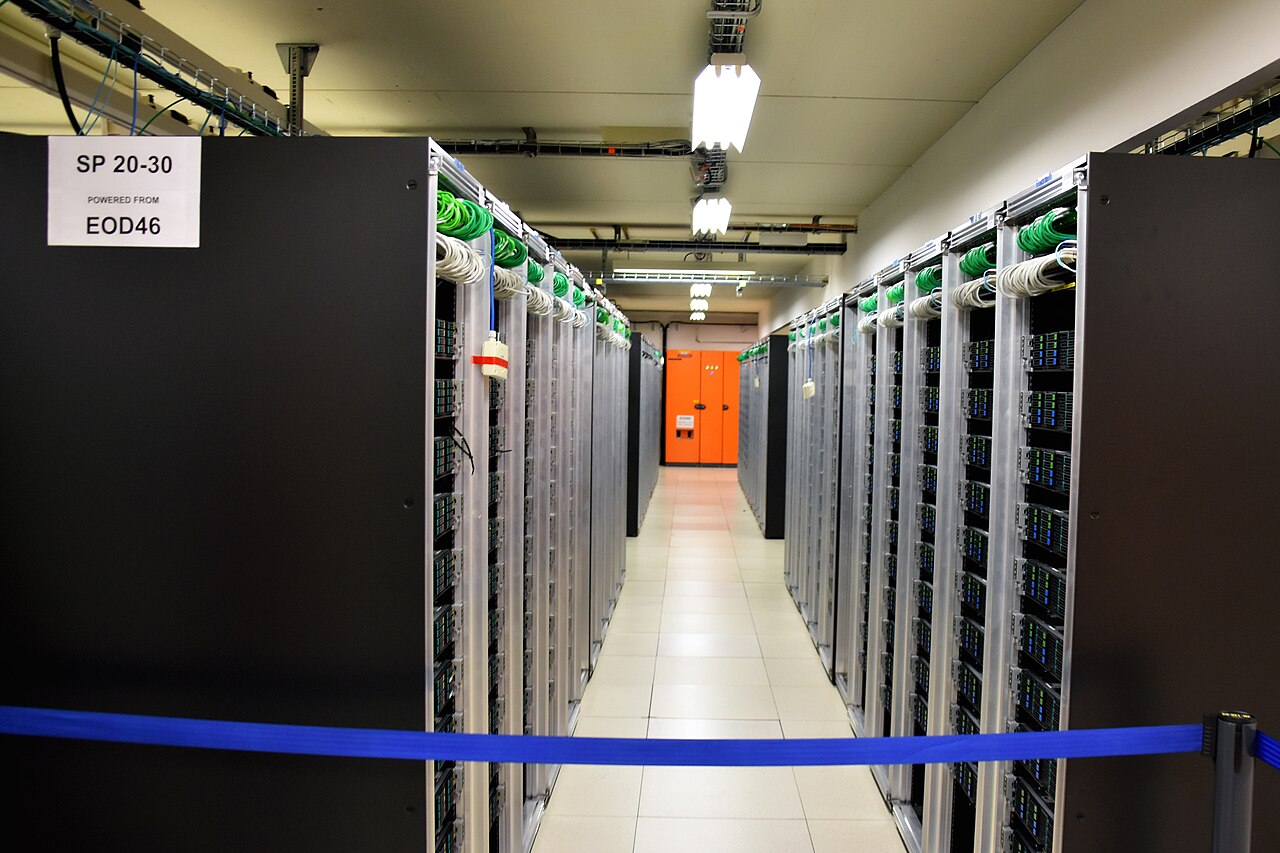
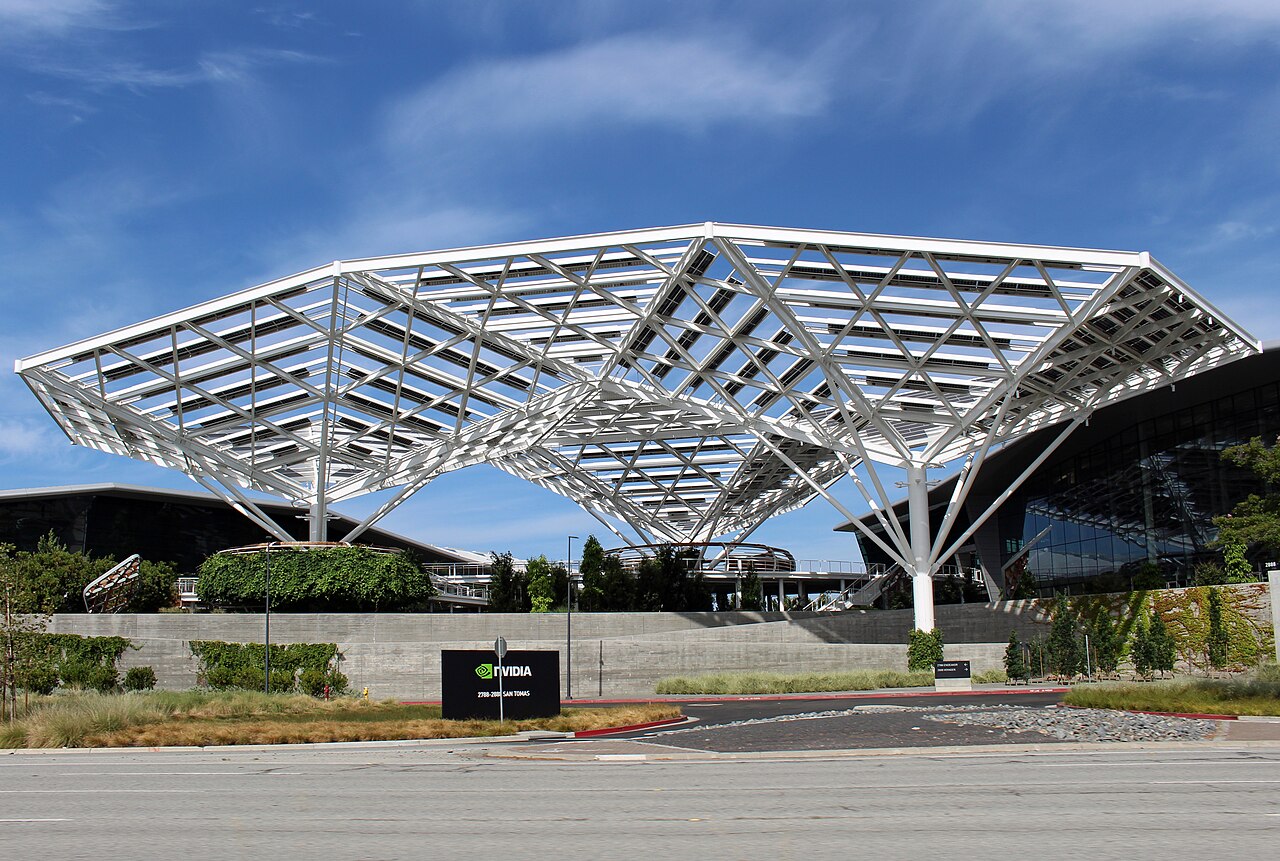
Header image: an aisle of server racks in the CERN Computer Centre, by SimonWaldherr via Wikimedia Commons, licensed under CC BY-SA 4.0. It is a generic research data centre and not a Lambda, Anthropic or Hut 8 facility. In-body photograph: Nvidia's Santa Clara headquarters, by Coolcaesar via Wikimedia Commons, licensed under CC BY-SA 4.0.