On August 28, 2026, the AI cloud provider Lambda closed roughly $1 billion in private, short-dated debt, arranged by JPMorgan Chase and marketed to private-placement investors. The proceeds buy Nvidia GPUs. The GPUs will be leased by Microsoft. It was Lambda's second billion-dollar-scale debt raise inside a month, and together the two deals are a clean, current example of the financing playbook now underwriting a large share of the AI buildout.
 NVIDIA
 Microsoft
What happened on August 28
Lambda, an Nvidia-backed AI cloud provider, secured about $1 billion in private debt to fund the purchase of Nvidia chips that Microsoft will lease. JPMorgan arranged the transaction, and the debt was placed privately with institutional investors rather than sold in a public bond market. The financing is described as short-dated: Lambda expects to deploy the hardware and start generating lease revenue quickly enough to repay the debt on a fast timeline, rather than amortizing it over the multi-year life typical of infrastructure debt.
The structural detail that matters most is who is actually being underwritten. Lenders are not primarily betting on Lambda's own balance sheet. They are lending against the reliability of Microsoft's lease payments for compute capacity Microsoft has agreed to take. That shifts the credit risk in the deal from a five-year-old private company to one of the world's largest, best-rated corporations, which is what makes debt at this speed and scale possible in the first place.
The second billion in a month
The August 28 deal did not happen in isolation. On August 12, Lambda priced a separate $926 million senior secured Term Loan B, earmarked to fund GPU deployment for what the company described as a committed, investment-grade "offtaker," the customer contracted to take the compute once it is live. Lambda's own announcement called it the first broadly syndicated, investment-grade-rated Term Loan B completed by a private neocloud, and Moody's assigned the facility a Baa2 rating. Morgan Stanley led the arrangement as bookrunner and administrative agent, with MUFG as joint bookrunner and Citizens Bank, Crédit Agricole and Wells Fargo as documentation agents. The loan matures at the end of 2030 and priced at SOFR plus 3.00%.
Both deals build on a $1 billion senior secured credit facility Lambda closed in May 2026, and both landed while Lambda is reportedly in talks to raise as much as $3 billion in a broader round ahead of a possible IPO. Read together, the sequence shows a company financing GPU purchases in successive, targeted tranches, each one sized to a specific batch of hardware and a specific customer commitment, rather than raising one large pool of capital up front.
Lenders are underwriting Microsoft's willingness to keep paying for compute, not Lambda's standalone business.
Reading on the structure of the August financing
What a neocloud is, and what these terms mean
A "neocloud" is a cloud provider built for one purpose: buying large volumes of AI accelerators, wiring them into data centers, and renting that capacity to companies that train or serve AI models. Lambda, CoreWeave, Nebius and Crusoe are the most frequently cited examples. Unlike Amazon, Microsoft or Google's general-purpose clouds, a neocloud's entire balance sheet is exposed to one asset class: GPUs that cost billions of dollars per cluster and that a new hardware generation can make less valuable within a few years.
Financing this is an unusual problem. Traditional infrastructure debt is priced for buildings and pipelines that hold their value for decades. GPUs do not. Two structures have emerged to bridge that gap, and both appear in Lambda's August financings:
- An offtaker is the customer who has committed, contractually, to take the compute once it is built. In these deals, that offtaker is Microsoft. A lease from an investment-grade offtaker gives lenders a predictable revenue stream to underwrite, which is what turns a purchase of depreciating hardware into something a bank will lend against on reasonable terms.
- Asset-backed, GPU-collateralized debt is debt secured by the chips themselves rather than by the borrower's general creditworthiness. If Lambda cannot repay, the GPUs are the collateral lenders can claim. That only works if the chips retain resale or re-lease value, which is precisely the assumption obsolescence puts under pressure.
There is also a vendor-financing layer worth naming. Nvidia has invested in Lambda and other neoclouds while also selling them the chips those investments help fund, and those chips are then leased to hyperscalers Nvidia has separately invested in. Each individual transaction in that chain is ordinary, but stacked together they raise the "circularity" question that has followed neocloud financing all year: whether the same dollar of demand is effectively being counted more than once as it moves between a chipmaker, its customers and its investments in those customers. Lambda's August deals do not resolve that question either way; they are simply the newest instance of it, with Microsoft rather than Nvidia sitting at the customer end of this particular pair of transactions.
Why an investment-grade offtaker changes the math
The reason Lambda could raise roughly $2 billion in secured and unsecured-adjacent debt inside a single month, on top of a $1 billion facility from three months earlier, comes down to whose name is effectively backing the paper. A lender evaluating a loan to a five-year-old, privately held GPU cloud with no long public credit history faces real uncertainty about repayment. A lender evaluating a loan secured by GPUs under a multi-year lease to Microsoft is evaluating a very different, much more familiar risk: whether Microsoft keeps paying its bills.
This is the same mechanism that let Amsterdam-based Nebius raise roughly $775 million against its own GPUs using a five-year, $19.4 billion Microsoft contract as the anchor, and it is part of a broader pattern in which more than $400 billion of AI-related debt has reportedly been raised globally in 2026. Hyperscalers gain compute capacity without adding it to their own balance sheets as capital expenditure; neoclouds gain access to debt priced closer to investment-grade rates than their standalone credit would otherwise justify; and lenders gain a security package that references a company far larger and more stable than the actual borrower. Whether that is a durable innovation or a structure that just moves risk to where it is least visible is the open question regulators, including the European Central Bank and the Bank for International Settlements, have started asking about opaque private-credit valuations and concentrated exposure to a small number of US technology issuers.
Two readings, held together
The confidence-signal reading. JPMorgan, Morgan Stanley and a syndicate of banks priced and placed roughly $2 billion of debt against Lambda's GPU purchases inside a month, and Moody's put an investment-grade rating on part of it. Sophisticated credit investors do not extend that scale of financing on hope; they underwrite a lease they believe Microsoft will honor and collateral they believe holds value. Real, contracted hyperscaler demand for GPU capacity is the thing making this financing possible at all, and it argues that end-user AI compute demand remains large enough that lenders are comfortable financing more of it, faster.
The concentration and leverage reading. The debt is short-dated, which limits Lambda's exposure to any single tranche but also means the company is repeatedly returning to credit markets to fund each new batch of hardware, a pattern that assumes those markets stay open on similar terms. The collateral is GPUs, an asset class with a shortening useful life as Nvidia ships new architectures roughly annually; a downturn in demand or an unexpectedly fast depreciation curve would weaken the collateral precisely when a lender might need to rely on it. And the credit quality of the whole structure rests on one counterparty, Microsoft, continuing to want and pay for this specific capacity for the life of the lease. A large and growing share of neocloud debt now traces back to the same handful of hyperscaler names as the ultimate backstop.
Both of these are true descriptions of the same transaction. Nothing about the August 28 deal resolves which one dominates; it simply adds another data point to a financing pattern that is scaling faster than the market's ability to say for certain how it ends.
What it means for AI compute supply and pricing
For builders one layer up from the infrastructure, financing structures like this determine how quickly GPU supply comes online and at what implied cost. Debt-funded neocloud capacity, priced against an offtaker's credit rather than the neocloud's own, tends to bring compute online faster and can put downward pressure on rental prices once that capacity is live, because the neocloud has less need to price in its own credit risk. It also means the price and availability of compute a product depends on today can shift with the health of a lease, a credit market, or a single hyperscaler's capital plans, rather than with underlying AI demand alone.
That is a reasonable argument for not wiring a product tightly to any single provider's infrastructure economics at a single point in time. The compute layer underneath every AI product, who owns the chips, who leases them, and at what implied cost, keeps being renegotiated in cycles measured in months rather than years. Platforms that route across model providers rather than committing to one, the way Metir AI works across models from OpenAI, Anthropic, Google and xAI, keep the option to follow that economics as it moves instead of inheriting the risk of whichever vendor's financing structure happens to be under the most strain at any given time.
The takeaway
Lambda's August 28 raise is not a story about one company; it is a clear look at how a growing share of the AI buildout is being paid for. A neocloud borrows against GPUs it has not yet deployed, secured by a lease from a hyperscaler with investment-grade credit, arranged by major banks and placed with institutional lenders who are, in substance, underwriting the hyperscaler rather than the neocloud. That structure has now repeated across Lambda, CoreWeave and Nebius, among others, at a combined scale approaching a meaningful share of the more than $400 billion in AI-related debt raised globally this year. Whether it represents lenders correctly pricing durable demand, or risk migrating into a less visible corner of the credit market, is a question the deals themselves do not answer. What they do show, plainly, is the mechanism: Nvidia sells the chips, a neocloud borrows to buy them, and a hyperscaler's name on a lease is what makes the borrowing possible.
Sources:
- Neocloud Lambda secures $1B in debt to buy more chips | TechCrunch
- Nvidia-backed Lambda inks $1 billion private debt deal to buy chips leased by Microsoft | Yahoo Finance
- Lambda Closes $926 Million Senior Secured Term Loan B Facility | Lambda
- Lambda raises $926m senior secured loan facility | Data Center Dynamics
- Lambda's $1bn private debt deal for a Microsoft lease, and how Nebius compares | TNW
Image credits
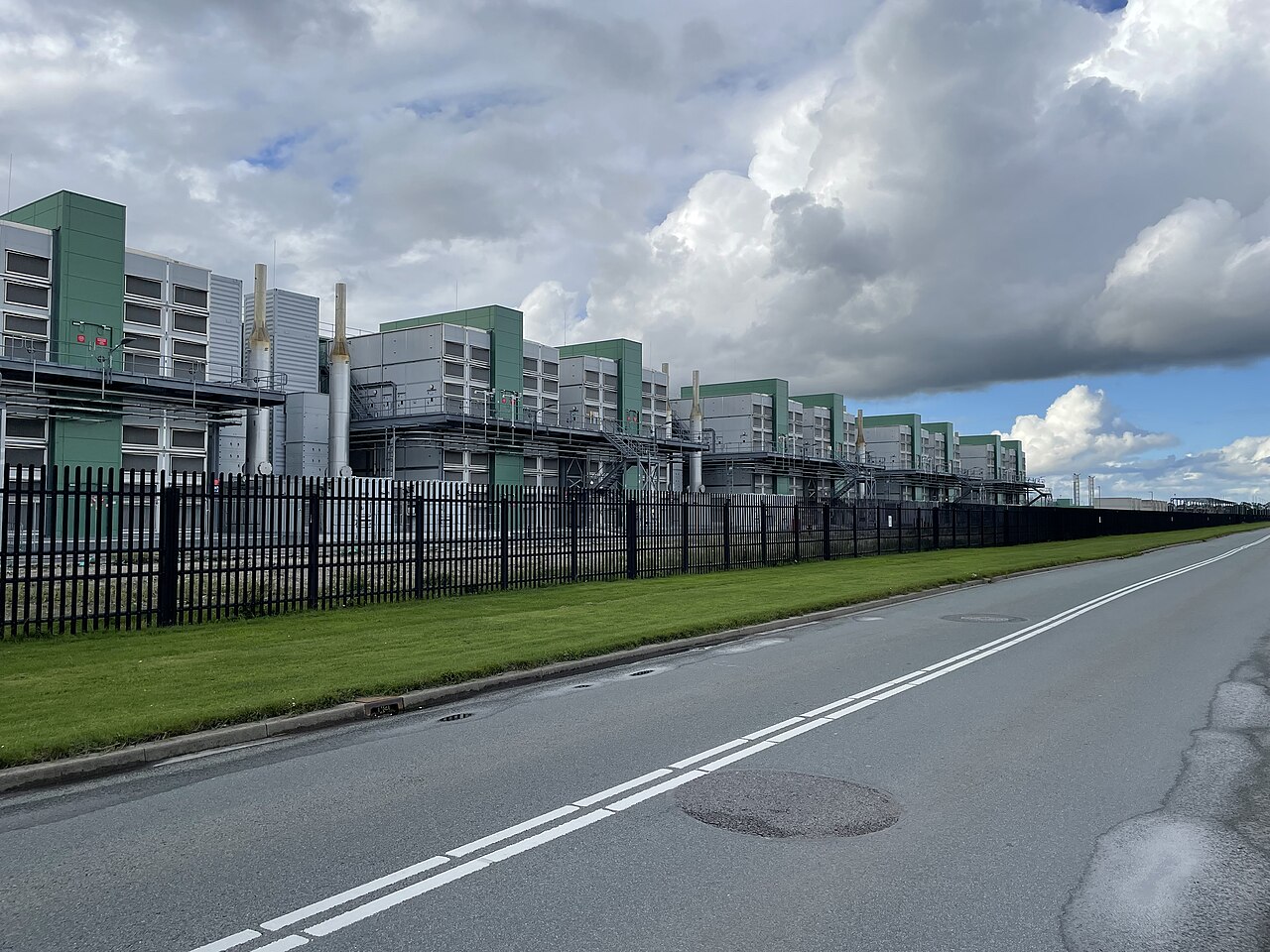
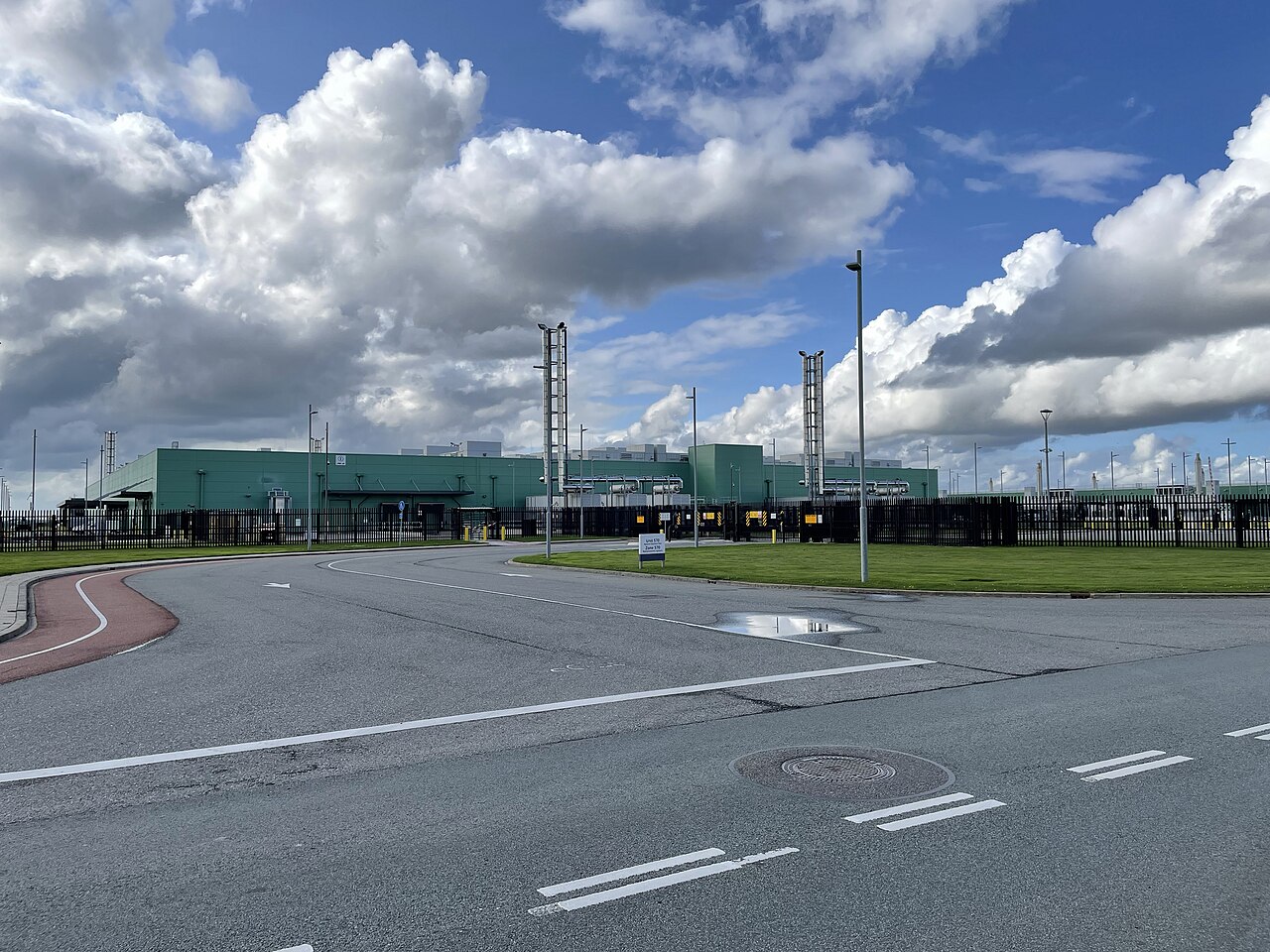
Header image and in-body photograph: Microsoft data center campus in Middenmeer, the Netherlands, via Wikimedia Commons (image 1, image 2), licensed under CC BY 4.0. These photographs show Microsoft's own data center infrastructure and not the specific facility housing the Lambda-operated GPUs discussed in this post; no photograph of that capacity is publicly available. They illustrate Microsoft's role as the lease counterparty that underpins the financing described above.