
In late July 2026, Nebius Group validated the first Nvidia Vera Rubin NVL72 rack at its data center in Finland, days after Nvidia took a stake in the company. It then set August 12 for its second-quarter earnings. The two events belong together. Bringing Nvidia's newest rack-scale system online is the supply side of Nebius's story, the ability to deliver frontier compute. The earnings report is the demand side, the test of whether the roughly $40 billion in contracted GPU revenue the company reports can start converting into recognized revenue on a believable schedule. For a European neocloud that has bet its future on being the continent's AI-infrastructure provider, the distance between those two numbers is the whole investment case.
 NVIDIA
 Meta
MetaWhat "validating a Vera Rubin NVL72 rack" means
The milestone is more than a press-release checkbox. The Vera Rubin NVL72 is Nvidia's current flagship rack-scale system: 72 Rubin GPUs paired with 36 Vera CPUs, interconnected at 260 terabytes per second, with per-GPU memory bandwidth of about 22 terabytes per second, which Nvidia puts at roughly 2.75 times its previous Blackwell generation. Rubin entered full production earlier in 2026, with volume shipments targeted for the second half of the year, so being among the first operators to validate a live rack is a genuine timing advantage. In a market where the binding constraint is access to the newest, most efficient accelerators, getting Rubin running and revenue-producing ahead of competitors is exactly the edge a neocloud is trying to buy.
Validation specifically signals readiness to sell. It is the step between hardware arriving and hardware earning, and it is why Nebius scheduled the announcement close to earnings: it is evidence that the capacity underpinning its contracts is real and coming online, not a slide in a roadmap.
Bringing Rubin online is the supply side. The August 12 report is the demand side.
On why the two announcements belong together
The $40 billion question
Here is the tension at the center of the story. Nebius reports roughly $40 billion in contracted GPU revenue, a backlog large enough to rival companies many times its current size. Analysts, meanwhile, model about $583 million of revenue for the June quarter. Annualize that single-quarter figure and you get a run-rate near $2.3 billion. The backlog is therefore on the order of seventeen times the company's annual revenue run-rate.
The backlog is large. Converting it is the test.
Nebius reports roughly $40 billion in contracted GPU revenue. Analysts model about $583 million of revenue for the June quarter, an annualized run-rate near $2.3 billion. The distance between the two is what the August 12 earnings call has to start closing.
Backlog is company-disclosed contracted revenue; the run-rate annualizes the analyst consensus for a single quarter and is not company guidance.
That gap is not automatically a problem. It is the normal shape of an infrastructure business that signs multi-year contracts before the capacity to fulfill them is built. A backlog is a promise of future revenue, and a large one signals that customers, including a $12 billion capacity tranche tied to Meta, want what Nebius is building. But a backlog is only worth its face value if it converts, on time, into delivered compute and recognized revenue. The risk is execution: data centers have to be built and energized, chips have to arrive, and customers have to actually consume the capacity they reserved. Until that conversion shows up in reported numbers, the backlog is a projection, and the market prices projections with a discount that shrinks only as they turn real.
Why August 12 is the real event
The earnings date matters more than the rack validation because it is where the backlog meets reality. Investors will be reading the report for a specific set of signals: how fast contracted backlog is converting into recognized revenue, a concrete timeline for commercializing Vera Rubin capacity, and evidence that capital expenditure is being executed on schedule rather than slipping. A strong print would show the conversion beginning, narrowing the credibility gap between a $40 billion backlog and a sub-$1 billion quarter. A weak or delayed one would widen it and raise the question every neocloud faces this year, whether paper contracts can become cash before the capital needed to fulfill them runs short.
The Nvidia stake taken shortly before the milestone adds a familiar wrinkle. As with several 2026 infrastructure arrangements, the chip supplier now holds equity in a customer that buys its chips, the same overlap that draws circular-financing scrutiny elsewhere in the sector. It is not evidence of anything improper, but it is one more reason to watch whether demand at Nebius is standing on its own or being helped along by its principal supplier's balance sheet.
Reading it in context
Nebius sits inside a broader 2026 pattern: a cohort of neoclouds racing to deploy the newest Nvidia hardware, financed by enormous contracted backlogs, all facing the same eventual reckoning over whether those backlogs convert into durable free cash flow. Some will convert cleanly and grow into their valuations. Others will find that building and energizing capacity at this pace, against contracts signed years before delivery, is harder and more capital-hungry than the backlog headline suggests. The Vera Rubin validation puts Nebius on the favorable side of the supply question. The August 12 report is the first real check on the demand-conversion question, and the two together are why this particular neocloud is worth watching right now.
For companies that consume AI compute rather than provide it, the sector's shape carries a practical lesson about concentration. Contracted capacity is only as reliable as the provider fulfilling it, and a workload pinned to a single neocloud inherits that provider's execution and financing risk. Keeping infrastructure choices flexible across providers, and applications portable across the models that run on them, the model-agnostic posture Metir AI favors, is one way to avoid betting a business on any single backlog converting on schedule.
The takeaway
What is verifiable is clear: Nebius validated Nvidia's first Vera Rubin NVL72 rack in Finland, reports roughly $40 billion in contracted GPU revenue, and will report second-quarter results on August 12 against an analyst consensus near $583 million. The hardware milestone answers the supply question in Nebius's favor. The far larger question, whether a $40 billion backlog converts into recognized revenue on a schedule that justifies the build-out, is what the earnings call will begin, but not finish, answering. Watch the conversion rate, not the backlog headline.
Sources:
- Nebius Locks In Aug. 12 Earnings Date After Vera Rubin Rack Goes Live in Finland | TechTimes
- Nebius validates first Vera Rubin NVL72 rack in Finland days after NVDA stake | Yahoo Finance
- Nebius validates first Vera Rubin NVL72 rack in Finland days after NVDA stake | Investing.com
- NVIDIA Kicks Off the Next Generation of AI With Rubin | NVIDIA Newsroom
- The August Verdict: Can Nebius Turn Paper Contracts Into Real Revenue? | ad-hoc-news
Image credits
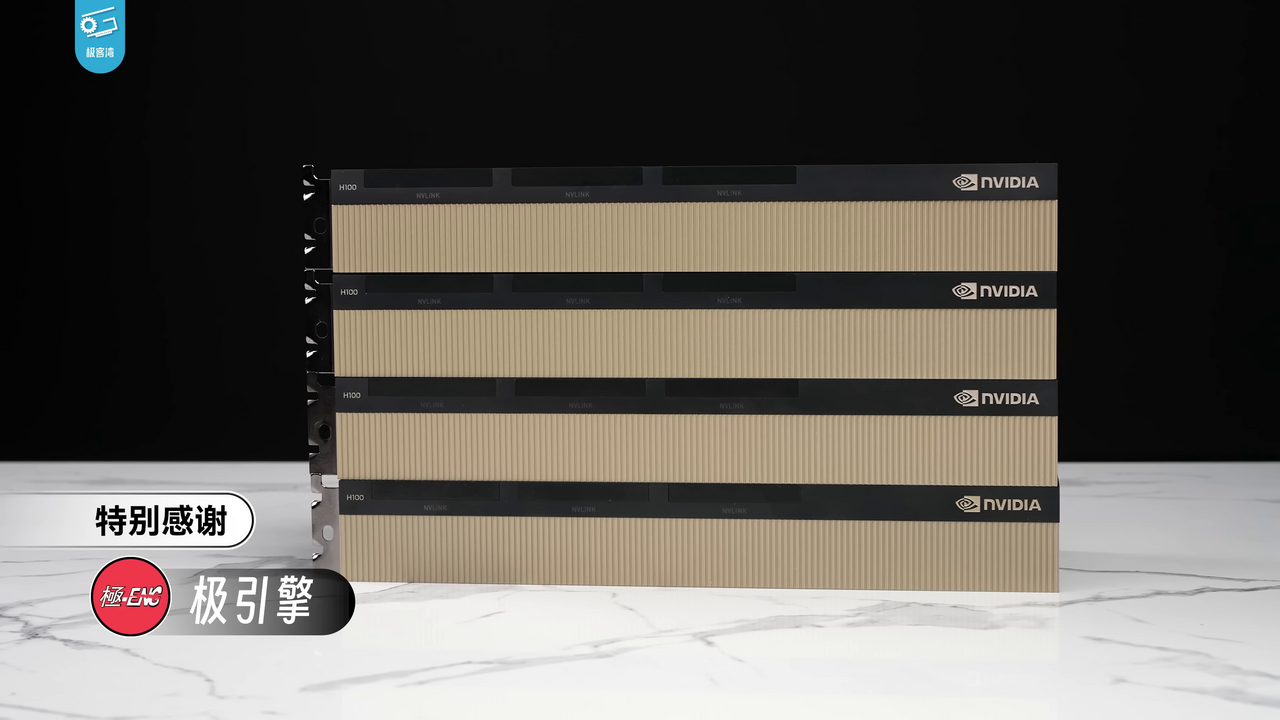
Header image: rows of racks in a data center, via Wikimedia Commons, licensed under CC BY-SA 2.0; an illustrative data center, not the Nebius Finland site. In-body photograph of Nvidia data-center GPUs by Geekerwan via Wikimedia Commons, licensed under CC BY 3.0; it shows an earlier accelerator generation, not Vera Rubin. Both images were reviewed before use.