Anthropic has agreed to pay Lambda, a cloud provider backed by Nvidia, roughly $35 billion over six years for AI computing capacity, according to reporting from Bloomberg, the Wall Street Journal, SiliconANGLE, and Qz on August 31 and September 1, 2026. The compute will run at a data center campus in Nueces County, Texas, near Corpus Christi, that is being developed by Hut 8, a company built on bitcoin mining that has spent 2026 converting itself into an AI hosting operator. The deal's most notable feature is not its size, large as it is, but its structure: Nvidia supplies the chips Lambda runs, holds an equity stake in Lambda, and also holds the lease on the physical building where all of it sits. This piece lays out what has been reported, places the Lambda deal inside Anthropic's fast-moving 2026 compute-buying pattern, and looks at what a chip maker sitting on three sides of one transaction says about how the AI infrastructure market is currently financed.
 Anthropic
 NVIDIA
The terms, plainly stated
Anthropic is the end customer, committing to buy roughly $35 billion of AI computing capacity over a six-year term. Lambda is the operator that sells Anthropic that capacity, a so-called neocloud that rents out GPU infrastructure rather than owning a diversified cloud business the way Amazon, Microsoft or Google do. The compute itself runs on Nvidia chips, at a campus Hut 8 calls Beacon Point: 525 acres in Nueces County, Texas, designed to eventually hold 1 gigawatt of total capacity. This deal covers about 350 megawatts of that campus, with initial energization targeted for the first quarter of 2027.
What makes the arrangement unusual is who sits between Anthropic and the physical building. Reporting on the deal, and on the site itself, describes Nvidia in three separate roles at once: it is the chip supplier equipping the facility, it is a financial backer of Lambda, and it is also the tenant that holds the underlying lease on the Beacon Point real estate, subletting compute access to Lambda rather than Hut 8 leasing directly to Lambda or to Anthropic. Data Center Dynamics and aiweekly, drawing on Financial Times reporting, identify Nvidia as the previously unnamed "high-investment-grade tenant" behind two 15-year Hut 8 leases at Beacon Point with a combined base contract value of $19.6 billion, a figure that can rise to roughly $50 billion if all renewal options are exercised.
Nvidia sits on three sides of this deal
Anthropic pays Lambda, Lambda runs Nvidia chips, and Nvidia holds the lease on the building underneath all of it.
Simplified structure based on public reporting. Nvidia's Beacon Point lease covers more capacity than this single deal draws on; it shows the flow of money, hardware and land, not every contractual party.
Nvidia as landlord, supplier, and financier
Stacking those three roles onto one company is what has drawn most of the analytical attention to this specific deal, more than the headline dollar figure has. Nvidia's chips generate the revenue that funds the lease payments; Nvidia's own balance sheet and equity backing give Lambda the credibility to sign a $35 billion contract with a company Lambda itself is not large enough to finance independently; and Nvidia is the one collecting rent on the building that houses its own hardware. Money that starts as Anthropic's compute payment moves through Lambda, past Nvidia's chip and equity involvement, and back to Nvidia again as lease income, before any of it reaches Hut 8 as the underlying landowner.
Nvidia's chips fund the lease payments, Nvidia's equity backs the tenant paying them, and Nvidia collects the rent on the building underneath. The word critics have settled on is circular.
Metir AI analysis
Nvidia has addressed this pattern directly, if not this specific deal by name. On its August 2026 earnings call, chief financial officer Colette Kress acknowledged the criticism head-on: "We recognize the scale of this support, and we know some will call this circular financing. We see it differently," she said, arguing the compute Nvidia is helping finance "is fungible and durable and can be redeployed to support other customers." That defense does not resolve the structural question so much as name it. Nvidia's own reported supply commitments had already more than doubled to roughly $279 billion by the same earnings call, and separate financing platforms Nvidia has arranged with Apollo, BlackRock, Blackstone, Brookfield, Goldman Sachs and KKR are aimed at mobilizing over $500 billion in third-party capital for AI infrastructure, with Nvidia reportedly willing to backstop up to $125 billion of that itself. The Lambda deal is one node in a financing web Nvidia has been building across most of 2026, not an isolated arrangement.
Lambda's own financing history fits the same neocloud playbook. The company has raised venture funding at a $5.43 billion valuation, took on $1 billion in short-dated debt in late August specifically to buy more Nvidia chips, and is reportedly in talks for a further $3 billion pre-IPO round that would value it above $12 billion ahead of a targeted 2027 listing. Its investor list includes Nvidia itself alongside ARK Invest, Andra Capital, and Andrej Karpathy. A single six-year, $35 billion contract from Anthropic is, by a wide margin, the largest revenue commitment Lambda has ever disclosed, and it arrives at exactly the moment Lambda needs that kind of backlog to support both its debt raise and its IPO pitch.
From bitcoin mining to AI hosting
Hut 8's role in this deal is a specific instance of an industry-wide pivot. The company built its business mining bitcoin, and it is not alone in redirecting that infrastructure, and the capital markets relationships that came with it, toward AI hosting: publicly traded miners including IREN, TeraWulf, Core Scientific, Riot Platforms, Cipher and HIVE Digital have all diversified into AI and high-performance computing leases over the past year, with analysts estimating that listed miners could draw as much as 70% of their revenue from AI and HPC workloads by the end of 2026, up from roughly 30% at the start of the year. TeraWulf separately signed a 20-year, roughly 401-megawatt lease with Anthropic, and Core Scientific expanded a CoreWeave contract to $10.2 billion over 12 years. The economics driving the shift are straightforward: crypto mining margins have compressed while AI hosting deals reportedly carry 80% to 90% operating margins for the miners providing the power and shell space, and a bitcoin miner already owns the two hardest things to acquire quickly in this market, land with grid interconnection and a pipeline for large amounts of electric power.
Hut 8's Beacon Point campus illustrates how far that pivot has gone at a single site: a company that entered 2026 as a crypto miner is now the developer behind a 525-acre campus carrying, across its two Nvidia leases and this Lambda-Anthropic deal, tens of billions of dollars in disclosed contract value, with a total capacity target of a full gigawatt, roughly the output of a large power plant, dedicated to one use.
Part of a much longer list
The Lambda agreement did not happen in isolation. It followed a $45 billion, six-year deal with Nscale for a West Virginia site announced August 26, which itself followed a $10 billion, six-year agreement with Volta for a Norwegian data center announced August 4, and a reported $5 billion compute-related deal with AMD in July. Anthropic has also formed Theseus Infrastructure, a joint venture with Macquarie Asset Management and GIC to develop AI data centers, though the companies disclosed no capital figure for that arrangement. Taken together with the deals that do carry public dollar figures, Anthropic disclosed roughly $95 billion of compute commitments in the nine weeks between early July and the end of August 2026 alone.
Four disclosed compute deals in nine weeks, $95B combined
Anthropic's largest disclosed, dollar-denominated 2026 compute commitments. Excludes deals reported without a public dollar figure (Theseus, Amazon, Google, Broadcom) and SpaceX's reported ~$1.25B-a-month arrangement.
Announcement month, 2026. Not exhaustive; selected to show the pace of Anthropic's largest disclosed compute commitments leading into the Lambda deal.
One detail stands out when the Lambda and Nscale deals are placed side by side: $35 billion for 350 megawatts works out to roughly $100 million per contracted megawatt over six years, while $45 billion for 460 megawatts works out to about $98 million per megawatt, a strikingly similar rate despite different sites, different landlords, and different points in Nvidia's product lineup. That consistency suggests these prices are not being negotiated site by site so much as set by a going rate for leased AI capacity that current market conditions, chip supply, and Nvidia's own involvement across multiple deals have converged on.
The Lambda deal also landed with unusual proximity to Anthropic's product calendar: it was first reported on August 31, one day before Anthropic released Claude Fable 5.1 and Claude Mythos 5.1 on September 1. Anthropic has not tied the two announcements together publicly, and there is no evidence the compute deal was structured around that specific launch date, but the sequencing captures the underlying relationship well. Model releases are what create the demand; compute deals are what let a lab keep serving that demand at scale.
Why lease instead of build
The recurring question these deals raise is why a frontier lab signs a six-year lease with a company as young as Lambda rather than building and owning its own data centers outright, the way the largest hyperscalers historically have. The answer is speed and balance-sheet exposure. Permitting, grid interconnection, and construction for a gigawatt-scale campus take years regardless of who owns the deed, and Anthropic is not in the business of developing real estate or negotiating utility interconnection agreements. Leasing lets Anthropic convert a capital-intensive, multi-year construction project into a purchased service with a fixed six-year cost, while Hut 8 and Nvidia absorb the site development risk and, in Nvidia's case, use its balance sheet strength to make a young operator like Lambda bankable for a contract this size. The tradeoff is that Anthropic now depends on the execution of three separate counterparties, Lambda's operations, Nvidia's chip delivery and lease commitments, and Hut 8's construction schedule, to actually receive the 350 megawatts it is paying for by the first quarter of 2027.
The takeaway
What is verifiable is this: Anthropic has committed roughly $35 billion over six years to Lambda for Nvidia-powered compute at a Texas campus where Nvidia itself, not Hut 8 or Lambda, holds the underlying lease, alongside an equity stake in Lambda and the chip supply contract that generates the revenue flowing through the whole arrangement. It is the fourth disclosed, dollar-denominated Anthropic compute deal in nine weeks, arriving days before a major model release and a week after an even larger Nscale agreement, and it sits inside a broader pivot of former bitcoin-mining infrastructure toward AI hosting that is reshaping companies like Hut 8 in real time.
For teams building products on top of these models, rather than financing the infrastructure underneath them, the practical lesson is not to inherit a lab's supplier and landlord dependencies as your own. Compute constraints and multi-billion-dollar leasing structures at any single lab are exactly why staying flexible at the model layer matters. Metir AI takes a model-agnostic approach, giving teams access to Claude, GPT, Gemini and Grok models side by side, so a squeeze on any one provider's infrastructure roadmap becomes a routing decision rather than a dependency.
Sources:
- Anthropic Strikes $35 Billion Cloud Deal With Nvidia-Backed Lambda | Bloomberg
- Anthropic signs $35 billion cloud deal with Nvidia-backed Lambda, source says | Investing.com
- Anthropic's Reported $35B Lambda Deal Involves Nvidia | TechRepublic
- Anthropic signed a $35 billion cloud deal with Nvidia-backed Lambda | Qz
- Anthropic $35B Deal With Nvidia-Backed Lambda for Texas Data Center | BIC Magazine
- Anthropic Locks In 350 Megawatts Of Texas Compute With $35 Billion Lambda Pact | eGamers
- Anthropic signs $35bn cloud agreement with Lambda | Data Center Dynamics
- BTC news: Anthropic's $35 billion AI deal runs through a bitcoin miner's Texas site | CoinDesk
- Nvidia Named as Tenant Behind Hut 8's $19.6B Texas Lease | aiweekly
- Hut 8 signs 352MW data center lease in Texas with investment grade tenant | Data Center Dynamics
- Is Nvidia's $35 Billion Anthropic Pact the Ultimate Circular Financing Play? | Yahoo Finance
- Nvidia Unleashes 70% Growth Bombshell and Defends Against 'Circular' Deals | Fortune
- Nvidia's Supply Commitments More Than Doubled to $279 Billion | The Motley Fool
- Nvidia Partners With Wall Street Giants to Raise $500 Billion for AI Infrastructure | Yahoo Finance
- AI Cloud Provider Lambda in Talks for $3 Billion Pre-IPO Round | Bloomberg via Yahoo Finance
- Neocloud Lambda Secures $1B in Debt to Buy More Chips | TechCrunch
- Anthropic Continues Compute-Gobbling Streak in $45 Billion Deal With Nscale | TechCrunch
- Anthropic Signs $10B Deal With AI Cloud Startup Volta | TechCrunch
- Anthropic, Macquarie and GIC Form Venture for AI Data Centers | Bloomberg via Yahoo Finance
- Bitcoin Miners Pivot to AI and HPC as Cryptocurrency Market Slumps | S&P Global Market Intelligence
- Anthropic Releases Claude Fable 5.1 and Mythos 5.1 | tech-ish
Image credits
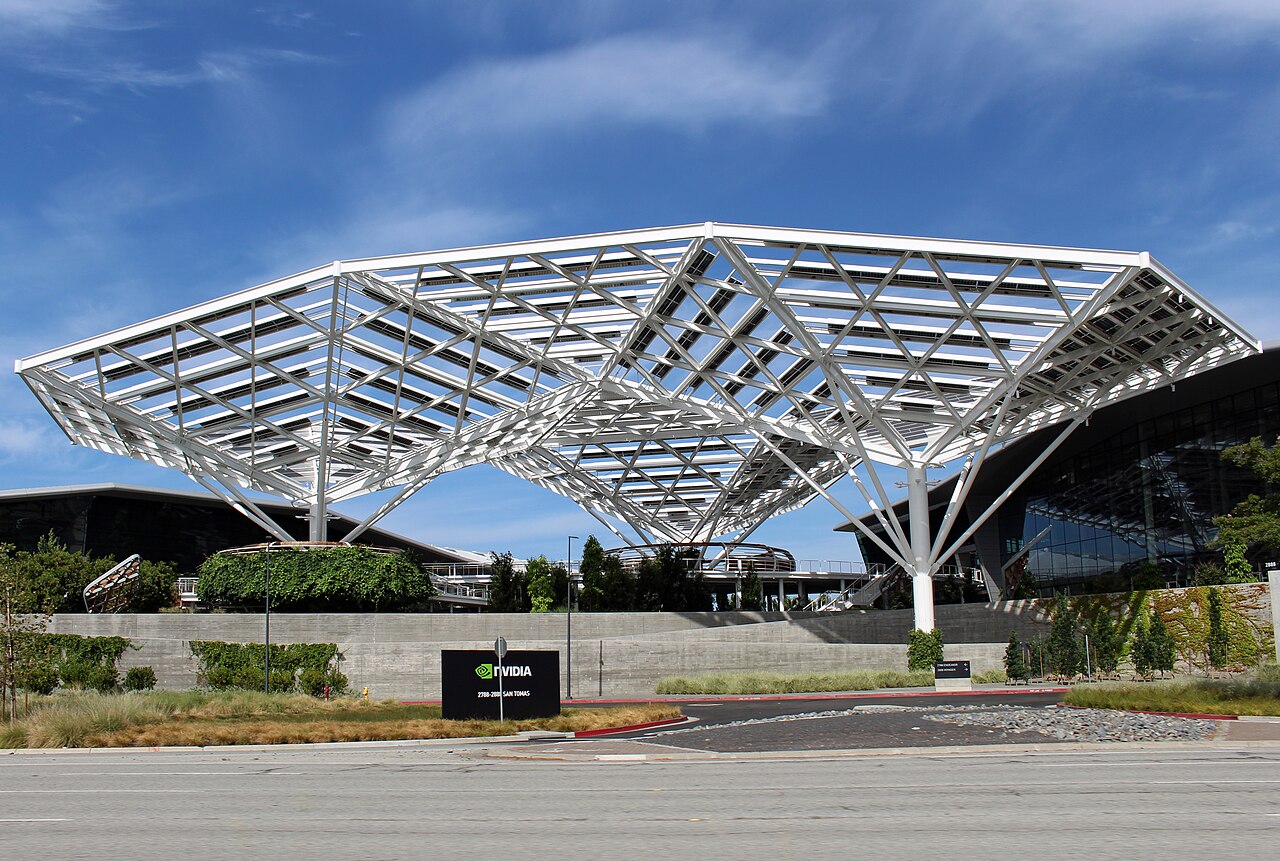
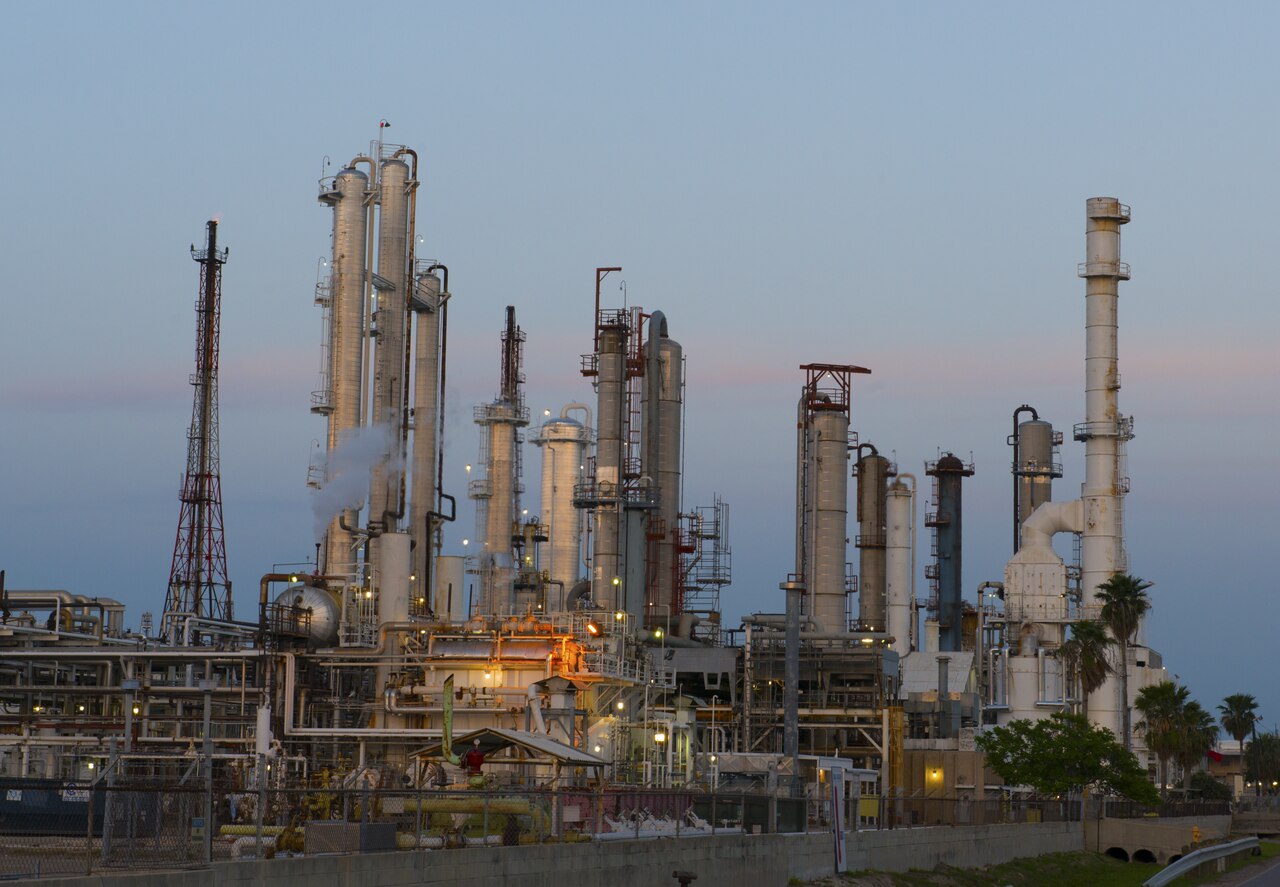
Header image: Nvidia's Voyager headquarters building at 2788-2888 San Tomas Expressway, Santa Clara, California, photographed by Coolcaesar via Wikimedia Commons, licensed under CC BY-SA 4.0. Nvidia holds the lease on the Texas data center at the center of this deal, but this photo shows Nvidia's real Santa Clara corporate campus, not the Beacon Point site itself. In-body photograph of industrial storage and refinery infrastructure on Nueces Bay in Corpus Christi, Texas, by Carol M. Highsmith (Lyda Hill Texas Collection of Photographs, Carol M. Highsmith's America Project, Library of Congress), via Wikimedia Commons, in the public domain. It depicts existing industrial infrastructure in Nueces County, Texas, not Hut 8's data center itself.