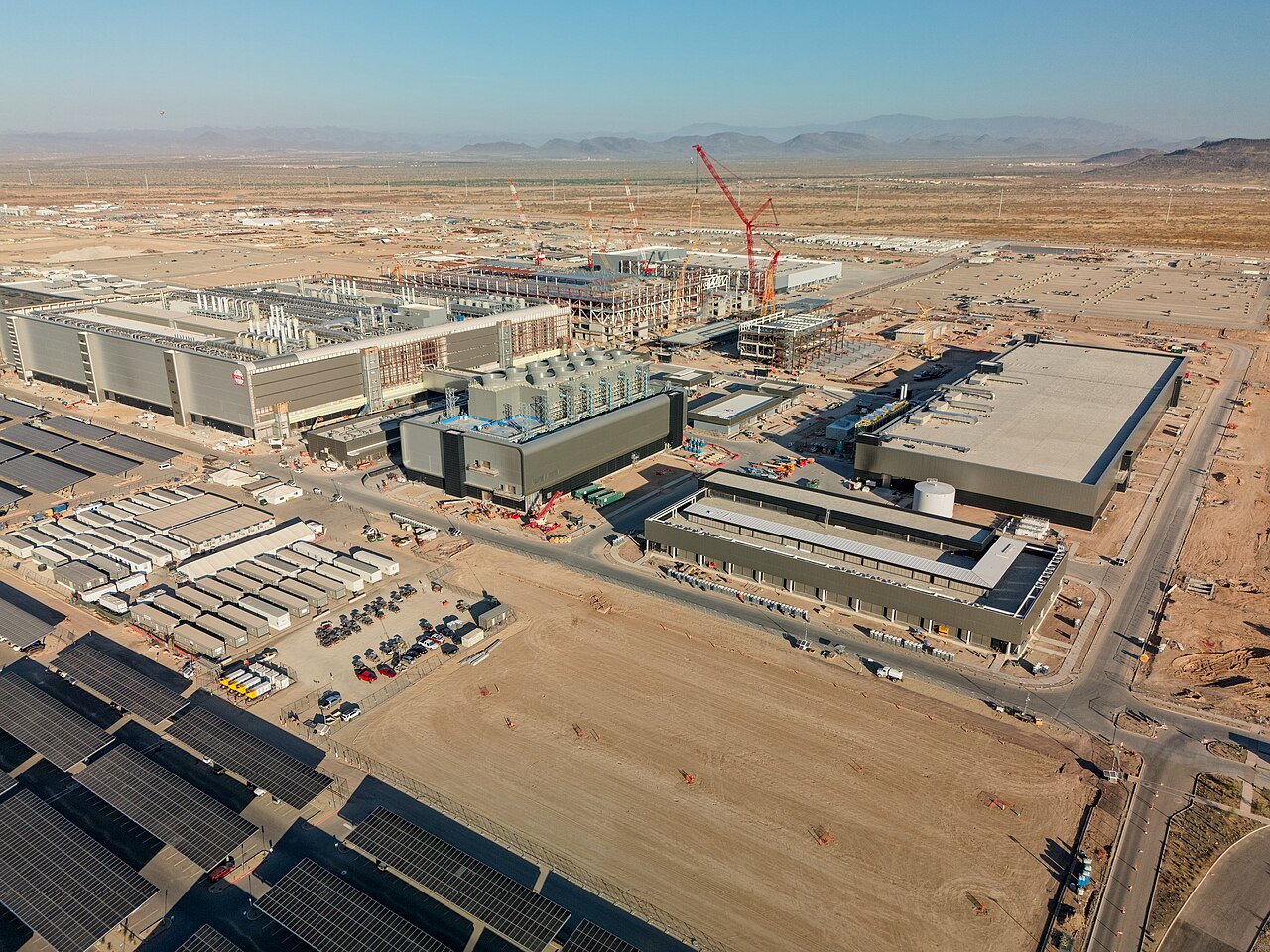
Terafab, the planned Texas chip complex backed by Tesla and SpaceX, spent the first week of October 2026 at the center of a public question: who will actually operate it? After an industry newsletter reported that TSMC was exploring a role, Elon Musk wrote on October 7 that "we will build and run the fab" and that TSMC could at most sublease part of it. This article lays out the sequence of statements, what is and is not confirmed about Terafab, and why running a leading-edge fab is a different problem from paying for one.
 Tesla
Tesla xAI
xAI X
XThe Terafab TSMC story, day by day
The chronology below uses dates from Culpium, Musk's posts on X as quoted in coverage, and market reports.
Five days of Terafab statements
October 2 to October 7, 2026, in order.
- Fri Oct 2 / Culpium newsletterReports TSMC is exploring a role helping operate Terafab factories, or as an anchor client for a Texas fab.
- Sat Oct 3 / Elon Musk on X"Just discussions, but something may come of it."
- Tue Oct 6 / MarketIntel shares slide 3.2% on fears it could be sidelined.
- Wed Oct 7 / Elon Musk on X"No, we will build and run the fab." TSMC could sublease part of the site, "nothing more than that."
- Wed Oct 7 / Intel CEO Lip-Bu TanTells Bloomberg Intel will remain involved (paraphrased in coverage).
According to Automotive World, Tim Culpan's Culpium newsletter reported on October 2 that TSMC was exploring ways to help operate Terafab's factories, possibly with Tesla as an anchor customer. Investing.com describes the framing slightly differently, as TSMC exploring Terafab as an anchor client for a future Texas fab. The two summaries are not identical, and we have not seen the newsletter itself, so the precise scope of what TSMC was reported to consider is uncertain.
Musk acknowledged the talks on October 3. Tom's Hardware headlined that he confirmed discussions with TSMC; the quoted words were "Just discussions, but something may come of it." On October 7 he replied to a commentator who had argued the likeliest deal had TSMC owning and running the fab: "No, we will build and run the fab. Let there be ZERO doubt about that," followed by "Maybe TSMC subleases part of the Terafab if they want, but nothing more than that."
Intel is the other named partner. Intel CEO Lip-Bu Tan told Bloomberg that Intel would stay involved, per the Investing.com and Automotive World summaries, which paraphrase rather than quote him.
What Terafab is, and what is confirmed
Electrek reported in August that the site is in Grimes County, Texas, with a first phase of $16.8 billion, at least 3,000 jobs, and a stated aim of combining logic, memory, packaging and testing under one roof. Wikipedia's summary of the record says Intel announced in April that it would join, and that Musk said Intel's 14A process (1.4 nm class) would be used at the full-scale fab. Investing.com calls 14A the only technology identified so far.
Some figures are less settled:
- Cost. County filings in May discussed an initial outlay of about $55 billion and up to $119 billion across all phases. The $16.8 billion figure is the August first phase. These are different measures, not a contradiction.
- Jobs. The 3,000 figure appears in the official announcement coverage. Forklog reports that a county agreement fixed $5 billion by 2030 and 1,800 jobs by 2035, a claim from a single source that we could not independently confirm.
- Commitments. Electrek notes that SpaceX's May filing called Terafab a "general framework" with no binding commitments.
- Timing. Texas filings reportedly list a December 1, 2026 construction start and completion by the end of 2028. Automotive World reports a pilot line targeting 3,000 wafers per month and silicon production from 2029.
Why building and operating a leading-edge fab is hard
Paying for a fab and running one are separate problems. Several mechanisms explain why the operator question mattered enough to move Intel and TSMC shares (Intel fell 3.2% on October 6 and TSMC's ADR was down 1.3% pre-market on October 7, per Investing.com).
Yield learning. Yield is the share of chips on a wafer that work. A new process starts low and improves as engineers find and remove defect sources across hundreds of steps. Intel's CEO has said 18A yields have improved 7% to 8% a month but are not yet best-in-class, per TrendForce. That learning is accumulated process knowledge, which is the main thing an experienced operator brings.
Time. TSMC CEO C.C. Wei has said a new plant takes two to three years to build, with "another one or two years to ramp it up," as quoted by Automotive World. Texas filings listing a 2028 completion date and reports of 2029 silicon fit that pattern.
Workforce. A fab needs process engineers, technicians and equipment specialists trained on specific tools. The 3,000 announced jobs would be a start; the pool of people who have ramped a 2 nm or 1.4 nm line is small, and much of it works at TSMC, Samsung and Intel. This point is our analysis rather than a figure from the coverage.
Capital buys the building. Yield learning is what a running fab accumulates.
Metir AI analysis
Cost: Terafab against other US fab projects
Announced US fab projects by planned investment
Billions of US dollars. Green bars are Terafab figures. Scopes and dates differ, so this is not a like-for-like cost per fab.
The comparison needs care. Electrek says TSMC is spending about $165 billion on six Arizona fabs. Samsung's planned Texas investment was over $37 billion at its December 2024 CHIPS Act award, covering Taylor and an Austin expansion, per SDxCentral. Intel's Ohio project is $28 billion, with completion pushed to 2030 to 2032. Terafab's phase one sits below the multi-fab programs, while its county-filing upper bound of $119 billion sits between Intel and TSMC.
Intel and Samsung as reference cases
Intel's track record is the reason its role draws scrutiny. Automotive World reports Intel Foundry posted a $10.32 billion operating loss in 2025, and Investing.com puts its external foundry revenue at $293 million in Q2, so Terafab would be a visible outside customer. TrendForce reports Intel has said it may pause or discontinue 14A without a significant external customer, with commitments expected from the second half of 2026 into the first half of 2027. Terafab could be one such commitment, though that link is our inference.
Samsung Taylor shows the ramp problem. Reports say mass production slipped from 2024 to 2026, and Tesla's AI5 chip reached trial production there in 2026, per Electrek and autoevolution. Electrek also says Tesla signed a $16.5 billion deal with Samsung for AI6, with TSMC covering the rest of its supply. See also our coverage of Samsung's foundry price hike.
What to watch next
- Whether TSMC takes a sublease, and on what terms, since Musk's "maybe" is not a deal.
- Whether Intel's 14A work for Terafab becomes a binding commitment, given the S-1 language.
- The December 2026 construction start in county filings.
- Capital plausibility: Bernstein estimated the one-terawatt compute goal would need $5 trillion to $13 trillion of capital spending, per Automotive World.
For context on newer entrants, see Rapidus and its 17 design partners, Intel's $15 billion stock offering and TSMC's record Q2. Chip supply shapes AI model costs, which is one reason a model-agnostic tool like Metir lets teams switch models as pricing moves.
Sources:
- Tom's Hardware: Musk confirms discussions with TSMC about Terafab
- Quartz: Musk rules out TSMC operational role
- Bloomberg, Oct 7, 2026
- Automotive World: Musk insists Terafab is his to run as Intel stays aboard
- Investing.com: Musk rules out TSMC role in Terafab operations
- Electrek: Terafab Grimes County $16.8B
- Wikipedia: Terafab
- Forklog: SpaceX and Tesla to invest $16.8B
- TrendForce: Intel 18A yields
- SDxCentral: Samsung CHIPS Act agreement
- DCD: Intel delays Ohio fabs
- Electrek: Samsung Taylor and Tesla AI5
- autoevolution: AI5 trial production
Image credits
- Hero: TSMC Fab 21 under construction in Phoenix, Arizona, November 2023. Photo by Hunter Trick, CC BY-SA 4.0, via Wikimedia Commons. It shows TSMC's site, not Terafab.
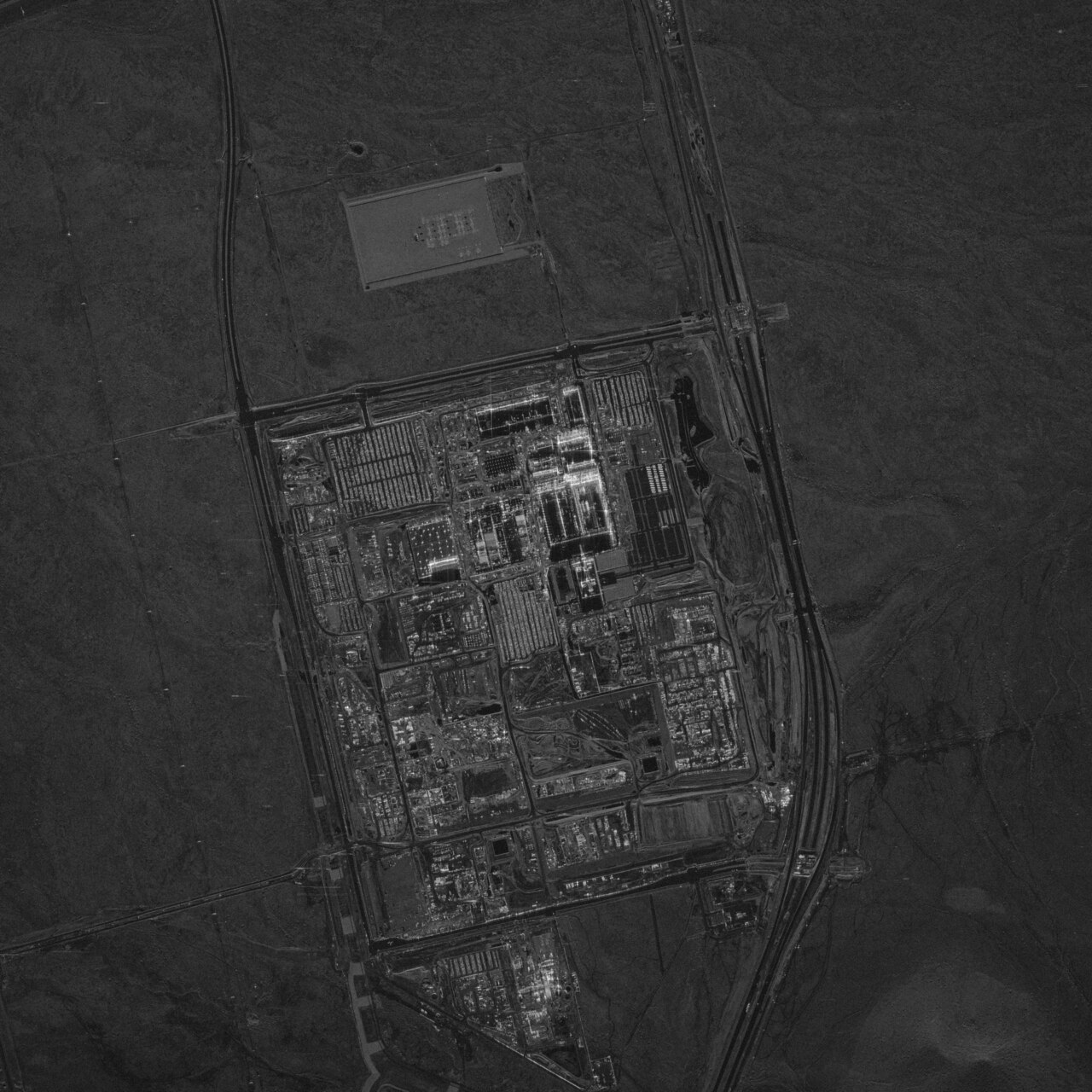
- In-body: TSMC Fab construction, Phoenix, AZ, March 2023. Image by Umbra Lab, Inc., CC BY 4.0, via Wikimedia Commons.