Samsung Foundry has raised prices on new orders across its advanced process nodes by up to 15%, according to reporting that surfaced on August 19, 2026. The increases touch the 4nm (SF4) and 5nm (SF5) lines Samsung uses to make AI accelerators, memory controllers, and other leading-edge logic, plus the older but still widely used 8nm (SF8) node. The driver, according to the same reporting, is straightforward: AI chip demand has filled Samsung's advanced capacity faster than the company expected, and some of that demand is spilling over from a fully booked Nvidia supply chain anchored at rival foundry TSMC.
 Nvidia
What Changed, Node by Node
The reported increases are not uniform across Samsung's lineup. On the 4nm SF4 node, the highest-volume line for current AI and mobile chips, customers in China and the United States are facing increases of 10% to 15%, while customers in Taiwan are seeing a smaller 5% to 10% bump. The 5nm SF5 node carries a broader 10% to 15% increase across customers. The older 8nm SF8 node, still used for a range of analog, power, and lower-complexity logic chips, is rising by up to 10%.
Samsung Foundry's August 2026 price increases
New-order price increases by process node, and the regional split within the 4nm line. Figures are percentage increases over prior pricing, as reported by industry press.
Up to 15% for China/US customers; 5-10% for Taiwan
Broad 10-15% increase across customers
Increases of up to 10%
4nm (SF4) increase by customer region
Bars scaled to a common 0-16% axis. Chinese and US customers are reported to be absorbing the largest 4nm increases; Taiwanese customers a smaller one.
Trade press reporting from Tom's Hardware, eTeknix, and SammyFans, all citing supply-chain sources on August 19, 2026, describes Chinese customers as accepting the steepest increases, reflecting how constrained their options are: Chinese firms have limited or no access to TSMC's most advanced nodes under existing export controls, which leaves Samsung as one of a small number of remaining paths to sub-5nm logic. Samsung's SF4 line at its Pyeongtaek campus has reportedly been running at full capacity since late last year, a level of utilization that would have been unusual for Samsung's foundry business even two years ago.
Why Samsung Suddenly Has Pricing Power
For most of the past decade, Samsung Foundry has been the industry's price-taker, not its price-setter. It has trailed TSMC in advanced-node yields and typically discounted aggressively to win business away from the market leader. That dynamic appears to be inverting, at least temporarily, and the reason is capacity, not a sudden leap in Samsung's manufacturing competitiveness.
TSMC's own leading-edge lines are booked out by AI accelerator orders well into the future, and the company has separately notified customers of price increases of roughly 5% to 10% across all its sub-5nm nodes starting in January 2026. When the market leader is both raising prices and unable to take on new volume, demand that would otherwise have gone exclusively to TSMC has nowhere to go but to the next-best option. Samsung, historically the fallback supplier, is currently the only other foundry in the world qualified to manufacture at 5nm and below at meaningful volume, alongside a much smaller and newer effort from Intel Foundry. That narrow field is the entire mechanism behind Samsung's newfound pricing power: when demand is inelastic (AI labs and chip designers cannot simply wait a year for capacity to free up) and the number of qualified alternative suppliers is one, the supplier holds the leverage.
A duopoly with a multi-year lead time on new capacity does not need to compete on price when both members are sold out at once.
Analysis synthesized from Tom's Hardware, eTeknix and SammyFans coverage
How a Wafer Price Increase Becomes a Higher AI Bill
The mechanism connecting a foundry price hike to what a developer eventually pays for an API call is real, but it is longer and leakier than "wafer costs more, tokens cost more." A foundry price increase raises the cost of the silicon die itself. That die is only one input into a finished AI accelerator: high-bandwidth memory (HBM), which is priced and supplied separately by memory makers, advanced packaging steps like CoWoS-style interposers, and final assembly and test all add their own cost layers, several of which have been under similar demand pressure. The finished accelerator then has to be amortized across a data center's power, cooling, networking, and financing costs before it produces a single unit of useful compute.
That layered structure means a wafer price increase of 10% to 15% does not translate into a 10% to 15% increase in the cost of an AI accelerator, let alone in the price of a token served from it. It shows up, with a lag, as a smaller increase in one line item among many, partially absorbed by chip designers' margins, partially passed on to cloud providers, and partially passed further downstream to end customers depending on how much competitive pressure exists at each link in that chain. New pricing typically applies to new orders rather than existing contracts, so the effect also arrives gradually as older, cheaper-priced wafer agreements roll off and get replaced.
The Regional Split Signals Something Beyond Cost
The fact that Samsung is charging different customers different rates for the same 4nm process is itself informative. Price discrimination by region is a standard tool when a supplier has market power and can segment customers by how many alternatives each group realistically has. Chinese customers facing US export restrictions on advanced chip technology have fewer alternative suppliers than Taiwanese customers, who sit inside an ecosystem with easier access to TSMC and to Taiwan's dense supplier base. Reporting that Chinese and US customers are absorbing the largest increases, while Taiwanese customers see a smaller one, is broadly consistent with that read: Samsung appears to be charging more where switching costs are highest.
The Counter-Forces Keeping AI Prices From Rising in Lockstep
Rising wafer costs are only one side of the ledger, and there are real forces pulling in the opposite direction on what AI ultimately costs to run. Model providers have continued to drive down inference cost per token through architectural efficiency gains, better serving techniques, and smaller models that match larger ones on many tasks. Competition among AMD, Nvidia, and a growing list of custom silicon efforts from hyperscalers puts pressure on accelerator pricing even as input costs rise, since no single chip vendor can pass through a wafer cost increase without regard to what alternatives its own customers have. The net effect on end-user AI pricing over the next year will depend on which force dominates: input cost inflation from foundries and memory suppliers, or efficiency and competition gains further up the stack. Both are real and pulling in opposite directions at once.
 AMD
AMDWhat to Watch Next
Several open questions will determine whether this becomes a durable shift or a temporary squeeze. Whether the increases stick depends partly on how customers respond: large buyers with enough volume to matter can negotiate, delay orders, or shift some volume to Intel Foundry as its 18A process matures, which would cap how much pricing power Samsung can sustain. TSMC's own response matters too, since if Samsung's prices approach TSMC's, some of Samsung's newly attracted overflow demand could reverse once TSMC's expanding capacity comes online. And because logic wafers are only one input, HBM memory pricing and CoWoS-style packaging capacity, both separately reported as tight through 2026, will do at least as much to determine the final cost of an AI accelerator as this particular foundry price move.
For teams building AI products, the more durable lesson is less about any single supplier's price sheet and more about not being locked into one model or one provider's cost structure as the underlying hardware economics shift. A model-agnostic platform like Metir AI, which routes across OpenAI, Anthropic, Google, and xAI models rather than committing to a single provider, gives teams a way to manage cost as the chips underneath every model keep getting more expensive to make.
Sources:
- Samsung raises advanced foundry prices by up to 15% as AI demand fills its 4nm lines | Tom's Hardware
- Samsung Foundry raises prices of its 4nm, 5nm, and 8nm nodes by up to 15% | eTeknix
- Samsung Foundry price hike: 15% increase driven by AI demand | TNW
- Samsung raises 4nm and 5nm chipmaking prices | SammyFans
Image credits
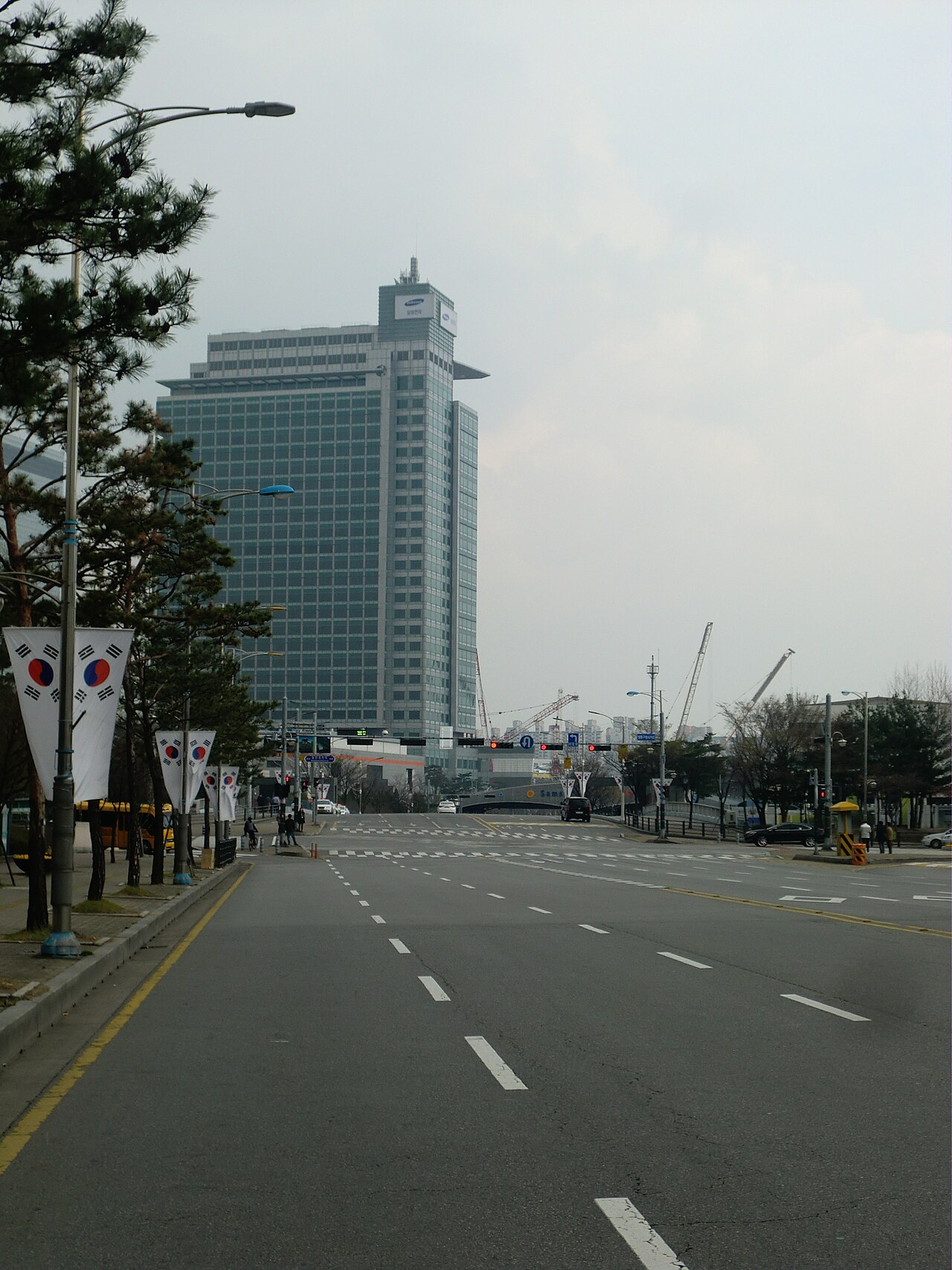
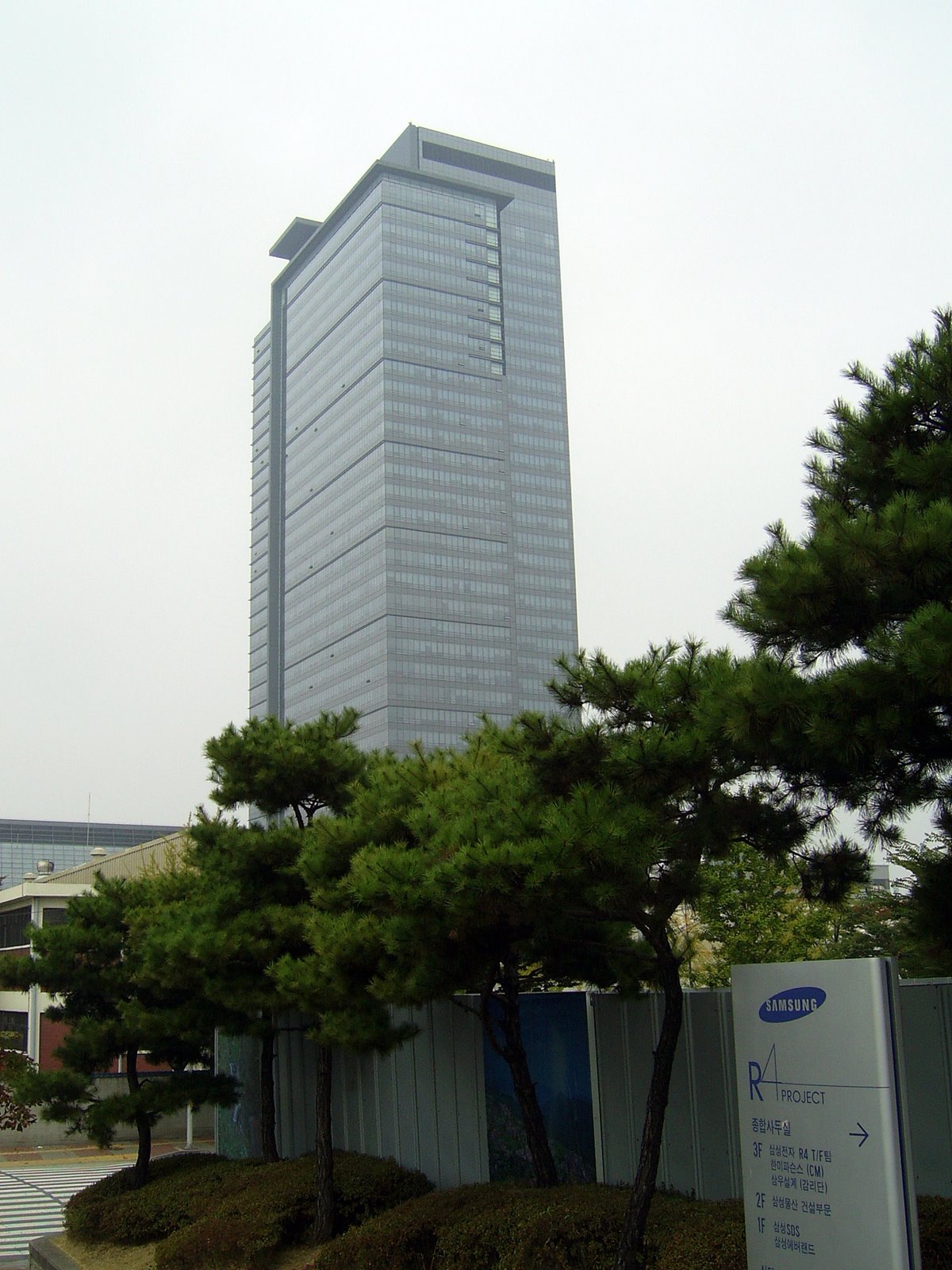
Header image: Samsung Electronics' headquarters building at the Suwon Digital City campus, South Korea, by Hyolee2 via Wikimedia Commons, licensed under CC BY-SA 4.0. In-body photograph of the Samsung Digital City campus in Suwon by Grzegorz Sokol via Wikimedia Commons, licensed under CC BY 3.0.