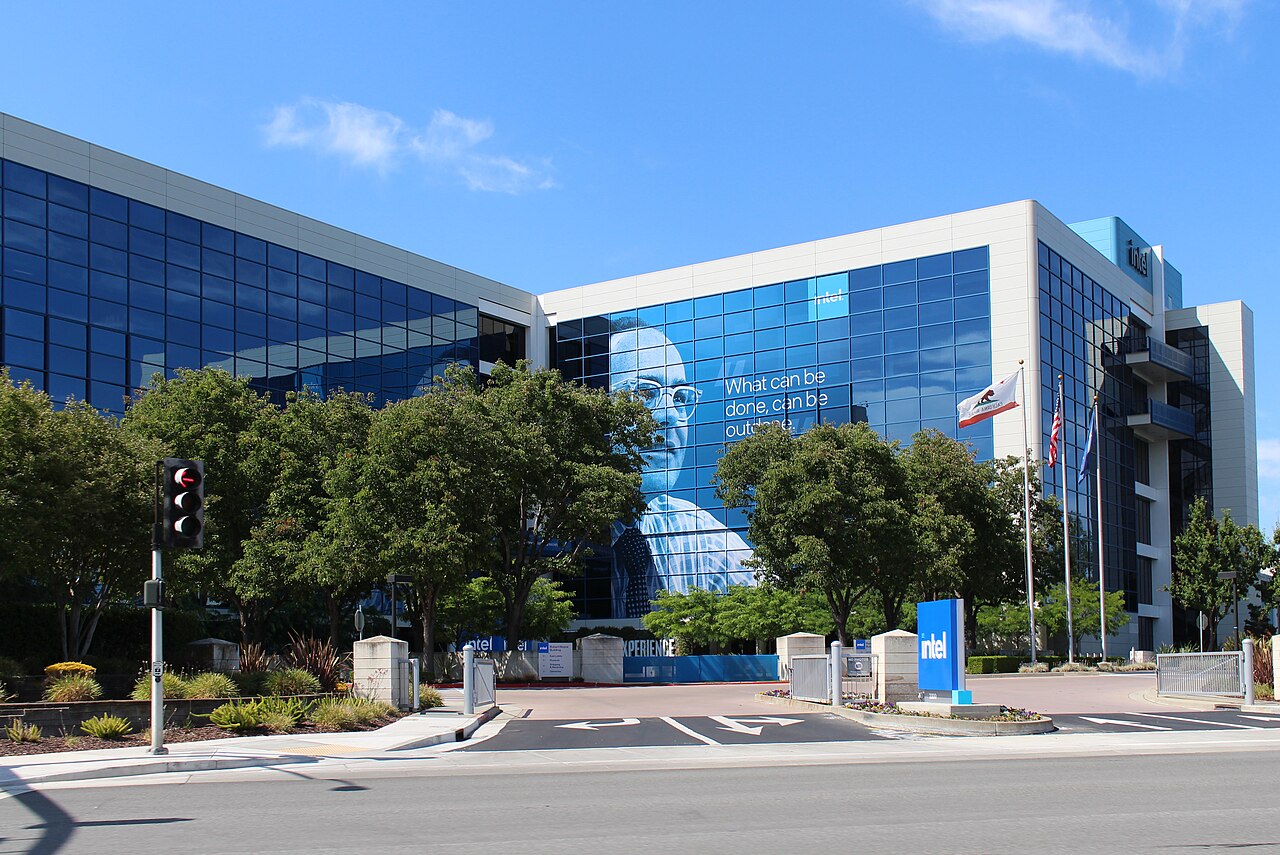
On August 10, 2026, Intel announced a proposed public offering of $15 billion in common stock, with a 30-day option for underwriters to buy up to an additional $2.25 billion. The deal is led by J.P. Morgan, Goldman Sachs, Morgan Stanley and Citigroup, and Intel has framed the proceeds as funding general corporate purposes, including capital expenditures and working capital tied to its AI-driven expansion. Shares fell roughly 3.7% premarket on the news, a reminder that raising billions in fresh equity is never free, even for a company whose stock has been one of the best-performing large-cap names of the year. This piece walks through what an Intel $15 billion stock offering actually does financially, why a foundry needs this much capital, and how to weigh the bull and bear cases without pretending either is settled.
What an equity offering actually is
A public stock offering is Intel selling newly issued shares directly to investors through underwriting banks, in exchange for cash today. That is sharply different from debt: a borrower agrees to pay interest on a schedule and the lender has no claim on future profits beyond that, while an equity issuer owes no interest and sets no repayment date, but every new share sold divides the same company among more owners. That is dilution: each existing share now represents a smaller slice of Intel and of any future earnings, unless the money raised grows the pie faster than it was cut.
Equity financing is a trade: no interest burden and no repayment deadline, in exchange for cutting every existing share into a smaller slice of the company.
That tradeoff explains the premarket drop almost mechanically. The offering does not, by itself, change what Intel is worth; it changes how many shares that value is divided across. The market priced in the dilution first and left the "what will Intel do with $15 billion" question for later, a fairly normal sequence for a large secondary offering.
Why a leading-edge foundry needs this much cash
The scale of the raise makes more sense once you look at what building at the leading edge of chip manufacturing actually costs. Reporting has tied the proceeds to Intel's elevated 2026 capital expenditure, reported at up to roughly $20 billion this year, and to its foundry expansion, advanced packaging capacity, and its 14A manufacturing process, the next-generation node Intel is racing toward volume production. Intel has also signed foundry customers for 14A, including reported deals with Nvidia and Tesla, underscoring capacity tied to committed demand rather than speculative buildout.
 Nvidia
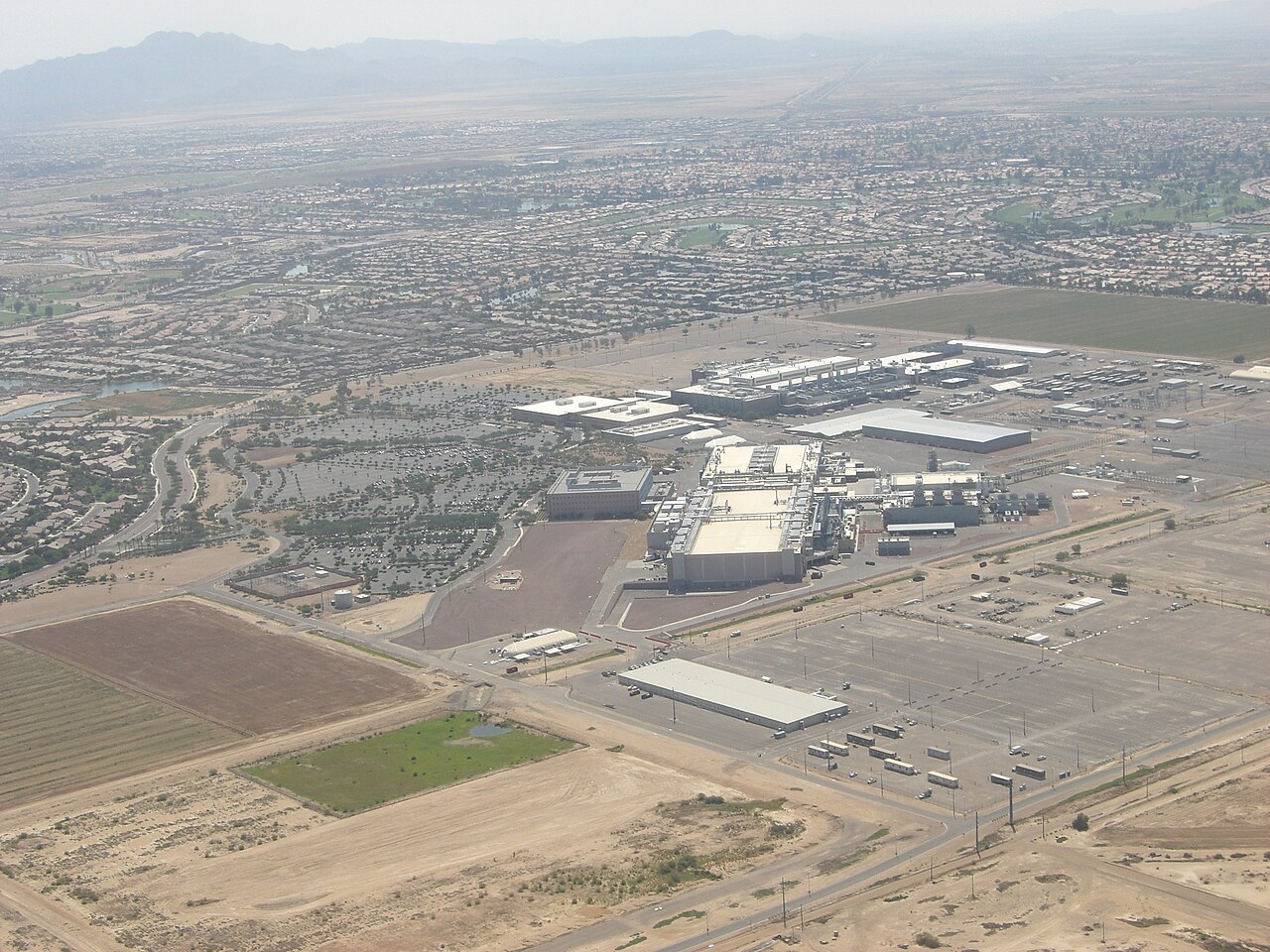
Semiconductor fabs are among the most capital-intensive facilities built by any industry. A single leading-edge fab can cost tens of billions of dollars once cleanroom construction, extreme ultraviolet (EUV) lithography tools, and advanced packaging lines are included, and that spending lands years before the resulting chips generate a dollar of revenue. Unlike software, where an idle server can be spun down cheaply, an idle fab is an enormously expensive asset depreciating in place. That is why Intel and TSMC both carry heavy capital expenditure relative to revenue, and why a raise this size is unremarkable in scale for the industry even though $15 billion is a striking number on its own.
The foundry bet, and the competitor it is aimed at
Intel's foundry ambitions are framed against TSMC, the dominant contract manufacturer for the AI accelerators built by Nvidia, AMD and others. Intel has spent years trying to convert its own manufacturing arm into a foundry business that makes chips for outside customers, not just its own processors, betting that a second credible source of leading-edge capacity, especially one anchored in the United States, is valuable enough to pull customers away from a single dominant supplier. TSMC has also been ramping aggressively this year, so Intel is not entering an empty market; it is trying to take share in one already scaling fast on AI demand.
Intel's 2026 run has outpaced the chip sector broadly
Approximate year-to-date share price gain through the August 2026 offering announcement. Reporting also placed INTC ahead of AMD and Nvidia's 2026 gains, though exact comparable figures were not disclosed alongside the offering.
Intel shares were reported up roughly 175% year-to-date in 2026, versus roughly 75% for the Philadelphia Semiconductor Index (SOX), before falling about 3.7% premarket on the dilution announcement.
The 2026 rally that made this offering possible
None of this happens in a vacuum. Intel stock has surged roughly 175% year-to-date in 2026, reported to have outperformed AMD, Nvidia and the Philadelphia Semiconductor Index (SOX), itself up roughly 75% this year. That run is relevant to the timing: a company issuing new shares gets more cash per share the higher its stock price sits, so raising equity after a rally like this one is, mechanically, the cheapest time to dilute. Waiting for a lower share price would have meant selling a larger percentage of the company for the same $15 billion.
That timing cuts both ways in how investors read it. The bull framing: management is capitalizing on a strong share price to fund a real, demand-backed expansion without adding debt or interest expense, from a position of strength rather than distress. The bear framing: a 175% run in a single year is an unusually large move to sell fresh shares into, and dilution lands hardest on investors who bought near the top of that rally. Both readings can be true at once, and the offering itself does not resolve which dominates. That depends on execution, specifically whether 14A ramps on schedule, whether foundry customers convert reported commitments into sustained volume, and whether AI accelerator demand keeps justifying the capacity being built.
The wider AI-capex backdrop
Intel's raise sits inside a broader supercycle. TSMC has also been expanding capacity sharply this year on the strength of AI chip demand, and the entire semiconductor manufacturing layer has been absorbing record capital expenditure to keep pace with orders from AI labs and hyperscalers. That is the environment in which a $15 billion equity raise reads as ordinary rather than alarming: one large capital commitment inside an industry-wide buildout, not an isolated bet. It is also a reminder that the value of the software and model layer sitting above all this silicon depends on that capacity existing, which is one reason staying flexible about which chips and providers power a given workload, rather than betting on a single winner, is a sensible hedge as the buildout continues.
What to watch next
The offering itself is a financing event, not a verdict. What will actually determine whether it was the right call is downstream: whether Intel prices the deal near current levels or has to discount it to clear demand, whether 14A hits its stated production timeline, whether foundry customers beyond the already-reported names materialize, and whether the elevated capex shows up in improved margins and market share over the next several quarters rather than further cash burn. Until then, the fairest reading of an Intel $15 billion stock offering is that it is a large, deliberately timed bet on a capital-intensive turnaround, priced by the market in real time as more information arrives.
Sources:
- Intel plans $15 billion stock offering to fund AI, foundry expansion | CNBC
- Intel stock offering: $15 billion to fund AI chips push | Quartz
- Intel Plans $15 Billion Stock Offering To Fund AI And Foundry Expansion | MLQ.ai
- Intel Plans $15 Billion Share Sale as Turnaround Rally Lifts Stock | Global Banking & Finance Review
- Intel to raise $15 billion in capital | Yahoo Finance
Image credits
Header image: Intel corporate headquarters (Robert Noyce Building) in Santa Clara, California, photographed in 2023, by Coolcaesar via Wikimedia Commons, licensed under CC BY-SA 4.0. In-body photograph: aerial view of Intel's Fab 12, Fab 22 and Fab 32 fabrication campus in Chandler, Arizona, by neepster via Wikimedia Commons, licensed under CC BY-SA 2.0.