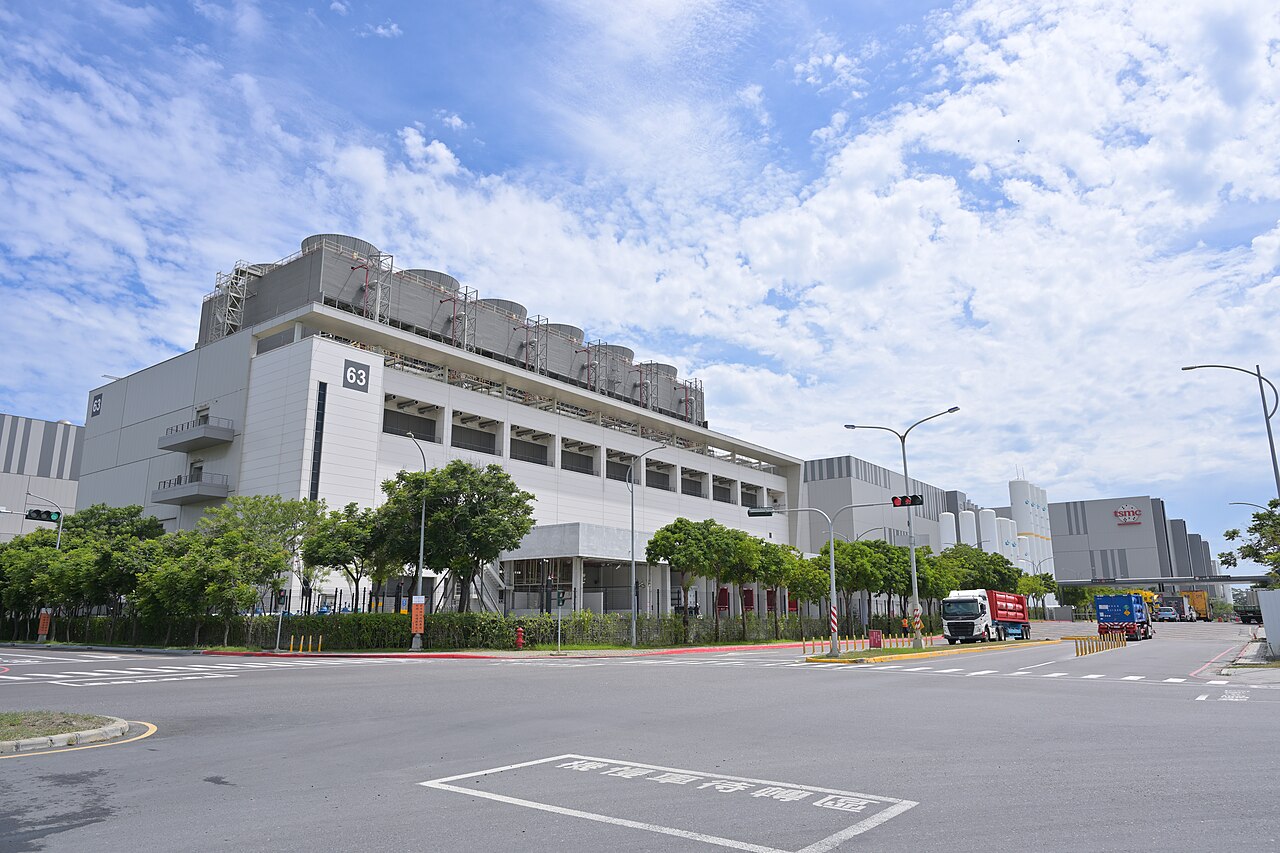
On July 16, 2026, Taiwan Semiconductor Manufacturing Company reported the strongest quarter in its history, and the numbers matter far beyond one company's income statement. TSMC manufactures the advanced chips that nearly every frontier AI system runs on, from Nvidia and AMD accelerators to the custom silicon that OpenAI, Google, Amazon and others are now designing. That makes its quarterly results the closest thing the industry has to a single, hard reading on whether AI infrastructure spending is still climbing or starting to level off. This quarter, the reading was unambiguous, and this piece walks through what the figures say, what they do not, and why the manufacturing layer has quietly become the most reliable place to check the health of the entire AI economy.
 NVIDIA
 OpenAI
 Google
 Anthropic
The headline numbers
TSMC reported second-quarter 2026 revenue of $40.2 billion, up 36% from a year earlier and above both its own guidance range and the roughly $39.9 billion analysts had modelled. Net profit surged 77.4% to a record NT$706.56 billion, and gross margin climbed to 67.7%, edging past the top of the company's guidance. Those are not the numbers of a business easing off a peak. They are the numbers of a business still accelerating into one.
The single most important line for anyone tracking AI was the outlook revision. Coming into 2026, a common thesis held that the infrastructure spending cycle would plateau this year as the first wave of data-center buildouts completed. TSMC instead raised its full-year revenue-growth outlook to slightly above 40%, telling investors that demand for advanced chips, especially from AI customers, was not just holding but strengthening. When the company that physically makes the chips lifts its guidance mid-year, it is describing order books that are already committed, not a forecast it hopes will come true.
Why AI now sets the trajectory
The clearest structural shift is in the revenue mix. High-performance computing, the platform category that houses AI accelerators, generated 66% of second-quarter revenue. A few years ago smartphones were TSMC's center of gravity; today compute is, and the crossover is not subtle.
Two thirds of TSMC's revenue is now compute
Share of TSMC Q2 2026 revenue by platform. High-performance computing, the segment that includes AI accelerators, accounted for 66% of the quarter.
TSMC Q2 2026 revenue by platform. HPC has become the company's dominant segment as AI accelerator orders scale.
That concentration cuts two ways, and an honest analysis has to hold both. On one side, it means TSMC is riding the single largest demand wave in the history of computing, with pricing power to match. On the other, it means a company that was once diversified across consumer, mobile and industrial end-markets is now heavily exposed to a single thesis. If AI capital spending were ever to contract sharply, two thirds of TSMC's revenue base would feel it directly. Nothing in this quarter suggests that is happening, but the concentration is a real feature of the business now, not a rounding detail.
When the company that physically makes the chips raises its guidance mid-year, it is describing order books that are already committed.
The 2nm ramp is the tell
Buried beneath the headline growth was a smaller figure that arguably says more about the next two years than the revenue line does. TSMC's 2-nanometer process, known as N2, contributed meaningful commercial revenue for the first time, at roughly 3% of wafer revenue. That sounds minor, and in absolute terms this quarter it is. But leading-edge nodes follow a predictable curve: they start at low single-digit revenue share, then ramp steeply as the largest customers migrate their flagship designs onto them.
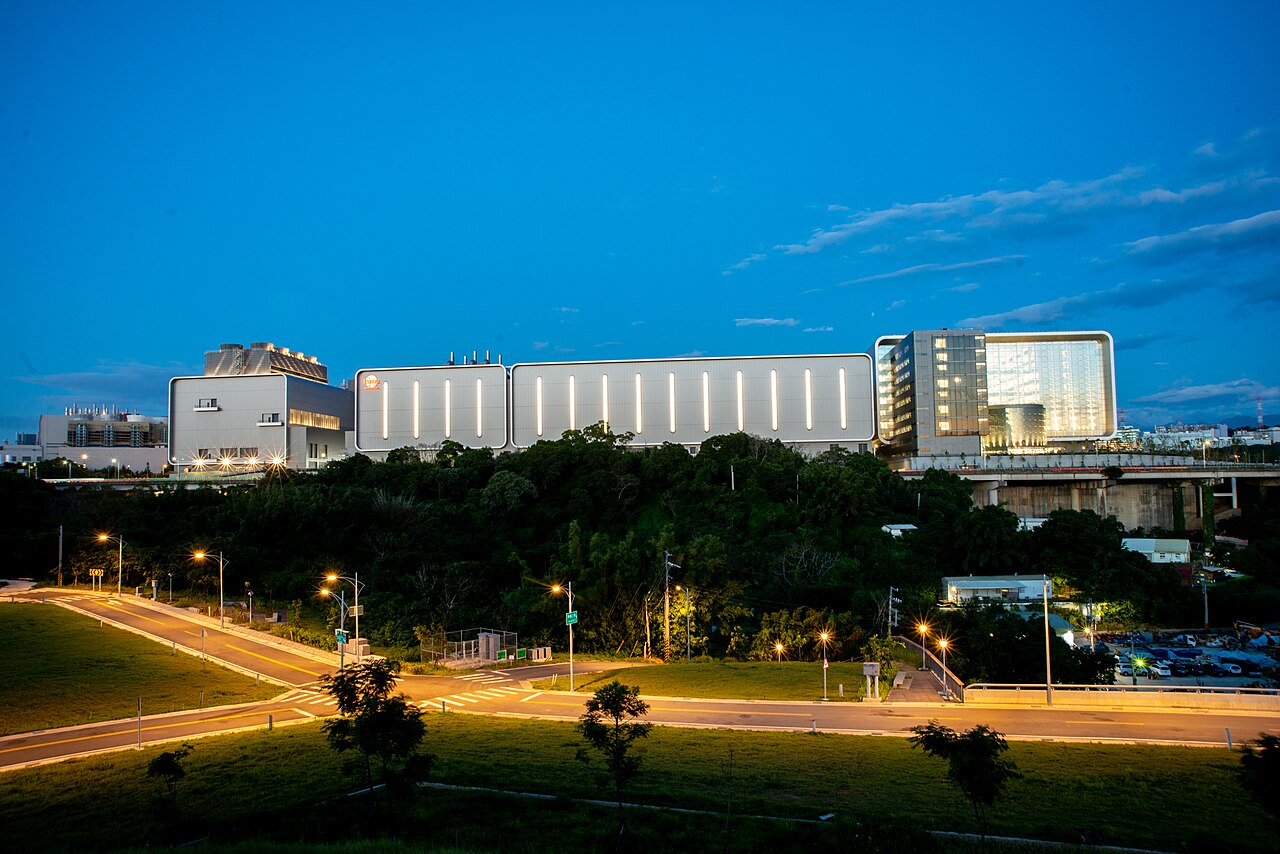
N2 matters for AI specifically because it is the node that many of the custom AI chips now in development are targeting. When labs and cloud providers design their own inference silicon, the difference between an older node and 2nm shows up directly in performance per watt, which is the metric that determines how cheaply a model can be served at scale. A first revenue contribution from N2 in mid-2026 signals that the manufacturing capacity for the next generation of both merchant and custom AI chips is coming online on schedule. That is a supply-side green light for everything downstream.
The Arizona commitment, and what it signals
Alongside the results, TSMC said it would invest an additional $100 billion in its Arizona operations, lifting its total committed spending in the state to $265 billion.
A $100 billion top-up to Arizona
TSMC's total committed US investment in Arizona, before and after the addition announced with Q2 2026 results.
The additional $100B lifts TSMC's committed Arizona spend to $265B, one of the largest foreign direct investments in US history.
The scale is easy to under-read. A commitment of this size is one of the largest single foreign direct investments in United States history, and it reflects two forces at once. The first is straightforward demand: customers want leading-edge capacity, and want more of it on US soil for supply-chain and policy reasons. The second is a hedge. Concentrating the world's most advanced chip production on a single island has long been treated as a systemic risk, and building duplicate leading-edge capacity in Arizona is TSMC's answer to customers and governments who have pressed for geographic resilience. The trade-off is cost: US fabrication is more expensive to build and run than Taiwanese fabrication, which puts a slow, structural weight on the very gross margins that looked so strong this quarter. Management has been candid that overseas expansion dilutes margins over time, so the 67.7% figure and the $265 billion commitment are in quiet tension with each other.
Reading it against the rest of the market
TSMC's quarter does not sit in isolation. It rhymes with what the demand side has been saying. Nvidia, TSMC's largest advanced-node customer, has described data-center GPUs as sold out and has pointed to roughly a trillion dollars of confirmed AI chip demand through 2027 from the largest technology buyers. The neocloud operators renting out GPU capacity have been raising debt against future contracts. And the frontier labs are committing to multi-gigawatt compute deals stretching years into the future.
Put together, the manufacturing layer, the merchant-chip layer and the demand layer are telling a consistent story: the spending is contracted well into the future, not speculative quarter to quarter. That consistency is what makes the plateau thesis hard to sustain right now. It is also worth stating plainly that consistency is not permanence. Every one of these figures ultimately rests on the assumption that AI applications will generate enough revenue to justify the compute being built for them. TSMC's order book validates that the money is being spent; it cannot validate that the spending will pay off. Those are different questions, and only the first is answered by an earnings report.
What it means for people building on AI
For teams that build products on top of AI models rather than manufacturing the hardware, the read-through is practical rather than financial. A capacity buildout of this scale, spanning merchant GPUs, custom inference chips and a ramping 2nm node, is what continues to push the cost of a unit of intelligence down over time and widen the menu of models that are viable to run. The competitive pressure that shows up as cheaper tokens and faster inference for end users starts here, in decisions about how many wafers to commit and which nodes to ramp.
The strategic lesson for builders is the same one the hardware roadmap keeps teaching: the ground moves. New chips change which models are cheapest to serve, which providers have capacity, and where the price-performance frontier sits from one quarter to the next. Architecting a product to route each task to whatever model currently fits it, rather than hard-wiring a single provider, is how a team turns that churn into an advantage instead of a migration cost. A model-agnostic workspace such as Metir AI, which keeps the choice of model a routing decision rather than a rebuild, is one way to stay on the right side of a supply curve that is clearly still bending downward.
The bigger picture
TSMC's record quarter is a data point, but it is an unusually clean one. Stripped of narrative, it says that AI infrastructure spending was still accelerating in mid-2026, that the capacity for the next generation of chips is arriving on schedule, and that the largest buyers have committed their money years in advance. The open question it leaves untouched is whether the applications running on all this silicon will ultimately earn their keep. That is the question that will define the back half of the decade. For now, the most important chipmaker in the world has told us the buildout is real, funded, and still growing, and that alone is worth understanding precisely rather than through headlines.
Sources:
- TSMC Posts Record Quarter as AI Chip Demand Pushes Full-Year Growth Outlook Past 40% | TechTimes
- TSMC Q2 2026 earnings: Record profit, $100 billion Arizona investment | Yahoo Finance
- TSMC 2Q26 profit surges 77% to a record on AI demand, first 2nm revenue | DigiTimes
- Earnings call transcript: TSMC lifts 2026 outlook as AI demand stays hot | Investing.com
- TSMC Q2 2026 Revenue Sets a Record: What It Means for AI | Phemex
- NVIDIA Announces Financial Results for Third Quarter Fiscal 2026 | NVIDIA Newsroom
Image credits
Header image: TSMC Fab 18 in the Southern Taiwan Science Park, Tainan, by 4300streetcar via Wikimedia Commons, licensed under CC BY 4.0. In-body photograph of the TSMC Global R and D Center in Hsinchu by 曾 成訓 via Wikimedia Commons, licensed under CC BY 2.0.