Meta Platforms reported third-quarter 2026 results with two stories running at once. The operating business grew quickly, with revenue of $64.6 billion, up 26% year over year. But spending on AI infrastructure pushed free cash flow negative for the quarter, and a one-off legal charge cut reported operating income by more than a third. A day later a New Mexico judge added a separate $25 billion civil penalty to the list of items investors have to price.
The quarter in numbers
According to Meta's results release, the quarter ended September 30, 2026 compared with the prior-year quarter as follows:
| Metric | Q3 2026 | Q3 2025 | Change |
|---|---|---|---|
| Revenue | $64,601M | $51,242M | +26% |
| Costs and expenses | $51,613M | $30,707M | +68% |
| Income from operations | $12,988M | $20,535M | -37% |
| Operating margin | 20% | 40% | n/a |
| Net income | $9,860M | $2,709M | +264% |
| Diluted EPS | $3.83 | $1.05 | +265% |
Two details make the headline comparison harder to read. Meta said costs include a $9.89 billion charge from an August 2026 agreement with 52 state attorneys general over teen mental health and social media litigation. Excluding it, Meta said operating income would have been $22.88 billion and diluted EPS $7.40. The prior-year net income figure was also depressed by a very high effective tax rate (87%, against 24% this quarter), so the 264% rise in net income says more about tax than about operations.
Meta's operating income fell 37% as reported, but the legal charge explains the gap
Income from operations in billions of US dollars. The third bar adds back the $9.89B charge Meta disclosed, as an illustration of the underlying figure Meta itself quotes.
Source: Meta Q3 2026 results release. Reported operating income $12,988M; $22.88B excluding the $9.89B charge; Q3 2025 $20,535M.
Our arithmetic on Meta's figures: excluding the charge, the operating margin would have been about 35% (22.88 divided by 64.60), against 40% a year earlier. That five-point compression is the more useful measure of what AI investment is doing to the underlying business, because it strips out the one-off item.
Capex: the number behind the cash flow
Capital expenditures including finance lease principal were $34.91 billion in the quarter, about 54% of revenue (our calculation). Operating cash flow was $32.79 billion, so capex exceeded operating cash flow by $2.12 billion, which is exactly the reported free cash flow of negative $2.12 billion. Cash and marketable securities stood at $82.45 billion.
Full-year 2026 capex guidance was narrowed to $135 to $145 billion from $130 to $145 billion. The change moves the bottom of the range up rather than the top, which signals more confidence that spending will not come in light. Meta also guided total 2026 expenses to $175 to $179 billion, raised to include the legal charge.
Capex of $34.9 billion against operating cash flow of $32.8 billion is the cleanest single line for understanding how much of Meta's AI build is now being funded beyond what the business generates in a quarter.
How the spending compares with earlier guidance
Earlier in the year Meta guided 2026 capex to $115 to $135 billion in January, then to $125 to $145 billion in April, as reported by Fortune and other outlets. The October range of $135 to $145 billion sits inside that envelope. Our earlier analysis of the previous quarter, Meta's Q2 2026 capex and free cash flow squeeze, covers how cash flow tightened going into this report.
 Meta
 NVIDIA
Reality Labs and 2027
Reality Labs posted an operating loss of $4.13 billion in Q3 (against $4.43 billion a year earlier). Meta expects the 2026 loss at $18 to $19 billion and roughly $15 billion in 2027. It gave no full-year 2027 revenue outlook but said it expects "strong overall revenue growth" through the year. Q4 revenue guidance is $73 to $76 billion.
Other operating metrics in the release:
- Family daily active people: 3.64 billion in September, up 3%.
- Ad impressions: up 10%, with average price per ad up 14%. Revenue growth therefore came more from pricing than from volume.
- Headcount: 66,775, down 15%, even as capex rose. Spending is shifting from people to hardware.
The New Mexico penalty: a separate item
On October 21, a New Mexico state judge, Francis Mathew of the First Judicial District Court in Santa Fe, ordered Meta to pay a $25 billion civil penalty under the state's Unfair Practices Act, according to reports from the Washington Times and others. The penalty followed a jury finding of more than 43 million violations tied to the Cambridge Analytica matter. The statute allows up to $5,000 per violation, which reporting put at a theoretical maximum of about $219.5 billion. The judge reduced the award to $25 billion, about 11% of that ceiling (our calculation), and reportedly set 15% annual interest until paid, roughly $3.75 billion a year. Meta said it will appeal, and the judge reserved a decision on injunctive relief.
Two cautions on how this connects to the quarter. First, the $9.89 billion charge in Q3 relates to the August agreement with 52 attorneys general, not to the New Mexico penalty, which was issued after the quarter ended. Second, none of the sources we reviewed state how Meta will account for the New Mexico judgment, and an appeal could change the figure. Readers should not add the two numbers together.
For scale, $25 billion is roughly 72% of one quarter of Meta's capex and about 30% of its cash and marketable securities (our calculations from the release). It is material, but it is not the same kind of constraint as the multi-year infrastructure commitment.
What the numbers suggest
| Question | Evidence in the release | Open point |
|---|---|---|
| Is AI spending showing up in revenue? | Revenue +26%, ad price +14%, impressions +10% | The release does not separate AI-driven gains from other factors |
| Is the build self-funding? | Capex ($34.9B) exceeded operating cash flow ($32.8B) | Meta holds $82.5B of cash to bridge the gap |
| Is margin under pressure? | Margin about 35% ex-charge, down from 40% | Depreciation from new capacity builds with a lag |
| How exposed is Meta to legal costs? | $9.89B charge plus a $25B penalty under appeal | Final liability depends on appeals and accounting |
The broader pattern is a fixed commitment (a capex range that rose at the bottom) set against variable outcomes (ad pricing and legal rulings). Analysts tracking the sector often compare this with the supply-side signals from TSMC's Q3 results and ASML's record quarter, which suggest chip supply, not demand, is the near-term limit for buyers like Meta.
For teams building on top of these models, the practical takeaway is about concentration. When a single company's capex swings by tens of billions, the pricing and availability of the models it releases can change with it. Using a model-agnostic workspace such as Metir, where the underlying model can be swapped without rebuilding workflows, is one way teams hedge against that kind of supplier shift.
What to watch next
- Q4 revenue against the $73 to $76 billion guide. It would test whether pricing-led growth continues.
- Depreciation and margin. As capacity enters service, expense growth should reflect it.
- The New Mexico appeal. Any change to the violation count or penalty will alter the headline.
- Free cash flow. A second negative quarter would raise the importance of external financing, a theme in AI infrastructure debt analyses.
Sources:
- Meta Reports Third Quarter 2026 Results (Meta Investor Relations)
- Meta ordered to pay $25 billion for violating New Mexico's consumer protection law (Washington Times)
- New Mexico Seeks $40 Billion Penalty From Meta in Historic Trial (Bloomberg Law)
- Meta AI capex hits $145 billion, investors grow anxious (Fortune, April 2026)
- AI News Today, October 21 (AI Weekly)
Image credits
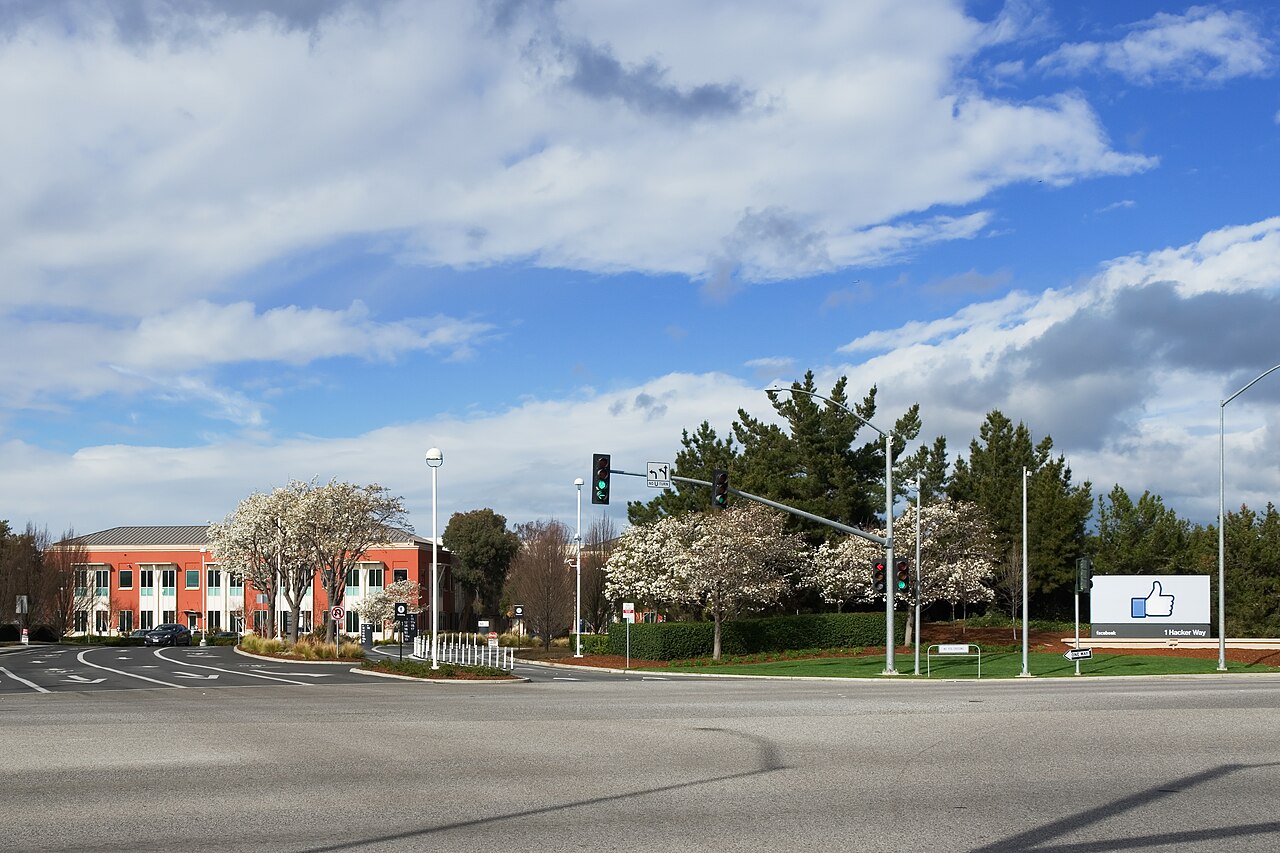
- Hero and in-body photo: "Facebook Headquarters 1 Hacker Way Menlo Park.jpg", released under CC0, via Wikimedia Commons. Pulled 2026-10-22 and reviewed visually before use.