TSMC reported third-quarter 2026 results on October 15, 2026, with revenue of US$46.72 billion and net income of NT$763.06 billion. Our earlier coverage looked at the monthly revenue run that led into the quarter and at the Q2 results. This article concentrates on what the quarter says about margins, product mix and capital spending, and what the fourth-quarter guidance implies. A note on currency, since secondary sources conflict: growth of 41.2% year over year is the US dollar figure, while 50.9% is the NT dollar figure. Both come from the same filing.
The headline numbers, and the currency question
In NT dollars, TSMC's 6-K shows revenue of NT$1,494.24 billion, up 50.9% from a year earlier and 17.6% from the second quarter. In US dollars, revenue was US$46.72 billion, up 41.2% year over year and 16.2% quarter over quarter. The gap between the two year-over-year rates reflects the NT dollar to US dollar exchange rate between the two periods, not a different business. Net income was NT$763.06 billion (up 68.7% year over year and 8.0% quarter over quarter), diluted EPS was NT$29.43, and ADR EPS was US$4.60. Gross margin was 66.4%, operating margin 58.7% and net margin 51.1%.
Revenue came in above the high end of TSMC's own guidance, according to the CFO's remarks as reported in the Investing.com call transcript. Press coverage cites different guidance ranges, and we did not find the range in the filing itself, so we do not repeat one here.
Gross margin: down 130 basis points, with a stated cause
The 66.4% gross margin is 130 basis points below the 67.7% reported for Q2. The CFO attributed the decline mainly to dilution from the 2nm ramp, per the call transcript. The arithmetic of that explanation is straightforward: a new node usually starts with lower yields and higher depreciation per wafer than mature nodes, so its first quarters of volume pull the blended margin down even while revenue rises.
A useful derived figure is the gap between gross and operating margin, which is a rough read on operating expense intensity. In Q3 it was 66.4% minus 58.7%, or 7.7 percentage points. At the Q4 guidance midpoints (66% gross, 57.5% operating) it is 8.5 points. That implies operating expenses growing slightly faster than revenue next quarter, though midpoints of ranges are only a guide.
There is no ceiling for TSMC's profitability, but a dramatic increase will not happen overnight either.
C.C. Wei, as transcribed by Investing.com
Mix: HPC at 68%, and 2nm already 8% of wafers
By platform, high-performance computing was 68% of Q3 revenue, up 22% quarter over quarter, per the call transcript. Smartphone was 21% (up 10%), IoT 4% (up 5%), automotive 4% (up 23%) and DCE 1% (down 12%). Applying the 68% to US$46.72 billion gives roughly US$31.8 billion of HPC revenue, and 21% gives roughly US$9.8 billion for smartphone. These are approximations because shares are rounded. For comparison, our Q2 coverage cited HPC at 66% of revenue, so the share rose about two points while total revenue grew 16%.
By process node, 2nm contributed 8% of wafer revenue, 3nm 33%, 5nm 28% and 7nm 10%, together 79% for 7nm and more advanced technologies, per the 6-K.
TSMC Q3 2026: share of wafer revenue by process node
Percent of total wafer revenue in the quarter ended September 30, 2026.
Source: TSMC Form 6-K filed with the SEC for the third quarter of 2026. The four nodes shown sum to 79%, matching the reported share for 7nm and more advanced technologies; the remaining 21% is older nodes.
Our Q2 coverage cited roughly 3% for first 2nm wafer revenue, which suggests 2nm moved from about 3% to 8% in one quarter, a rise of about five points. The two figures come from different filings and rounding, so treat the change as approximate. The margin cost of that speed is visible in the gross margin line above.
Capex: US$60-64 billion, reaffirmed
Third-quarter capital expenditure was NT$443 billion, about US$13.8 billion, according to the transcript coverage. Full-year 2026 capex guidance of US$60 billion to US$64 billion was reaffirmed. Management also said capex across 2026 to 2028 is expected to be significantly higher than the past three years, per a summary of the call.
Two ratios help frame this. Q3 capex of US$13.8 billion is about 30% of that quarter's US$46.72 billion revenue (13.8 over 46.72), a quarterly figure that is higher than the full-year share because spending is lumpy. And the guided range implies an average of US$15 to US$16 billion per quarter (60 to 64 divided by 4), so a Q3 figure just below that average does not by itself change the full-year picture. Overseas fabs are part of the spend; the call coverage says dilution to gross margin from overseas fabs is currently closer to 2% and is expected to widen to 3% to 4% in the next few years.
What the Q4 guide implies
TSMC guided Q4 revenue to US$52.3 billion to US$54.3 billion, gross margin to 65% to 67% and operating margin to 56.5% to 58.5%, assuming 31.8 NT dollars per US dollar.
- Revenue: against Q3's US$46.72 billion, the range implies sequential growth of about 11.9% at the low end, 14.1% at the midpoint (US$53.3 billion) and 16.2% at the high end. That is below Q3's own 16.2% sequential growth at the midpoint.
- Margin: the 66% midpoint is 40 basis points below Q3's 66.4%, so the guide assumes 2nm and overseas dilution continue, partly offset by cost improvements.
- Gross profit dollars: about US$35.2 billion at midpoints (53.3 times 0.66) versus about US$31.0 billion in Q3 (46.72 times 0.664), an increase of roughly 13%. Profit dollars grow even as the margin percentage edges lower.
- Full year: management said it now expects 2026 revenue growth of about 44% in US dollars, per the call coverage, up from the earlier outlook of slightly above 40% that we noted in the Q2 post.
Wei on Terafab: still in discussion
Asked about Terafab, the Tesla and SpaceX-backed chip complex covered in our piece on Musk's October statements, C.C. Wei did not name Musk, SpaceX or Tesla, according to the Investing.com transcript. He said TSMC talks to one customer trying to build a fab, "Terafab," and that "we are still in discussion." The transcript summary we read attributes further wording about who would run the fab, but we could not confirm its exact context against a full primary transcript, so we leave it out. Musk's October 7 statement was that his companies would build and run the fab, so what a TSMC role would actually be remains publicly unresolved.
What remains unknown
- 2nm margin path. The filing gives the Q4 range but not when 2nm margins converge toward the corporate average.
- Customer concentration. HPC at 68% is a platform share, not a customer share; how much comes from a few accelerator designers is not disclosed in the filing.
- Preliminary status. The 6-K table notes the Q3 figures have not been approved by TSMC's Board of Directors.
- 2027 capex. Only the 2026 to 2028 direction ("significantly higher") was described, not a number.
For readers building on AI hardware, the practical read is that supply and cost at the leading edge keep shaping what compute costs downstream. Model-agnostic tools such as Metir AI are one way teams avoid tying a product to a single provider's hardware cycle.
Sources:
- TSMC Form 6-K, third quarter 2026 results and guidance (SEC)
- Earnings call transcript: TSMC beats Q3 2026 estimates as stock slips (Investing.com)
- Key facts: TSMC Q3 revenue NT$1.49T record; 2026 capex US$60-64B (TradingView News)
Image credits
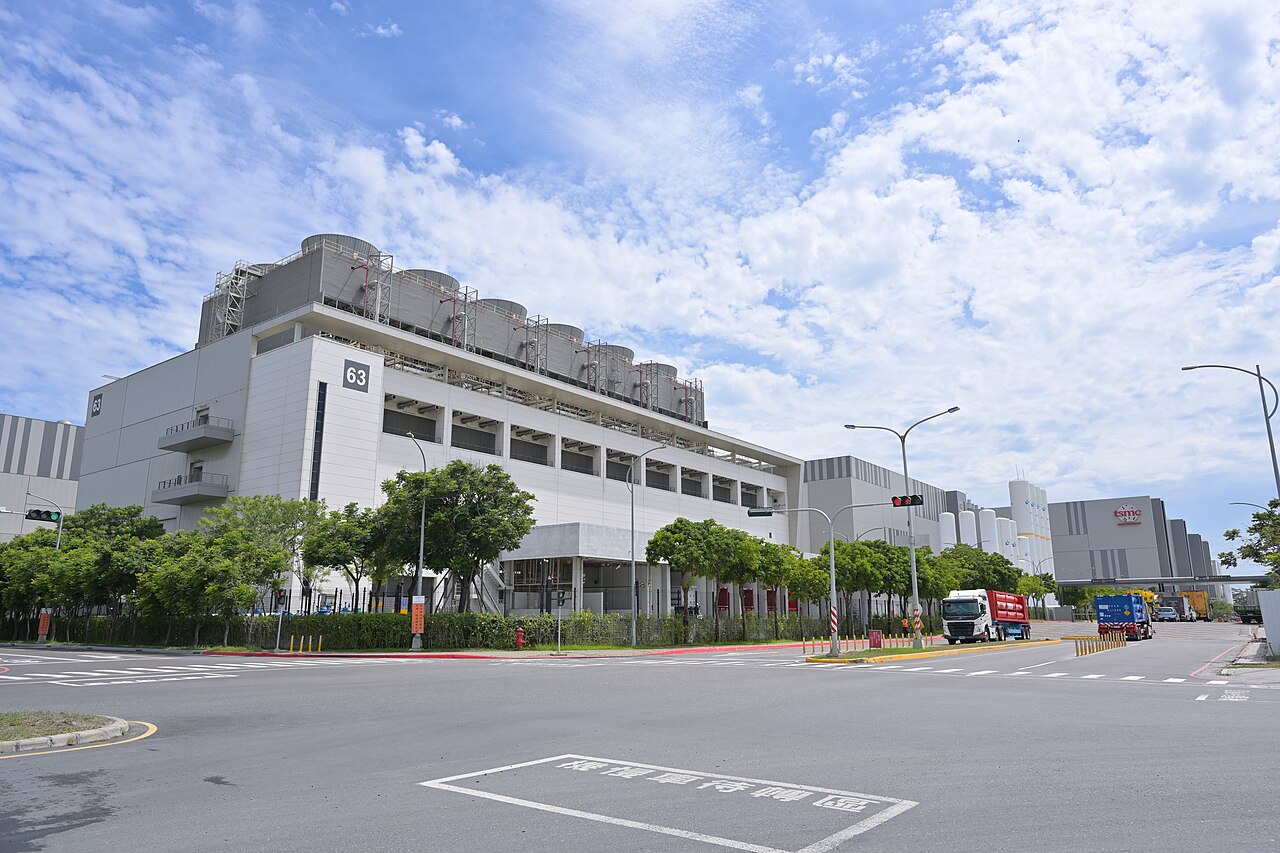
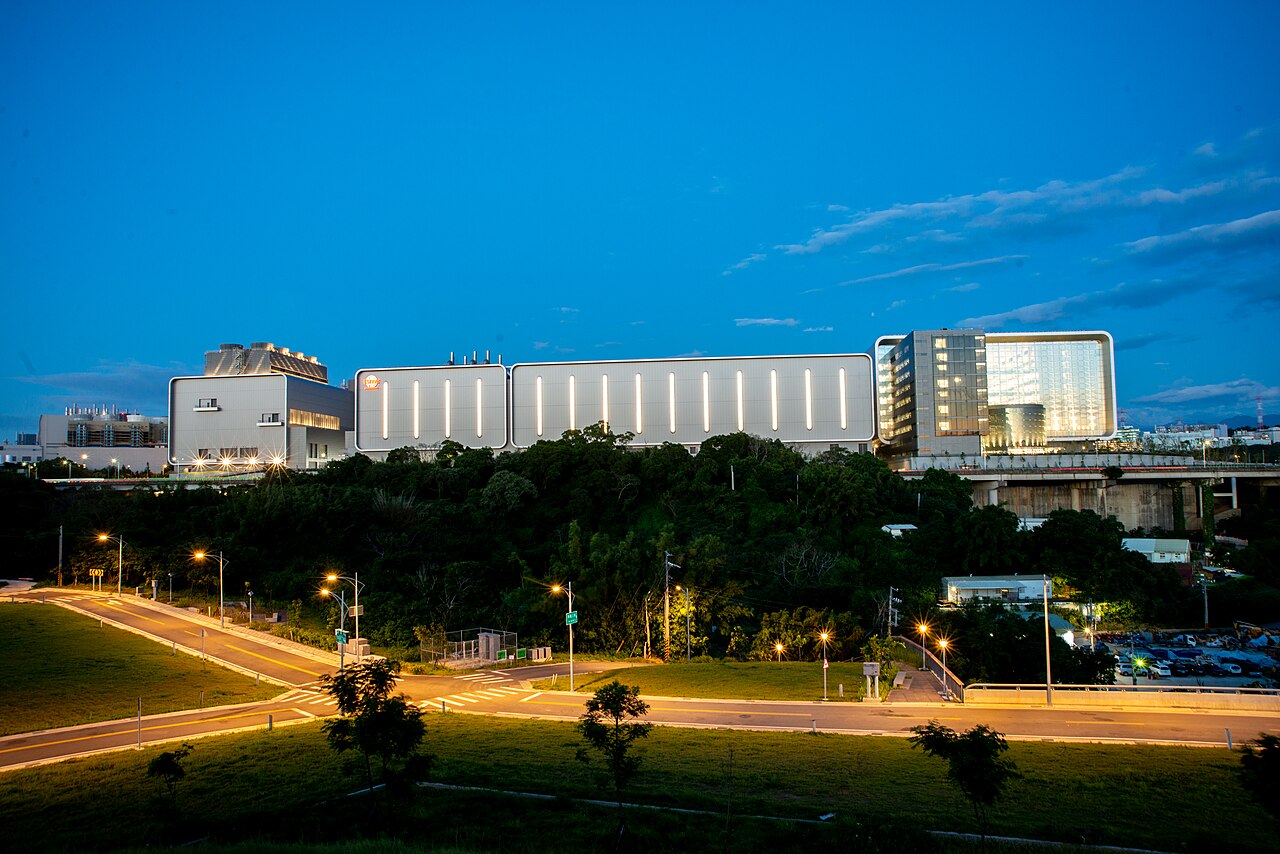
Header image: TSMC Fab 18 in the Southern Taiwan Science Park, Tainan, photographed May 2025 by 4300streetcar, via Wikimedia Commons, licensed CC BY 4.0. In-body photograph of the TSMC Global R and D Center in Hsinchu by 曾 成訓, via Wikimedia Commons, licensed CC BY 2.0. Both are illustrative and were taken before this quarter.