On September 20, 2026, the Financial Times reported that Big Tech companies hold roughly $300 billion of AI infrastructure exposure off their balance sheets, structured through guarantees and special-purpose vehicles rather than reported as ordinary debt. The number is large, but the more useful part of the story is the how. Once you understand the instrument doing the work, a residual value guarantee, the headline stops being a scandal and becomes something more precise: a question about what an investor can see when they read a financial statement.
Nothing here is alleged to be illegal, and the arrangements are disclosed. The debate is about visibility, and visibility is worth taking seriously on its own terms.
What a residual value guarantee is
Start with the plain mechanics. A technology company wants a data center built. Instead of borrowing the money itself and recording that debt, a separate legal entity, a special-purpose vehicle, is created to own the facility and issue the debt against it. Outside investors, typically asset managers and private-credit funds, put up most of the equity and buy that debt.
The mechanics of a residual value guarantee
The build gets financed and the capacity gets built. What moves is where the debt is reported: onto a separate entity, backed by a promise that sits in the footnotes.
The risk that concentrates the argument is the guarantee itself: it becomes a real cost only if AI hardware has to be sold below its agreed value, which is precisely the scenario a slowdown would produce.
The tech company's role is the guarantee. It promises that if the facility or its chips eventually have to be sold and fetch less than an agreed value, it will cover part of the shortfall. That promise is a residual value guarantee. Because the debt sits in the SPV and the company's obligation is a contingent guarantee, the borrowing does not appear as a liability on the company's own balance sheet. It shows up instead as a disclosure in the footnotes, which is a very different thing from a headline debt figure that flows into the leverage ratios most people actually read.
The two examples that make it concrete
The FT investigation put numbers on the pattern. Alphabet's disclosed data-center lease guarantees jumped from $16.9 billion to $43.8 billion in roughly six months, with under 2 percent of that carried on its balance sheet.
Alphabet's data-center lease guarantees, before and after
Disclosed guarantee balance in US dollars over roughly six months. Less than 2 percent of the total was recorded on the balance sheet itself.
A guarantee is a contingent liability, not debt the company drew down. The scrutiny is about how much of that contingent exposure a reader can see in the headline balance sheet, coloured here for emphasis only.
Meta's Louisiana project, reported at around $50 billion, is structured through a Delaware special-purpose vehicle in which an outside investor holds about 80 percent and Meta about 20 percent, backed by roughly $28 billion of residual value guarantees supporting roughly $27 billion of debt held by large credit investors. Meta, Amazon, Oracle, Broadcom, and Nvidia were all cited using variants of the same approach. The structures differ in detail; the shared feature is that the company underwrites the downside without reporting the borrowing as its own.
Why any of this is allowed, and why it is done
Off-balance-sheet financing is a normal, legal tool, and companies use it for reasons that are not sinister. It spreads the capital cost of a build across outside investors, it keeps a company's reported leverage lower, and it can match the financing to the life of the asset. Accounting rules permit it as long as the arrangements are disclosed, and they are, in the footnotes and risk sections of public filings.
 Google
 Meta
Meta AWS
AWS NVIDIA
The reason it draws scrutiny now is the specific risk these guarantees are written against. A residual value guarantee becomes a real cash cost only if the underlying assets, in this case AI chips and the buildings around them, are sold for less than their agreed value. That is precisely the scenario an AI slowdown would produce: if demand for compute softened, GPUs would depreciate faster and resale values would fall, triggering the very guarantees that are currently invisible in the leverage ratios. The structure is most benign exactly when it is least needed, and most consequential in the one environment it is meant to protect against.
A guarantee written against the resale value of AI chips is a bet that AI chips hold their value. That bet is fine until it is the thing everyone is testing at once.
Metir analysis
How to read it without overreacting
Two failure modes are worth avoiding. One is to treat $300 billion of guarantees as $300 billion of hidden debt about to detonate. It is not. A contingent guarantee is not drawn debt, and many of these facilities will run profitably for years, in which case the guarantees are never called. The other failure mode is to wave it away because it is disclosed and legal. Disclosure in a footnote is not the same as visibility in the numbers investors actually price on, and a guarantee that only bites in a downturn is, by construction, correlated with everything else going wrong at the same time.
The measured reading sits between the two. The AI build-out is real, the capacity is genuinely being created, and the financing engineering is a rational response to its scale. It also means the sector's true leverage is higher and less legible than the headline balance sheets suggest, and that the downside is concentrated in a scenario, falling hardware values, that would hit many of these companies together.
For businesses relying on that infrastructure rather than financing it, the practical takeaway is modest but real. The durability of the AI build-out is now partly a financing question, not only a technology one, and financing structures can change faster than data centers can be repurposed. Keeping your own AI stack flexible enough to move across providers, rather than hard-wired to any single one's capacity bets, is one way to stay insulated from decisions being made three layers down in a special-purpose vehicle you will never see.
Sources:
- Big Tech uses guarantees to keep $300bn of AI exposure off balance sheets | Ground News (Financial Times)
- FT: Big Tech Hides ~$300B of AI Infrastructure Debt Off Balance Sheets via Residual Value Guarantees | AI Weekly
- Big Tech expands AI financing guarantees as off-balance-sheet exposure reaches $300bn | Traders Union
- Alphabet and Meta's AI Infrastructure Financing: What $300 Billion Off the Balance Sheet Actually Means | FourWeekMBA
Image credits
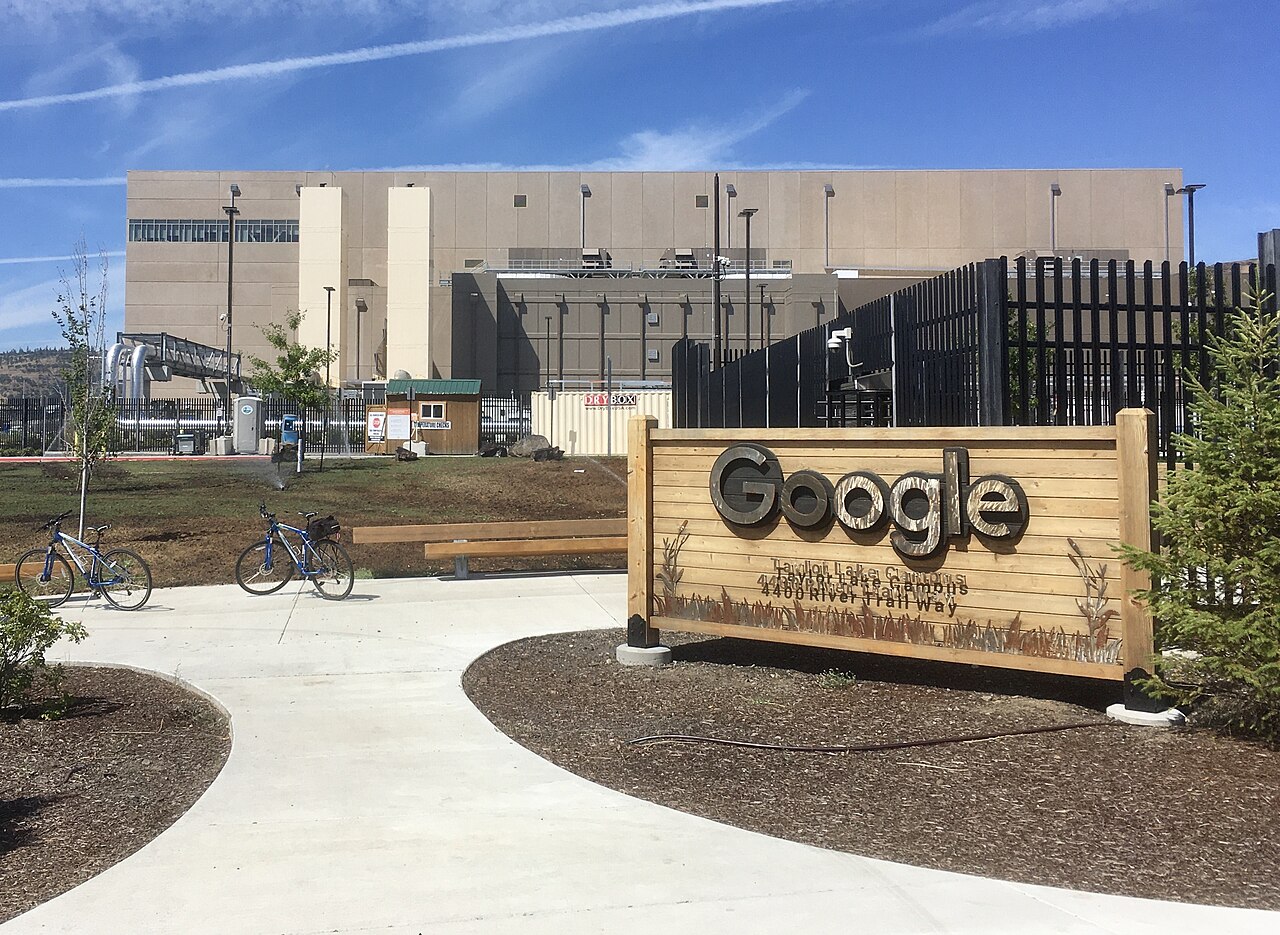
Google data center, by Lambtron, via Wikimedia Commons, licensed under CC BY-SA 4.0.