Anthropic's IPO prospectus shows that Broadcom has agreed to lend the company up to $42 billion so it can lease Broadcom's chips, Reuters reported in an exclusive on October 1, 2026 (Investing.com, via Reuters). The Broadcom Anthropic loan takes the form of convertible notes and is sized to about one-third of the $125.2 billion Anthropic has pledged under a five-year agreement for tensor processing unit (TPU) capacity. It is one of the clearest disclosed examples yet of vendor financing in AI: a chip supplier lending its customer the money to rent the supplier's own hardware.
 Anthropic
The $42 billion here is unrelated to the prospectus's $42 billion fiscal 2025 loss, which we covered separately.
What the Broadcom Anthropic loan covers
According to the reporting on the filing, Broadcom may designate a financing partner to hold the notes, and the notes could convert into Anthropic equity. Anthropic said it does not expect any notes to be sold before its IPO is completed (Yahoo Finance). In April 2026, Anthropic deposited cash into a restricted account for Broadcom's benefit and may have to add funds depending on circumstances. If certain payment or performance defaults were triggered, a large share of its lease obligations could become immediately payable while its access to the facility would be curtailed (Resultsense).
The reports reviewed here do not describe a conversion price, maturity date or interest rate, so the cost of the financing to Anthropic, and the size of any eventual equity stake, cannot be calculated from public information.
How much of the $125.2B TPU lease the Broadcom notes cover, in $B
Gray bars are Anthropic's commitment, green is the maximum Broadcom note facility, and navy bars show Broadcom's own debt and cash for scale.
Sources: Anthropic IPO prospectus as reported by Reuters (Oct 1, 2026); Broadcom fiscal Q3 2026 results (Sept 2, 2026). The notes are a ceiling, not an amount drawn.
Spread evenly, $125.2 billion over five years is about $25 billion a year, though the filing as reported does not give an annual schedule. The notes leave roughly $83.2 billion of the commitment to be funded in other ways, including revenue, IPO proceeds or other debt. Yahoo Finance also reported a separate $15 billion revolving credit facility being arranged.
How convertible notes work
A convertible note is debt that can turn into shares. Until conversion, the holder is a lender with a claim on repayment. At conversion, the debt is exchanged for equity at a price or formula set in the agreement. The borrower typically pays less cash interest than on straight debt in exchange for possible dilution; the lender gets a creditor's protection plus upside if the shares rise. In this case, the holder would be Broadcom or its designated partner, which would make Anthropic's chip supplier a potential shareholder too.
Vendor financing in AI: how it compares
Broadcom is following a pattern set by other chip suppliers. "Nvidia is putting in place a massive amount of its balance sheet, and Broadcom is having to follow suit," Seaport Research analyst Jay Goldberg told Reuters (Investing.com).
| Deal | Instrument | Size | Status |
|---|---|---|---|
| Nvidia and OpenAI, Sept 2025 | Staged investment tied to 10 GW of systems | Up to $100B | Replaced by equity stake |
| Nvidia and OpenAI, 2026 | Equity in OpenAI's $110B round | $30B | Closed March 2026 |
| AMD and OpenAI, Oct 2025 | Warrant for AMD shares tied to 6 GW of GPUs | Up to 160M shares | Vests on milestones |
| Broadcom and Anthropic, 2026 | Convertible notes for TPU leases | Up to $42B | Disclosed in prospectus |
 Nvidia
 AMD
AMDThe direction of value differs. Nvidia bought equity in its customer. AMD gave its customer the right to buy AMD stock, potentially about 10% of the company. Broadcom is lending, with the option for that loan to become equity. All three tie a supplier's financial exposure to a customer's chip demand, which is why critics use the label circular financing. Our earlier piece on Nvidia's reported $250 billion OpenAI backstop covers that debate.
The same company would supply the chips, finance the lease, and could end up holding the customer's shares.
Summary of the structure described in Anthropic's prospectus
What it means for Broadcom's balance sheet
At the end of fiscal Q3 2026, on August 2, Broadcom held $24.0 billion in cash against about $59.5 billion of debt, and generated $13.7 billion of free cash flow in the quarter (Broadcom via SEC). A $42 billion facility is large relative to either figure, which is one reason a financing partner matters.
Bloomberg reported on October 2 that banks working for Broadcom are seeking about $60 billion for AI chip financing: a $42 billion Class A senior secured tranche and an $18 billion Class B junior tranche led by Blackstone, which would fund $9 billion itself (Dataconomy). The matching $42 billion figure suggests a link to the Anthropic facility, but the reports reviewed here do not state that the two are the same instrument. This builds on the August talks about up to $100 billion.
The prospectus itself flags the tension. Broadcom's roles as hardware supplier and financier create "potential conflicts of interest," and its pricing and hardware decisions could "hamper Anthropic's access to sufficient computing infrastructure" (Yahoo Finance). Concentration runs both ways: Anthropic is expected to be Broadcom's largest compute customer in 2027, and Broadcom projects AI semiconductor revenue of $115 billion in fiscal 2027 (Investing.com).
The IPO context
The disclosure arrives as investors read a prospectus showing close to $4.6 billion of 2025 revenue, an operating loss above $8 billion and about $518 billion of infrastructure obligations (Yahoo Finance). Because the notes could convert, prospective shareholders will want the conversion terms when they are published. Our IPO timeline post covers the expected listing schedule.
Looking ahead
The notes cover about one-third of the TPU commitment, and the terms that determine their cost and dilution are not yet public. How much risk Broadcom itself carries will depend on whether a financing partner takes the notes. For teams building on these models, compute deals this concentrated are a reminder that capacity and pricing can shift, which is one reason some use model-agnostic tools such as Metir.
Sources:
- Investing.com (Reuters): Exclusive: Broadcom to lend Anthropic up to $42 billion to lease its chips, filing says
- Yahoo Finance: Broadcom offering Anthropic $42 billion loan for AI chip leases
- Quartz: Broadcom is offering to lend Anthropic up to $42 billion
- Resultsense: Broadcom to lend Anthropic up to $42bn, IPO filing shows
- Dataconomy: Broadcom banks seek $60B to finance AI chips
- Broadcom fiscal Q3 2026 results (SEC exhibit 99.1)
- NVIDIA: OpenAI and NVIDIA announce strategic partnership to deploy 10 gigawatts
- CNBC: Nvidia CEO Huang says $30 billion OpenAI investment might be the last
- CNBC: AMD stock skyrockets as OpenAI looks to take stake in AI chipmaker
Image credits
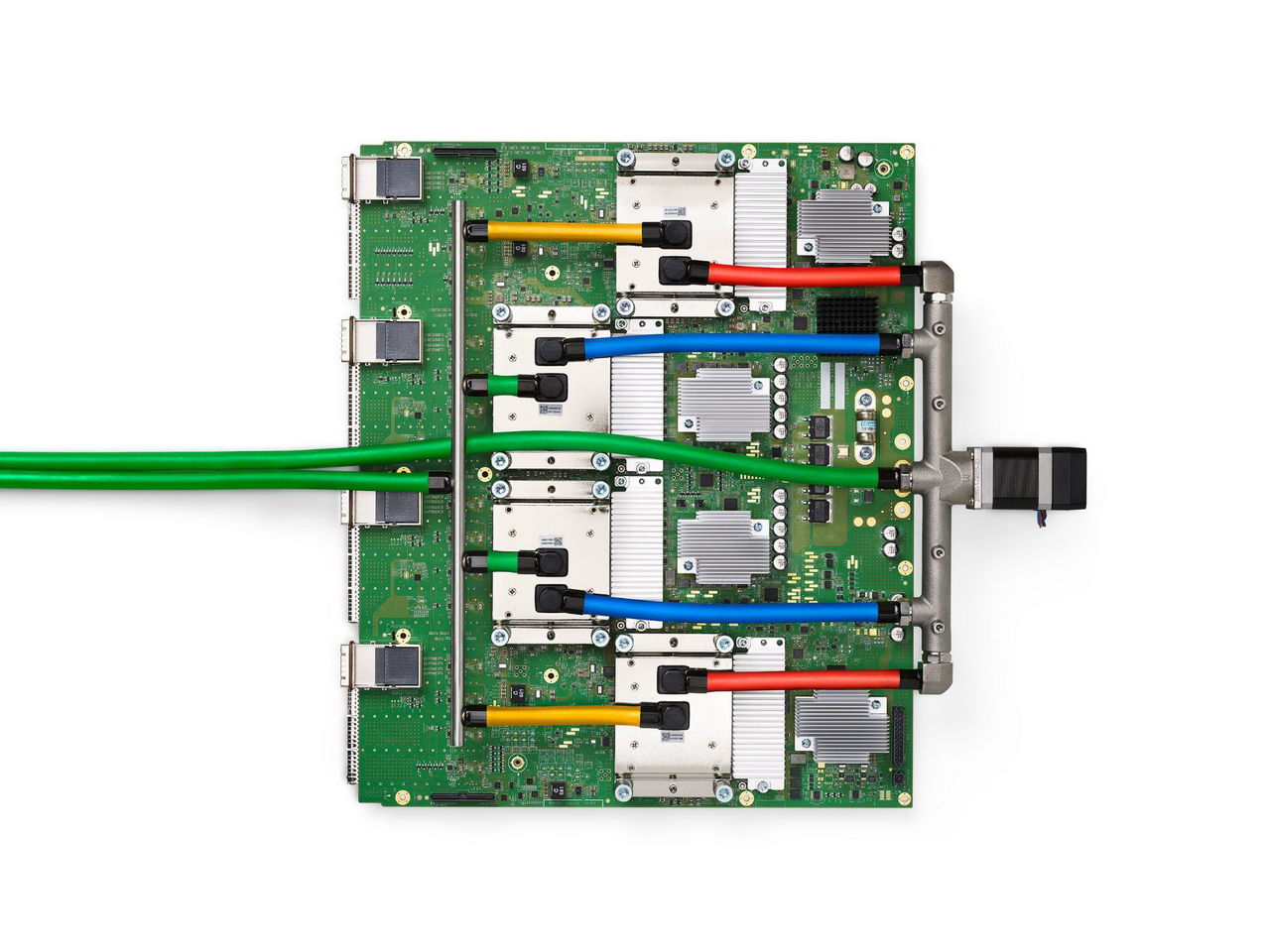
- Hero: Google TPU v4 board with four liquid-cooled TPU v4 packages, an earlier TPU generation shown for illustration and not the capacity Anthropic is leasing. Source: Wikimedia Commons, by Norman P. Jouppi, George Kurian, Sheng Li, Peter Ma, Rahul Nagarajan, Lifeng Nai, Nishant Patil, Suvinay Subramanian, Andy Swing, Brian Towles, Cliff Young, Xiang Zhou, Zongwei Zhou and David Patterson, licensed CC BY 4.0.
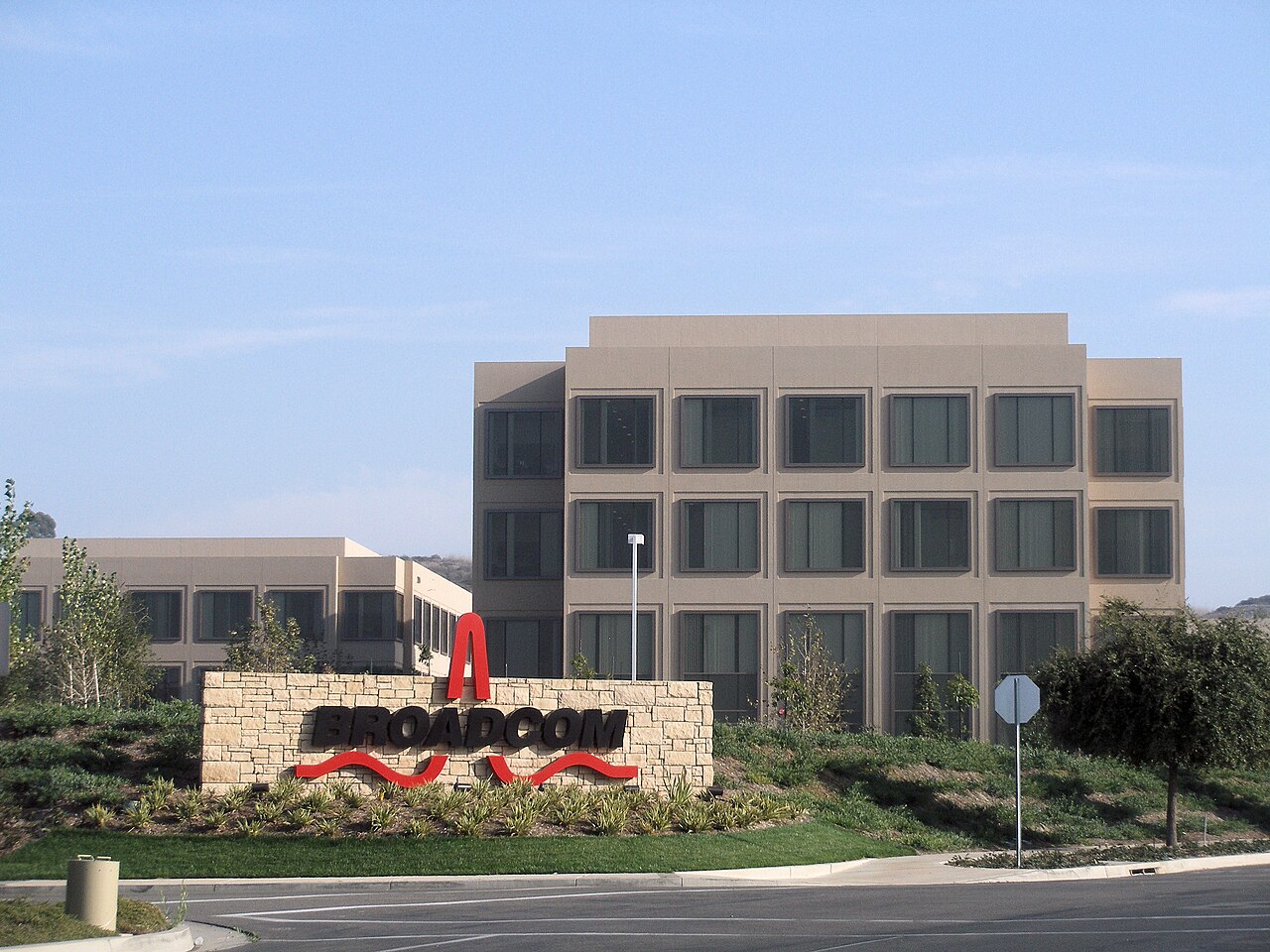
- In-body: Broadcom headquarters building and sign, 2007. Source: Wikimedia Commons, by Coolcaesar, licensed CC BY-SA 3.0.