On October 4, 2026, Axios reported that Reflection, an Nvidia-backed startup, is preparing to release its first open-weight model, and that the model is expected to compete with Chinese open models such as DeepSeek and Qwen. Nothing has shipped yet. As of this writing there is no announced model name, release date, license, model card or independent benchmark, according to coverage such as ExplainX. This piece separates what is documented about Reflection AI's first open-weight model from what is still intent: who funds the company, how much compute it has secured, and why Western enterprises might care.
 NVIDIA
Who Reflection is and how it got funded
Reflection was founded in 2024 by two former Google DeepMind researchers, Misha Laskin (CEO) and Ioannis Antonoglou (co-founder and CTO). Its first product was Asimov, a code-comprehension agent that indexes repositories and developer tools so engineers can ask questions about a large codebase, per Sacra. The company positions itself as an open-model alternative to closed frontier labs.
The funding record that multiple sources agree on:
- March 2025: about $130 million across a seed and a Series A led by Lightspeed Venture Partners and Sequoia Capital (Sacra).
- October 2025: a $2 billion round at an $8 billion valuation, led by Nvidia with $800 million. Other investors named in coverage include Lightspeed, Sequoia and Eric Schmidt.
- 2026: the picture is less clear. The Next Web reported in July, citing the Wall Street Journal, that Reflection was seeking $2.5 billion at a $25 billion valuation. Some data trackers instead describe a Series C closing in April 2026. Because sources disagree, treat the 2026 valuation as reported rather than confirmed.
The compute behind the model
Open weights still need enormous training runs, and Reflection has been buying capacity. Two deals are documented.
SpaceX. On June 23, 2026, The Next Web reported a roughly $6.3 billion agreement in which Reflection pays SpaceX about $150 million a month from July 1, 2026 through 2029 for Nvidia GB300 systems at the Colossus 2 data center in Memphis. Either party can exit on 90 days' notice after the first three months, so $6.3 billion is a ceiling, not a guarantee. Our earlier post on SpaceX's compute leasing business places this contract alongside the much larger Anthropic and Google arrangements.
Nebius. In mid-July 2026, Bloomberg and others reported a deal worth more than $1 billion for GB300 capacity through 2029. Antonoglou was quoted by The Next Web: "The need for open models is clear, and this additional compute capacity will allow Reflection to continue to build" frontier AI systems at scale.
Reflection's reported compute commitments
Contract value through 2029, in billions of US dollars. Both deals are for Nvidia GB300 capacity.
The SpaceX figure is a ceiling that assumes the full term runs. The Nebius figure is a floor.
Together the two deals account for more than $7 billion of committed or capped spending through 2029, the figure repeated in the October coverage. A derived observation: the SpaceX contract is the larger commitment, but the exit clause makes the Nebius floor and the SpaceX ceiling different kinds of numbers, which is why the chart labels them separately.
The enterprise pitch: an American alternative
The reported target is Western enterprises that want low-cost AI they can run themselves but are wary of the security and provenance concerns attached to Chinese-developed models. Runtimewire describes the framing as an "AI factory": a package of models, software, computing capacity and engineering that lets a company customize a model around its own data and deployment needs, with the weights downloadable so users can adapt them independently. That echoes the language Nvidia uses for its own infrastructure vision, and it explains why an Nvidia-backed lab is a natural fit.
The market context is covered in our analysis of Chinese open models and US enterprise adoption. Open-weight Chinese systems have been competitive on price and capability, while some government agencies and defense contractors have avoided them over origin concerns, as ExplainX notes. A US-origin open model does not need to win every benchmark to be useful to that audience; it needs to be good enough and acceptable to procurement teams.
To build a big rocket ship, it takes time.
Misha Laskin, as quoted by Runtimewire, on how long it takes Reflection's models to reach the most advanced capabilities
Laskin's remark matches the expectation in the Axios scoop that the model will initially trail the best US closed systems. Reflection is competing on openness and deployability, not on topping a leaderboard.
What is not yet known
Several open questions determine whether this matters to buyers:
- Release terms. There is no confirmed license. Turing Post noted that Reflection has signaled it will release weights while keeping datasets and training pipelines proprietary, closer to Meta's approach than a fully open project. That is a reading of leadership statements, not a published license.
- Track record. As of Turing Post's earlier review, Reflection had no public models on Hugging Face, and Asimov had been behind a waitlist as of March 2026.
- Performance. No independent benchmark exists. "Competitive with leading Chinese open models" is the reported expectation, not a measurement.
- Policy context. The debate over whether downloadable models should face restrictions, covered in our post on Nvidia's open weights letter, will shape how and where a model like this can be distributed.
How to read the announcement
The strongest facts are financial and infrastructural: a documented $2 billion round led by Nvidia, and two multi-year compute contracts with named counterparties. The weakest are the model's capabilities, which no one outside the company has tested. For teams evaluating open models, a sensible approach is to build a small evaluation set from your own tasks now, price self-hosting against hosted APIs, and wait for the license and weights before committing. A model-agnostic workspace such as Metir AI makes that comparison easier, since swapping a new open model in alongside existing ones does not require rebuilding your workflow.
The wider trend is that open-weight leadership, which in 2025 and 2026 was largely Chinese-developed, now has a funded US-based contender backed by the dominant chip supplier. Whether Reflection's first release narrows that gap will be visible in downloadable weights and third-party benchmarks, not in funding totals.
Sources:
- Scoop: A powerful new model from startup Reflection is set to shake up the AI race | Axios
- Reflection prepares its first open-weight model for enterprise AI | Runtimewire
- Reflection AI Open-Weight Model: What We Know (Oct 2026) | ExplainX
- SpaceX lands $6.3bn compute deal with Reflection AI | The Next Web
- Reflection signs a $1bn AI compute deal with Nebius | The Next Web
- Nebius to Sell $1 Billion in AI Capacity to Startup Reflection | Bloomberg
- Reflection AI valuation, funding and news | Sacra
- Reflection AI: $25B Valuation, SpaceX Deal and the Open-Weight Bet | Turing Post
- Reflection AI | Wikipedia
Image credits
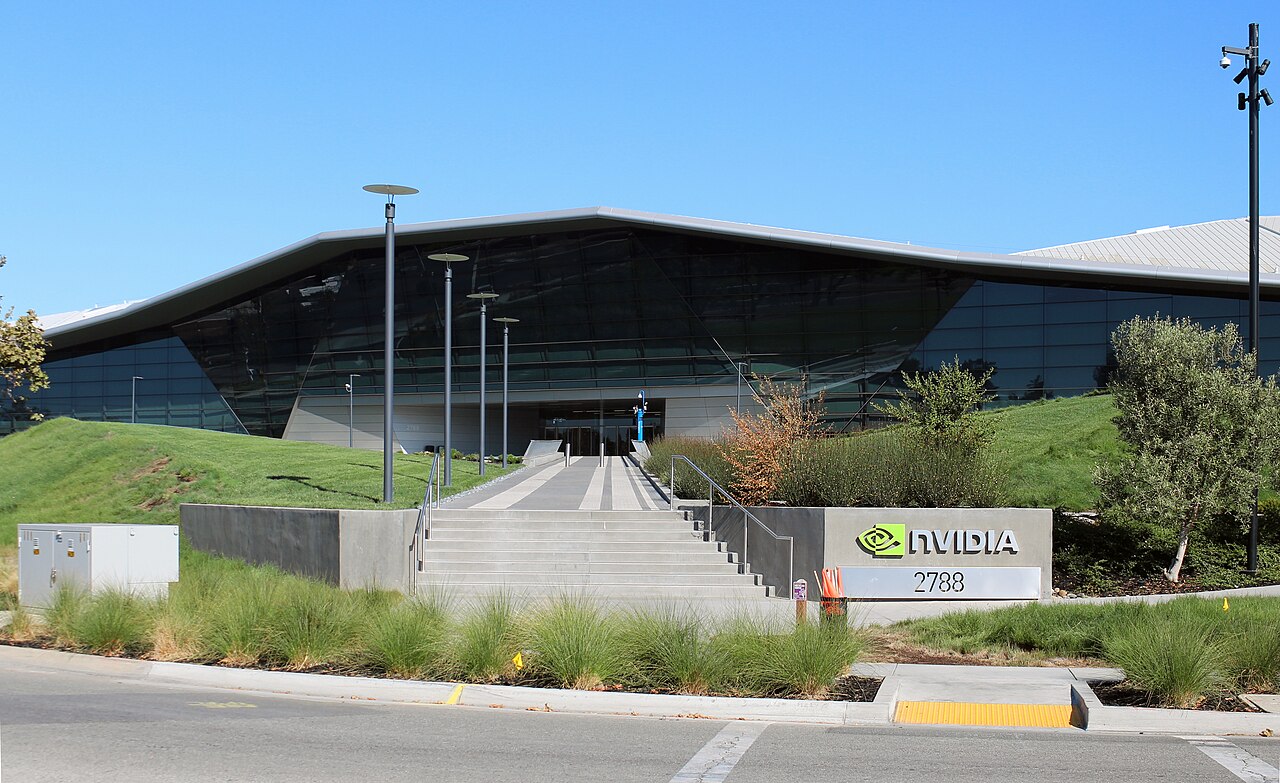
Header and in-body image: Nvidia headquarters, Santa Clara, California, photographed August 4, 2018 by Coolcaesar via Wikimedia Commons, licensed CC BY-SA 4.0. It shows Nvidia's building, not Reflection. Reviewed before use.