On Tuesday, October 27, 2026, The Information reported that OpenAI plans to buy tensor processing units (TPUs) from Google, citing one person familiar with the matter. Reuters carried the report, and The Next Web, which published it on October 28, said it had not independently verified it. OpenAI declined to comment, and Google had not responded to Reuters' request, made outside regular business hours.
The reporting is thin on specifics: it gives no financial terms, chip counts, delivery timing or chip generation, and does not say where the chips would run. That makes it a signal worth analyzing, and not yet a confirmed transaction.
What is known and what is not
| Item | Status |
|---|---|
| OpenAI plans to buy Google TPUs | Reported by one source, unconfirmed |
| Price, volume, delivery date | Not reported |
| Chip generation | Not reported |
| Where the chips would be hosted | Not reported |
| OpenAI and Google comment | OpenAI declined; Google had not responded |
The reported sequence so far
OpenAI and non-Nvidia compute: the reported sequence
The final step is a single-source report that neither company has confirmed.
- Jun 2025Reuters: OpenAI begins renting Google TPUs; OpenAI later says no active plans to use them in products
- Apr 2026Google says it will sell TPU hardware directly to a small group of customers
- Jun 2026OpenAI unveils its first custom chip, designed with Broadcom
- Oct 2026OpenAI says frontier models will be available on Google Cloud
- Oct 27, 2026The Information: OpenAI plans to buy Google TPUs (unconfirmed)
The Next Web and Reuters supply the background. Reuters reported in June 2025 that OpenAI had begun renting Google's chips, its first meaningful use of non-Nvidia hardware, mainly to lower inference costs. OpenAI then said it had no active plans to use them in its products. In April 2026, Google said it would sell TPU hardware directly to a small group of customers who could run the chips in their own data centers. In June 2026, OpenAI unveiled its first custom AI chip, designed with Broadcom, and said it planned to use it by the end of this year. Last week, according to The Next Web, OpenAI said its frontier models would be available on Google Cloud, following a similar move with Amazon Web Services. We covered that step in OpenAI models on Google Cloud Model Garden, and the custom chip in our Jalapeno chip benchmark analysis.
Why the buy-versus-rent distinction matters
Renting capacity in Google Cloud and buying hardware are different commitments. Renting leaves the chips in Google's facilities and operations. Buying, in the reporting's framing, would be a different arrangement, though the sources do not say how it would be structured. Google's April announcement that it sells TPUs to a small group of customers for their own data centers is the closest published precedent, and The Next Web notes demand has grown partly from deals with Anthropic, to the point that Google's own researchers have had to wait for access.
Reading the market signals
- Supplier concentration. The Next Web describes OpenAI as among the largest buyers of Nvidia's GPUs. A second large accelerator source, if confirmed, would add a rival chip supplier to a customer that has leaned on one.
- Google's TPU business. Alphabet CFO Anat Ashkenazi said the company expects a small share of TPU sales revenue by the end of 2026, with most arriving in 2027, per The Next Web. Reuters noted investors were watching Google Cloud closely, with Alphabet reporting results the day after the story.
- Software portability. Moving a model stack between chip families is rarely a simple swap, because compilers and kernels differ. Our look at TorchTPU and PyTorch lock-in covers the software side that any such shift would depend on.
- Scale of spending. Reuters reports that Amazon, Microsoft and Alphabet plan to spend as much as $600 billion combined on AI infrastructure this year, which frames why a single chip order from a frontier lab draws attention.
A purchase would be a different arrangement from renting, though the report does not say how it would be structured.
Summary of Reuters coverage
 OpenAI
 Google
 NVIDIA
What would change the picture
- Confirmation. A statement from either company, or a filing, that turns a single-source report into a fact.
- Terms. Volume, generation and delivery dates determine whether this is a pilot or a structural shift.
- Hosting. Whether chips would sit in OpenAI's own data centers, Google's, or a third party's.
- Nvidia's response. How supply deals and pricing from existing vendors evolve, which is outside what the current reporting covers.
What it means for teams building on AI
Chip sourcing is mostly invisible to people using a model, but it can shape pricing, capacity and availability over time. Because labs change suppliers and clouds, many teams prefer not to tie their workflows to one vendor; multi-model tools such as Metir keep that choice open at the application layer. The general point holds whichever way this report resolves.
Sources:
- OpenAI reportedly plans to buy Google's TPU chips alongside Nvidia, The Next Web, October 28, 2026
- OpenAI reportedly plans to buy Google's AI chips, The Information says, Let's Data Science, October 28, 2026
Image credits
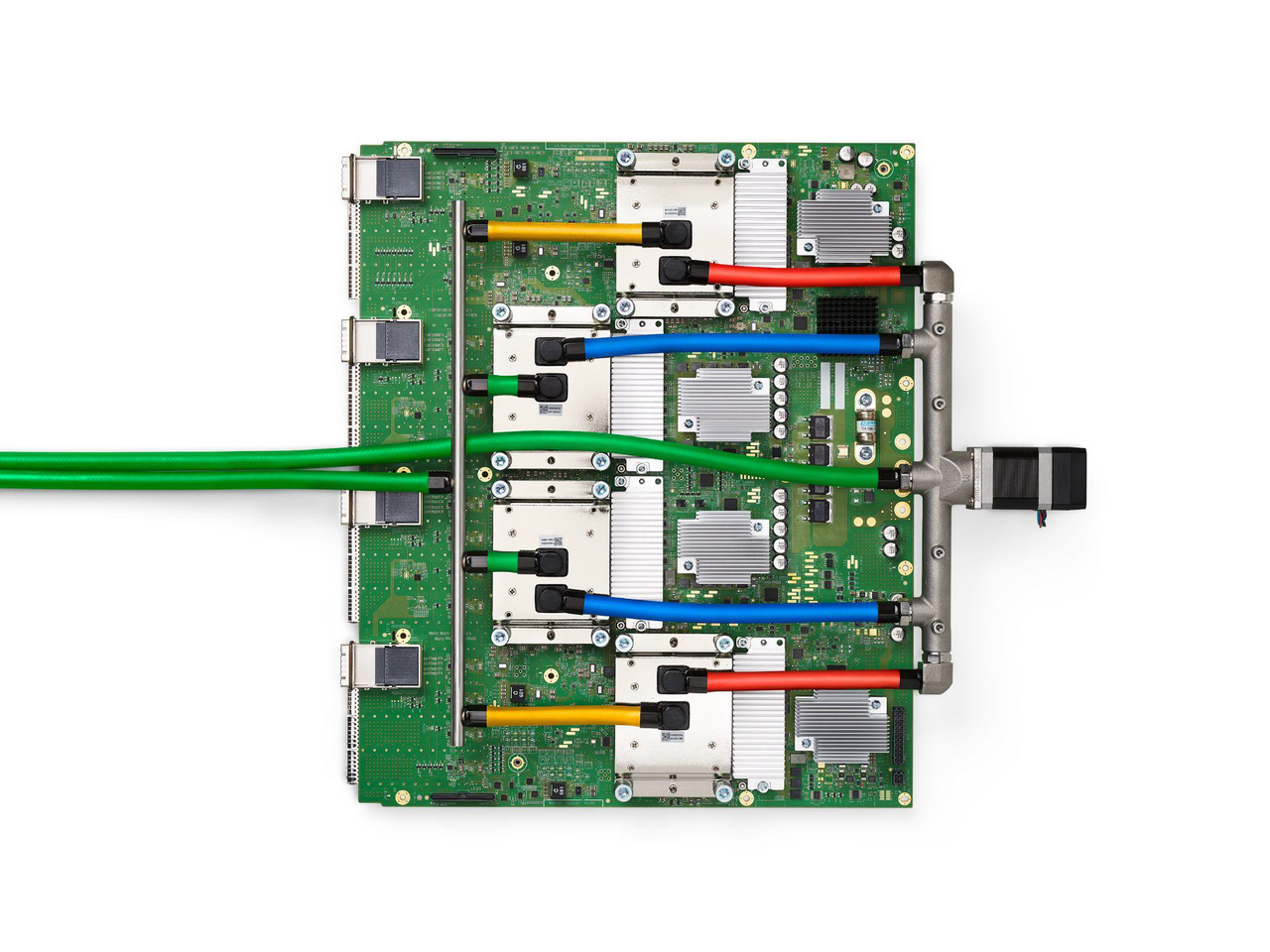
- Google TPU v4 board, from Jouppi et al., arXiv 2304.01433, via Wikimedia Commons, licensed CC BY 4.0. Illustrative of an earlier generation; reviewed visually.