When OpenAI and Broadcom unveiled a custom inference chip called Jalapeno in June 2026, the announcement was mostly about ambition: a fast design cycle, a first tape-out, early samples running in the lab. What it lacked was numbers. On August 24, 2026, OpenAI filled that gap, publishing the first live performance benchmarks for the chip and claiming clear advantages in energy efficiency and latency over Nvidia's flagship Blackwell-generation systems. The reaction was immediate, because a credible challenge to Nvidia on its own benchmarks is a rare thing. This piece works through what OpenAI actually claimed, the caveats that come attached, and why the specific metric it chose to lead with tells you where the AI hardware fight is really being fought.
 OpenAI
 NVIDIA
 AMD
AMD Google
What OpenAI claimed
Jalapeno is an inference chip, meaning it is built to run trained models and answer queries rather than to train models in the first place. That distinction matters, and we will return to it. According to the benchmarks OpenAI released, a 700-watt Jalapeno part delivered between 1.5 and 1.9 times more throughput per kilowatt than Nvidia's GB200 and GB300 rack systems, and between 1.7 and 3.6 times lower end-to-end latency, while drawing far less power: the comparison pits a 700W part against Nvidia accelerators rated at roughly 1,200W and 1,400W.
OpenAI paired the performance numbers with a claim about how the chip was built. It said it used its own generative models to accelerate the hardware engineering itself, compressing the design-to-tape-out timeline to roughly nine months, optimizing arithmetic logic circuits with AI, and generating software kernels where the AI-written implementations reportedly outperformed human-expert kernels by 1.5 to 1.8 times. OpenAI said it plans to begin deploying the chip in its own data centers later this year. The chip was co-developed with Broadcom, which handles the physical design and manufacturing partnership, a division of labor that mirrors how Google built its TPUs.
The caveats that come attached
None of this makes Jalapeno a Nvidia-killer, and reading the benchmarks well means holding several caveats at once.
The first and most important: these are first-party benchmarks. OpenAI designed the tests, chose the workloads, and selected the comparison points. That is standard for a launch, and it does not make the numbers false, but it does mean they are the vendor's best case rather than a neutral referee's verdict. The figures that will actually move the industry are the independent ones, run by third parties on workloads the chip's designer did not pick. Until those exist, the honest posture is to treat the claims as promising and unverified.
The second: this is an inference chip, not a training chip. The comparison to Nvidia is real but narrow. Training the largest frontier models is a different workload with different demands, and it remains Nvidia's stronghold. Jalapeno is aimed at the part of the compute bill that grows every time more people use a model, which is large and growing, but it is not the whole market.
A 700-watt part beating 1,400-watt parts is not really a story about speed. It is a story about power.
On why efficiency per watt is the metric OpenAI led with
The third: efficiency comparisons are sensitive to exactly what is measured. Throughput per kilowatt on a specific model at a specific batch size and sequence length can look very different from throughput on another configuration. A 1.5 to 1.9 times range is wide precisely because the answer depends on the workload. The chip may be excellent at the shapes OpenAI runs most and less differentiated elsewhere, which is fine for a company building a chip for its own traffic but complicates any general claim.
Why efficiency per watt is the real headline
Notice what OpenAI led with. Not raw speed, but throughput per kilowatt. That choice is the analytically interesting part, because it reflects the constraint that increasingly governs AI infrastructure: power.
Power draw: a 700W part against 1,200-1,400W systems
Rated power of the parts OpenAI compared. Jalapeno's efficiency claim is throughput per kilowatt, so a lower power figure at comparable work is the point.
OpenAI reports 1.5 to 1.9 times more throughput per kilowatt than these systems. Figures are OpenAI's own first-party benchmarks.
Data centers are bounded by how many megawatts they can secure and cool. When power is the binding constraint, the question stops being "how fast is one chip" and becomes "how much useful work can I extract from each megawatt I am allowed to draw." A part that does 1.5 to 1.9 times the work per kilowatt lets an operator serve far more traffic inside a fixed power budget, or serve the same traffic while leaving headroom for growth. For a company running inference at OpenAI's scale, that efficiency compounds directly into cost and into how many users it can serve before it runs out of grid.
This also explains why OpenAI would build the chip at all. It is one of Nvidia's largest customers. Designing custom silicon is expensive and slow, and a company only does it when the economics of buying merchant hardware at scale become painful enough to justify the effort. The move is less a bet that OpenAI can out-engineer Nvidia in general and more a bet that, for the specific and enormous workload of running its own models, a purpose-built part pays for itself. Google, Amazon, and Meta reached the same conclusion years ago for their own workloads.
What it changes, and what it does not
For Nvidia, one large customer building an in-house inference chip is a known risk rather than a surprise, and Nvidia's position rests on far more than any single product generation: a mature software stack, a broad installed base, and dominance in training. Jalapeno chips its inference business at the margin; it does not dislodge the platform. The more interesting pressure is cumulative. OpenAI, Google, Amazon, Meta, and now reportedly Anthropic are all designing or deploying custom silicon for the workloads they run most. Each individual chip is narrow. Together they signal that the largest buyers intend to own more of their own inference stack over time.
There is a layer above all of this that the silicon race does not settle. Whichever chip runs a given model, the decision of which model answers a given request, and how a workload is routed across a fleet of different accelerators and hosted endpoints, is a software problem. Systems built to stay model-agnostic and hardware-agnostic, Metir among them, are designed so that a shift in the underlying silicon is a configuration change rather than a rebuild. More competitive inference hardware is good for that layer, because it lowers the cost of the endpoints it routes among without changing what it routes.
The measured takeaway is narrow but real. OpenAI has shown, on its own benchmarks, that a purpose-built inference part can beat Nvidia's flagship on efficiency per watt for the workloads OpenAI cares about. Independent numbers will decide how general that result is. What is already clear is that the metric the industry now optimizes for is not tokens per second in isolation, but tokens per second per watt, and Jalapeno is a bet placed squarely on that shift.
Sources:
- OpenAI says its Jalapeno chip beats Nvidia's GB300 in first published benchmarks (Tom's Hardware, Aug 24, 2026)
- OpenAI Jalapeno: Better Than Nvidia Blackwell (SemiAnalysis)
- OpenAI and Broadcom unveil LLM-optimized inference chip (OpenAI)
- OpenAI Claims an AI Chip Breakthrough. Jalapeno Beats Nvidia's GB300 in Tests. (IBTimes, Aug 2026)
- OpenAI's Jalapeno Chip Is Outperforming Nvidia, AMD And Google Chips, SemiAnalysis Says (TradingView)
Image credits
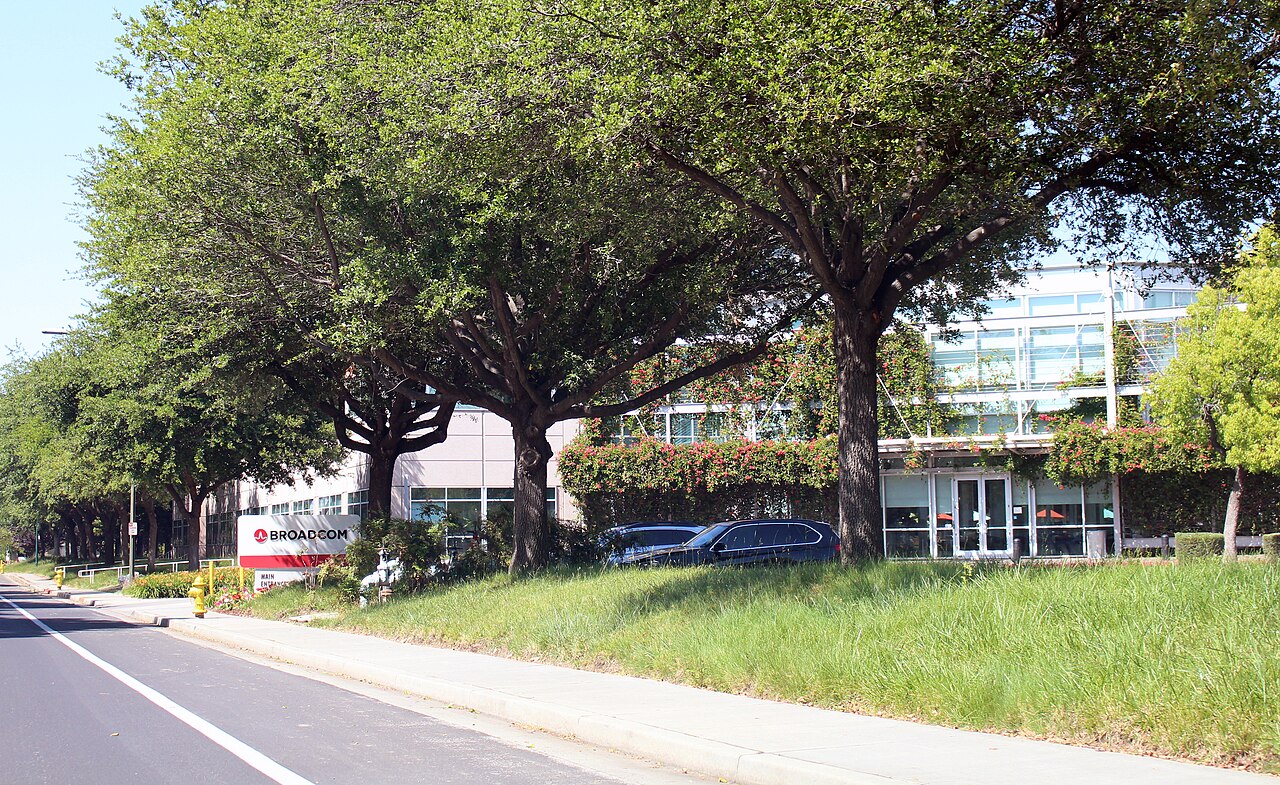
- Hero: "Broadcom Headquarters San Jose" by Coolcaesar (via Wikimedia Commons), licensed CC BY-SA 4.0. Retrieved August 25, 2026.
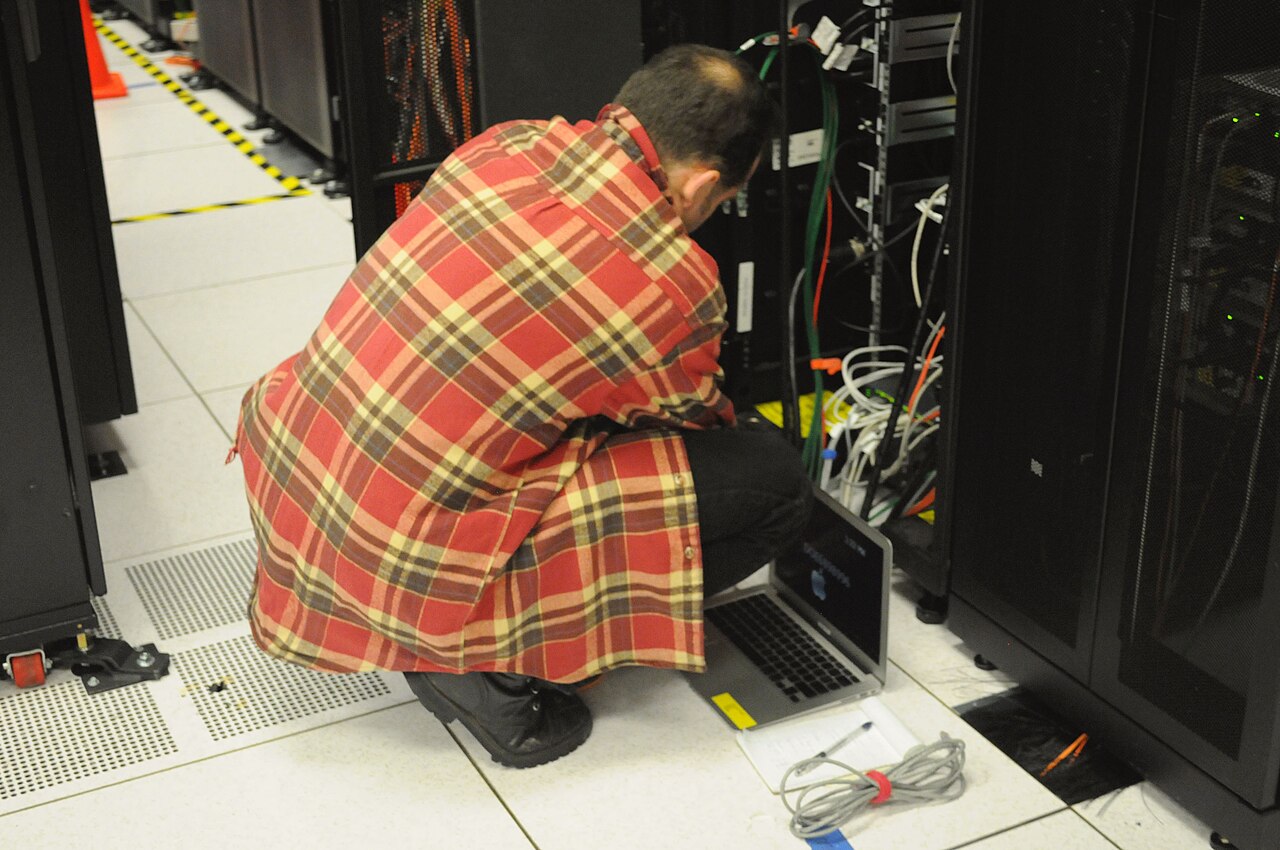
- In-body data-center photo: "Technician with laptop working on server rack at NERSC" (via Wikimedia Commons), released under CC0. Retrieved August 25, 2026. Illustrative only; not Jalapeno hardware.