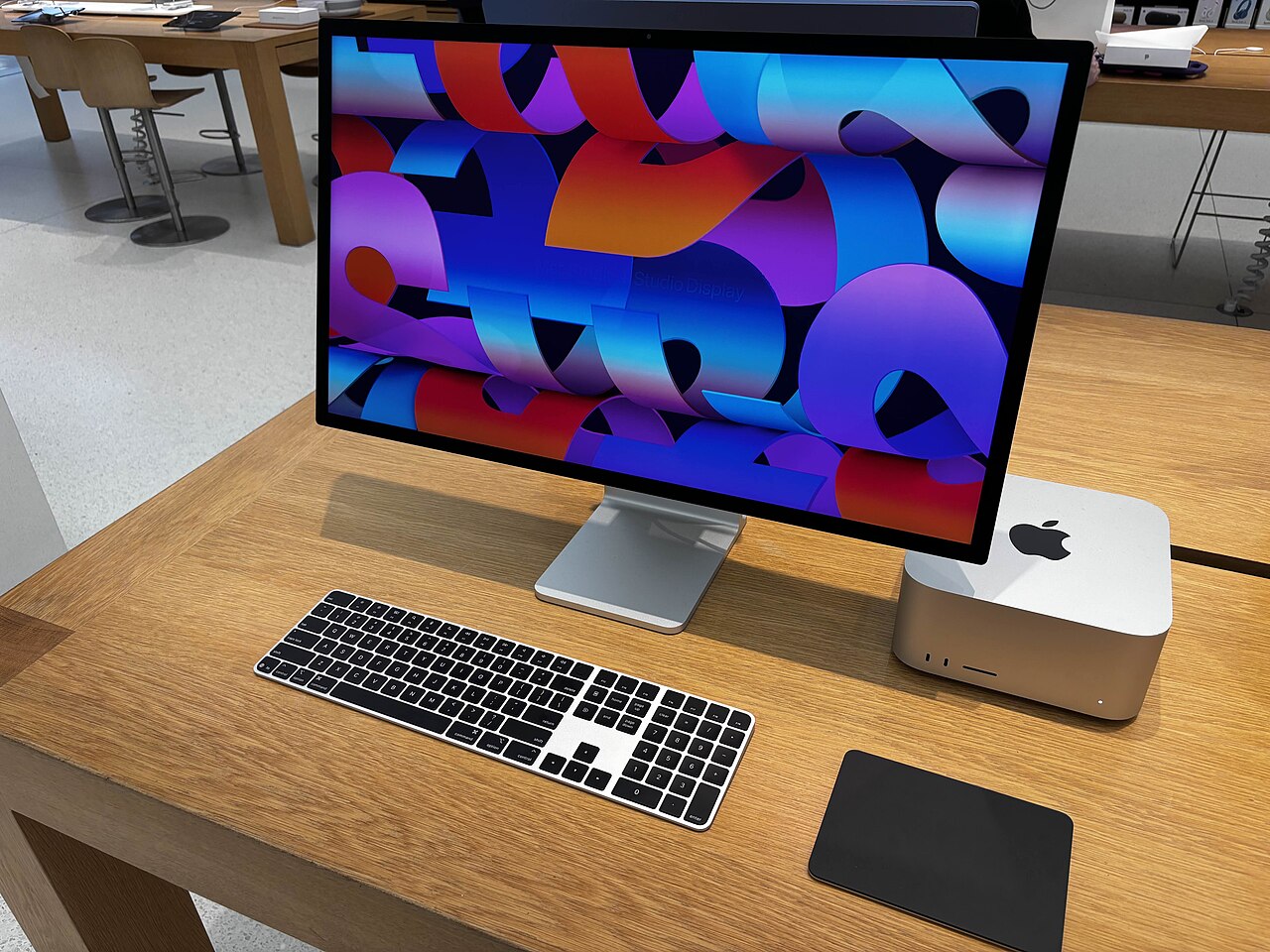
Meta's Superintelligence Lab released Muse Spark Open on October 15, 2026, an open-weight, natively multimodal model with 816 billion total parameters, 42 billion active per token and a 1 million token context window. Meta calls it the most capable US open-weight model to date, which is the company's own characterization and not an independent ranking. The release is notable for a second reason: Meta says the full model runs on two Apple M5 Ultra Mac Studio computers, which moves a model of this size from data-center territory toward a desk. This article works through the numbers, the license, the distribution list and the gaps in what has been published so far.
 Meta
Meta Apple
Apple NVIDIA
What Meta announced
According to Meta's research post, Muse Spark Open is built for coding and agentic work, including long-horizon tasks, complex software engineering and multi-step reasoning. Weights are available through Hugging Face, Amazon SageMaker AI, Google Cloud Model Garden and Microsoft Foundry Models. Hosted API access is listed on Baseten, Fireworks AI, Groq, Modal, Nebius, OpenRouter and Together AI. Inference support spans SGLang, vLLM, TensorRT-LLM, Hugging Face Transformers, Apple MLX, llama.cpp and Unsloth.
The model ships under the Muse Model License, which Meta describes as having limited commercial terms that allow many developers to use the model for free. The post does not spell out where the commercial limits begin, so developers will need to read the license text itself before building a product on it. Meta also says the model received additional safety post-training because of open-weight risks and met the release thresholds of its Superintelligence Scaling Framework, with a full evaluation report promised "soon".
The memory arithmetic
The headline claim is hardware. Meta states that each Mac Studio's integrated GPU can use up to 512 GB of unified memory, so two machines pool roughly 1,024 GB, and that memory bandwidth is 1.2 TB/s per chip. The question is why 816 billion parameters fit.
The weight footprint is simple arithmetic: parameters multiplied by bytes per parameter. At 16-bit precision, 816 billion parameters need about 1,632 GB, which does not fit. At 8-bit it is about 816 GB, and at 4-bit about 408 GB. Meta's post does not say which precision it used for the two-machine demonstration, so the figures below are our own estimates of what each precision would require, and they exclude the key-value cache and runtime overhead, which grow with context length.
Can 816B parameters fit on two Mac Studios?
Approximate weight-only memory in GB at three precisions, against the 1,024 GB two machines can pool. Excludes KV cache and runtime overhead.
Two readings follow from this. First, an 8-bit version would leave roughly 200 GB of headroom across the pair for cache and overhead, while a 4-bit version would leave far more room for long contexts. Second, a 1 million token context is a different memory problem from the weights: the cache for a very long prompt can be large, so the practical context a two-machine setup can serve depends on cache settings that Meta has not detailed.
Why 42 billion active parameters matters
A mixture-of-experts model stores many specialist sub-networks but routes each token through only a few. Here 42 billion of 816 billion parameters are active per token, about 5 percent. Two consequences are worth separating:
- Memory is set by total parameters. All 816 billion must be resident (or streamed), which is why the memory footprint above is the binding constraint on a desktop.
- Speed is set by active parameters. Each generated token reads roughly 42 billion parameters worth of weights, so decode speed on a memory-bandwidth-limited machine is closer to that of a much smaller dense model. This is a general property of the architecture, and Meta has not published tokens-per-second figures for the Mac Studio setup.
That combination, large memory and modest per-token compute, is why unified-memory machines are a natural fit for sparse models, and it helps explain the choice of demonstration hardware.
Local agentic tests, with caveats
Meta says its agentic tests ran entirely on-device with Muse Code, including iOS bug fixes and features for the open-source app Ice Cubes, and video editing in DaVinci Resolve. These are demonstrations, not benchmark scores. The "Key Benchmarks" section of Meta's post links to a separate evaluation methodology report and does not itself contain scores. The only performance numbers on the page are inference speedups for custom Helion GPU kernels in SGLang: 1.03 times to 3.95 times at the kernel level on NVIDIA and AMD GPUs, and a 3 percent end-to-end speedup on AMD MI350.
Meta's page is specific about memory, licenses and where to download. It is silent on benchmark scores and tokens per second, which is where a deployment decision would be made.
Where it fits among Meta's other models
Meta's recent releases cover several points on the size spectrum. We covered the smaller Muse Glimmer 30B open-weight local agent model and the hosted Muse Wonder frontier model with its pricing and benchmarks. Muse Spark Open sits at the large end of the open-weight line: far above Glimmer in size and, unlike Wonder, distributed as downloadable weights. Elsewhere in the open-weight field, NVIDIA has been reported to be training a model of at least a trillion parameters, as described in our look at Nemotron 4.
What remains unknown
- Benchmark results. The evaluation methodology report is linked but the post carries no scores, so claims of leadership among open models cannot yet be checked.
- Throughput on the Mac Studio pair. No tokens-per-second figure is given.
- Precision used. The quantization level in the two-machine demonstration is not stated in the post.
- License boundaries. The commercial limits of the Muse Model License are not summarized in the announcement.
- Safety evaluation. The full report is promised later; detailed results are in the Hugging Face model card.
What it means for builders
For teams choosing between hosted and self-hosted models, the release widens the range of options: a very large sparse model available through more than ten hosts, plus a path to run it privately. The trade-offs are the usual ones: hardware cost and cache memory for local use, and license terms for commercial use. Because the weights are on many providers at once, products built across several models, such as Metir AI, can compare hosted endpoints on price and latency without being tied to a single vendor.
The takeaway
Muse Spark Open pairs a very large total parameter count with a small active slice, and Meta's claim that two desktop machines can hold it is plausible on the memory arithmetic if the weights are stored at 8-bit precision or lower. What is missing is the evidence that normally decides adoption: published benchmark scores, throughput numbers and clear commercial license limits. Those are likely to arrive in the promised evaluation report and in independent testing over the coming weeks.
Sources:
Image credits
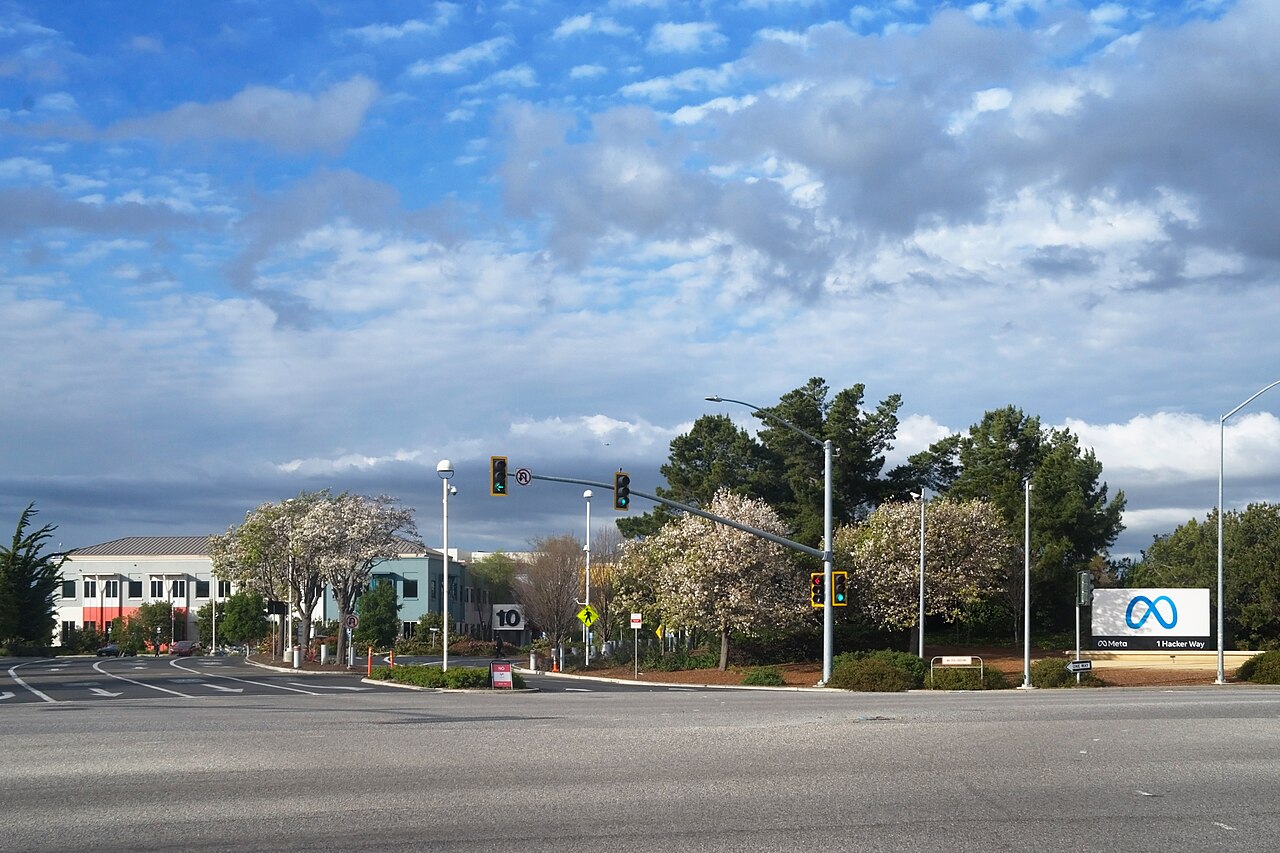
Header image: Apple Studio Display with a Mac Studio, keyboard and trackpad on a table, via Wikimedia Commons, released under CC0. It shows an earlier-generation Mac Studio, not the M5 Ultra model Meta describes, and is illustrative only. In-body photograph of Meta's headquarters campus, via Wikimedia Commons, released under CC0.