On August 10, 2026, Meta Superintelligence Labs released Meta Muse Glimmer, a 30 billion parameter open-weight model licensed under Apache 2.0 and built to run agentic workloads locally on a single consumer GPU. The release matters less for raw scale, 30 billion parameters is modest next to the multi-trillion-parameter open models shipping this year from Chinese labs, and more for what it is built to do: multi-step reasoning, tool use, coding, evaluation, and multimodal understanding, packed into one model small enough to fit on hardware a single developer already owns. This piece looks at what Meta actually shipped, what the benchmark numbers do and do not show, and where a 30B local agent model fits in a field that now spans everything from pocket-sized weights to multi-trillion-parameter frontier releases.
 Meta
Meta Qwen
Qwen Gemma
GemmaWhat Meta actually released
Muse Glimmer is a 30-billion-parameter model with a 131,000-token context window and support for more than 100 languages. Meta built it specifically for agentic use cases that combine several capabilities most open models handle separately: multi-step reasoning across a task, reliable tool calling, coding, acting as an LLM-as-a-judge evaluator, multimodal understanding, and recovering gracefully when an earlier step in an agent loop fails. The pitch is a single model that can run an agent loop end to end without a round trip to a hosted API.
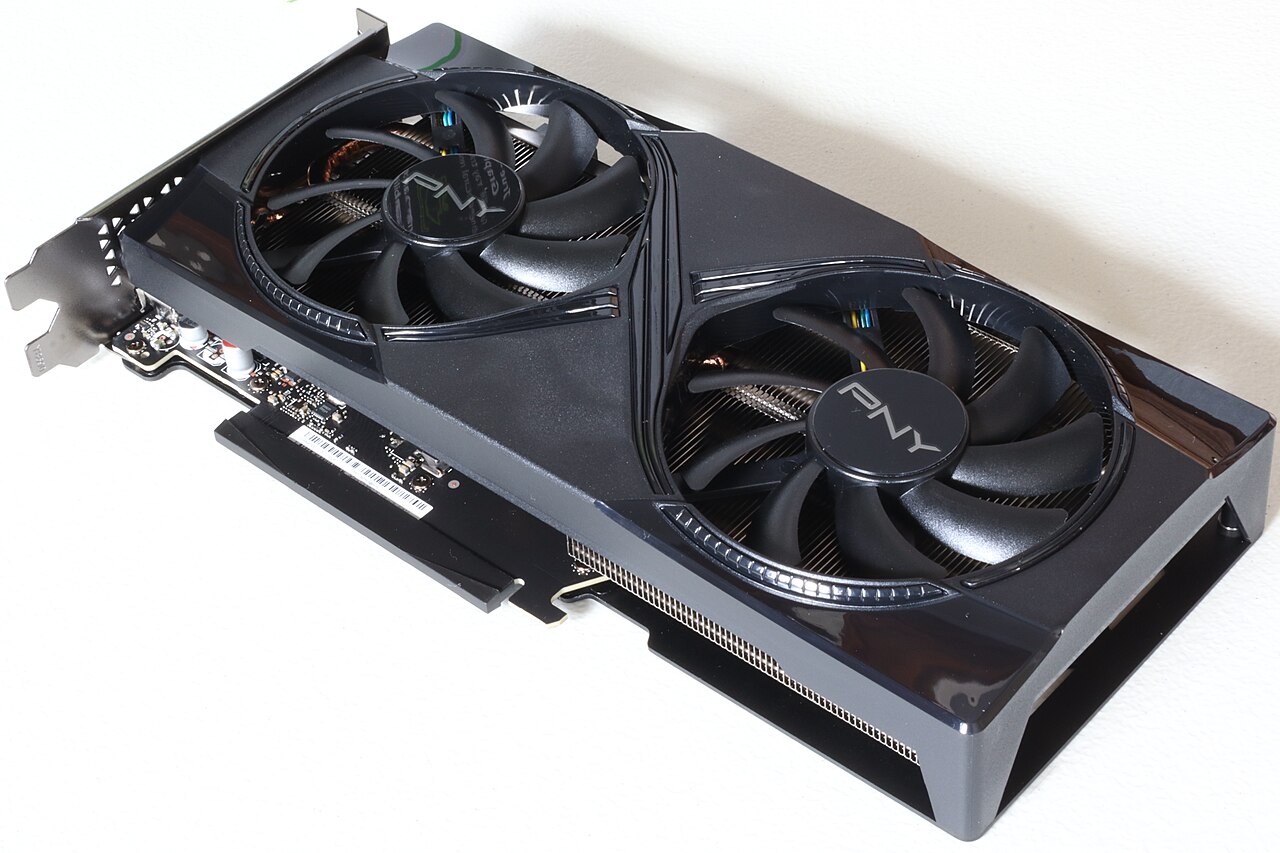
The practical detail that makes that pitch credible is the hardware target. Meta says the model is designed to run on a single consumer GPU, and quantized GGUF builds already on Hugging Face reportedly fit in roughly 24GB of VRAM, the amount available on a high-end consumer card rather than a data-center accelerator. That is a deliberate design constraint, not an afterthought: a 30B dense model sized to fit consumer VRAM after quantization is a different kind of release than a frontier-scale model that only a hosted API can serve economically.
The licensing choice is the other headline. Meta is shipping Muse Glimmer under Apache 2.0, a genuinely permissive open-source license, in contrast to the more restrictive community license terms that governed the Llama family through most of the last two years. Apache 2.0 removes the usage caps and attribution requirements that made some earlier Meta releases awkward for commercial builders to adopt without legal review. For a company that has spent the last year fielding criticism over Llama's licensing terms, returning to a release with no such strings attached is a notable shift in posture, independent of how the model performs.
The benchmark numbers, read carefully
Meta compared Muse Glimmer against two other open-weight models roughly the same size: Google's Gemma 4 31B and Alibaba's Qwen 3.6 27B. On MCP Atlas, the one benchmark where Meta published all three scores side by side, Muse Glimmer scored 75.5 against 62.5 for Gemma 4 and 54.2 for Qwen 3.6, a wide margin on a test built around agentic tool use through the Model Context Protocol. On its own reported results, Muse Glimmer also posted 74.6 on DeepSearch QA, 51.2 on SWE-Bench Pro, 43.3 on Gaia2, 94.7 on AIME 2026, 77.0 on IFBench, and 80.0 on AA-LCR.
Muse Glimmer (30B) versus Gemma 4 31B and Qwen 3.6 27B
Meta-reported scores. MCP Atlas is the only benchmark where Meta published all three models; the other three are Muse Glimmer's own reported results with no disclosed comparator figures.
Muse Glimmer's own reported scores (no comparator figures published for these three):
All figures are Meta-reported at launch. Independent evaluation of Muse Glimmer had not yet been published as of August 10, 2026.
Those numbers are worth taking seriously and reading with the same caution applied to every same-day launch claim: they are Meta's own evaluations, on benchmarks and comparison sets Meta selected, and no independent third-party evaluation of Muse Glimmer had been published at the time of release. Agentic benchmarks like MCP Atlas and Gaia2 are also relatively young as a category, with less standardized methodology and fewer years of cross-lab validation than long-established academic benchmarks. A 30B model leading two other 30B-class models on a self-reported eval is a real signal about relative capability at this size tier, but it says nothing about how Muse Glimmer compares to hosted frontier models like the largest Claude, Gemini, or GPT releases, which are trained at far greater scale and, unsurprisingly, still outperform any single-GPU model on the hardest reasoning and coding tasks.
A model that never leaves the machine trades some ceiling on raw capability for full control over cost, latency, and what data goes where. Neither property make the other obsolete.
On the local-versus-cloud tradeoff
Why a local 30B agent model matters at all
The case for a model like this has little to do with topping a leaderboard. Running a 30B model on hardware you already own removes the per-token API bill entirely, which matters for any workload that runs constantly rather than occasionally, like a background agent monitoring logs or triaging inbound messages all day. It keeps data on the machine that generated it, which matters for anyone working with sensitive documents, regulated data, or simply a preference not to send every prompt to a third party. It cuts network latency out of the loop, since inference happens on local hardware rather than over a request to a remote data center. And it works with no internet connection at all, which is the difference between an agent that functions on a flight or in a secure facility and one that does not function anywhere the network does not reach.
None of that displaces hosted frontier models, which still win decisively on the hardest tasks and do not require a developer to own or maintain the hardware. The realistic outcome is that local open-weight models and hosted frontier models end up doing different jobs in the same pipeline, cheap always-on local reasoning for routine steps, an escalation to a larger hosted model when a task genuinely needs it, which is part of why tooling that treats models as interchangeable rather than locking a workflow to one provider is useful: a platform like Metir that lets a team mix a local open-weight model with hosted frontier models in the same workflow makes that split a routing decision rather than a rebuild.
Where it sits in the open-weight field
Muse Glimmer arrives into a field that has gotten crowded fast. Alibaba's Qwen line, Google's Gemma family, DeepSeek's releases, and Mistral's models have all been competing on open weights through 2026, at wildly different scales, from small models built for edge devices up through multi-trillion-parameter releases aimed squarely at closed frontier labs. A 30B model built specifically for the local-agent use case, rather than for raw benchmark scale, is a distinct bet: that the more durable opportunity in open weights is not chasing frontier-scale parameter counts but owning the mid-size, single-GPU-friendly tier where an open, permissively licensed model can plausibly replace an API call for everyday agent work.
Whether Muse Glimmer wins that tier will depend on things Meta's own launch numbers cannot settle: independent benchmark verification, real-world tool-use reliability outside curated tests, and how it holds up against Gemma and Qwen's next revisions rather than the ones it launched against. What is confirmed today is narrower and still meaningful: a major lab has shipped a 30-billion-parameter, Apache 2.0-licensed model, purpose-built for local agentic use on a single consumer GPU, with a 131K context window and Meta-reported scores that lead its immediate size class on at least one directly compared benchmark. The rest is what the next few months of independent testing will show.
Sources:
- Meta returns to open source with Muse Glimmer, an Apache 2.0-licensed 30B parameter AI model optimized for agents, available now | VentureBeat
- Meta AI Releases Muse Glimmer | MarkTechPost
- Meta Muse Glimmer | Phoronix
- unsloth/Muse-Glimmer-30B-GGUF | Hugging Face
- Meta releases Muse Glimmer for local AI agents | TestingCatalog
Image credits
Header image: Entrance sign at Meta's headquarters, 1 Hacker Way, Menlo Park, California, by Nokia621 via Wikimedia Commons, licensed under CC BY-SA 4.0. In-body photograph of an NVIDIA GeForce RTX 5060 Ti 16GB consumer graphics card by FreeMediaKid! via Wikimedia Commons, licensed under CC BY-SA 4.0.