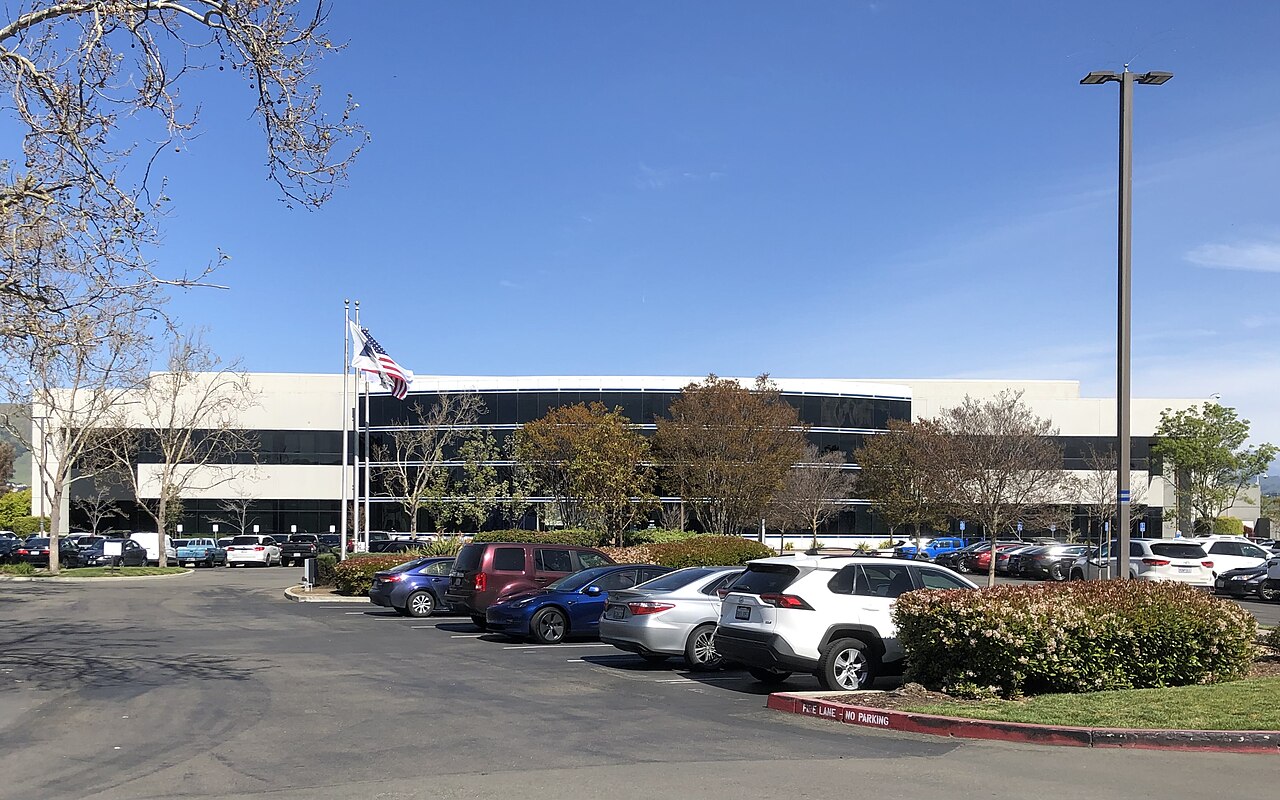
Lam Research reported fiscal first-quarter results on Wednesday, October 21, 2026, and the numbers beat Wall Street on both lines. Revenue for the quarter ended September 27 was $8.22 billion against analyst estimates of about $8.14 billion, and adjusted earnings were $2.20 per share against roughly $2.17, according to an Associated Press summary built on Zacks data. The stock still fell. TradingKey recorded a 9.80 percent decline for the October 22 session, while the broader technology equipment sector fell 3.29 percent.
A record quarter followed by a sharp drop is a familiar pattern late in an expansion, and it is a useful case study in how markets read guidance rather than results. This post lays out what Lam reported, what the December-quarter guide actually implies, and why a beat of about 1 percent was not enough.
What Lam reported
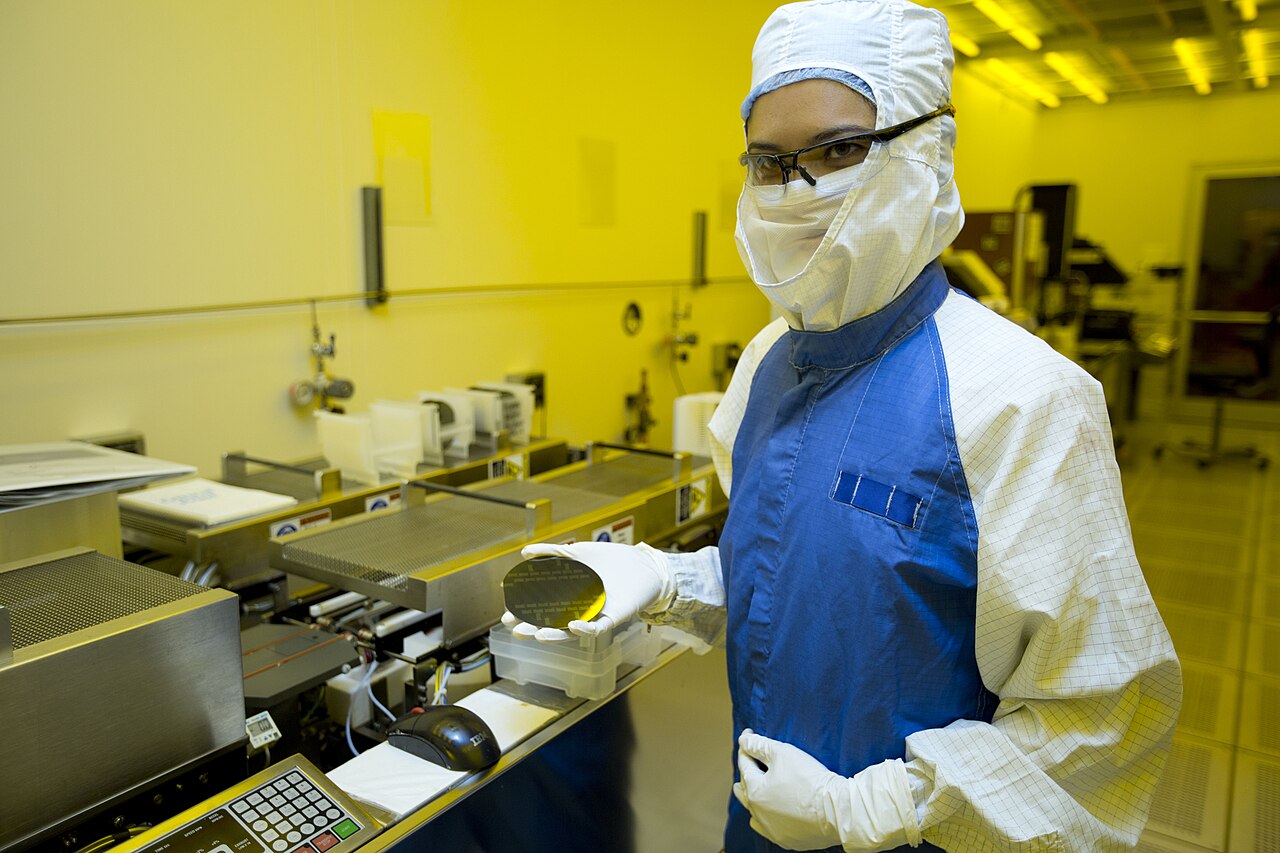
Lam Research makes the etch and deposition machines used to build the most advanced chips, including the memory and logic that go into AI accelerators. It is one of the largest wafer fab equipment (WFE) suppliers. Its direct customers are chipmakers and memory makers, and it reaches companies such as Nvidia and the AI labs only indirectly, through the chips those customers build.
 Nvidia
The headline figures for the September quarter:
- Revenue: $8.22 billion, up from $6.72 billion in the June quarter, a sequential increase of about 22 percent (our calculation from the two reported figures).
- Earnings: GAAP net income of $2.75 billion, or $2.19 per share; adjusted EPS of $2.20.
- Margins: Investing.com reported a non-GAAP gross margin of 52.4 percent and an operating margin above 40 percent for the first time in the company's history.
- Versus its own guide: In July Lam guided the quarter to $8.1 billion, plus or minus $400 million. The $8.22 billion result landed about 1.5 percent above that midpoint.
The December guide is where the story is
For the December quarter, Lam guided to revenue of $8.6 billion plus or minus $400 million and non-GAAP earnings of $2.33 per share plus or minus $0.15. The chief financial officer said the revenue guide was limited by near-term supply chain constraints, according to Investing.com.
Lam Research: a 22% sequential jump, then a guide for about 5%
Quarterly revenue in billions of dollars: actuals and guidance midpoints.
Grey bars are June-quarter actuals and the prior guidance midpoint; green bars are the September actual and the December guidance midpoint. Percentages are calculated from the figures shown.
Reading the guide against the quarter just reported shows why the reaction was not a simple "beat and raise" story:
- Growth decelerates sharply. Sequential growth was about 22 percent into September. The guidance midpoint implies about 5 percent into December ($8.6 billion divided by $8.22 billion).
- The low end is flat. The bottom of the range, $8.2 billion, sits just under the September actual. The top, $9.0 billion, implies roughly 9 percent.
- The guide met consensus but not the buy side. TradingKey reported that the outlook matched the official analyst consensus but fell short of higher expectations among investors tied to AI build-outs. Sell-side estimates and what the most bullish holders had priced in are different numbers, and the second set drives a stock after earnings.
The pattern is common for companies whose shares have run up on a theme: when valuation multiples are already high, a result that is merely in line with the optimistic case offers little cushion. Applied Materials showed a milder version of the same behavior in August, covered in our look at its record quarter.
The question was never whether demand was strong. It was whether strong was already in the price.
On the gap between results and reaction
Supply, not demand, is the stated limiter
The most analytically interesting phrase in the call coverage is the CFO's attribution of the guide to supply chain constraints. TradingKey described near-term component shortages that delayed equipment deliveries into later quarters. Two readings are consistent with that statement, and the evidence available does not separate them:
- Timing. If orders are intact and shipments are slipping, revenue is deferred rather than lost, and later quarters should absorb it.
- Capacity ceiling. If customers are limited by how quickly they can prepare cleanrooms and install tools, supplier revenue tracks the customers' pace, not their appetite.
The second reading fits comments Lam management made earlier in the year, summarized in transcript coverage, that the industry is largely sold out of what it supplies and that cleanroom readiness paces growth. ASML told a similar story in its own quarter: see our coverage of its record sales and supply shortfall.
China and the mix question
TradingKey's summary of the call said China accounted for about 35 percent of Lam's revenue in the September quarter and that management expects China revenue to be meaningfully down in the December quarter. We could not verify the 35 percent figure against Lam's own release, so treat it as indicative. If it holds, the guide embeds two moves at once: a decline in a large region and growth elsewhere that more than offsets it, which would make the underlying non-China growth rate higher than the 5 percent headline.
The broader market backdrop matters too. Semiconductor stocks had already weakened earlier in the month, as our piece on the semiconductor index's eight-day losing streak described, with investors questioning how long AI capital spending can keep compounding.
How analysts responded
Analyst reactions reported by TradingKey were mixed in direction but notable in size: Needham cut its price target from $390 to $290, and Morgan Stanley lowered its target to $339. The same report put the one-month average target at $370.58, with a range from $213 to $500. A spread that wide indicates how much disagreement exists about the equipment cycle's durability, not just about this quarter.
Equipment makers are also a long-cycle read on the AI build-out. Lam raised its 2026 wafer fab equipment outlook in July to the low $150 billion range, up from a prior $140 billion with upside bias, per coverage of its June-quarter release. A fab ordered now takes years to fill, so equipment orders reflect what chipmakers expect in 2027 and beyond, while model labs and cloud providers report nearer-term demand.
What to watch next
- Whether the December quarter lands near the top of the range. A result at $9.0 billion would indicate deferred shipments catching up.
- China's step-down versus other regions. The size of the offset determines whether the 5 percent guide is conservative.
- Hyperscaler capex updates. Alphabet, Microsoft and Amazon report in the coming days, and their spending plans feed directly into the memory and logic customers that buy Lam's tools.
- Margin durability. Operating margin above 40 percent is a high bar, and the supply constraints that cap revenue may also raise costs.
For people who build on AI rather than invest in it, the practical lesson is that compute supply is paced by physical equipment and cleanrooms, which is one reason model-agnostic tools such as Metir are designed to let work move between providers when availability or pricing shifts.
Sources:
- Lam Research: Fiscal Q1 Earnings Snapshot | AP via WTOP
- Lam Research Corp Stock (LRCX) Moved Down by 9.80% on Oct 22: Key Drivers Unveiled | TradingKey
- Lam Research tops first-quarter targets and issues upbeat guidance, stock falls | Investing.com
- Lam Research Corporation Reports Financial Results for the Quarter Ended June 28, 2026 | Placera
- Lam Research Q4 earnings call highlights | Nasdaq
Image credits
Header image: Lam Research building in Fremont, California. By Olaf2 via Wikimedia Commons, licensed under CC BY-SA 4.0. In-article image: a technician holding a silicon wafer in a cleanroom, U.S. Department of Energy, public domain, via Wikimedia Commons.