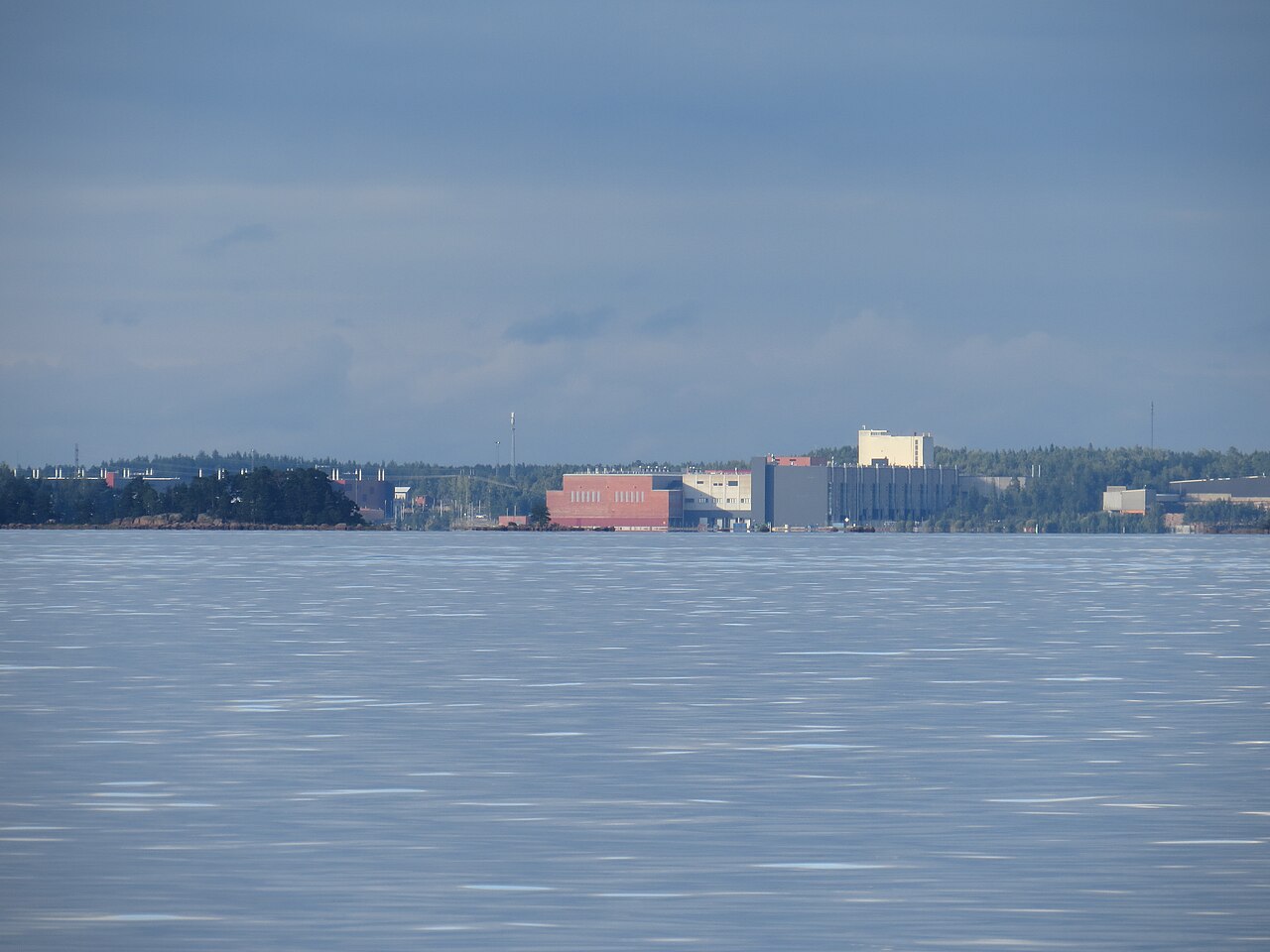
Finnish authorities have ordered a Google subsidiary to halt environmentally significant preparatory work at two planned data center sites until environmental assessments are finished. The Finnish Permit and Supervision Authority, known by its initials LVV and described in English-language coverage as the Finnish Supervisory Agency, told Tuike Finland to stop work in Muhos and Kajaani immediately and no later than October 23, according to reports on October 7, 2026. The Finland data center halt arrives less than a month after Google announced its EUR 13 billion Finland investment, and it turns a quiet administrative question, when an environmental impact assessment must happen, into a test of how fast AI infrastructure can be built.
 Google
 Google Cloud
 Gemini
What the Finland Google data center halt covers
The order covers two of the four Finnish locations in Google's September plan: Muhos and Kajaani. The other two named in that plan, Hamina and Vaala, were not reported as part of the order. LVV's environment department head, Tommi Muilu, said that trees had been removed, topsoil stripped, site roads and storage areas built and ditches altered before the assessments were complete. The work is to stay paused until the assessment procedures are done, and Tuike Finland was asked to explain its position by October 14 or face enforcement proceedings.
The hectare figures need care. The widely repeated "more than 300 hectares" refers to Muhos alone. According to Yle's reporting on the allegations and Finnish coverage of the order, a Google spokesperson confirmed about 330 hectares at Muhos and just under 200 at the Otanmaki site in Kajaani. Adding the two gives roughly 530 hectares, which is our arithmetic, not a figure any authority has stated. Some English-language outlets report only the Muhos total.
Forest cleared at each site vs the 200 hectare assessment trigger
Hectares reported cleared by Google's Finnish project company. The dashed line is the 200 hectare level that Finnish coverage cites as the point where permanent forest clearing needs a prior environmental impact assessment.
Sources: Yle and Helsingin Sanomat (via Kaleva), Al Jazeera, Oct 2026. Kajaani is plotted at 199 ha because coverage says only "just under" 200. Hover a bar for details.
Google's response
Google's spokesman Sondre Ronander said the company had fallen short of its own high standards, that it had acted in good faith, and that it would follow LVV's guidance. Google also said it plans to plant trees on 130 hectares at Muhos. Finland's environment minister, Sari Multala, said that all companies operating in Finland must comply with the law and that in this case that had not happened.
That is a shift from the company's earlier position. When the Finnish Association for Nature Conservation first alleged illegal logging in September, Google's communications director said trees were felled in full compliance with forestry law and that extensive nature studies had been done. Both statements can be true at once: forestry law and the environmental assessment law are separate regimes with separate triggers, a distinction that sits at the center of this case.
How Finland's environmental impact assessment works
Finland's EIA, called YVA in Finnish, is governed by an Act and Government Decree from 2017. According to the Ministry of the Environment's description of the procedure, it runs in two phases. The developer first submits an assessment programme that sets out what will be studied. A coordinating authority gives a statement on it. The developer then carries out the studies and compiles an assessment report, and the procedure ends when the coordinating authority issues its statement on that report.
Two features matter here. First, the assessment is meant to come before the decisions it informs: permitting authorities must show how the results shaped their choices. Second, it is not itself a permit. It is a gate that has to be passed before certain activities and approvals can proceed. The Ministry's 2017 page names the regional ELY Centre as coordinating authority; in this case LVV describes itself as the coordinating authority for the assessment processes, so the institutional label has changed since that page was written.
The assessment is meant to inform a decision, not to document one after the trees are gone.
Metir analysis
Why the sequence became the dispute
The dispute is about order of operations. Helsingin Sanomat reported, as relayed by Kaleva, that logging at Muhos ran from March to August, that Tuike Finland asked LVV on April 30 for discretionary treatment to avoid an assessment, and that LVV told the company in May that one was required. The same report cites a threshold: forest clearing above 200 hectares that permanently changes land use needs an assessment before it is carried out.
The threshold produces an interesting wrinkle. Muhos, at about 330 hectares, is above 200. Kajaani, at just under 200, is below it if viewed alone. The reports we read do not say what basis LVV used for Kajaani, but the same authority's notice of September 18 says assessment procedures were already ongoing for both projects, and Yle reported that phase one of the assessment was complete at both sites while phase two was not. Whether preparatory work can start between those phases is therefore the practical question.
How the Muhos and Kajaani case unfolded
Reported milestones, 2026. Green marks authority action, amber marks upcoming deadlines.
- Mar to Aug 2026Logging at the Muhos site, per Helsingin Sanomat.HS via Kaleva
- Apr 30Tuike Finland asks the permit authority to waive an assessment, per HS.HS via Kaleva
- MayThe authority tells the company an assessment is required, per HS.HS via Kaleva
- Sep 9Google announces its EUR 13B Finland plan.Google
- Sep 17 to 18Nature League alleges illegal logging; LVV requests clarifications from Tuike and both municipalities.Yle, LVV
- Oct 7Order reported: stop environmentally significant preparatory work in Muhos and Kajaani.Al Jazeera, Euronews
- Oct 14Tuike Finland due to explain its position or face enforcement.Al Jazeera
- Oct 23Latest date for work to stop.Al Jazeera, Euronews
The municipal layer adds complexity. LVV's notice says both municipalities approved site plans that are now under administrative court appeal. Muhos told authorities it had not issued building permits or other licenses for the project. Several layers of approval, none of which individually covers felling that precedes them, can leave a gap that a fast-moving developer treats as open ground.
By contrast, the Vaala project followed the expected path. Tuike Finland submitted its assessment programme to LVV on October 1, covering about 460 hectares and up to four server buildings, with public comments open until November 2.
Why the Nordics attract AI data centers
Finland draws this scale of investment because several scarce inputs coexist. As covered in our earlier analysis of the investment, those include a cool climate, relatively low-carbon electricity, available industrial land and grid institutions able to support large loads, plus Google's operating history at Hamina, where a former paper mill uses seawater cooling and heat recovery for district heating is being developed. The plan also includes a 22-year agreement tied to the Loviisa nuclear plant, which Al Jazeera notes covers up to half of its output.
The same attractions create the pressure. Large tracts of cheap, sparsely populated land are often forest, and AI-scale campuses need hundreds of hectares. The Muhos and Kajaani parcels are exactly the type of land that makes Finland attractive, which is why the assessment step cannot be treated as a formality.
A broader pattern of permitting friction in Europe
Finland is not the first European jurisdiction to tighten the terms of data center growth, though its trigger is environmental process rather than electricity. In the Netherlands, an amendment that took effect on January 1, 2024 prohibits new hyperscale data centers, defined as more than 10 hectares with a connected load of 70 megawatts, except in Het Hogeland and Hollands Kroon. Our coverage of Europe's grid bottleneck and of the spread of local opposition documents how power, water and land disputes have delayed or restricted projects across the region.
The common thread is that rules written for ordinary industrial development are now meeting campuses sized for AI. Opposition parties in Finland are pushing for a national permit system to prevent power shortages and price increases, and environmental advocates attributed the case to an overheated market in which municipalities lack experience with such projects, according to UNN's summary.
What to watch next
- October 14: whether Tuike Finland's explanation satisfies LVV or leads to enforcement.
- October 23: the outer date for work to stop at Muhos and Kajaani.
- The assessments: how long phase two takes, and whether the final statements change site layouts, since the Nature Conservation Association says satellite images show four nature sites that the Muhos plan designated for preservation were destroyed.
- Court appeals: the administrative court cases on the municipal site plans.
- Schedule risk: Google's plan concentrates spending in 2027 and 2028, so any slip in site preparation matters more than the hectare count alone.
The case is less a verdict on Finland as a data center location than a stress test of the assessment gate. A clear sequence, programme then report then clearing, is slower on paper and, as the Vaala filing shows, achievable. How the other sites are managed will indicate whether this becomes an exception or a template for tighter oversight.
Sources:
- Finland orders halt to work on Google data sites over environment concerns | Al Jazeera
- Finland orders pause on Google AI data centres over environmental concerns | Euronews
- Google has been ordered to halt the construction of data centers in Finland | UNN
- Luonnonsuojeluliitto: Googlen työmailla tehty epäiltyjä laittomia hakkuita | Yle
- Viranomainen Googlen epäillyistä laittomista hakkuista | Yle
- HS: Google yritti saada poikkeusluvan Muhoksen hakkuisiin | Kaleva
- Lupa- ja valvontavirasto on pyytänyt selvityksiä Muhoksen ja Kajaanin hankkeista | LVV
- Google tuhosi luvatta metsää Muhoksella | MTV Uutiset
- Vaalan datakeskushankkeen ympäristövaikutusten arviointimenettely käynnistynyt | STT Info
- Uusi YVA-laki voimaan | Ministry of the Environment
- Challenges in the Dutch data center market | Greenberg Traurig
- Google's €13B Finland AI Infrastructure Bet, Explained | Metir AI
Image credits
- Google's Hamina data center campus, IA, via Wikimedia Commons, licensed under CC BY-SA 4.0. Hamina is not one of the two sites covered by the order.
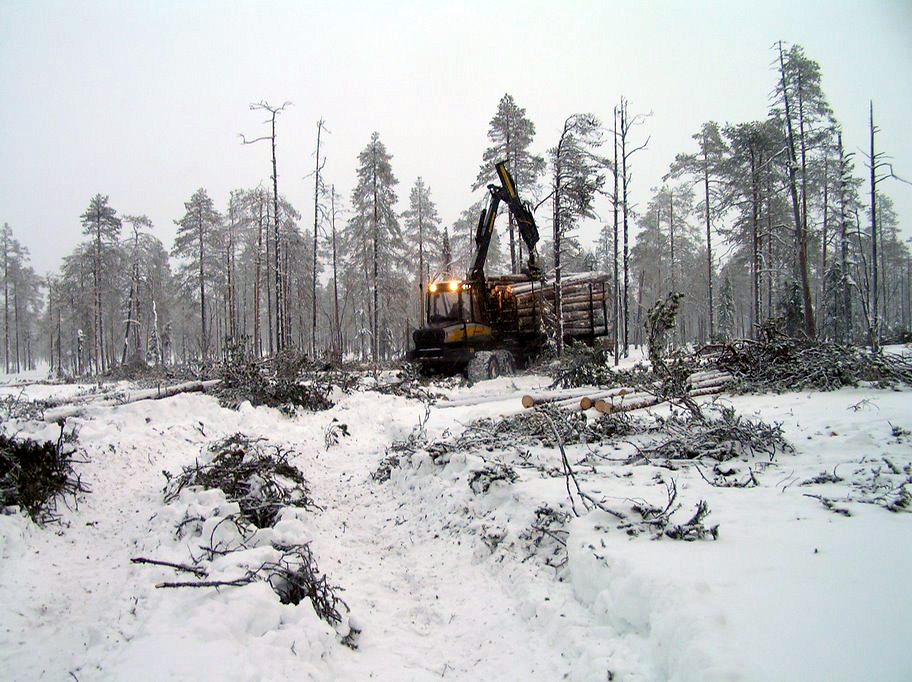
- Ponsse forwarder working in Lapland, Greenpeace Finland, via Wikimedia Commons, licensed under CC BY 2.0.