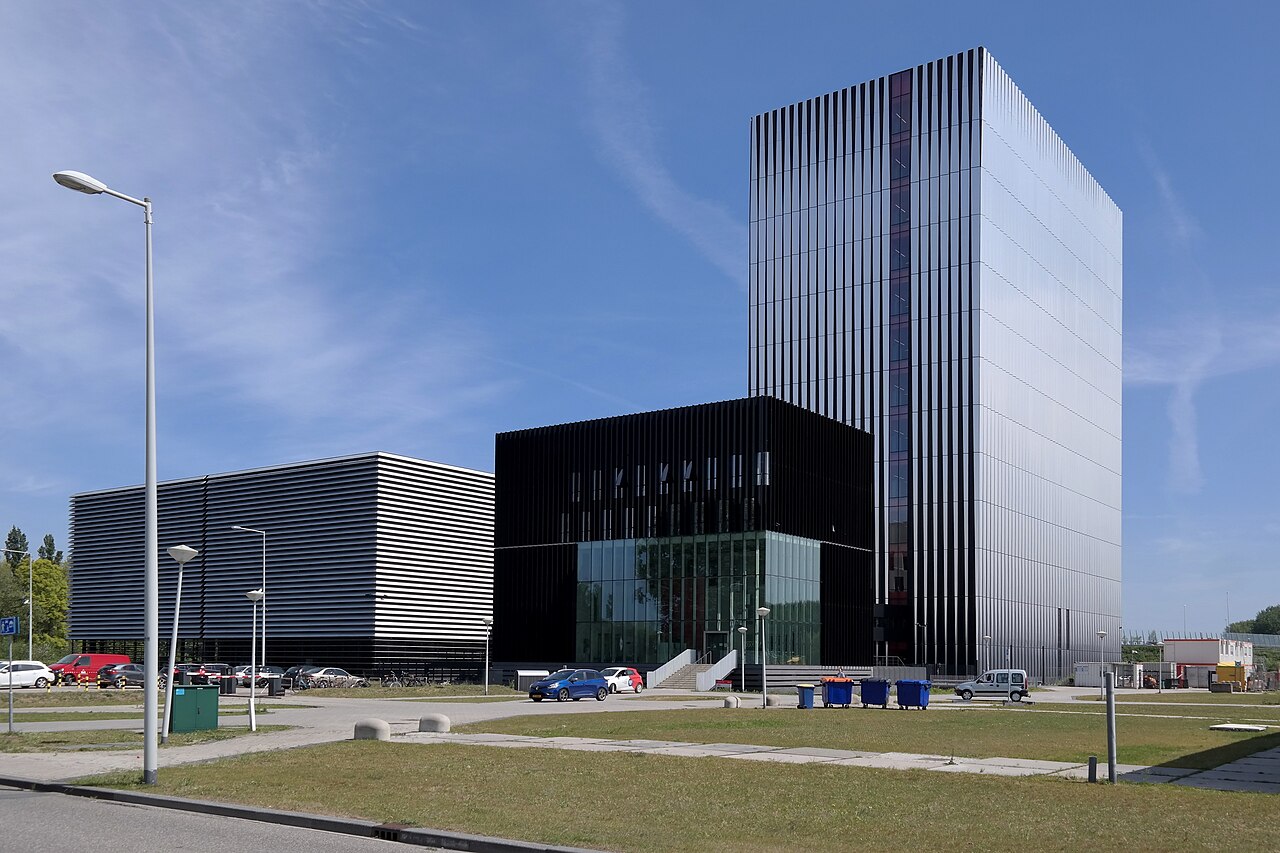
The AI data center backlash that began in American counties is now a global pattern. CNBC reported on October 3, 2026 that public opposition has spread to Europe, Asia and Africa, and that it is raising risks for investors. According to a summary of the CNBC story, research from STL Partners puts the European investment affected by opposition, through delays and cancellations, at about $42 billion, against about $77 billion in the United States. This article checks those numbers against other sources, separates the friction into three vectors, and looks at how the companies involved are responding and what that means for where AI compute gets built.
 Microsoft
 Google
 AWS
AWS Meta
Meta NVIDIA
How big is the AI data center backlash, in numbers
Two datasets frame the picture, and they measure different things. STL Partners' figures, as relayed by CNBC, are cumulative estimates of investment hit by opposition. Data Center Watch, operated by 10a Labs, counts single quarters in the US: at least 75 stalled or delayed projects worth about $130 billion in the first quarter of 2026, and at least 45 projects worth about $68 billion in the second, more than half of the large projects newly proposed in that quarter. The same report counted 843 local opposition groups across 49 states, up from 396 at the end of 2025.
Data center investment disrupted by local opposition
Billions of US dollars. Green bars are STL Partners cumulative estimates for Europe and the US; grey bars are Data Center Watch single-quarter counts for the US.
The two sources use different methods and time windows, so the bars should not be added together or compared one-to-one.
The bars are not directly comparable, and it would be a mistake to add them. What they do show is scale: even the smaller European figure is a mid-double-digit billion sum, and the European Data Center Monitor, cited in the CNBC coverage, says more than 70 European projects were rejected or restricted between January and April 2026, more than in all of 2025. On the US side, a Gallup poll reported by the same Data Center Watch coverage found seven in ten Americans oppose an AI data center in their area.
Friction vector one: power and the grid
Electricity is the most concrete constraint, and Ireland is the clearest case study. Ireland's regulator says data centers grew from 5% of national electricity demand in 2015 to 21% in 2023. Its final connection policy, published on December 12, 2025, requires new data centres to bring generation or storage matching 100% of their site capacity on a de-rated basis, and to meet at least 80% of annual demand with Irish renewable electricity within six years of energisation.
We covered the grid side in detail in our Europe grid bottleneck analysis. In South Africa, the concern is more immediate: civil rights groups cited a 160 megawatt estimate for an Equinix Cape Town facility, in a country with recent memory of rolling blackouts.
Friction vector two: water
Water has driven some of the longest-running disputes. In Santiago, Chile, Google's Cerrillos project drew resistance from residents during a drought. Google later moved to replace water-based cooling towers with air-cooled condensers.
In Malaysia, Bloomberg reported in November 2025 that Johor was tightening data center approvals over water, and on February 24, 2026 Prime Minister Anwar Ibrahim said in parliament that new applications not related to AI had already been stopped, while AI-related approvals continued. That exemption is analytically interesting: it treats AI facilities as strategically different from conventional ones, even as their resource footprint is larger.
Thailand is the sharpest recent case. On September 4, 2026, officials suspended construction of 49 data centre projects to write new standards, citing power and water consumption. Another 117 proposed facilities were awaiting investment approval, against 35 operating centres. The Bangkok governor noted that gaps had allowed data centres to obtain permits as warehouses.
Friction vector three: land and local benefit
The third vector is less about a physical resource than about who benefits. In the Netherlands, the government in 2022 paused hyperscale data center permits above 10 hectares, and Meta's planned campus in Zeewolde stalled amid political pushback. Thai officials' complaint about facilities near hospitals, and South Korean opposition to data centers near homes, belong in the same category. STL Partners research reported by CNBC says 17 of 33 approved Korean projects have been delayed by local protests.
South Africa adds a transparency angle. The country hosts 70% of Africa's data center capacity, according to President Ramaphosa as quoted by Fortune, and its Human Rights Commission received over 250 submissions in its inquiry. The core complaint is that operators are not required to disclose binding electricity, water and land commitments, which makes projects hard to evaluate.
The three vectors are not independent: a site that solves its water problem with air cooling takes on more electricity, and the grid rules then bite harder.
Metir AI analysis
How companies and governments are responding
Responses cluster into a few approaches, each with a trade-off:
- On-site or proximate generation. Ireland's rule makes this mandatory for new connections. It protects the public grid but moves the capital cost, and the permitting fight, onto the developer.
- Cooling redesign. Google's Cerrillos redesign swapped water for air. Air cooling cuts water draw but generally raises electrical load, which shifts pressure from one vector to another.
- Reclaimed water and tariffs. In Johor, The Edge Malaysia reports data centre operators hunting for recycled water and renewable energy.
- Standards instead of bans. Thai officials stressed the country is not closed to data centers and wants clear, consistent rules and a single oversight body.
What it means for AI compute supply and siting
The arithmetic matters for supply. Delay costs compound because GPU orders are placed against energization dates. When a site slips a year, the accelerators either wait or move to a different, usually already-permitted site, which tends to favor existing campuses and sites with firm power.
That dynamic also explains growing interest in sites that avoid land and grid disputes altogether. Google's Project Suncatcher studies TPUs in orbit, and NetworkOcean says it has run customer workloads from a floating, solar-powered system in San Francisco Bay. The scale gap is large: the reported trial used one Nvidia H100 GPU on a 20 kW solar array and the company has described a target of 1 GW of compute by 2030. For comparison, the Cape Town facility above is estimated at 160 MW. These are early experiments, not near-term substitutes, and each would carry its own regulatory questions.
What to watch next
- Thailand's new standards. Officials said rules are expected within about a month, and the content will show whether pauses end in tighter specifications or lasting caps.
- Europe's tally. STL Partners' $42 billion figure for Europe, against about $77 billion in the US, is a useful baseline for whether opposition keeps spreading.
- Quarterly counts. Data Center Watch's Q3 numbers will show whether the sharp drop from Q1 to Q2 (75 to 45 projects) is a trend or noise.
- Disclosure rules. South Africa's inquiry and Ireland's capacity-mapping duties could make facility-level resource use public.
For readers building on AI services, the practical lesson is that compute supply is increasingly set by permits and power, which is one reason model-agnostic tools such as Metir avoid tying a workflow to any single provider's capacity.
Sources:
- How U.S. data center backlash is spreading across Europe and Asia | CNBC
- Europe Data-Center Backlash Stalls $42B of Projects, STL Says | AI Weekly
- US Data Center Opposition Stalls 120 Projects in 2026 | Trending Topics
- New Electricity Connection Policy for Data Centres | CRU
- New Irish Large Energy Users Connection Policy | DLA Piper
- Civil rights groups call to halt South Africa's data center boom | Fortune
- Thailand freezes 49 data centres as resource fears escalate | The Star
- Malaysia freezes new data centre developments | Smart Water Magazine
- Malaysia's Data Center Hub Tightens Approvals on Water Worries | Bloomberg
- Johor: Data centres on the hunt for recycled water and renewable energy | The Edge Malaysia
- Municipality of Cerrillos (Google Data Center) v. Evaluation Commission | Climate Change Litigation
- Dutch government halts hyperscale data centers, pending new rules | DCD
- Meta pauses Dutch data centre plans amid political pushback | Silicon Republic
- NetworkOcean runs GPU on floating data center powered by solar panels in San Francisco Bay | DCD
Image credits
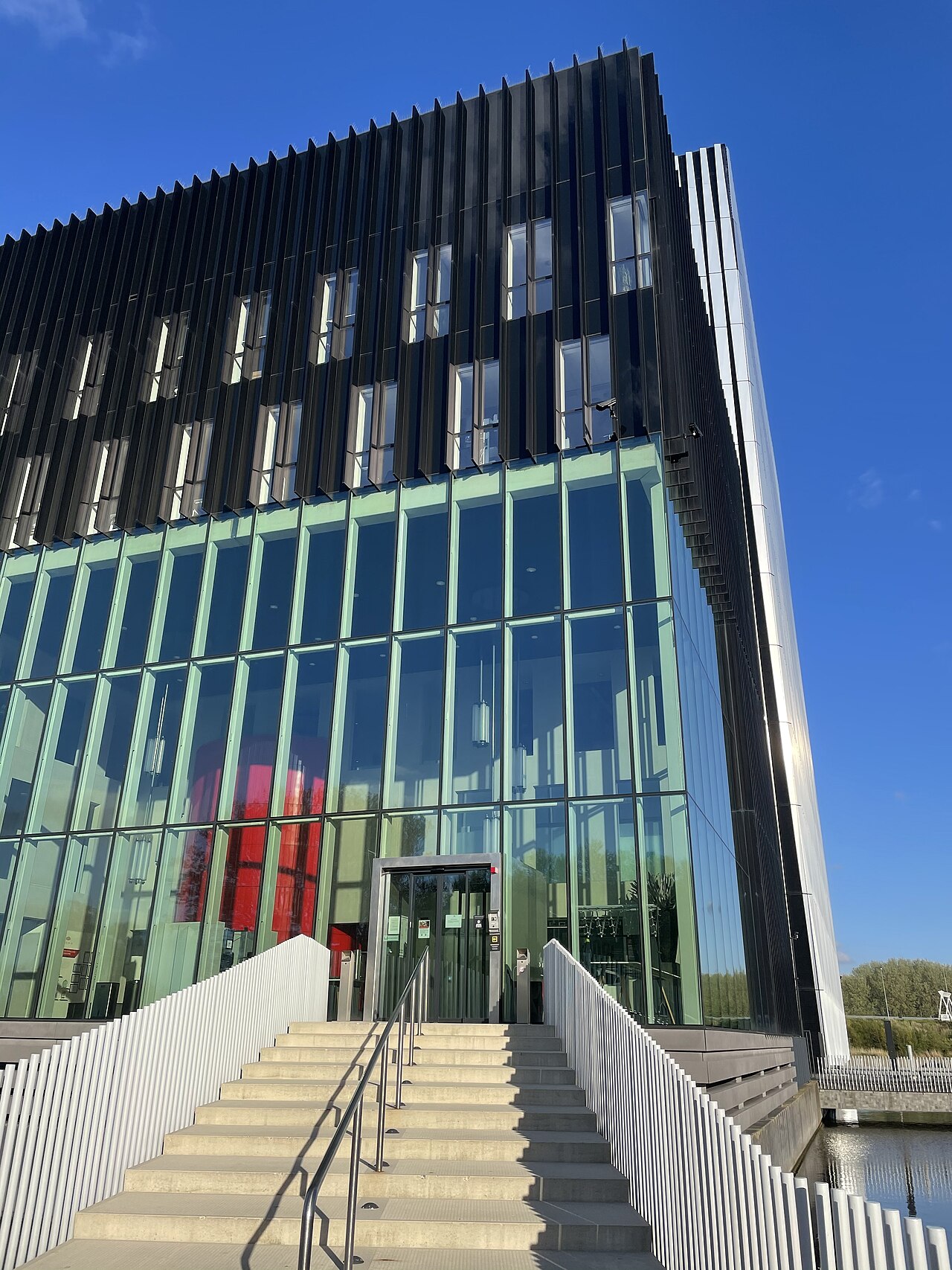
Header image: the Equinix AM3 and AM4 data center buildings in Amsterdam, photographed on May 8, 2020 by Choinowski, via Wikimedia Commons, licensed under CC BY-SA 4.0. In-body photograph of the Equinix Amsterdam entrance, taken on May 7, 2021 by C0pMer, via Wikimedia Commons, licensed under CC BY-SA 4.0. Neither photograph depicts a project mentioned as blocked or paused. Both images were reviewed before use.