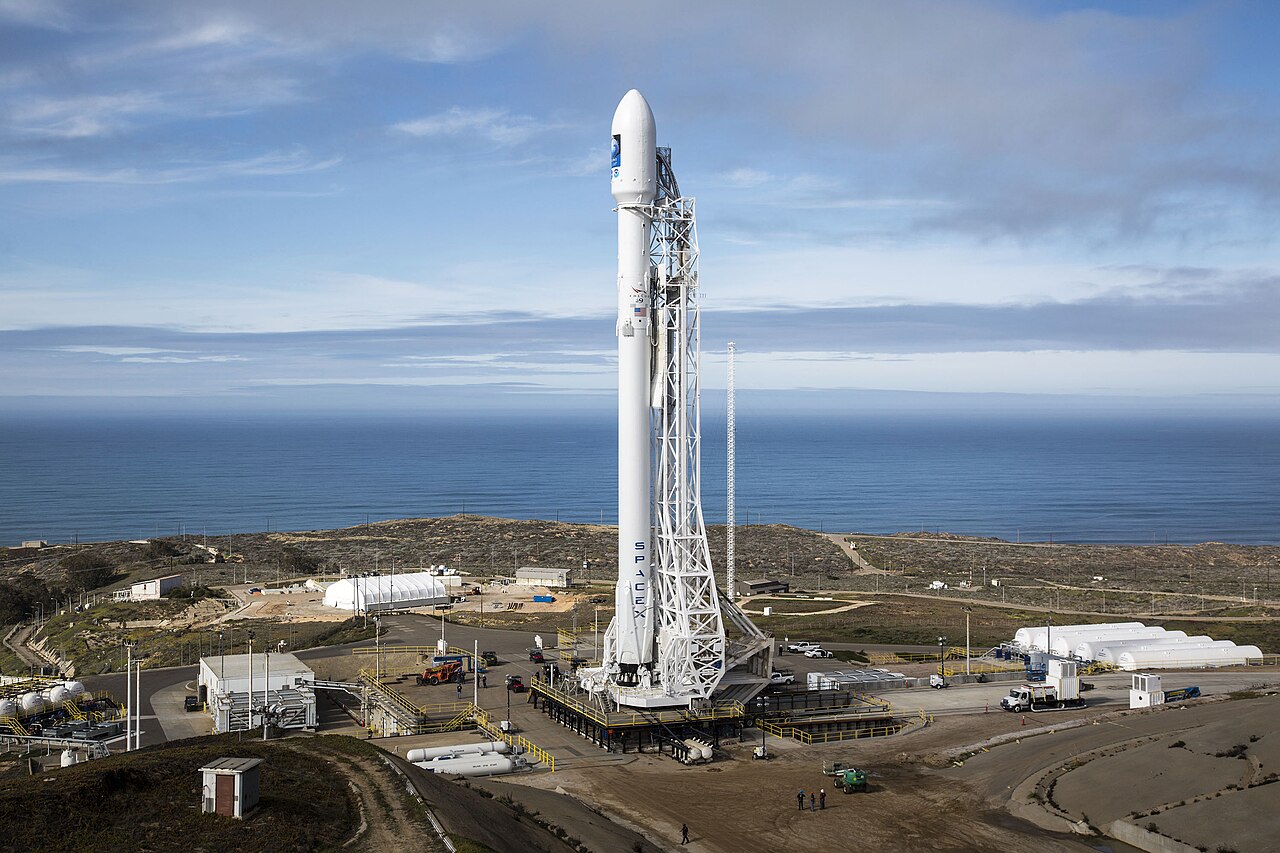
On October 1, a SpaceX Falcon 9 is scheduled to lift off from Vandenberg Space Force Base carrying a refrigerator-size satellite loaded with four of Google's Tensor Processing Units. It is the first orbital test of Project Suncatcher, Google's research effort to find out whether AI computing belongs in space at all. The satellite, reportedly named MVP, will not run a data center. It exists to answer a much narrower question: can the same chips Google uses on the ground survive a rocket launch, cosmic radiation, and the thermal extremes of low Earth orbit, and still do useful work.
 Google
 NVIDIA
Why anyone would put a data center in orbit
The case for Project Suncatcher starts with what actually limits AI data centers on the ground: power and cooling, not chips. Building a new gigawatt-scale data center now means years of grid interconnection queues, permitting, land acquisition, and, in many regions, water rights for cooling. Google's own research paper on the project argues that a satellite in the right orbit sidesteps most of that. In a dawn-dusk sun-synchronous low Earth orbit, a satellite sees the sun nearly continuously, and a solar panel there can generate up to eight times more power per unit area than the same panel does at Earth's surface, according to Google's paper. No batteries for a day-night cycle, no grid connection, no land.
Why put a data center in orbit at all
Power and cooling are what cap a ground data center. Orbit trades one set of constraints for another.
- •Power draw limited by grid interconnects and local supply
- •Cooling needs water or heavy mechanical chiller plants
- •Land, permitting, and transmission lines take years
- •Reliable day-and-night power once it is built
- •Dawn-dusk orbit gets near-continuous sunlight, no batteries needed
- •Solar panels up to 8x more productive than at Earth’s surface
- •No water, no land, no grid interconnect queue
- •Cooling and radiation are the open engineering problems
Illustrative framing based on Google's published Project Suncatcher rationale, not a quantitative scoring model.
Cooling flips the other way. On the ground, air and water carry heat away from chips efficiently. In the vacuum of space there is no air to convect heat into, so a satellite has to conduct heat through its structure to radiator panels and shed it as infrared radiation, a slower and less forgiving process. That is one of the two things the MVP satellite exists to test, alongside whether Google's Trillium (TPU v6e) chips can tolerate the radiation and vibration of launch and orbit. Reporting on the mission indicates the satellite's four TPUs will run in short bursts of roughly 15 minutes before shutting down so the radiators can catch up, an early sign of how binding the cooling constraint really is.
What this launch is, and is not, testing
It helps to be precise about scope. The MVP satellite is not a proof that space data centers work. It is a single, uncrewed feasibility test of hardware survival. Google has published radiation test results as partial groundwork: in ground testing with a 67 MeV proton beam, TPU hardware showed irregularities only after a 2 krad(Si) dose, well above the roughly 750 rad(Si) the paper estimates a shielded TPU would accumulate over a five-year mission, and no hard failures appeared up to 15 krad(Si). That is encouraging evidence from a lab, not confirmation from orbit, which is exactly the gap this launch is meant to close.
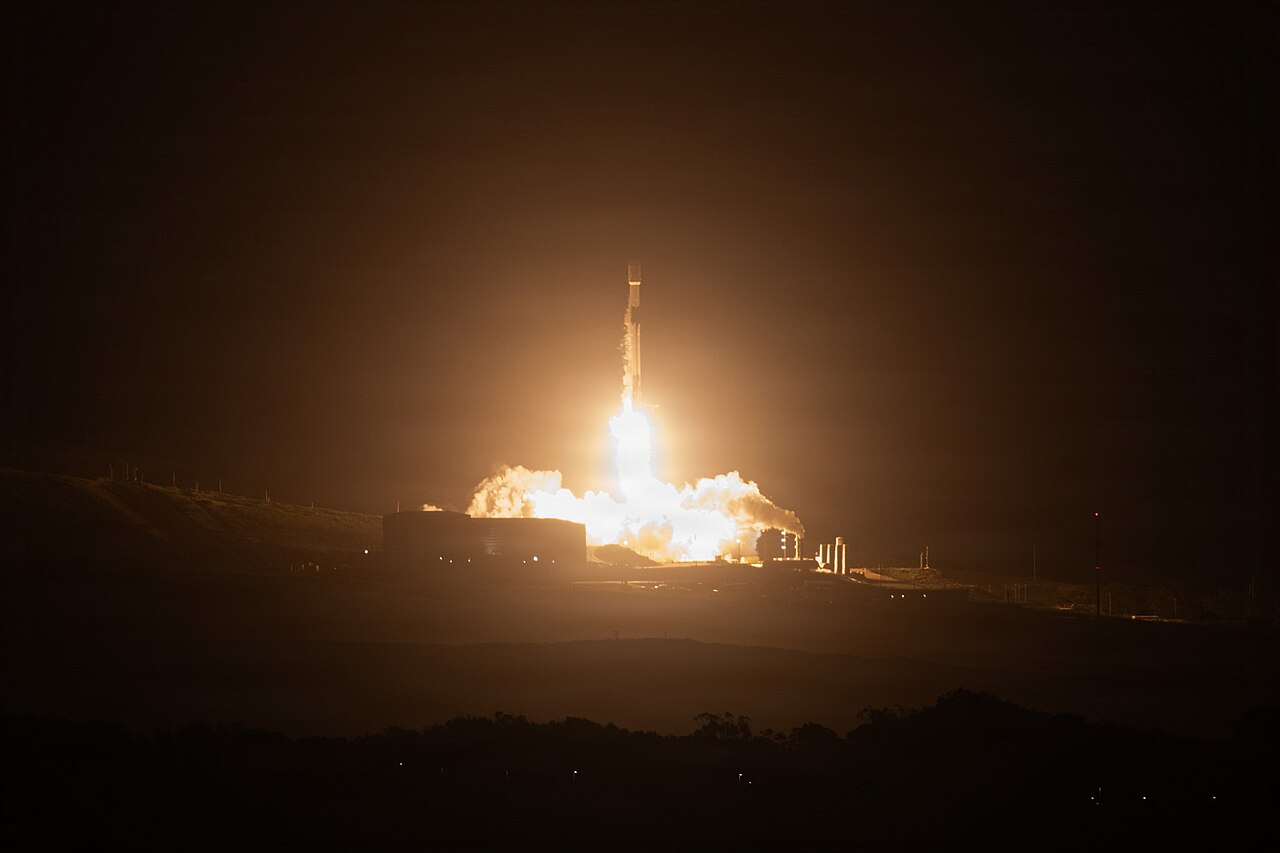
Google's near-term follow-up, planned for early 2027 with satellite imaging partner Planet, moves to the next unresolved problem: getting satellites to talk to each other fast enough to act as one machine. Two prototype satellites are due to test free-space optical inter-satellite links, the lasers a real compute cluster would need to move data between chips at usable speed. Google's paper reports a single pair of optical transceivers already demonstrated 1.6 terabits per second of bidirectional bandwidth in testing, but a working cluster needs that multiplied across many satellite pairs, pointed and held with enough precision to stay locked on a moving target from a distance, while every satellite drifts slightly in its own orbit.
Project Suncatcher's phased roadmap
From a single test satellite to an illustrative orbital cluster. Each phase answers a narrower question than the last.
The scale Google is actually reaching for, and what stands between here and there
The number attached to this program that gets the most attention is 81. Google's research paper models an illustrative cluster of 81 satellites arranged within roughly a 1 kilometer radius, with neighboring satellites spaced 100 to 200 meters apart, all in that same 650 kilometer sun-synchronous orbit. Google is careful to frame this as illustrative rather than committed: the paper states plainly that significant technical and logistical hurdles remain and that the final scale could change.
Those hurdles are worth naming rather than waving past. Station-keeping 81 satellites within a kilometer of each other, close enough for laser links but far enough to avoid collision risk, is an orbital mechanics and propulsion problem with no precedent at this density. A cluster that size has no on-site technician if a radiator clogs or a link degrades; servicing means either extreme reliability engineering or accepting that failed units are simply abandoned. And the economics only work if launch costs keep falling. Google's paper points to projected costs below $200 per kilogram to orbit by the mid-2030s as the threshold where space compute could compete with ground infrastructure on an annual cost-per-kilowatt basis, a projection that depends on a launch market outside Google's control.
A cluster in orbit trades the constraints that cap a ground data center for a different, largely untested set: radiation, servicing, and how close satellites can safely fly.
On the actual bet behind Project Suncatcher
Google is not alone up there
Google is not the only company betting on orbital AI compute, and the two approaches differ in both hardware and posture. SpaceX has announced its own plan, called Starmind, built around NVIDIA chips rather than Google's own silicon. The first Starmind satellite, described as carrying roughly 72 Vera Rubin-generation NVIDIA GPUs, the rough equivalent of one server rack, is targeted for launch around late 2027. Elon Musk has described an eventual vision of up to a million satellites functioning as a single orbital data center, and SpaceX is building a dedicated factory in Bastrop, Texas, to manufacture them at scale.
The contrast is instructive. Google's public rollout is deliberately incremental: four chips first, to test survival; two satellites next, to test communication; a cluster only sketched as illustrative math in a research paper, with the company's own document flagging the hurdles that remain. SpaceX's public framing starts from the scale target and a factory built to hit it, with the hard engineering questions, thermal management, radiation tolerance over years of operation, servicing a satellite nobody can reach, folded into the timeline rather than sequenced ahead of it. Both companies are, in effect, running the same experiment with a different order of operations, and it will take years of flight data, not press releases, to know whether either sequencing was the right one.
What would actually make this matter
If space-based compute ever reaches meaningful scale, the question that follows is not just whether the hardware survives but who gets to use it, and on what terms. Locking a workload to whichever company's satellites happen to be in orbit would recreate, at greater physical distance, the same vendor dependence that already worries buyers of ground-based AI infrastructure. That is the same principle Metir AI applies at the model layer today: an assistant should route work to whichever model or provider fits the task, rather than a user having to bet upfront on whose infrastructure, terrestrial or orbital, their intelligence will end up running on.
For now, Project Suncatcher is one satellite, four chips, and a fifteen-minute compute window, launching to answer a question Google does not yet know the answer to. That is the honest state of space-based AI computing in September 2026: a serious research program with real orbital hardware finally leaving the ground, years away from anything resembling a working data center.
Sources:
- Google's Project Suncatcher research announcement
- Exploring a space-based, scalable AI infrastructure system design | Google Research
- Google is taking a major step forward toward space-based AI data centers | The Motley Fool
- SpaceX is launching Google's next big AI data center hundreds of miles into space | Tom's Guide
- Google Project Suncatcher: SpaceX Transporter-18 launch details | Tesla North
- Google Project Suncatcher: space-based AI compute | Xenospectrum
- Project Suncatcher Is Launching Google AI Chips into Space Next Week | Android Headlines
- SpaceX to use NVIDIA GPUs for its Starmind project | Engadget
Image credits
- Hero: "2016 Falcon 9 at Vandenberg Air Force Base" by SpaceX, licensed CC0 (Public Domain Dedication). Source: Wikimedia Commons. Reviewed before publication; shows a Falcon 9 vertical on the pad at Vandenberg, the launch site and rocket family used for the Transporter-18 rideshare carrying Project Suncatcher's MVP satellite. This is a prior Falcon 9 photographed at Vandenberg, not the Suncatcher launch itself, which occurs after this post's publication date.
- In-body figure: "Vandenberg Launches Starlink Mission Aboard Falcon 9 Rocket" by the U.S. Space Force, public domain (U.S. government work). Source: Wikimedia Commons. Reviewed before publication; shows a separate, prior Falcon 9 rideshare-style launch at night from the same Vandenberg pad, illustrating the launch site rather than the Suncatcher mission itself.