On November 10, 2026, Federal Reserve Vice Chair for Supervision Michelle W. Bowman gave a speech titled "The U.S. Economy and Considerations for Monetary Policy" at the Council on Foreign Relations in Washington, D.C. Part of it addressed AI investment directly: she said AI-related debt is "on track to exceed $800 billion this year" and warned of a possible "sharp correction in equity prices for AI firms" if revenues disappoint. Semafor reported the remarks in the context of Anthropic's planned public listing. This post sticks to what the speech text says, adds arithmetic where it helps, and notes what the speech does not claim.
 Anthropic
What Bowman said
The speech links AI to the broader economy before turning to risk. The quotes below are from the Fed's published text.
| Topic | What the speech says |
|---|---|
| Growth | Growth has been supported by "robust increases in AI-related capital expenditures." |
| Data centers | "The boom in data center investment is undeniable." |
| Debt | AI-related debt is "on track to exceed $800 billion this year." |
| Off-balance-sheet | Potential payments on related obligations "are estimated at more than three times the amount of debt." |
| Financing structure | Equity investments among AI firms create "the appearance of circular financing." |
| Valuations | "Equity valuations in the tech sector have dropped" as investors reassess expected returns. |
| Revenue | "AI revenues have been rising quickly but are not yet sufficient." |
| Risk | "We could see a sharp correction in equity prices for AI firms" if returns fall short. |
| Counterparty risk | Complex structures make it "difficult to properly assess counterparty risk," though most involved entities are described as well capitalized with stable funding. |
The numbers behind the headline
Bowman gave two quantities: debt above $800 billion this year, and obligations of more than three times that amount. Multiplying out, "more than three times" implies more than $2.4 trillion in potential payments (our arithmetic, a floor rather than an estimate). Added to the debt, the combined exposure would exceed $3.2 trillion. The speech does not give that total or break it down by company or instrument, so these figures show scale rather than a measured amount.
AI debt versus the off-balance-sheet obligations Bowman cited
Billions of US dollars. Debt is Bowman's figure for 2026; the obligations bar is our arithmetic on her statement of more than three times the debt, so it is a floor.
Source: Bowman speech, Council on Foreign Relations, 10 Nov 2026 (federalreserve.gov); arithmetic ours.
The off-balance-sheet category is the harder one to see. Such obligations, which can include long-term leases and purchase commitments, typically do not appear as borrowings on a balance sheet, which is why the Fed describes them as complicating counterparty analysis. Our earlier posts track some of the visible pieces, including CoreWeave's credit signals and the Treasury Secretary's remarks on AI alarmism.
AI revenues have been rising quickly but are not yet sufficient.
Michelle W. Bowman, Council on Foreign Relations, November 10, 2026
What the speech does not say
A neutral reading needs the limits as well as the warning.
- It does not predict that a correction will happen. The language is conditional: if returns fall short, a correction could follow.
- It does not name individual companies. Semafor connects it to the Anthropic listing, but the connection is the outlet's framing.
- It states that most of the entities involved are well capitalized with stable funding, which is a mitigating point.
- It notes that tech equity valuations have already dropped, so some repricing has occurred.
Why circular financing draws attention
Circular financing refers to arrangements where an investor's money returns to it as revenue, for example a chip or cloud supplier investing in a customer that then buys its products. Bowman's phrasing is that the structure creates the appearance of a closed loop, which is narrower than saying the loop is unsound. The analytical point is that reported revenue can look healthier than the underlying demand from independent end customers if a large share depends on the supplier's own capital. The speech does not quantify that share, and companies' disclosures vary.
How this fits the earlier picture
Several of our previous posts track the same financing question from the company side, including the Treasury Secretary's view, the neocloud credit stress indicators and the prospectus figures for Anthropic. A Fed supervisor naming the debt and off-balance-sheet totals adds an official reference point to figures that previously came mostly from market data and company filings.
What to watch
- Whether supervisors publish a breakdown of the debt and off-balance-sheet totals.
- How the planned Anthropic listing is received, since Semafor quotes a Nomura strategist saying IPO wobbles might trigger a selloff in the AI theme around the listing.
- Revenue growth at AI providers relative to the capital spending, which is the variable Bowman identifies.
- Credit spreads on AI-linked issuers.
What it means for teams building on AI
A financial correction would not change what a model can do on a given day, but it could change pricing, product availability and which providers keep investing. Teams can reduce exposure to any single provider by keeping workflows portable, which is the model-agnostic approach tools like Metir take.
Sources:
- Federal Reserve: Bowman, "The U.S. Economy and Considerations for Monetary Policy" (Nov 10, 2026)
- Semafor: Anthropic IPO could lead to large correction in markets, Fed official says (Nov 11, 2026)
- Metir: CoreWeave AI debt and CDS
- Metir: Bessent on AI alarmism
Image credits
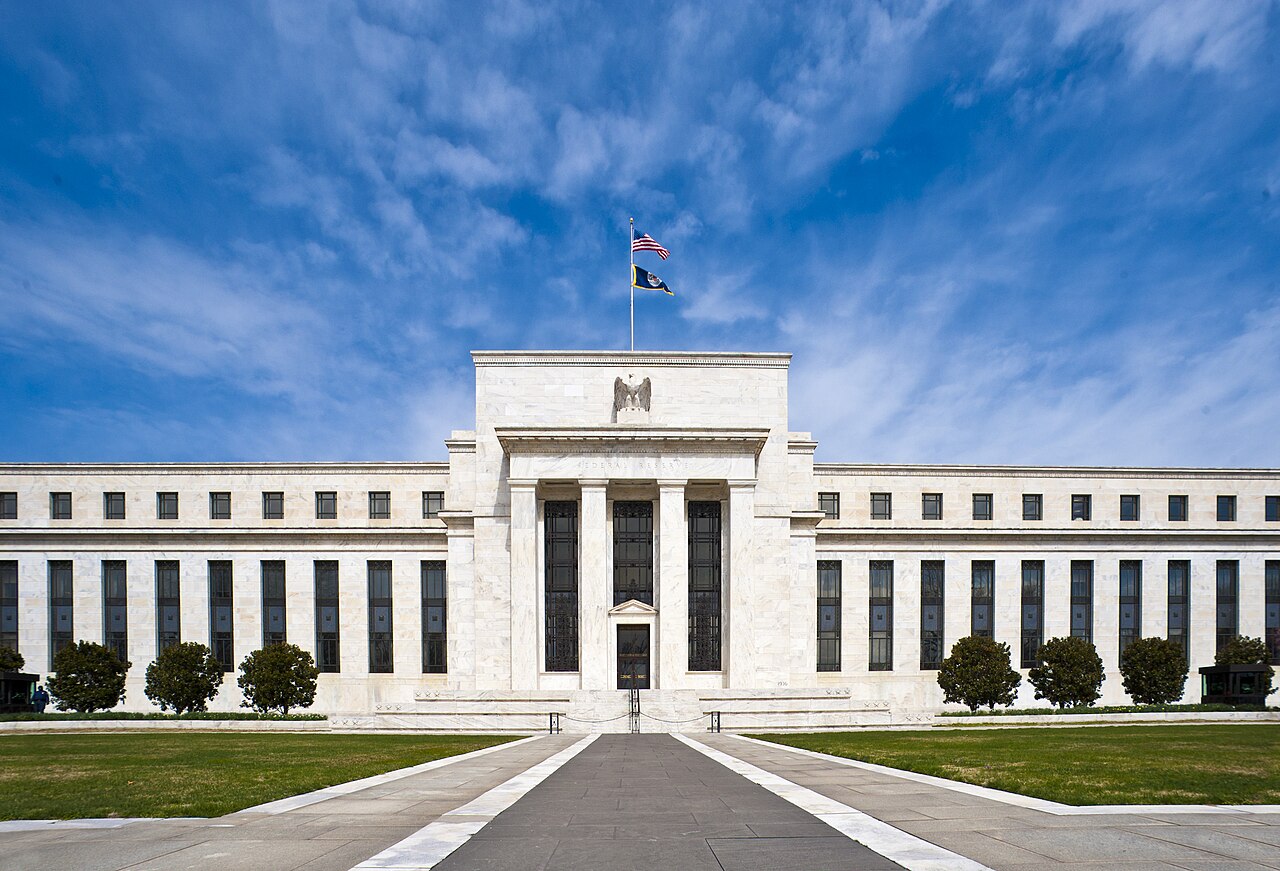
- Marriner S. Eccles Federal Reserve Board building, Washington, D.C. Author: Federalreserve, via Wikimedia Commons. Public domain.