On July 29, 2026, shares of CoreWeave (Nasdaq: CRWV) fell about 9%. That kind of single-day move is not unusual for a volatile AI stock. What made the day notable happened in a different market entirely: the credit default swap market, where investors trade protection against a company failing to repay its debt, priced CoreWeave's five-year default probability at roughly 50%. Insuring $10 million of CoreWeave debt for five years was quoted at about 855 basis points, meaning roughly $855,000 a year, a premium level typically associated with borrowers already in or near distress.
Days later, CoreWeave went to sell a $2.6 billion leveraged loan, raised to fund additional compute capacity for customers that include Anthropic PBC, and had to sweeten the terms to get it done. This piece explains what a credit default swap is, why the CDS market can diverge sharply from the stock market, what specifically changed in CoreWeave's loan pricing, and how to read a single-company credit warning against the much larger debt buildout underway across AI infrastructure.
What a credit default swap actually prices
A credit default swap is, in effect, insurance on a bond or loan. The buyer pays a periodic premium; the seller agrees to pay out if the borrower defaults. The premium, quoted in basis points of the insured amount, is the market's real-time estimate of default risk, priced by traders whose job is specifically to price credit risk, not equity upside.
That is why the CDS market and the stock market can tell different stories about the same company at the same time. Equity investors are pricing a wide range of outcomes, including scenarios where a company grows into a much larger business over years, and a 9% one-day drop reflects a shift in sentiment about that range. Credit investors are pricing a narrower, more binary question: will the company make its debt payments over the life of the contract. When CDS spreads widen sharply, it means the market handling that specific question, and nothing else, has moved a great deal. A CDS-implied default probability near 50% is an unusually strong signal in that narrower market, on the scale normally seen with companies already flagged as distressed credits, and it is worth taking seriously even from investors who remain constructive on the underlying business.
A CDS spread this wide is the bond market speaking in a language equity investors do not always read.
Credit markets, explained
The $2.6 billion loan and why it had to be repriced
Anthropic is one of the AI labs whose growing compute needs CoreWeave has built capacity to serve, and part of the $2.6 billion leveraged loan in question was raised specifically to fund additional capacity tied to that relationship. Selling that loan to investors in late July required moving the terms in the borrower's favor, the sign that demand was softer than CoreWeave's bankers had planned for.
 Anthropic
Specifically, pricing moved to about 5.5 percentage points above the benchmark rate, as much as 1.25 percentage points above where the deal was initially marketed, and the loan was ultimately offered at a discount of 96 to 97 cents on the dollar rather than closer to par. Each of those moves means the same thing from a different angle: lenders wanted more compensation for the risk than CoreWeave first offered, and the company paid up to get the deal placed. That is a live, market-tested read on CoreWeave's borrowing cost, arriving within days of the CDS market's own repricing.
The capex-to-revenue gap underneath the debt
The gap the bond market is pricing
CoreWeave's own guidance calls for $31-35B of 2026 capital spending against roughly $6.2B in trailing-twelve-month revenue. The 2026 capex bar uses the $33B midpoint of that range.
Figures are CoreWeave's own disclosed guidance and reported trailing revenue, not a forecast of the eventual gap.
The reason lenders are asking harder questions traces back to CoreWeave's underlying economics. By the company's own guidance, it needs roughly $31 billion to $35 billion of capital expenditure in 2026 to build the data-center capacity its contracts require, against approximately $6.2 billion in trailing-twelve-month revenue. A gap of that size between what a company needs to spend and what it currently brings in is not automatically alarming for infrastructure businesses signing multi-year contracts ahead of demand; it is the normal shape of a capital-intensive buildout. But it also means CoreWeave depends heavily on continued access to debt markets at reasonable rates to keep building, which is precisely the access that widening CDS spreads and a repriced loan put a real cost on.
Why GPU-collateralized debt carries its own risk profile
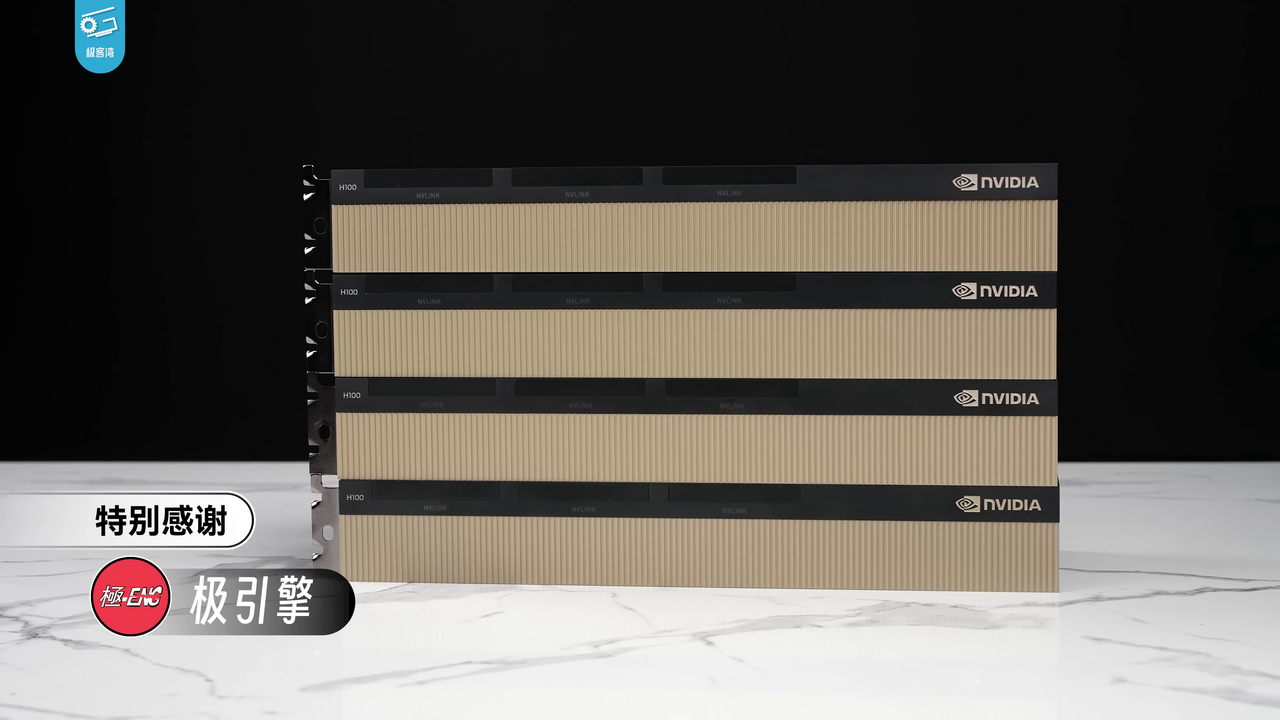
Separately from the repriced loan, CoreWeave closed a $3.1 billion GPU-backed loan facility, expanding its access to public markets for GPU-collateralized financing, meaning loans secured directly by the value of the chips themselves. That structure is now common across the neocloud sector because it lets capital-intensive AI infrastructure companies borrow against an asset that is, on paper, valuable and in high demand.
The risk in that structure is specific and worth naming plainly. GPUs are not like real estate or aircraft, assets that depreciate slowly and have deep, liquid resale markets. They are technology products on a fast generational cycle; a chip that anchors a lending facility today can be a step or two behind the frontier within a few years, with resale value that is far harder to predict than a building's. A second concentration risk sits alongside it: a meaningful share of CoreWeave's revenue and future contracted capacity is tied to a small number of large AI-lab customers. Financing raised specifically to serve one such customer, as with the Anthropic-linked portion of the $2.6 billion loan, means the loan's performance is partly a bet on that single relationship continuing to scale on schedule, not just on demand for compute broadly.
The mechanism that makes this a warning sign, not just a bad week
What separates a credit-market warning from ordinary stock volatility is that it can become self-reinforcing. Wider CDS spreads and a costlier loan raise CoreWeave's refinancing cost. A higher cost of capital strains a business model that already runs on a debt-funded capex treadmill, borrowing heavily today against contracted revenue that arrives later. If that strain shows up in weaker results or slower contract growth, it can widen CDS spreads further, raising the cost of the next financing round. Whether that loop actually takes hold, or stays a one-time repricing that settles down, is the open question the market itself has not resolved.
Two honest readings
The disciplined way to hold this is to state both readings plainly rather than pick one.
The first reading: the bond market is flagging a real solvency risk. Credit investors are professionals whose job is pricing exactly this kind of danger, and a CDS spread implying roughly 50% five-year default odds, paired with a loan that had to be repriced within days to clear, is a specific, market-tested signal that CoreWeave's current capex pace is outrunning what its balance sheet can comfortably support without continued, cheap access to debt.
The second reading: distressed-level CDS pricing on a hyper-growth infrastructure company can overstate near-term default risk. CDS markets for less-liquid single names can move sharply on relatively thin trading volume, and a company with genuine contracted revenue growth, a scarce and in-demand product, and access to equity as well as debt markets is not mechanically the same credit as a mature company posting the same spread. The $3.1 billion facility CoreWeave closed in the same period shows lenders are still willing to extend GPU-backed credit at scale, which sits in some tension with a 50% implied default probability.
Both readings are defensible from the same set of facts, and the honest position in early August 2026 is that neither can yet be ruled out.
A single-name signal inside a larger buildout
It is worth being precise about scope. CoreWeave's CDS blowout is a company-specific event, driven by its particular mix of leverage, capex pace and customer concentration, not a market-wide credit event. It sits alongside, but is distinct from, the broader 2026 debate over AI infrastructure capital spending and vendor financing across the sector. What makes it worth attention beyond CoreWeave itself is that it is one of the first live, market-priced tests of how credit investors value the debt funding this specific style of AI buildout, GPU-collateralized, customer-concentrated, and running well ahead of current revenue. Whether it turns out to be an early warning or a company-specific event will become clearer as more of these loans come up for pricing across the sector.
For anyone building on top of AI infrastructure rather than financing it, the practical lesson is about concentration risk generally. A compute or infrastructure bet tied tightly to a single provider carries exposure to that provider's own balance sheet, not just its product roadmap. Keeping application-layer work portable across models and providers, the approach Metir AI takes by staying model-agnostic rather than locked to one vendor's stack, is one way to avoid inheriting a single company's financing risk as your own.
The takeaway
None of this is investment advice, and nothing here predicts whether CoreWeave defaults, refinances comfortably, or grows into its capex. What is verifiable is narrower and more useful: on July 29, 2026, the credit market priced CoreWeave's default risk at a level usually reserved for distressed borrowers, and within days the company had to offer better terms to place a $2.6 billion loan tied in part to its Anthropic relationship. That is a specific, dated signal from the market that prices credit risk for a living. Whether it marks the start of a wider reassessment of AI infrastructure debt or a one-off repricing of a single, fast-growing borrower is the question the rest of 2026 will answer.
Sources:
- CoreWeave CDS Hits 50% Default Odds: Bond Market Calls Time On GPU Debt Spiral | TechTimes
- CoreWeave Boosts Yield on $2.6 Billion Loan Tied to Anthropic | Bloomberg
- CoreWeave Said to Sweeten $2.6 Billion Loan Terms Amid Debt Concerns | Investing.com
- CoreWeave: The Debt-Laden AI Play With Growing Risk for Investors | AInvest
- CoreWeave Closes $3.1 Billion Loan Facility, Expanding Access to Public Markets for GPU-Backed Financing | CoreWeave Investor Relations
Image credits
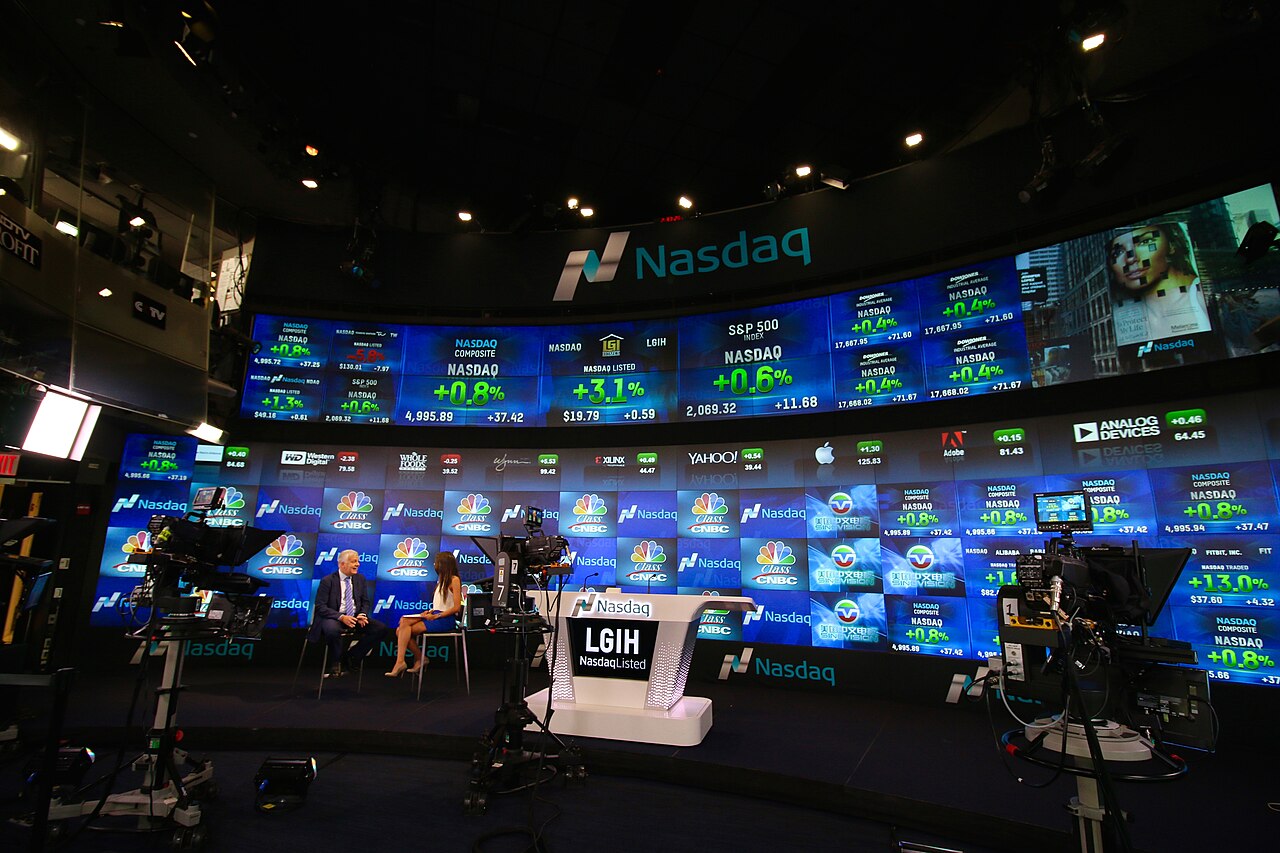
Header image: interior of the Nasdaq MarketSite broadcast studio in Times Square, New York, via Wikimedia Commons, licensed under CC BY 2.0. It depicts the general Nasdaq venue, not a CoreWeave-specific event. In-body photograph of stacked NVIDIA H100 data-center accelerators by Geekerwan via Wikimedia Commons, licensed under CC BY 3.0.