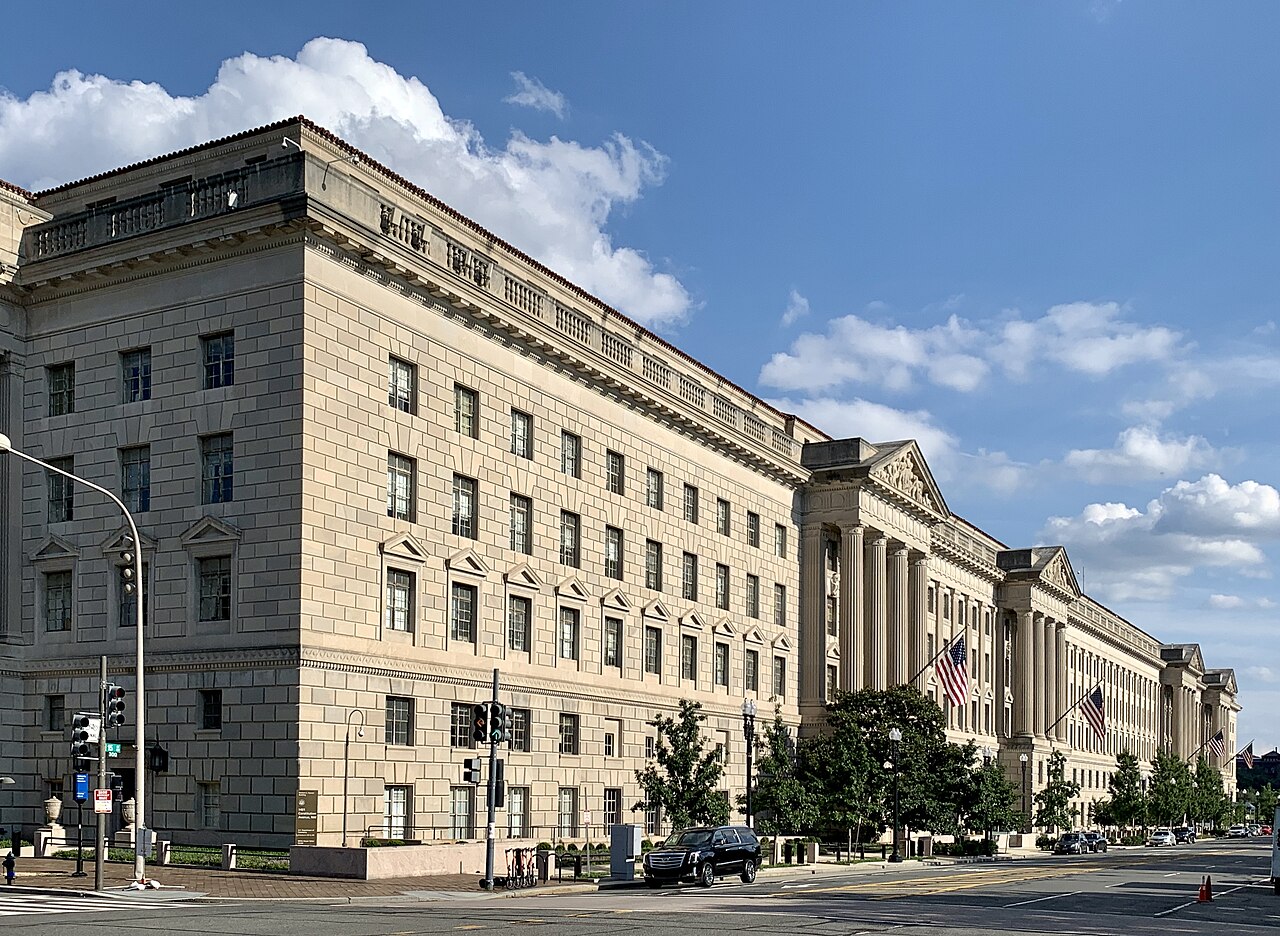
On November 16, 2026, the U.S. Commerce Department issued an interim rule to curb access to advanced AI chips by companies in restricted countries through data centers elsewhere, according to TechCrunch and Reuters. Earlier export rules asked where a chip was shipped. This one asks who can use the computing power that chip provides, which closes the route of renting compute abroad.
 NVIDIA
What the rule requires
Per TechCrunch's summary of the interim rule:
- A license is required to export, reexport or transfer AI chips and servers to data centers anywhere in the world if those sites may provide compute to entities in China or other restricted countries.
- Indirect access through intermediaries or brokers is covered.
- Exporters and data center operators must monitor customers' ownership and activity to confirm they are not controlled by anyone from the D:5 group, which includes China, Russia, Iran, North Korea and 18 others.
- Existing operators offering covered services have 90 days from the effective date to obtain licenses. The exact effective date was not stated in the report reviewed.
- Separately, the rule adds license requirements for advanced semiconductor exports to Malaysia, Singapore, Indonesia, Thailand and Brazil, citing a "higher-than-normal risk of diversion." These requirements do not apply to chips destined for U.S.-based companies.
- Commercial recommendation systems, such as those used in e-commerce or social media, are excluded.
- It rescinds the Biden administration's January 2025 AI Diffusion Rule, which set country-level limits on advanced chip exports and restricted transfers of certain powerful models.
The rule's stated rationale is that "this new control is a logical extension of existing controls," because such compute "can be used to train and run advanced" models that could support military and intelligence uses.
Four tests in the remote-access rule
The rule moves the licensing question from where a chip ships to who can use the compute it provides.
Source: TechCrunch, November 16, 2026. The exact effective date was not stated in that report.
Reading the threshold
Total processing performance, or TPP, is the U.S. export-control measure of a chip's computing power. The rule applies to data centers or networks able to supply more than 12 million TPP. TechCrunch estimates that is roughly the maximum compute of about 750 Nvidia H100 or H200 chips.
Using that estimate, our own arithmetic gives a sense of scale: at eight accelerators per server, 750 chips is about 94 servers, a small deployment by current hyperscale standards. The threshold therefore captures cluster-sized sites rather than only the largest campuses, though a site below it that is part of a larger network could still be aggregated, since the rule refers to networks as well as data centers.

From shipment control to end-use control
Three shifts follow from the design.
- The unit of regulation changes. A shipment license attaches to a sale. A rule keyed to who can reach the compute attaches to an ongoing service, which puts continuing obligations on operators, such as customer ownership checks, in a way closer to know-your-customer regimes in finance.
- Geography gets broader and narrower at once. The license requirement follows the end user's identity anywhere in the world, while five Southeast Asian and South American countries get extra requirements because of diversion risk. Chips headed to U.S.-based companies are carved out.
- A prior framework is removed. Rescinding the AI Diffusion Rule replaces country-tier limits with an entity- and access-based approach.
The question moves from where the chip sits to who is allowed to use what it computes.
Analysis
The context behind it
This builds on an earlier pattern we covered in the cloud loophole versus smuggling, where a reported multi-billion-dollar lease of chips in Southeast Asian data centers showed that access, rather than ownership, was the contested channel.
Reporting around the rule also describes a U.S. effort to add Megaspeed, an Nvidia customer, to a special entity list, because it is believed to have bought thousands of Nvidia chips to supply compute to Chinese businesses. Reuters reported that Chinese AI firms are rushing to secure overseas computing capacity amid fears of tighter restrictions. These are reports of intent and behavior, not findings. The rule landed days after Nvidia's leadership change, which we cover in Huang's resignation and the November 17 earnings setup, and coverage by NPR and CBS News connects the two, though the rule's text is framed around chip diversion and not around any individual.
Who is affected
| Group | Likely effect |
|---|---|
| Neoclouds and colocation operators above 12M TPP | Need licenses and customer ownership monitoring; 90 days for existing operators |
| Chip and server exporters | Must assess end-user control, including through brokers |
| Customers in the five named countries | Face added license requirements on advanced semiconductor imports |
| U.S.-based buyers | Carved out of the new license requirements |
| Chinese AI developers | Remote rental through third countries becomes a licensed activity |
Open questions
- Effective date and enforcement. The reporting reviewed does not give the effective date, which starts the 90-day clock.
- Aggregation. How regulators count a network of smaller sites against the 12M TPP line.
- Verification. How operators prove ownership chains for customers that are layered companies.
- Demand effects. Whether this shifts workloads to domestic Chinese chips or to other jurisdictions. Our look at Huawei's growing share of China's AI chip market is background for that question.
For companies that buy AI capacity through intermediaries, or that use multi-provider tools such as Metir that route across different model hosts, the immediate effect is likely to be contractual: more questions about where inference runs and who ultimately owns the infrastructure.
Sources:
- US tightens AI chip export controls to deter Chinese companies from accessing compute remotely | TechCrunch
- US issues rule to protect advanced AI chips from being accessed remotely | Reuters
- Nvidia, Jensen Huang and the Commerce Department | NPR
- Commerce Department moves to limit remote access to AI chips | CBS News
- Everything That Happened in AI Today, Tuesday, November 17 | The Neuron
Image credits
Header image: the Herbert C. Hoover Building, headquarters of the U.S. Department of Commerce, Washington, D.C., by APK via Wikimedia Commons, licensed CC BY-SA 4.0.
In-body image: the main lobby of the Commerce Department building, via Wikimedia Commons, public domain.