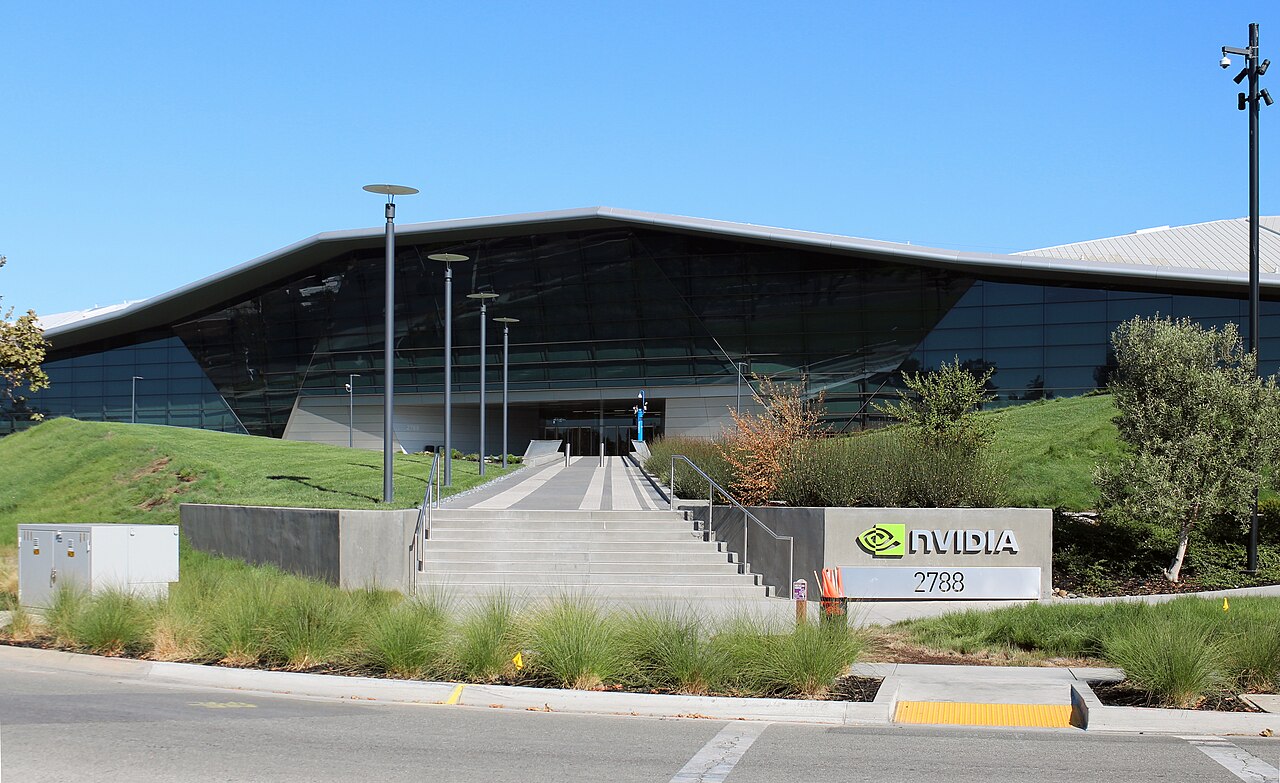
Nvidia announced on November 12, 2026 that its board had accepted the resignation of co-founder Jensen Huang as president and CEO. According to TechCrunch's report on the regulatory filing, the board accepted it on Wednesday, November 11, and the company disclosed it the next day. CFO Colette Kress becomes interim CEO and keeps the CFO role until a permanent successor is found. This post separates what is confirmed from what is alleged, and looks at what the transition means for a company that sits underneath most of the AI buildout.
 Nvidia
What is confirmed
- The resignation and interim CEO. Huang resigned as president and CEO. Kress, previously CFO and executive vice president, is interim CEO while remaining CFO, per TechCrunch.
- A new governance seat. Harvey C. Jones, a managing partner at Square Wave Ventures and former Synopsys CEO, was named Nvidia's first-ever board chair. He has been on the board since 1993 and is expected to lead the CEO search, per the same report.
- No reason in Nvidia's statement. Nvidia's statement thanked Huang for "his immeasurable contributions to the company and the industry" and did not state a reason, according to TechCrunch.
- An independent investigation. CNBC's live coverage reports that the board hired the law firm Wachtell Lipton to investigate intelligence-related allegations, and that Huang denied compromising national security or Nvidia's secrets.
- Congressional interest. CNBC reports that House Foreign Affairs Chair Brian Mast said Huang agreed to testify before Thanksgiving, with the date under negotiation, and that Senate Banking Chair Tim Scott called for Huang and Commerce Secretary Howard Lutnick to testify publicly on December 3 and December 10, respectively.
What is reported, and not established
TechCrunch attributes the departure to Huang's admission, days earlier, of a personal relationship with a woman alleged to be a Chinese spy. Those allegations have not been proven in any court or by any public finding, and Huang has denied that he compromised national security or company secrets. A Neuron digest of the coverage cites CNN as reporting that Nvidia said it found no evidence that corporate or national-security secrets were compromised. Different outlets describe the personal details differently, so this post does not rely on them. The business questions below stand regardless of how the investigation resolves.
How the market reacted
According to CNBC, the stock closed at $173.73 on Wednesday, November 11, against a closing high of $239.24 on October 6. That is a 27.4% decline from the peak close (our arithmetic from those two figures). On Thursday it opened down more than 13%, recovered much of that, and closed down 4.3%, just above a $4 trillion market value after earlier trading below it. CNBC also reports the shares are on track for a sixth straight weekly decline, the longest slump since 2012, and have lost more than $2 trillion in value since the October peak.
Peers moved more sharply. TechCrunch reports CoreWeave fell about 9%, Nebius about 16% and IREN 6.6% on Thursday. The pattern is consistent with these companies' business models, which are tied to Nvidia hardware supply and sentiment. Our earlier coverage of the CoreWeave Q3 results shows how closely the neocloud group tracks the GPU cycle.
Analyst price targets before and after the resignation
Price targets in dollars for three firms, as reported by CNBC on November 12, 2026. Baird also downgraded the stock to neutral.
Cantor kept overweight and Stifel kept buy. Targets are analyst opinions, not predictions of outcomes.
The analyst split
CNBC lists a wide range of responses, which is itself informative:
| Firm | Move | Stated reasoning |
|---|---|---|
| Cantor Fitzgerald | Target cut from $350 to $250, overweight kept | Not detailed in the live blog |
| Stifel | Target cut from $315 to $205, buy kept | Not detailed in the live blog |
| Baird | Target cut from $500 to $200, downgraded to neutral | Not detailed in the live blog |
| KeyBanc | Commentary | Material increase in strategic, organizational and execution risk |
| Bernstein | Commentary | Hard to buy "in size" given likely further allegations |
| Janus Henderson | Commentary | Possible "clearing event" for the stock |
FactSet counted at least 10 analysts turning more bearish during the week, per CNBC. Notably, the firms that cut targets mostly kept constructive ratings, which suggests the revisions reflect a higher risk discount rather than a changed view of demand. That reading is our interpretation, not a statement from the firms.
Huang's departure represents a material increase in strategic, organizational, and execution risk.
KeyBanc's John Vinh, as reported by CNBC
Why governance structure matters here
TechCrunch notes Huang is the largest individual shareholder at about 3.5% with no supervoting rights, and that the board could have removed him at any time. That sets Nvidia apart from companies where a founder's control makes a sudden exit structurally harder, and it means the board, not a control block, decides the succession. The creation of a first-ever board chair, with a long-tenured director leading the search, reads as a formal separation of oversight from management. Analysts quoted by CNBC differ on the outcome: one expects Kress to steady the company but sees a likely need for an outside leader over the longer term.
What to watch on November 17
CNBC reports Nvidia plans to report fiscal third-quarter results on November 17 at about 1:20 p.m. PT, with a call at 2 p.m. PT. It will be the first public test without Huang, and a short list of items will show whether the transition changes the operating picture:
- Guidance language. Whether the forward outlook is delivered by Kress with the same product-roadmap framing, or with more conservative hedges.
- Customer financing. Semafor argues that AI companies may no longer assume Nvidia will back the market on the same terms. Any change in how Nvidia describes investments, backstops or supply commitments to customers will be read in that light.
- China exposure. Semafor also examined possible effects on Chinese AI developers, whose chip access depends on U.S. export restrictions. Questions about export compliance are likely on the call.
- Pending deals. The planned acquisition of Hugging Face, about $12.9 billion, is still expected to close in 2027, per TechCrunch's report on the CEO's response. Our earlier coverage of the deal covers the terms.
- Congressional calendar. Testimony dates fall in the weeks after the report.
Takeaways for AI builders
- Key-person risk is now visible in AI infrastructure. A single executive's departure moved a roughly $4 trillion company and its customers on the same day.
- Roadmaps are institutional. Nothing in the reporting says product schedules changed, and the earnings call is the first checkpoint.
- Hardware concentration is a planning variable. Teams that route workloads across multiple model and hardware providers carry less exposure to any one supplier's turbulence. Model-agnostic platforms, Metir among them, are one way to keep that flexibility at the application layer.
Sources:
- TechCrunch: Nvidia's Jensen Huang resigns, chipmaker names CFO Colette Kress as interim CEO
- CNBC: Nvidia CEO Jensen Huang resigns, live updates
- The Neuron: Everything that happened in AI today, Friday, November 13
- Semafor: The end of the Nvidia put that powers the AI ecosystem
- Semafor: Nvidia turmoil could shake up Chinese AI landscape
- TechCrunch: Hugging Face CEO vows to keep fighting for open source AI
Image credits
- NVIDIA headquarters, Santa Clara: Coolcaesar, CC BY-SA 4.0, via Wikimedia Commons.
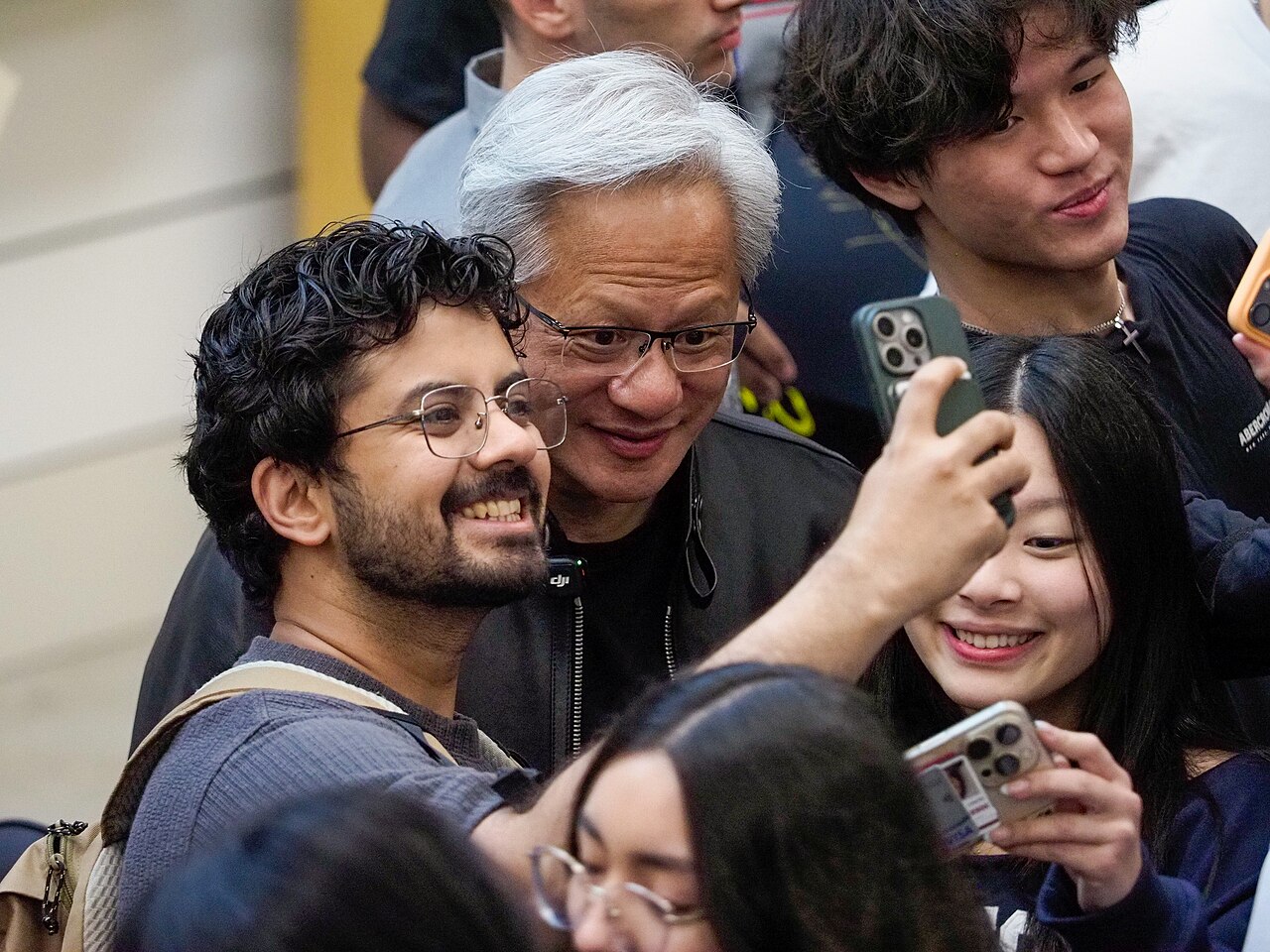
- Jensen Huang at Stanford, April 30, 2026: Anderseidesvik, CC BY-SA 4.0, via Wikimedia Commons.