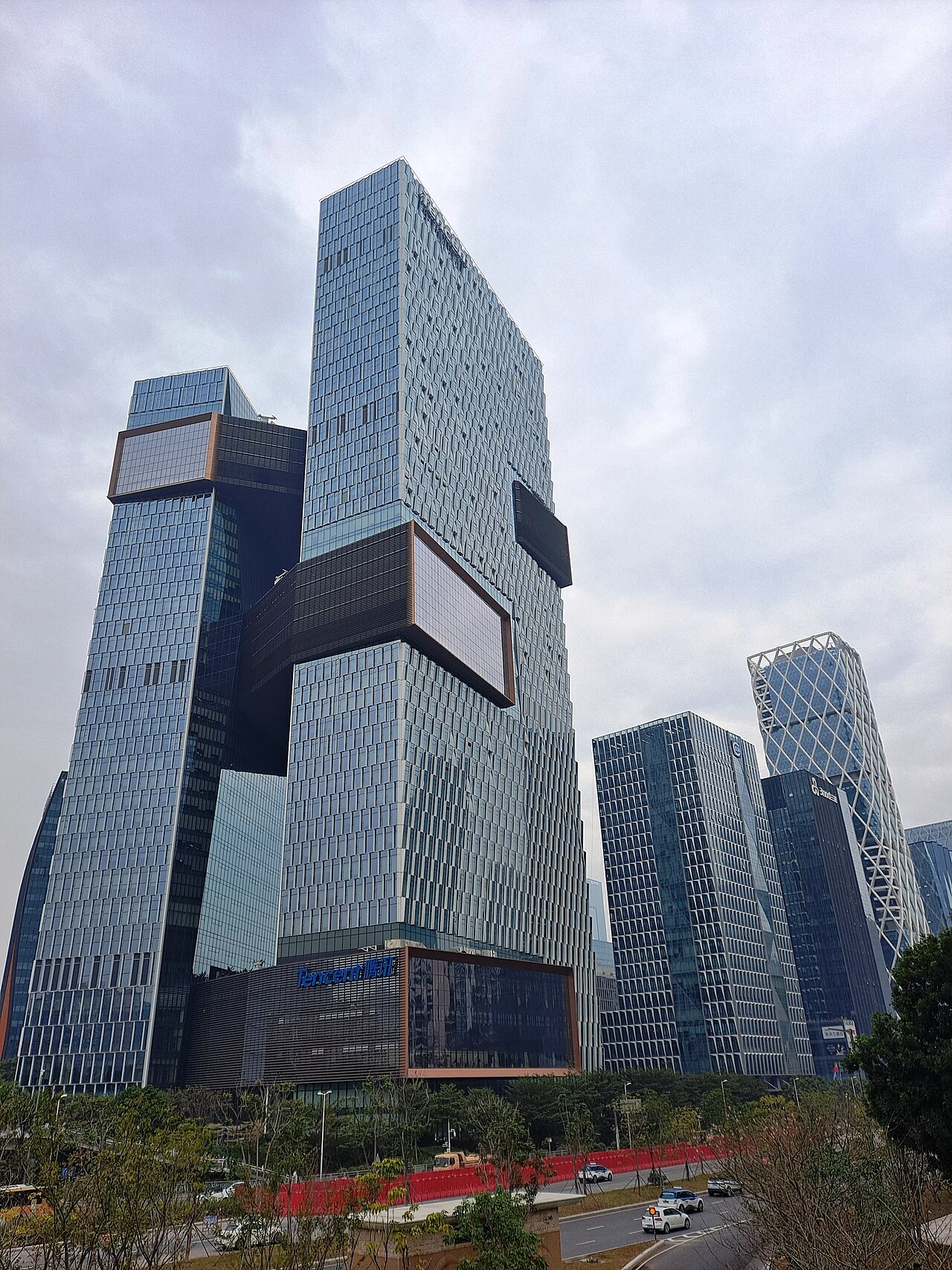
Two stories from October 1, 2026 show AI chip export controls being tested from opposite directions. In one, Tencent reportedly signed a five-year lease worth about $7 billion for access to roughly 100,000 advanced AI chips in Oracle data centers in Southeast Asia, a deal reported by the Financial Times and not confirmed by either company (TrendForce; Investing.com). In the other, the US Justice Department announced the arrest of a California business owner charged with smuggling more than $300 million of GPU servers to China through Malaysia and Singapore (DOJ). One route moves the computing, not the chips. The other allegedly moves the chips themselves.
The reported Tencent and Oracle lease
According to the FT report, relayed by Investing.com, the deal is Tencent's largest overseas lease, about 30% was paid upfront, and the details come from "two people with knowledge of the matter." Reuters reported that Oracle and Tencent had not answered requests for comment (FinanceFeeds). The reports do not name the exact chip model or the host countries.
The economics can be estimated with simple arithmetic, which is ours and not part of the report. If $7 billion covers 100,000 chips evenly over five years, that is $70,000 per chip for the term, or $14,000 per chip per year. Spread across every hour of a year, it works out to about $1.60 per chip-hour. The 30% upfront share implies roughly $2.1 billion paid at signing. Contracts like this usually bundle power, networking and service, so these are rough implied figures, not a disclosed price.
How export rules treat remote access
The reason the lease matters for policy is that current US export rules focus on where hardware goes. As TrendForce and Investing.com put it, Chinese companies are restricted from buying advanced AI chips directly, but US rules do not currently prohibit them from leasing computing capacity overseas.
The EAR does not generally control remote access if that access does not involve the export of a controlled item.
Freshfields, A Fresh Take, July 30, 2026
That gap is not absolute. In May 2025, the Commerce Department's Bureau of Industry and Security (BIS) rescinded the Biden-era AI Diffusion Rule, issued in January 2025, (Wiley). Alongside the rescission, BIS issued guidance warning that a license may be required when an exporter has "knowledge" that an infrastructure-as-a-service provider will use advanced chips to train AI models for or on behalf of parties headquartered in China or other Country Group D:5 destinations. Whether any given lease falls inside that guidance depends on facts, such as how the capacity is used, that are not public.
Congress is trying to close the gap directly. The Remote Access Security Act (H.R. 2683) would amend the Export Control Reform Act so the Commerce Department can control remote access to US items, including through cloud services, when it poses a serious national security or foreign policy risk (Baker McKenzie). The House passed it 369 to 22 on January 12, 2026 (House China Select Committee). Senators Dave McCormick and Ron Wyden introduced a Senate version in December 2025 (Sen. McCormick), and as of Freshfields' July 2026 analysis it was still awaiting a Senate vote. It is not law.
The Earthmade smuggling indictment
The second case is a classic hardware diversion allegation. Greg Lui, 38, also known as Yiu Kong Lui, of San Gabriel, California, owns Earthmade Computer Inc. in City of Industry. A three-count indictment returned on September 29 charges him with conspiracy to violate the Export Control Reform Act and the Export Administration Regulations, outbound smuggling, and conspiracy to commit money laundering (DOJ).
Prosecutors allege that from 2023 to 2024 he bought servers containing high-end GPUs from US manufacturers using false paperwork about end users, shipped them to Malaysia and Singapore, where no license was required, and had them re-exported to China. In one example, a January 2024 purchase order covered 27 servers with export-restricted GPUs for about $7,614,000, shipped from Los Angeles to Kuala Lumpur. That is roughly $282,000 per server by our arithmetic. Press coverage identifies the GPUs as Nvidia H100s (Courthouse News). The conspiracy and money laundering counts each carry a maximum of 20 years, and smuggling up to 10. An indictment is an allegation, and Lui is presumed innocent.
 Nvidia
Two channels, very different scale
Green bars are the reported Tencent lease of overseas compute; gray bars are figures alleged in the Earthmade smuggling indictment. The axis is log-scaled, in millions of US dollars, because the values span three orders of magnitude.
Sources: Financial Times report via TrendForce and Investing.com (Oct 1, 2026; unconfirmed by the companies); US Department of Justice press release (Oct 1, 2026; allegations only). Upfront and per-year rows are derived arithmetic.
Southeast Asia sits in the middle of both
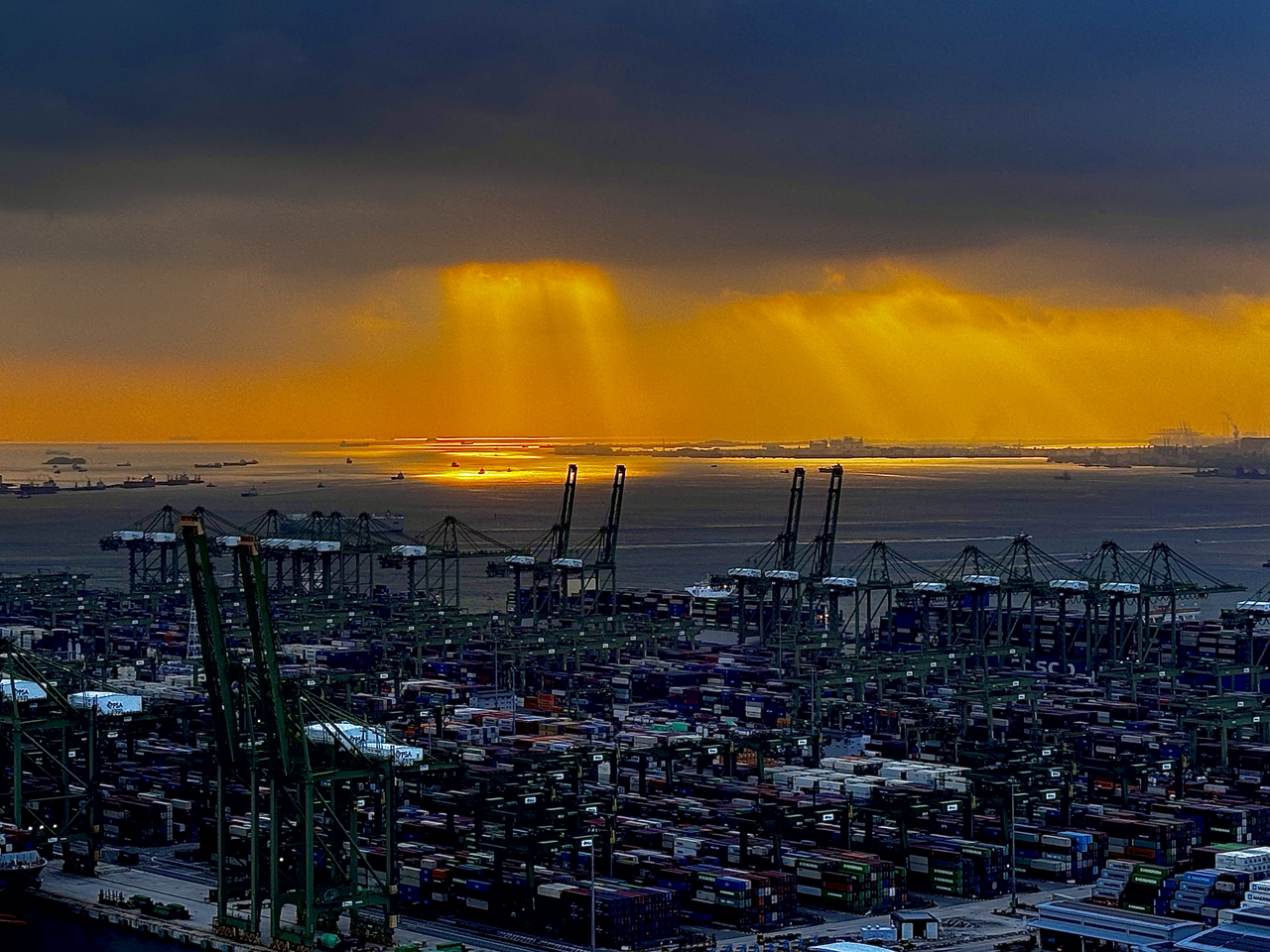
Both stories run through the same region. Singapore and Malaysia are major shipping and logistics hubs, and they have also become data center hubs: Oracle announced in October 2024 that it would invest more than $6.5 billion in a public cloud region in Malaysia (Oracle). In July 2025, Malaysia's trade ministry began requiring a Strategic Trade Permit for exports, transshipments and transits of high-performance US-origin AI chips (The Star). The conduct alleged in the Lui case predates that rule.
What the two cases show
Smuggling is already illegal, so enforcement depends on paperwork checks, freight forwarders and cooperation from transit countries. The reported lease raises a different question: whether the law should reach it at all. A shipment can be inspected at a port; compute accessed over a network has no comparable checkpoint, which is why the debate has moved to bills like the Remote Access Security Act.
For organizations using AI, the practical lesson is that access to compute is shaped by policy as well as price, and both can shift quickly. Keeping workflows portable across models and providers, as platforms like Metir allow, is one way to limit exposure to any single supply chain.
Sources:
- US Department of Justice, Office of Public Affairs: California man arrested for smuggling more than $300 million in export-controlled computer servers to China
- US Attorney's Office, Central District of California: San Gabriel man arrested on federal charges
- Courthouse News: California man charged with smuggling $300 million in restricted AI hardware to China
- Benzinga: Nvidia AI servers, Malaysia, Singapore, China $300 million scheme charged
- TrendForce: Tencent reportedly signs $7B deal to lease 100,000 AI chips from Oracle in Southeast Asia
- Investing.com: Tencent leases 100,000 chips from Oracle for $7 bln, FT
- DatacenterDynamics: Tencent signs on for 100,000 GPUs via Oracle, report
- FinanceFeeds: Oracle and the $7 billion Tencent AI compute deal
- Wiley: BIS rescinds AI Diffusion Rule and issues guidance on advanced computing integrated circuits
- Baker McKenzie: US House passes Remote Access Security Act
- House Select Committee on the CCP: House passes bipartisan legislation to limit adversaries' remote access to critical technology
- Sen. Dave McCormick: Remote Access Security Act introduced with Sen. Wyden
- Freshfields: Remote access or remote possibility? RASA and the future of cloud export controls
- Oracle: Oracle to invest more than US$6.5 billion in AI and cloud computing in Malaysia
- The Star: MITI imposes permit requirement on US-origin AI chip exports
Image credits
- Hero: Tencent Seafront Towers, Tencent's headquarters in Shenzhen. Source: Wikimedia Commons, photo by 钉钉, licensed CC BY-SA 4.0.
- In-body: Pasir Panjang Container Terminal, Singapore. Source: Wikimedia Commons, photo by Icepinner, licensed CC BY 4.0.