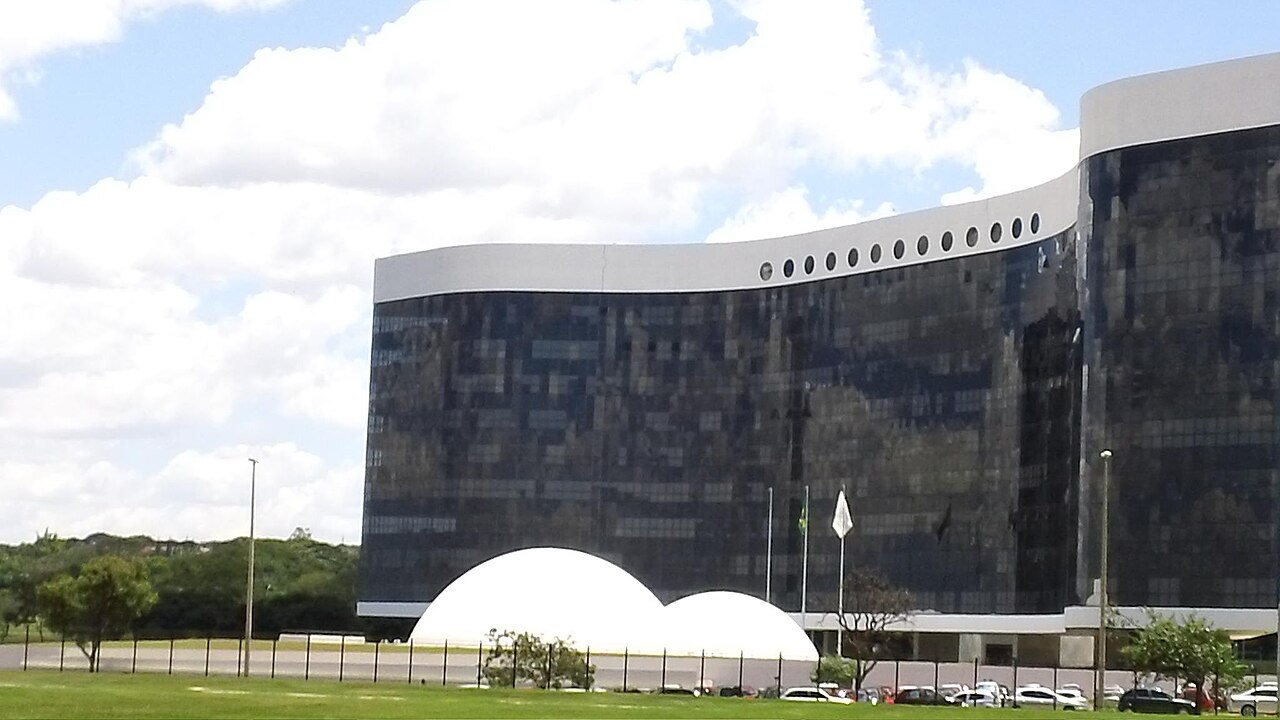
On October 15, 2026, Justice Marco Aurélio Bellizze of Brazil's top electoral court ordered Meta to act immediately to ensure equal treatment of the two presidential candidates ahead of the October 25 runoff, including a requirement that its AI tool "applies identical criteria" to both campaigns. The order followed a complaint by incumbent Luiz Inácio Lula da Silva, according to AP reporting. The order extends a campaign dispute over feed reach to the behavior of an AI assistant.
 Meta
What the court ordered
Per AP, the court ruled that Meta cannot reduce the distribution of political content, restrict searches or remove posts in a way that imbalances the race between Lula and Flávio Bolsonaro, and that its AI tool must apply identical criteria to both candidacies. Meta faces a fine of 500,000 reais (about $98,000) per day for noncompliance. Meta declined to comment on the ruling.
What the Lula campaign alleged
The campaign said Meta applied "unjustified reductions in reach" to its materials and organic posts, and had not followed a plan Meta itself submitted to the court. Its lawyers said content from Lula and his supporters "faces delivery restrictions, without any justification or transparency", while profiles supporting the opposing side received "a disproportionate and artificial reach, garnering more views even than global celebrities."
On the AI tool specifically, the complaint said users of Meta AI in WhatsApp could not generate campaign images of Lula, but could create them to promote Flávio Bolsonaro. The campaign asked for an immediate end to the restrictions and for Meta to double Lula's reach to make up for the harm. The court's reported order is narrower than that request: it requires equal treatment rather than compensation.
Meta's position
On October 11, Meta told the court it rejects claims that its platforms favor Bolsonaro. It acknowledged technical glitches that affect accounts beyond Brazil and said it complies with Brazilian electoral rules and is committed to equal platform access for all parties. In other words, the company attributes the reported behavior to technical faults rather than policy, and no public evidence reviewed here establishes intent either way.
Analysis: why chatbot symmetry is hard to guarantee
The legal standard is symmetry. The engineering reality is that safety filters were not built to be symmetric.
Metir analysis
Image generators commonly refuse or restrict depictions of real, named people, and the rules are usually applied through classifiers and prompt filters. Three mechanisms can produce asymmetric results without any intent to favor a side:
- Likeness filters trained on different data. A face or name that a filter recognizes strongly is blocked more often than one it recognizes weakly. The two candidates may be recognized to different degrees.
- Policy keyed to office. Rules that protect "heads of state" more strictly than other politicians would apply differently to an incumbent and a challenger.
- Regional and language effects. Moderation tuned on Portuguese-language slang, party symbols or campaign slogans may flag one campaign's vocabulary more often.
An order to apply identical criteria is straightforward to state and harder to verify. Auditing it requires paired tests: the same prompt template with each candidate's name, repeated enough times to separate a real gap from sampling noise. Because model outputs vary between runs, a single refusal on one side proves little, while a consistent difference across hundreds of trials would be strong evidence. No such audit has been reported publicly in connection with this case.
The penalty arithmetic
How the daily penalty would accumulate over the ten days to the runoff
Cumulative exposure in thousands of US dollars if the 500,000 real per day penalty applied for the stated number of days. Simple multiples of the stated daily figure.
Source: AP report of the October 15, 2026 order (500,000 reais, about $98,000, per day). Illustrative arithmetic; no fine has been reported as levied.
Simple multiples show the exposure at about $98,000 per day, or roughly $980,000 across the ten days between the order and the runoff. This is illustrative arithmetic only; no fine has been reported as levied. The practical pressure may come more from the legal precedent and the possibility of further orders than from the figure itself; for scale, Meta's latest quarterly results show operating income in the billions of dollars.
Election context
In the first round on October 4, Flávio Bolsonaro, the son of former president Jair Bolsonaro, received 47% of the vote to Lula's 45%, neither reaching the 50% needed to win outright, according to AP. The race is close, which is why small differences in reach or tool behavior draw legal attention. The runoff outcome was not available when this article was written.
What to watch
- Compliance evidence. Whether Meta files documentation of how its AI tool treats both candidates, and whether the court accepts it.
- Whether other assistants are tested. Election bodies elsewhere may reuse the paired-prompt approach, as with the midterm chatbot research trends in the United States.
- Disclosure rules. Spending on synthetic political content is already rising, as in the $137 million of AI political ads tracked in US midterms.
Takeaways for people choosing AI tools
Refusal behavior on political subjects differs between vendors and changes without notice. Users who rely on an assistant for campaign or civic work can reduce single-vendor risk by comparing outputs across several models, which is the kind of side-by-side workflow Metir supports.
Sources:
- Brazil's Lula wins electoral court challenge against Meta for alleged pro-Bolsonaro algorithm bias (AP via KSAT, October 15, 2026)
- Brazil's Lula challenges Meta at electoral court for alleged algorithmic bias and AI restrictions (AP via La Nacion, October 15, 2026)
- Brazil's presidential race heads to Lula-Bolsonaro runoff as right gains ground (WUNC/NPR, October 4, 2026)
Image credits
- Hero and in-body photo: "Sede do Tribunal Superior Eleitoral, em Brasília.jpg" by Alexandresena, licensed CC BY-SA 4.0, via Wikimedia Commons.