Political campaigns and outside groups have spent more than $137 million airing ads made at least partly with artificial intelligence ahead of the 2026 midterm elections, according to tracking by the Wesleyan Media Project. The group, co-directed by Erika Franklin Fowler and Travis Ridout, identified 220 such ads across 34 states through October 11, and found that only 27 percent carried a disclaimer saying AI was used. In the 2024 election cycle, the same project found less than $50,000 in spending on AI-generated ads.
Election day is November 3, 2026. With under two weeks to go, this is the first cycle in which AI-assisted advertising is a measurable line item rather than a curiosity. This post walks through what the data shows, how it was counted, and what the numbers cannot tell us.
What was measured
The Wesleyan Media Project tracks political advertising and built its AI database from several inputs, as described by Let's Data Science: disclaimers on the ads themselves, news reporting, AdImpact tagging, and review by its own coding staff. Spending figures rely on AdImpact estimates, and uncertain cases are excluded. The project says its count is likely an undercount because AI use is hard to detect.
Those methodology notes matter for how to read the headline:
- "At least partly AI" is a broad category. It spans deepfake-style depictions of real people and cheaper uses such as generating stock footage or cutting production costs. Gizmodo's reporting noted both.
- Spending is attached to ads that aired, not to the AI step. The $137 million is the airtime cost of ads that used AI somewhere in production, not money spent on AI tools.
- Detection bias runs one way. Ads that disclose are easy to find, and ads that do not may be missed, so the 27 percent disclosure rate describes the ads the project could identify.
Scale: from a rounding error to a line item
Against the 2024 figure of under $50,000, $137 million is a rise of more than 2,700 times (our calculation, using $50,000 as the ceiling for 2024). Spread across 220 identified ads, the average is roughly $620,000 per ad, though that average blends a few heavily aired spots with many smaller ones, and each ad is aired many times, so it should not be read as a production cost.
The jump has several plausible contributors that the data cannot rank: better and cheaper video and image generation, more tolerance among campaigns, and the fact that 2024 detection was less developed. Treat the multiple as an indicator of direction, not a precise growth rate.
Who is using it
AI political ads: who sponsors them and how often they are labelled
Share of ads or spending, per the Wesleyan Media Project count through October 11, 2026.
Democrats sponsored 12% of the identified ads; the remainder came from independents and issue groups. The tracker says its count is likely an undercount.
Republican candidates or groups sponsored 81 percent of the identified ads and accounted for 88 percent of the spending, according to Gizmodo's report of the data. Democrats sponsored 12 percent of the ads, with the remainder from independents and issue groups. Gizmodo said nearly half of the ads feature deepfakes of real politicians, and many tie local candidates to national Democrats such as Hillary Clinton, Nancy Pelosi and Alexandria Ocasio-Cortez.
Ridout told the New York Times that Democrats face more reputational risk when using a tool they want regulated, one explanation offered for the imbalance. It is an interpretation from a researcher, not a measured cause, and the sample is 220 ads, so a few large advertisers can shift the party split materially.
Much of the AI use is not disclosed through any type of disclaimer.
Erika Franklin Fowler, Wesleyan Media Project, via Gizmodo
The disclosure gap
Only 27 percent of the 220 ads, about 59 of them by our arithmetic, included a statement that they contained AI-generated content. The legal backdrop explains part of the gap:
- No federal law specifically regulates AI-generated political ads, according to coverage of the Wesleyan data.
- Thirty states require AI disclosures for political ads, per Gizmodo, so in roughly 20 states there is no such rule on the books.
- Satire claims. In August the New York State Democratic Party filed a complaint with the state Board of Elections accusing Republican gubernatorial candidate Bruce Blakeman's campaign of violating a law on disclosing deceptive AI content. Gizmodo reported that Blakeman has posted at least 22 AI-generated ads on social media since April, and that his campaign argues satirical ads do not require disclosures. The complaint is an allegation, and we found no ruling.
A contrasting tactic has also appeared. Texas Democratic Senate candidate James Talarico ends one ad with the line "Made by humans. Not AI," a sign that authenticity is itself becoming a messaging position.
How to read an AI-assisted ad
For voters, the practical issue is less whether AI was used than whether the ad depicts something that did not happen. A few checks that apply regardless of the tool:
- Look for a disclaimer, then do not rely on its absence. With 73 percent of identified ads unlabeled, no label is not evidence of authenticity.
- Check the source and the claim, not the pixels. Detection tools are unreliable, and the stronger test is whether reputable outlets or the candidate's own record corroborate the scene.
- Distinguish production uses from depiction uses. Stock footage generated by AI is different in kind from a fabricated statement by a real person.
AI assistants can help with claim-checking, but they make mistakes of their own, as we detailed in our look at voters using chatbots for midterm research. Using several models and comparing their answers, which model-agnostic tools such as Metir make easy, is one way to catch an individual model's errors, though none of them replace primary sources.
What to watch
- Final-week spending. The count ends October 11, and late-cycle ad buys are typically heavy, so the final total will be higher.
- Enforcement. Whether the New York complaint or similar state cases produce rulings will clarify how far satire exemptions reach.
- Federal action. The absence of a federal rule leaves a state patchwork, and any national standard would have to reconcile the 30 state regimes.
- Platform policy. The tracked ads run on television and social media, where disclosure rules are set partly by platforms rather than statute.
Sources:
- 137 million has been spent on AI-generated ads ahead of midterms, only 27% included a disclaimer | Gizmodo
- AI-Generated Political Ads Hit $137 Million Ahead of Midterms | Let's Data Science
- Millions of dollars spent on AI-generated political ads as midterms approach | NewsChannel 9 (ABC)
Image credits
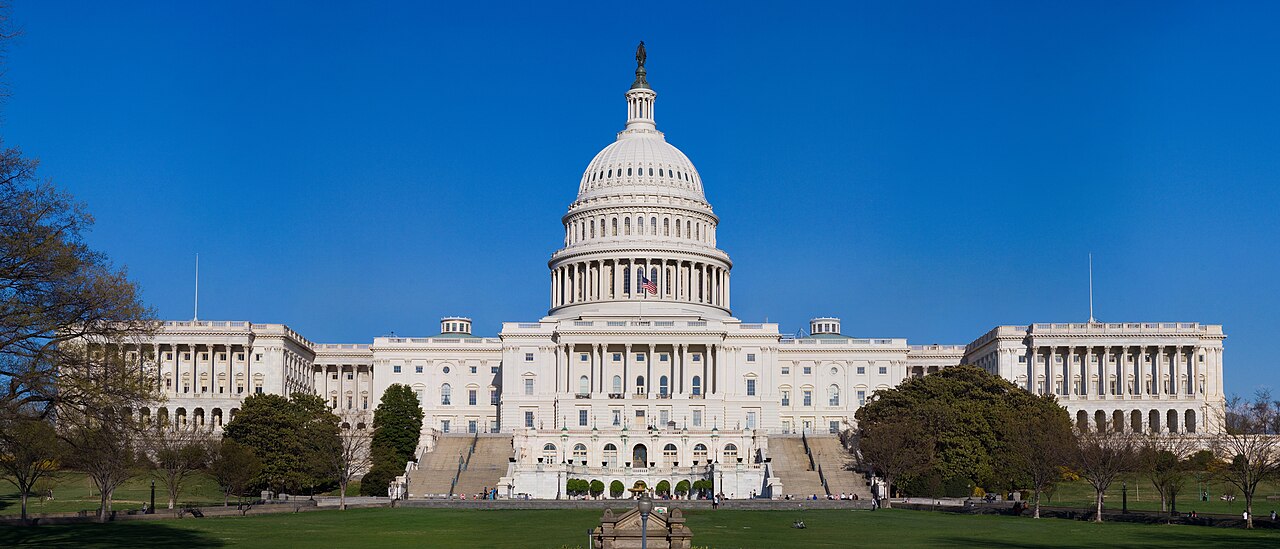
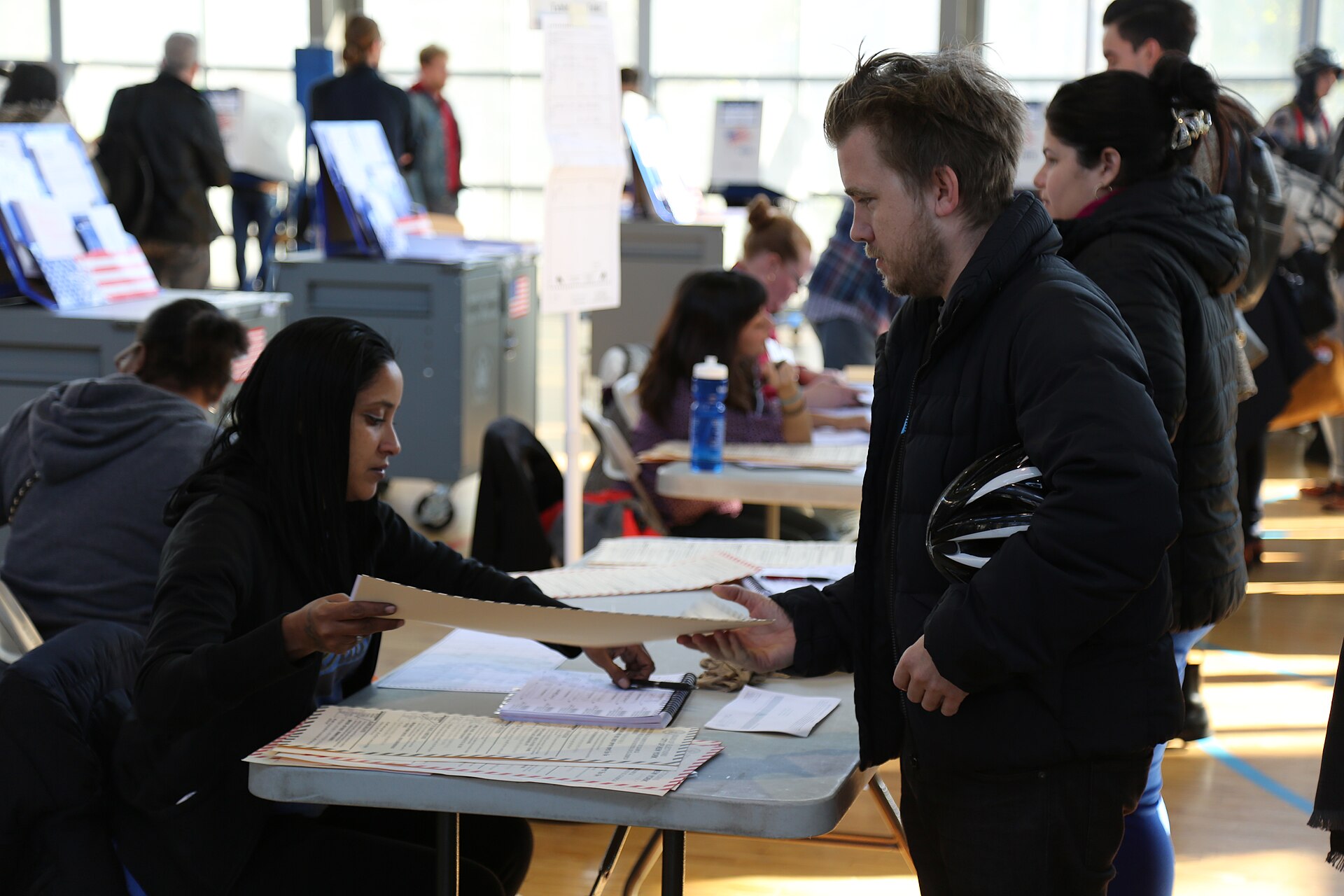
Header image: the west front of the United States Capitol, by Noclip via Wikimedia Commons, public domain. In-article image: a poll worker hands a voter a ballot in New York City, November 8, 2016, by Voice of America via Wikimedia Commons, public domain.