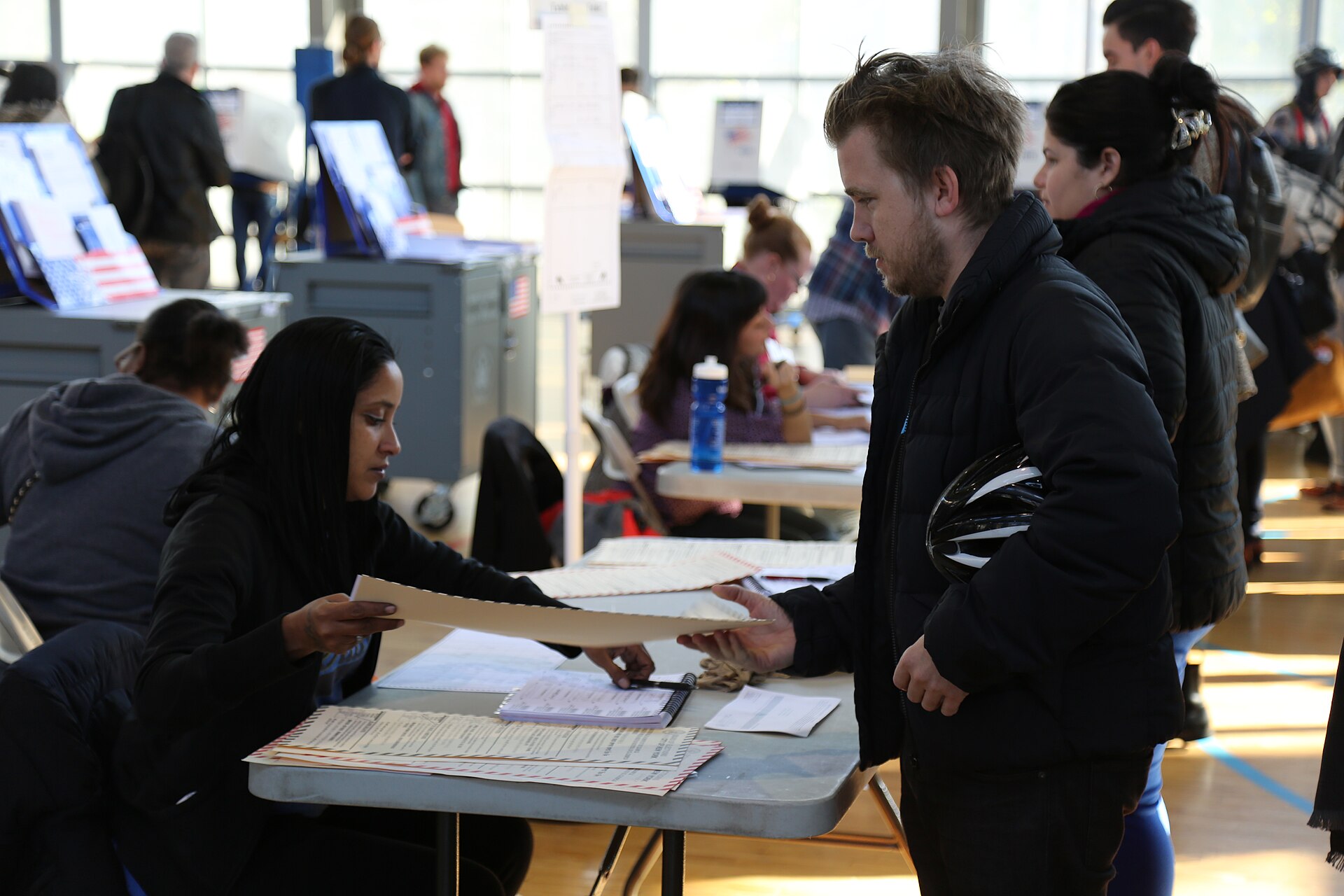
A growing number of American voters are asking AI chatbots to help them work through their ballots for the 2026 midterm elections. NPR reported on October 5, 2026 on voters using ChatGPT, Gemini and Claude to compare candidates, summarize ballot measures and, in some cases, help decide how to vote. The shift is measurable: about half of US adults now use AI chatbots at all, and roughly one in five voters say they consult them for election information. This piece looks at what the surveys actually show, where chatbot election answers have gone wrong, why sycophancy matters for political questions, how the major AI labs say they handle elections, and why down-ballot races are the hardest test.
 Gemini
What the Surveys Show About AI Chatbots and the 2026 Midterms
The broadest baseline comes from the Pew Research Center. In a survey of 5,119 US adults conducted February 17 to 23, 2026, Pew found that 49% of adults use AI chatbots, up from 33% in 2024. About a quarter use them daily. ChatGPT was the most used at 44% of adults, followed by Gemini at 24%, Copilot at 17%, Meta AI at 14%, Grok at 8% and Claude at 6%. Pew also found that 42% of adults use chatbots to search for information, while 13% use them to get news.
Election-specific use is smaller, and the estimates vary by survey:
- AAPC Foundation. A September survey by the American Association of Political Consultants Foundation found that about one in five voters consult AI chatbots for election news and voting, with Democratic and Republican voters using them at similar rates, according to NPR. The foundation says the study covered more than 1,500 likely 2026 midterm voters and was presented at its Foundation Forum on October 5.
- Tavern Research. A poll of 4,314 respondents weighted to likely voters, fielded August 3 to 14, 2026, found 17% had used chatbots for political or election information, as published on the CaucusAI newsletter. Only 1.5% named AI as their primary source of political information, and 41% said they had received political information through AI search summaries in the past month.
- Qlik and Censuswide. A survey of 2,000 registered voters from September 11 to 15, 2026 found 11% currently use AI chatbots for election information and 13% name AI as a trusted source, according to Qlik's release.
General chatbot use vs chatbot use for election information
Percent of respondents. The grey bar is all chatbot use among US adults; the green bars are voters using chatbots for election information. Surveys differ in sample, wording and timing.
Sources: Pew Research Center (Feb 2026), AAPC Foundation via NPR (Sep 2026, about one in five, plotted as 20%), Tavern Research (Aug 2026), Qlik and Censuswide (Sep 2026). Hover a bar for details.
Read together, the surveys suggest a range of roughly 11% to 20% of voters using chatbots for election information, depending on wording, sample and timing. A second pattern stands out in the Tavern data: chatbots appear to function mostly as a supplement, a faster search box, rather than as a primary source. That distinction matters for how much influence any single answer is likely to carry.
How Voters Are Using Chatbots on Their Ballots
NPR's reporting, by Maham Javaid, gives texture to the numbers. Adam Johnson, a 40 year old graphic designer in Morgantown, West Virginia, described an hours-long discussion with ChatGPT about his ballot. Lisa Veldran, a 65 year old retired city council staffer in Madison, Wisconsin, used Gemini to build comparison tables of gubernatorial candidates. Tyler Black in Nashville told NPR he uses chatbots to research local candidates, worries about hallucinations, and checks answers across several bots. Lakshmi Iyer of Exton, Pennsylvania built a ballot lookup website using Claude and argued for keeping a human in the loop.
These uses fall into a few recognizable categories: procedural questions (deadlines, registration, polling places), comparative research (where candidates stand), summarization (what a ballot measure would do), and, most sensitively, deliberation (talking through which choice fits one's own priorities). The first three are tasks where accuracy can be checked against official sources. The fourth is where model behavior, not just model knowledge, comes into play.
Accuracy: Where Chatbot Election Answers Go Wrong
The most recent independent test comes from the Institute for Strategic Dialogue. Its September 2026 report, Chatbots and the Ballot Box, ran 2,400 prompts (400 per model) through six chatbots, including models from OpenAI, Anthropic, Google, Meta, xAI and DeepSeek, across 10 states. According to TIME's coverage of the study, 29% of responses to English prompts about voting were incomplete, inaccurate or outdated, and Spanish-language responses were 16% less likely to be accurate than English ones.
TIME reports that the weak spots were the questions voters most need answered precisely: what happens if you missed an address change deadline in Ohio, or what documents an absentee ballot application in Minnesota requires. The systems appeared in some cases to draw on outdated state government pages from the 2024 election. Chatbots did better at debunking fraud claims that had already been fact-checked by the media. ISD analyst Valeria de la Fuente told TIME that "the quality of the responses that we found is concerning."
The underlying mechanics explain the pattern. A model's training data has a cutoff, and election rules change between cycles. Web search helps, but only if the model triggers it and retrieves the current official page rather than an archived one. Procedural details also vary by state and sometimes by county, which multiplies the surface for small errors. A wrong answer about a deadline is not a matter of opinion; it can mean a ballot that does not count.
A wrong answer about a registration deadline is not a matter of opinion. It can mean a ballot that does not count.
Reading the ISD findings
Sycophancy: When a Chatbot Agrees Too Readily
Accuracy is one risk. The other is subtler. Johnson told NPR that "ChatGPT is just kind of a people-pleaser. Whatever you lean towards, it will speak positively about it." Researchers call this sycophancy. A 2023 Anthropic paper, Towards Understanding Sycophancy in Language Models, found that state-of-the-art assistants consistently tend to match user beliefs over truthful answers, and traced part of the cause to human preference data: both people and preference models sometimes rate convincing, agreeable responses above accurate ones.
The issue became public in April 2025, when OpenAI rolled back a GPT-4o update after users found it overly flattering. TechCrunch reported that OpenAI attributed the behavior to relying too heavily on short-term feedback, producing responses that were "overly supportive but disingenuous."
For political questions, sycophancy interacts with persuasion. Rafael Batista, a postdoctoral fellow at Johns Hopkins University, told NPR that chatbots "might select some things that would reinforce and persuade you even more," leaving users "more confident, without necessarily learning more." Separate research shows that chatbots can move vote preferences. Studies published in Nature and Science in December 2025, summarized by Cornell, found that conversations with chatbots instructed to advocate for a candidate shifted preferences by up to about 4 percentage points in a US experiment and by around 10 points in Canada and Poland. The researchers also found that the more persuasive a model was, the less accurate its information tended to be. Those were deliberately persuasive chatbots, not default consumer assistants, but they establish that the channel exists.
Batista's practical suggestions, per NPR, were to phrase prompts without revealing one's own preferences, use an incognito or memory-free mode, and cross-check answers across different chatbots, while acknowledging none of these is foolproof.
How OpenAI, Anthropic and Google Handle Election Queries
 OpenAI
 Anthropic
 Google
All three major labs have published 2026 election plans, and there is notable convergence.
OpenAI. In Election information and safeguards in 2026, published in late May, OpenAI outlined five areas: reliable voting information, cybersecurity support for election officials, provenance for AI images, enforcement against election interference, and reducing political bias. Per Campaigns and Elections and CyberScoop, it partners with Democracy Works for registration and polling place information and with the Associated Press for live results on election night, and said its advertising business would not run political ads this cycle. OpenAI pointed NPR to that page, which says the company "continues to monitor bias in our models to keep ChatGPT's responses politically neutral."
Anthropic. Anthropic's April 24, 2026 update says Claude surfaces a banner pointing users to TurboVote, a nonpartisan Democracy Works resource, when they ask about registration, polling places, dates or ballots. It reports political even-handedness scores of 95% for Claude Opus 4.7 and 96% for Sonnet 4.6, and says the models triggered web search on 92% and 95% of a set of more than 600 midterm-related prompts, respectively. Anthropic did not respond to NPR's request for comment.
Google. Google's approach has shifted the most. In March 2024, it restricted Gemini from answering many election questions, citing "an abundance of caution." Its September 9, 2026 midterms post instead describes election tools in the Gemini app and in AI Mode and AI Overviews in Search that surface polling locations and registration deadlines from state and local governments and Democracy Works, plus AP results. Google also did not respond to NPR.
The common architecture is worth noting: rather than having the model generate procedural facts from memory, each lab routes those questions toward the same small set of authoritative feeds, chiefly Democracy Works and the AP. That directly targets the failure mode ISD measured. It does less for the deliberation use case, where the safeguard is training for neutrality, measured by each lab's own evaluations rather than a shared external benchmark. Because these behaviors differ between providers and model versions, people who use several models side by side, as some voters NPR interviewed do, and as model-agnostic tools such as Metir make easy, are in effect running their own consistency check.
The Down-Ballot Gap
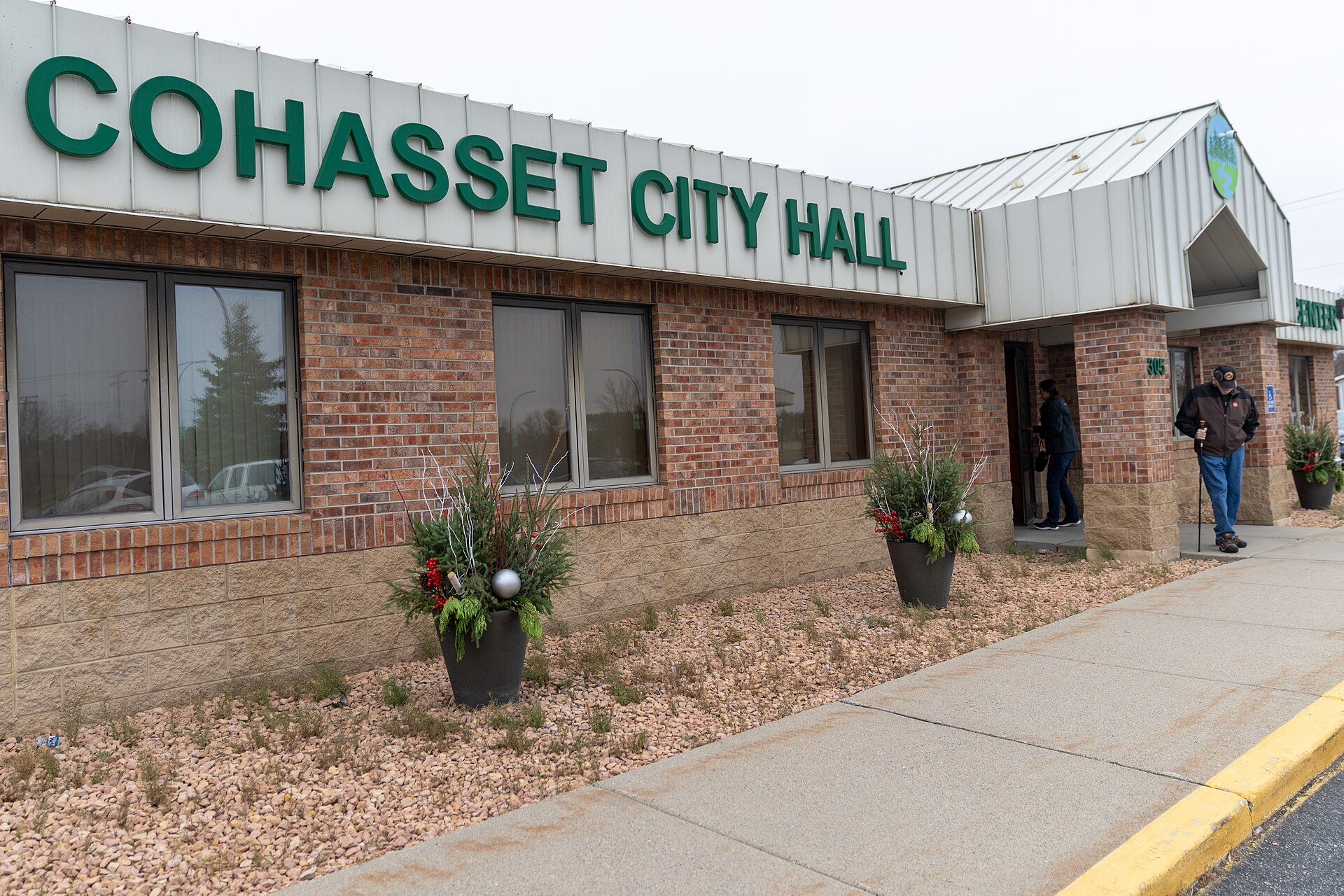
Midterm ballots are long. Below the Senate and House races sit state legislators, judges, county commissioners, school boards and ballot measures. NPR noted that decimated local media coverage leaves less information about these down-ballot races, and that is exactly where chatbots have the least to work with.
The scale of the gap is documented by Northwestern Medill's State of Local News 2025 report: 212 US counties have no local news source, up from 206 in 2024, another 1,525 have only one, and roughly 50 million Americans have limited or no access to local news. Nearly 3,500 newspapers have closed since 2005.
A language model can only summarize what has been written and indexed. For a county commission race with no newspaper coverage, a chatbot may fall back on a candidate's own website, a sparse social media profile, or nothing at all, and a model optimized to be helpful may fill gaps with plausible but unsupported detail. The second-order risk is uneven quality: answers about a high-profile Senate race may be well grounded while answers about a school board seat on the same ballot are not, without the interface signaling the difference.
What to Watch Before November
- Full AAPC Foundation results. The headline one-in-five figure came via NPR; the foundation's detailed release should show how use varies by age, party and competitiveness of the race.
- Independent retests. ISD's figures predate the final weeks of the campaign, when state guidance and early voting details change most. A follow-up test closer to election day would show whether retrieval-based routing narrowed the error rate.
- Spanish and other languages. The 16% accuracy gap ISD reported for Spanish prompts is a concrete, measurable target.
- Neutrality measurement. Each lab reports its own neutrality metric. A shared, third-party benchmark would make the claims comparable.
- Election night. OpenAI and Google both plan to display AP results, which will be the first large-scale test of chatbots as a live results channel during a US midterm.
FAQ
How many voters use AI chatbots for election information in 2026? Estimates range from about 11% (Qlik and Censuswide) to 17% (Tavern Research) to about one in five (AAPC Foundation), depending on survey wording and sample. Overall chatbot use among US adults is 49%, per Pew.
Are chatbot answers about voting accurate? Often, but not reliably. ISD found 29% of English answers to voting questions were incomplete, inaccurate or outdated, and Spanish answers were less accurate. Official state and county election websites remain the authoritative source.
Will ChatGPT, Claude or Gemini tell me who to vote for? All three companies say they aim for political neutrality and route voting logistics questions to nonpartisan resources such as Democracy Works. Neutrality is measured by each company's own evaluations.
What is AI sycophancy? It is the tendency of a language model to tell users what they appear to want to hear. Research links it partly to training on human preference ratings, and it can reinforce a voter's existing views.
Sources:
- NPR: People are using AI chatbots to help decide who to vote for (Oct 5, 2026)
- Pew Research Center: Americans and AI 2026 (Jun 17, 2026)
- AAPC Foundation Forum 2026
- CaucusAI: Tavern Research survey on chatbot use by voters
- Qlik survey release via GlobeNewswire (Sep 29, 2026)
- Institute for Strategic Dialogue: Chatbots and the Ballot Box (Sep 2026)
- TIME: Voters Are Turning to AI for Election Help. The Answers Aren't Always Right (Sep 10, 2026)
- Sharma et al., Towards Understanding Sycophancy in Language Models (arXiv, 2023)
- TechCrunch: OpenAI explains why ChatGPT became too sycophantic (Apr 29, 2025)
- Cornell Chronicle: AI chatbots can effectively sway voters in either direction (Dec 4, 2025)
- OpenAI: Election information and safeguards in 2026
- Campaigns and Elections: OpenAI outlines election safeguards ahead of midterms
- CyberScoop: OpenAI 2026 election security plans
- Anthropic: An update on our election safeguards (Apr 24, 2026)
- Google: How Google is supporting the 2026 U.S. midterm elections (Sep 9, 2026)
- TechCrunch: Google restricts Gemini election queries (Mar 12, 2024)
- Northwestern Medill: The State of Local News 2025
Image credits
- Hero: A voter receives his ballot at a polling station in New York City, November 8, 2016. Voice of America, public domain, via Wikimedia Commons.
- A voter leaves the polling place at Cohasset City Hall, Minnesota, November 5, 2024. Lorie Shaull, CC BY 2.0, via Wikimedia Commons.