The Anthropic employee charity match is the latest unusual line item to surface from the company's IPO materials. On October 4, 2026, The Information reported that Anthropic booked more than $660 million in non-cash expense for stock matching employee charity gifts between October 2025 and March 2026, and that the cost is likely to reach billions after a listing, diluting shareholders. The Information's article is paywalled, so this piece relies on summaries of it from AI Weekly and a newsletter roundup dated October 4 that quotes the report. Figures below are as relayed there, not from the filing itself, which is not public.
 Anthropic
How an Anthropic employee charity match works
According to the newsletter roundup quoting The Information, early employees received a 3-to-1 match on up to half of their stock holdings, while later hires received a 1-to-1 match on up to a quarter. A longer analysis on Longterm Wiki, a secondary source that cites Anthropic Careers, Bloomberg and Fortune, describes the same two tiers and says employees direct gifts to donor-advised funds, known as DAFs. Treat the tier details as reported rather than confirmed by Anthropic.
The mechanics matter because the match is paid in equity, not cash. An employee who donates shares triggers a company contribution of additional shares. Anthropic spends no cash, but new shares are created, and that has two consequences: an expense appears in the financial statements, and every existing holder owns a slightly smaller slice.
Why a non-cash charge still counts as an expense
Under US GAAP, equity-based pay to employees is generally measured at fair value and recognized as expense. PwC's accounting guide states that the fair value of an equity award is measured on the grant date and not remeasured unless the award is modified, and that compensation cost is recognized over the requisite service period. Explainers on ASC 718, such as Cake Equity's guide, describe the result as a non-cash operating expense.
The accessible coverage does not say which accounting standard Anthropic applies to the match, so it would be an overreach to assume it is a standard stock-compensation award. What is reported is the outcome: a non-cash expense, and a decision to leave it out of adjusted operating profit. Calcbench CEO Pranav Ghai told The Information that excluding such a charge from adjusted profit is "not common at all," per AI Weekly, and AI Weekly adds that this could draw SEC scrutiny when the S-1 is public. That is commentary, not a regulatory finding.
Not common at all.
Calcbench CEO Pranav Ghai on excluding the charge from adjusted profit, as relayed by AI Weekly
Dilution arithmetic: derived, not reported
The reported share counts are not available, so the calculations below are illustrative and labelled as derived. They convert dollar charges into a percentage of equity value at a single reference price, the roughly $965 billion mark from the May private round that AI Weekly cites and our prospectus coverage also references.
| Scenario (derived) | Calculation | Approximate share of equity value |
|---|---|---|
| $660M charge at the $965B mark | 660 / 965,000 | about 0.068% |
| Q1 2026 portion, about $125M, at $965B | 125 / 965,000 | about 0.013% |
| Hypothetical $3B charge at a $2T valuation | 3,000 / 2,000,000 | 0.15% |
| Hypothetical $5B charge at a $2T valuation | 5,000 / 2,000,000 | 0.25% |
The last two rows are scenarios, not forecasts. The reported phrase is only "billions." Two more derived observations: if the six months split into two quarters, subtracting the roughly $125 million Q1 figure from the $660 million-plus total implies about $535 million or more fell in October through December 2025, so the quarterly charge appears to have dropped sharply in the first quarter. Also, share counts are issued at the price at the time, and earlier prices were lower, so earlier charges represent a larger share count than this simple math suggests.
Who bears the dilution
AI Weekly reports that the seven co-founders are ineligible for the match, which concentrates the dilution on later joiners and on outside investors who paid in at the May round. The co-founders are Dario Amodei, Daniela Amodei, Tom Brown, Jack Clark, Jared Kaplan, Sam McCandlish and Christopher Olah. Fortune reported in January 2026, via Yahoo Finance, that all seven pledged to give away 80% of their wealth, and quoted Dario Amodei: "The thing to worry about is a level of wealth concentration that will break society." That pledge is a statement of intent about the founders' own holdings, and Longterm Wiki notes it is non-binding. The match is a separate company program that adds shares.
For control context, the founders' voting structure is covered in our 50.1% voting control analysis. Dilution from the match shrinks economic ownership but does not by itself change those voting arrangements, though the effect on any specific class depends on share terms we have not seen.
How other corporate giving programs compare
Salesforce built its model around a pledge rather than a match. Its Pledge 1% page describes the 1-1-1 model as 1% of equity, technology and employee time, with employees encouraged to spend 1% of working hours, roughly seven days a year, volunteering. Salesforce also says that for many startups, pledging 1% of equity early on is the most common way to take part. That is a company-level commitment of equity to grants, not a per-employee match, so it is a different structure from what is reported at Anthropic.
 Salesforce
Google offers the more conventional cash match. Double the Donation, a third-party matching-gift directory, lists a 1:1 ratio with a per-employee annual cap. Other directories list different caps, so the exact limit should be checked with Google directly. The contrast is the point: a capped cash match has a ceiling set in advance, while an equity match scales with the share price.
 Google
2025 corporate contributions, as reported
Contributions in millions of US dollars. BlackRock is described in the coverage as the next-largest Fortune 500 donor by this measure.
Source: The Information, as relayed by AI Weekly. The underlying filings are not public.
That scaling is the unusual feature. A match tied to a percentage of an employee's holdings, rather than a dollar cap, means the dollar cost rises as the valuation does. The chart above, using figures relayed by AI Weekly, shows Anthropic's 2025 contributions of $540 million against $109 million for BlackRock, described as the next-largest Fortune 500 donor by that measure. The comparison is as reported and the methodology is not public.
What to watch
- The S-1 itself. Whether the charge is disclosed as stock-based compensation or a separate line, and how adjusted operating profit is defined.
- Share counts and terms. The percentage dilution can only be computed properly from shares issued, not dollar charges.
- Post-IPO trajectory. A reported move from hundreds of millions to billions depends on price, participation and whether tiers change.
- Regulatory reaction. Any SEC comment on the non-GAAP treatment would be a signal for other issuers.
For teams that follow the AI sector, the practical lesson is that headline losses, adjusted metrics and share counts all move for reasons unrelated to product usage, which is one reason a model-agnostic workspace like Metir keeps buyers flexible. The timing of the listing is covered in our mid-November timeline piece.
Sources:
- AI Weekly: Anthropic's Charity-Match Charge Hit $660M+ in Six Months to March
- The Information: Anthropic's Big Charity Bill for Shareholders (paywalled, headline and byline only)
- Roundup, October 4, 2026, quoting The Information
- Longterm Wiki: Anthropic Pre-IPO DAF Transfers
- Fortune via Yahoo Finance: Anthropic cofounders giving away 80% of their wealth
- PwC Viewpoint: Grant date, requisite service period, and expense attribution
- Cake Equity: ASC 718 guide
- Salesforce: Pledge 1%
- Double the Donation: Google matching gifts
Image credits
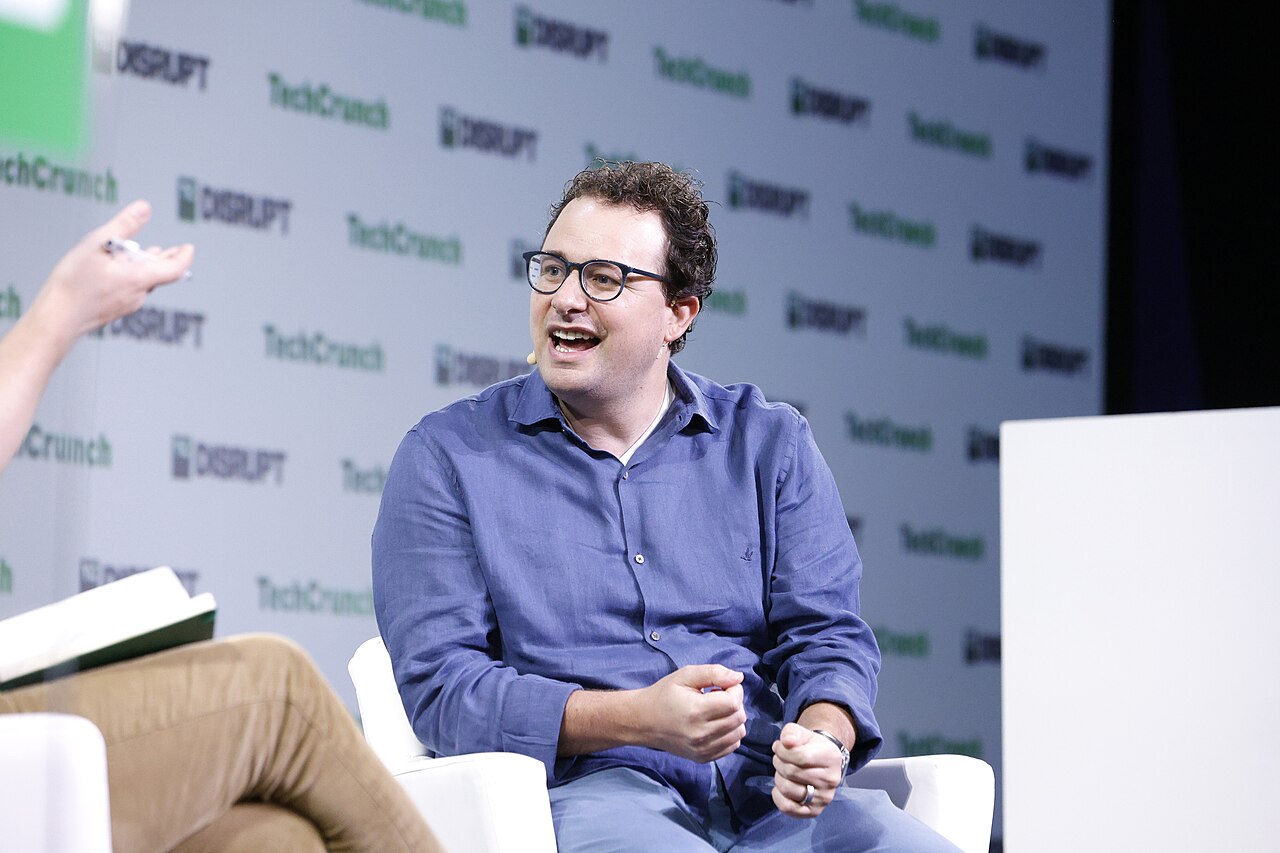
- Dario Amodei at TechCrunch Disrupt 2023 (hero). Photo: TechCrunch, licensed CC BY 2.0. Wikimedia Commons
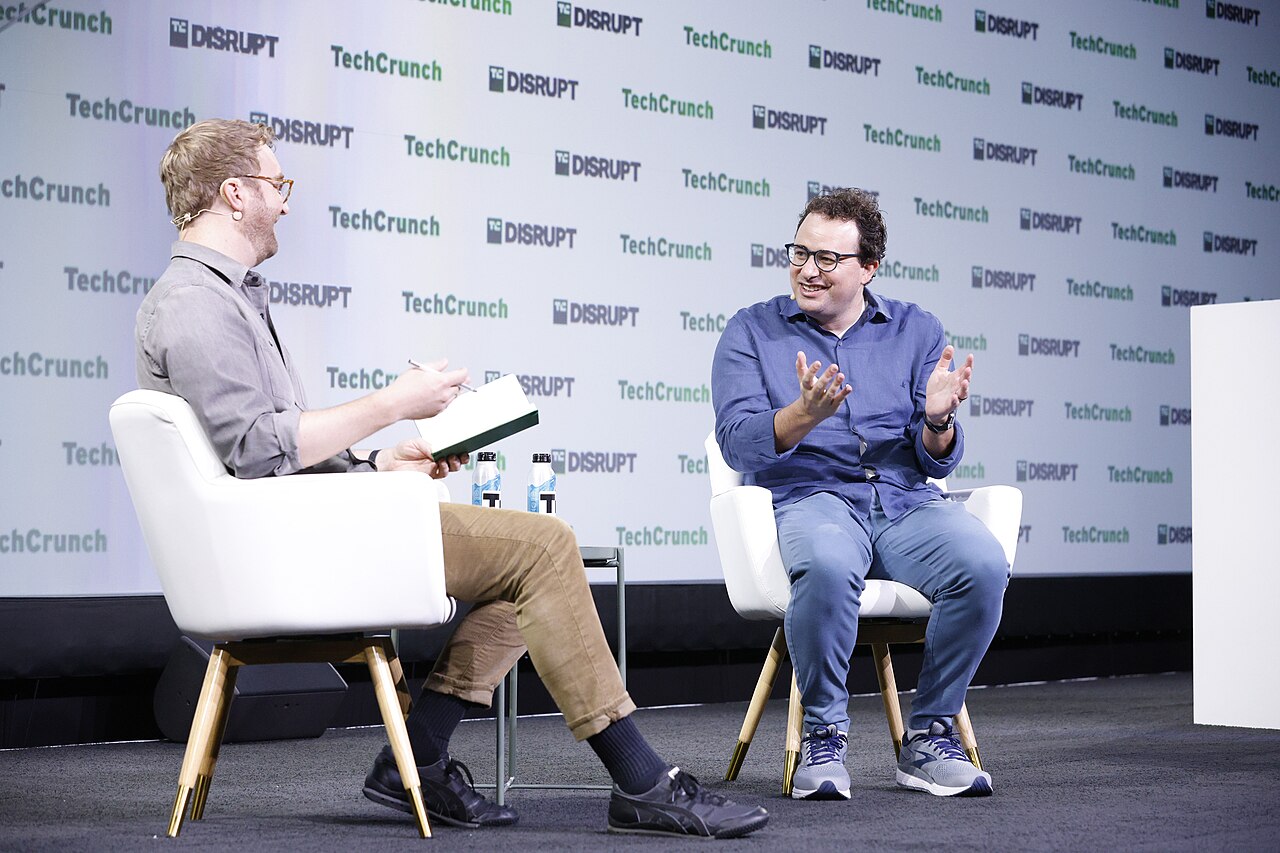
- Dario Amodei in conversation at TechCrunch Disrupt 2023 (in body). Photo: TechCrunch, licensed CC BY 2.0. Wikimedia Commons