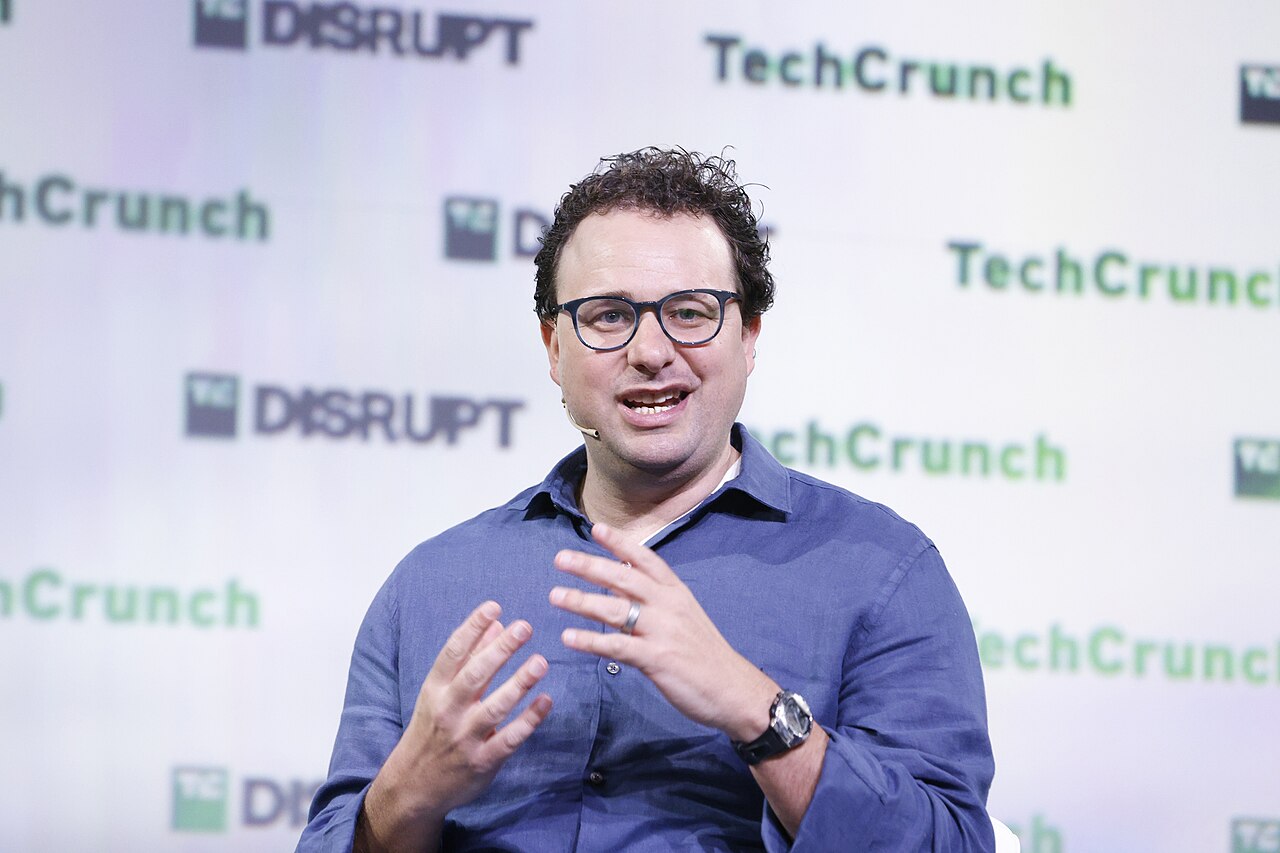
On September 25, 2026, The Information reported that Anthropic is asking its shareholders to approve a new class of stock that would give CEO Dario Amodei and his six co-founders a combined 50.1 percent of the vote on most corporate matters. A shareholder vote was expected within days of the report. The arrangement would lock in founder control of the company just as it prepares for one of the largest IPOs ever attempted, at a moment when outside investors are about to start trading its stock for the first time.
The plan is unusual even by the standards of founder-friendly tech governance, and it is worth walking through carefully: what the shares actually do, who they cover, what triggers them, and how the arrangement compares with the dual-class structures that Google, Meta, Snap and Palantir used to keep their own founders in charge after going public.
 Anthropic
 Palantir
 Google
 Meta
MetaWhat is actually being proposed
Anthropic was founded in January 2021 by seven people, including CEO Dario Amodei. Each of the seven co-founders currently owns roughly 2 percent of the company, a combined economic stake well short of a majority. The plan under shareholder review would create a special class of shares held by the founders as a group that carries no additional economic value at all. Its only function is voting: it would lift the founders' combined voting power to 50.1 percent on most matters that come to a shareholder vote, regardless of how much of the company's equity outside investors end up holding once the stock is publicly tradable.
That detachment of votes from ownership is the structure's defining feature, and reporting is explicit that the founders would not gain outright control of everything. The arrangement reportedly would not extend to electing Anthropic's board, where the independent Anthropic Long-Term Benefit Trust, a body created when the company organized as a public benefit corporation, already holds the authority to select and remove most directors. The founders' own board seats are also reportedly set to expand, from two to three. Separately, Anthropic plans to give employees their own class of stock that could act as a tie-breaker on some corporate questions, adding a third bloc alongside founders and outside shareholders.
There is a built-in expiration condition. The 50.1 percent voting arrangement holds only as long as at least three of the seven founders continue to hold a minimum ownership stake, a threshold that has not been publicly disclosed. If founder ownership falls below that floor, the special voting class reportedly lapses.
Why "Palantir-style" is the right comparison
Reporting from The Information and other outlets has directly compared the structure to the one Palantir Technologies used ahead of its 2020 direct listing, and the comparison holds up well.
Founder voting control, five tech IPOs compared
Anthropic and Palantir both use a super-voting class explicitly detached from economic ownership; Snap, Meta and Google tie extra votes to shares the founders actually hold.
Figures as reported at each company's IPO or in its most recent proxy filing; see Sources.
At its 2020 IPO, Palantir created a Class F share held by co-founders Peter Thiel, Alex Karp and Stephen Cohen that was explicitly designed to guarantee the three of them up to 49.999999 percent of total voting power in perpetuity, a figure chosen to sit just under a majority. Crucially, the Class F formula was built so that the founders' voting share would not shrink even if they sold down the underlying stock, a genuine first among major dual-class listings. Anthropic's proposal is not identical (it grants a majority rather than a share just under one, and it is contingent on founders keeping some stake rather than fully detached from it), but the underlying idea, a share class whose vote is engineered independently of ordinary economic ownership, is the same one Palantir pioneered.
The share class does not add a dollar of economic value. Its only job is to keep the vote with the people who built the company, after the market starts pricing the stock.
The core mechanism behind Anthropic's proposal
Dual-class structures themselves are much older than either company. Google's 2004 IPO gave Larry Page, Sergey Brin and then-CEO Eric Schmidt roughly 64 percent of total voting power through Class B shares carrying ten votes apiece against one vote for the public's Class A shares, a structure Alphabet still uses today. Meta followed the same ten-votes-to-one template ahead of Facebook's 2012 IPO; Mark Zuckerberg currently holds about 61 percent of Meta's voting power on an economic stake of roughly 13 percent, according to the company's own SEC filings. Snap went further still at its 2017 IPO, selling the public entirely non-voting Class A shares while co-founders Evan Spiegel and Bobby Murphy retained a combined 88.5 percent of the vote through Class B and C shares. What is distinctive about the Anthropic and Palantir approaches is not the dual-class concept itself but the degree to which the super-voting shares are explicitly untethered from the founders' actual economic ownership, rather than merely carrying extra votes per share still owned.
Why a mission-driven lab might want this
Anthropic organizes itself as a Delaware public benefit corporation, with a stated purpose of developing advanced AI responsibly, and it created the Long-Term Benefit Trust specifically to give an independent body a growing say over its board as the company scales. That framework was built for a private company answering to a small set of investors who signed on to the mission. Public markets are a different audience: index funds, quarterly-earnings-driven analysts and activist investors who are legally obligated to maximize shareholder returns, not to weigh a public-benefit mandate.
A public benefit corporation's directors are permitted under Delaware law to balance shareholder financial interests against the stated public purpose, but that permission is more fragile once the shareholder base is enormous, dispersed and return-focused. Locking in founder voting control is one way to insulate the board, and by extension the mission, from a shareholder revolt aimed at prioritizing growth or margin over safety commitments the founders have made public. Whether that insulation is read as principled continuity or as founders shielding themselves from accountability is, as with any dual-class structure, a matter of where the reader's priors sit.
What it means for new investors
For anyone buying Anthropic stock once it lists, the practical upshot of a share class with "no added economic value" is straightforward: an investor's dollars buy the same claim on the business they would without the arrangement, but their vote buys proportionally less influence over how that business is run, because 50.1 percent of the total vote is spoken for before public trading even opens. That is the same trade every buyer of Google, Meta or Palantir stock has already made, and the market has generally been willing to make it; all three companies traded (and Alphabet and Meta still trade) at valuations investors consider fair given the structure, priced in rather than treated as disqualifying. The May 2026 funding round that valued Anthropic near $965 billion, alongside reports that its shares have since traded near $1.5 trillion on the secondary market ahead of the offering, suggests investor demand for the stock has not been dampened by the governance news, though the two figures come from different kinds of transactions (a primary funding round versus secondary trades) and are not directly comparable measures of the same thing.
The 3-of-7 minimum-stake trigger is worth watching as a governance mechanism in its own right. It ties the founders' collective voting premium to their continued individual commitment, rather than granting it unconditionally the way Palantir's Class F shares do. In principle that gives outside shareholders a check the Palantir structure lacks: if enough founders cash out and step back, the extraordinary voting power lapses with them. In practice, whether that check ever binds depends on details, chiefly the size of the undisclosed minimum stake, that have not yet been made public.
The bigger picture
Anthropic's request is a case study in a tension that runs through every mission-oriented company that goes public: the same public capital that funds an ambitious frontier lab also dilutes the founders' ability to steer it, and a dual-class structure is the standard tool for resolving that tension in the founders' favor. Anthropic's version borrows Palantir's core insight, that voting rights can be engineered separately from ownership, while adding its own wrinkle, a floor that expires if founders' own commitment to the company does. Neither the size of that floor nor the outcome of the shareholder vote was public at the time of writing, and both will matter more to how the arrangement is judged than the headline 50.1 percent figure alone.
For enterprises and builders, the episode is also a reminder that governance risk sits alongside model-capability risk whenever a workflow depends heavily on a single AI provider. A frontier lab's cap table, board composition and voting structure can shift in ways a customer never sees coming, exactly as this proposal did. Keeping work portable across models, the approach a model-agnostic workspace like Metir AI takes, is one way to treat any single provider's corporate governance as a variable to watch rather than a dependency to absorb blind.
Sources:
- Anthropic's founders seek voting control ahead of IPO | TechCrunch
- Anthropic Seeks Palantir-Style Control Ahead of IPO | Yahoo Finance
- Anthropic's founders seek voting control ahead of IPO | Yahoo Finance
- Anthropic seeks Palantir-style control ahead of IPO | TheNextWeb
- Anthropic Asks Shareholders to Grant Its Seven Founders 50.1% Voting Control Ahead of IPO | AI Weekly
- Anthropic's founders push for 50.1% voting control before IPO listing | BetaNews
- Palantir targeting 3-class voting structure, giving founders 49.999999% control in perpetuity | Yahoo Finance
- In amended filing, Palantir admits it won't have independent board governance for up to a year | TechCrunch
- Google's Sham Shareholder Democracy | The Motley Fool
- Snap IPO Triggers Outcry Over Non-Voting Shares | Berman Tabacco
- Meta Platforms proxy filing on Class B share voting power | U.S. Securities and Exchange Commission
- The Long-Term Benefit Trust | Anthropic
Image credits
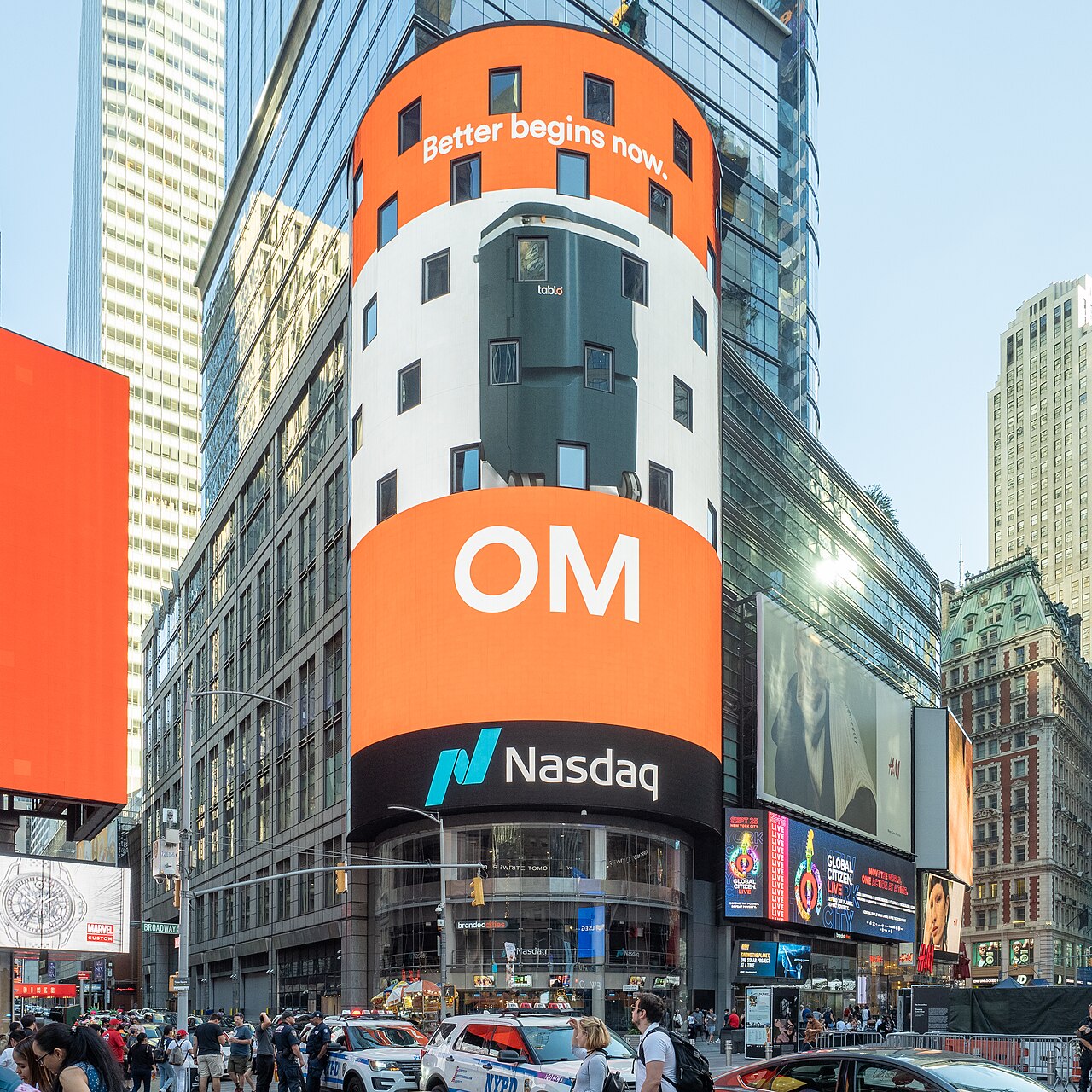
Header image: Anthropic co-founder and CEO Dario Amodei speaking at TechCrunch Disrupt 2023, by TechCrunch via Wikimedia Commons, licensed under CC BY 2.0. In-body photograph of the Nasdaq MarketSite in Times Square by ajay_suresh via Wikimedia Commons, licensed under CC BY 2.0.