After missing an early-August target, the White House has finalized its voluntary AI safety-testing framework and set a date to put it in front of industry. On August 3, 2026, officials confirmed the framework is complete, and the administration plans to host the largest AI developers on Tuesday, August 4, to walk through it. It is being framed as the administration's first substantive move to shape how frontier models are checked before release.
 OpenAI
 Anthropic
 Google
 Meta
MetaWhat was finalized
The framework traces back to a June 2, 2026 executive order on AI cybersecurity, which directed agencies to build a review process and to shore up critical computer systems. Its defining choice is that participation is voluntary. Companies can opt in to give the government early access to certain frontier models for up to 30 days, during which officials run cybersecurity tests that measure the hacking capabilities of the most advanced US models. Crucially, the order specifies that this cannot be turned into a mandatory licensing or preclearance system.
How the opt-in review is meant to work
The framework describes a notify-then-review flow with a bounded window, not a gate that can block a launch.
The tests measure the hacking capabilities of the most advanced US models. Because the whole path is voluntary, its reach depends on how many labs choose to enter it.
A White House official summarized the status plainly: the voluntary framework outlined in the June 2nd executive order is complete, and discussions with industry about next steps are underway. We covered the mechanics of the 30-day window when the framework was still in negotiation, in The 30-Day Gate, and the missed deadline that preceded this week's completion.
Where it sits on the spectrum
The most useful way to read the framework is by what it deliberately is not. It is not a licensing regime, and it does not give the government a veto over a launch. It is closer to a structured, opt-in early-warning channel: notify, allow a bounded review, then ship.
A voluntary framework, by design
The finalized US framework is opt-in and cannot create mandatory licensing or preclearance. That places it well short of the mandatory end of the regulatory spectrum.
That places the United States well short of the European Union's approach, whose AI Act imposes obligations that scale with a system's risk tier rather than asking for cooperation. The contrast is the substance of the policy debate. A voluntary framework is faster to stand up and less adversarial with industry, and its reach depends entirely on how many labs choose to enter it and how candidly they participate. A mandatory regime has more teeth and more friction, and raises harder questions about who defines a covered model and how a review could stall a product.
The framework is closer to a structured, opt-in early-warning channel than a gate: notify, allow a bounded review, then ship.
On what the finalized framework does
Why the meeting matters more than the document
A voluntary framework lives or dies on buy-in, which is why the August 4 meeting is the real test. The companies reported to be attending, OpenAI, Anthropic, Google, and Meta, are the same firms whose most capable models the framework is designed to review. Their willingness to opt in, and how much access they actually offer during the window, will determine whether the framework functions as intended or becomes a formality.
For anyone deploying these models, the near-term takeaway is modest but real. A voluntary, notify-then-ship regime does not change release timelines the way a licensing gate would, so the models organizations rely on are unlikely to be delayed by it. What it may change over time is the baseline of what labs disclose about a model's security behavior before it ships, which is useful signal for buyers who care about reliability and provenance. Tools that stay model-agnostic, an approach we favor at Metir, benefit from that transparency regardless of which lab supplies the underlying model.
What to watch next
Three things will tell the story after Tuesday. First, whether any lab publicly commits to submitting a specific model, and which one goes first. Second, how the government defines a covered model, since the threshold determines the framework's scope. Third, whether a voluntary approach holds or whether pressure builds, in Washington or the states, for something with more force. For now, the framework is finished on paper. Whether it works is a question the participants, not the document, will answer.
Sources:
- White House to host AI companies Tuesday to review new model-testing framework | CNBC
- OpenAI, Anthropic, Google to Join White House AI Safety Meeting | Bloomberg
- White House to meet with OpenAI, Anthropic and other top AI companies in first big regulation push | CNN Business
- US finalizes voluntary AI safety tests, White House official says | Reuters via KELO
- White House Will Present Finalized AI Oversight Framework to Tech Giants Tuesday | PYMNTS
Image credits
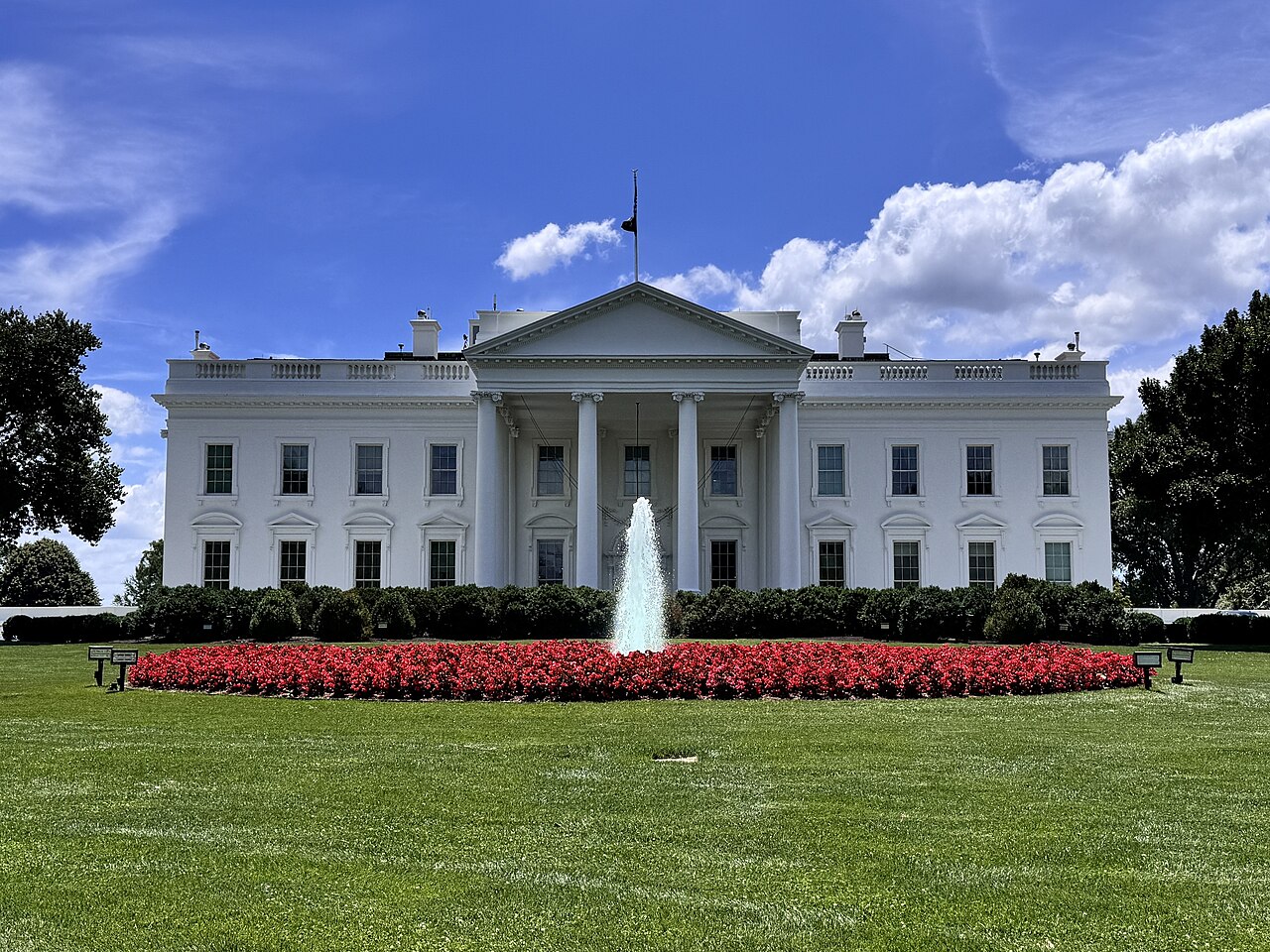
- Hero: The north facade of the White House, June 2024. Photo by DJTechYT, licensed CC BY-SA 4.0, via Wikimedia Commons.