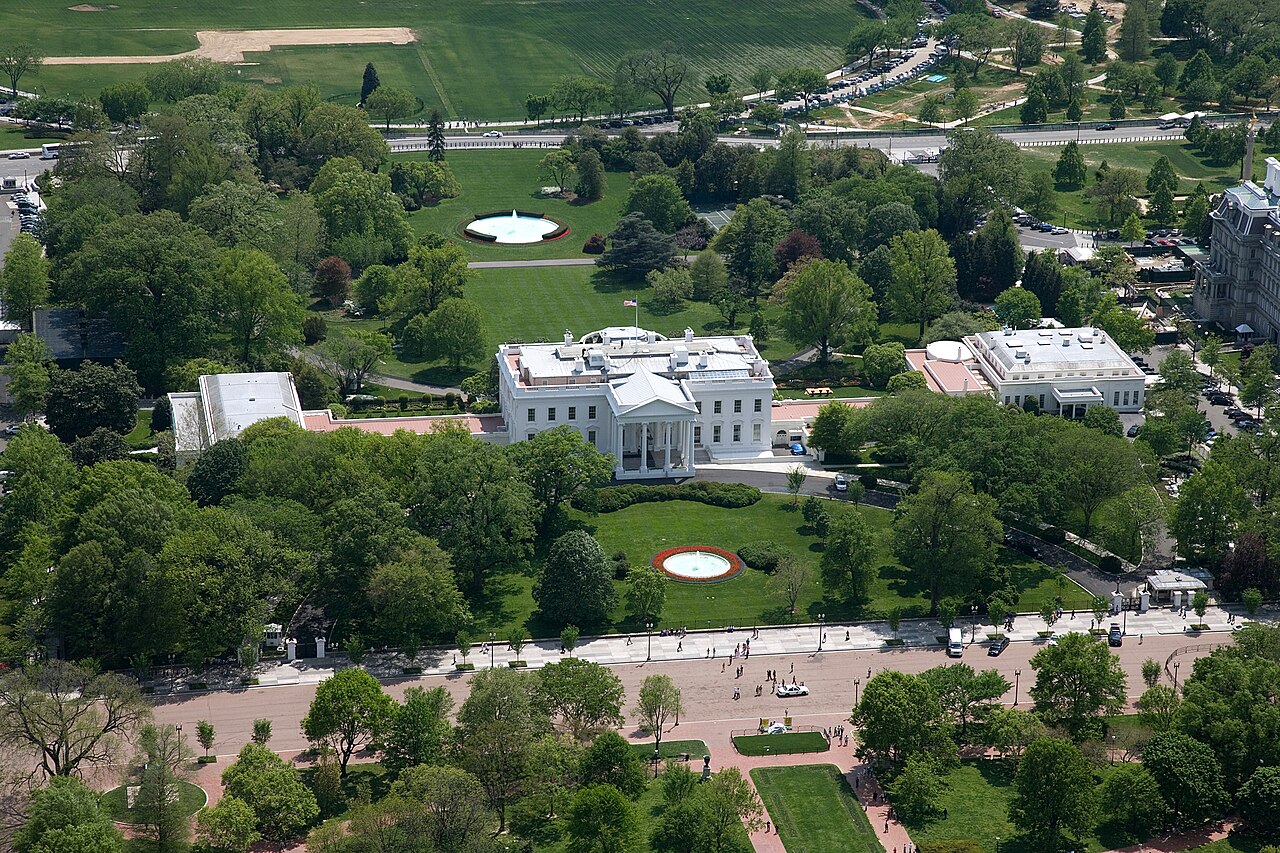
For most of the modern AI era, shipping a frontier model has been a commercial decision. A lab finished training, ran its evaluations, and released. In July 2026 that began to change. The White House entered the final stretch of negotiations with OpenAI, Google and Anthropic on a voluntary framework that would give the federal government a window to review the most capable models before they reach the public. The word "voluntary" is doing a lot of work in that sentence, and this piece is an attempt to unpack what the arrangement is, how it came together, and what it would and would not change.
The tone throughout is neutral. Reasonable people disagree about whether pre-release review makes AI safer or simply slower, and both readings are represented below.
 OpenAI
 Google
 Anthropic
The six weeks that produced it
The framework did not arrive in a vacuum. It was the product of a compressed and unusually public sequence of events.
How the frontier-review framework took shape
Six weeks that moved model releases from a purely commercial decision toward a negotiated one. Colour marks whether each step widened access, restricted it, or set policy.
- June 2, 2026Executive order on covered frontier modelsDirects agencies to build a classified benchmarking process and allows up to 30 days of pre-release government access to designated models.
- June 12, 2026Anthropic launches Fable 5 and Mythos 5Two new frontier models ship publicly.
- June 12 to 13, 2026Commerce Department orders a suspensionAccess for foreign nationals is cut on national-security grounds after reports of a jailbreak, triggering a global shutdown of the two models.
- June 30, 2026Export controls liftedCommerce removes the license requirement after Anthropic agrees to detect and address risks, help set standards, and report malicious activity.
- Early July 2026GPT-5.6 staggered releaseOpenAI opens GPT-5.6 to trusted partners first at the government’s request, then to the wider public on July 9.
- Week of July 7, 2026Voluntary framework nears completionThe White House enters final talks with OpenAI, Google and Anthropic on standardised pre-release review, with the triggering threshold the central open question.
The through-line is a shift from ship-then-explain toward notify-then-ship, at least for the models judged most sensitive.
The chain began with a June 2, 2026 executive order directing agencies to build a classified benchmarking process for designating "covered frontier models," and allowing developers to give the government up to thirty days of pre-release access to those models. Ten days later, on June 12, Anthropic launched Claude Fable 5 and Mythos 5. Within roughly a day, the Commerce Department ordered access suspended for foreign nationals on national-security grounds, following reports of a jailbreak that could bypass the models' safety guardrails, and the two models went dark globally.
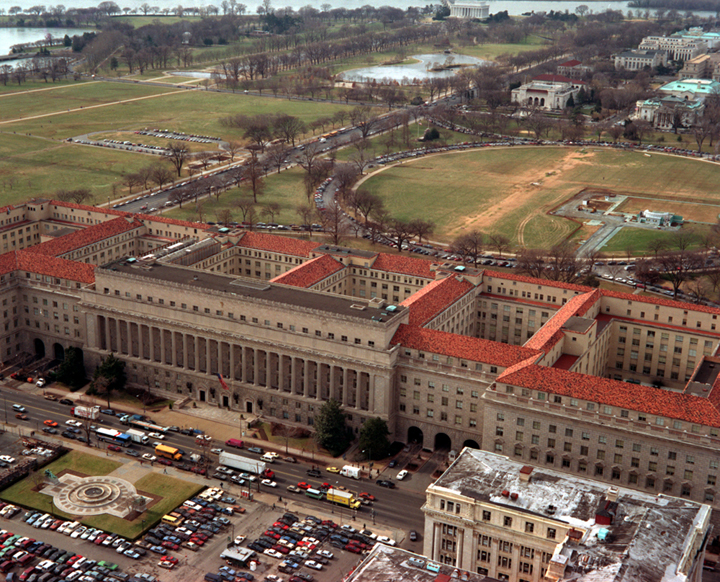
Anthropic disagreed publicly, arguing that a narrow potential jailbreak should not justify recalling a commercial model already deployed to hundreds of millions of people, and that applying such a standard across the industry would effectively halt all new frontier releases. On June 30 the Commerce Department lifted the controls after Anthropic agreed to proactively detect and address security risks, to help the government develop standards for future models, and to report malicious activity. Around the same time, OpenAI staggered the release of GPT-5.6 at the government's request, opening it first to a small group of trusted partners before the wider public launch on July 9. By the week of July 7, those one-off negotiations had crystallised into talks over a single standing framework.
What the framework would actually do
Stripped to its mechanics, the proposed arrangement has three moving parts.
- A trigger. Only models above some capability threshold, the "covered frontier models" of the executive order, would fall under the process. Everything below the line ships as before.
- A review window. For a covered model, the government would get up to thirty days of pre-release access to assess national-security implications before public launch.
- Access rules. The standards would also clarify who can use a covered model inside the United States and abroad, the domestic-versus-foreign question that the Fable 5 episode turned into a live issue.
What the framework is not is equally important. It is voluntary, not a licensing regime; there is no statutory requirement that a lab submit a model, and compliance rests on agreement rather than law. It is a notification-and-review step, not an approval gate in the pharmaceutical sense, at least as described. And it applies only at the frontier, leaving the vast majority of models, including most open-weight and smaller commercial releases, untouched.
The threshold problem
The single hardest question in the negotiation was reportedly not whether to review models but which models. The trigger threshold determines everything downstream, and the incentives pull in opposite directions.
Set the bar high and few models are ever captured. The process becomes largely symbolic, applying to a handful of releases per year while the frontier keeps advancing in the space beneath the line. Set the bar low and the review window starts to bite: more releases get caught, timelines lengthen, and a thirty-day gate on a fast-moving competitive product becomes a real cost. Reporting through early July described exactly this tension, with the labs pushing for higher thresholds that capture less and government officials advocating lower bars that capture more.
There is no neutral answer, because the threshold is really a dial between two values that cannot both be maximised: caution and speed. Where it lands will say more about the framework's practical weight than any of its formal language.
The threshold is really a dial between two values that cannot both be maximised: caution and speed.
Why the triggering bar was the hardest part of the deal
The case for, and the case against
A neutral treatment has to state both readings plainly, because the same facts support very different conclusions.
The case for pre-release review is that frontier models are dual-use in a way that ordinary software is not, and that a short government look before the most capable systems reach adversaries is a modest insurance premium against a genuinely asymmetric risk. On this view, the Fable 5 jailbreak was precisely the kind of thing a review window exists to catch before, rather than after, global deployment. A predictable standing process is also arguably better for the labs than the alternative that produced it: abrupt, unpredictable takedowns issued after launch.
The case against starts from the same premise and reaches the opposite place. If the threshold drifts low, a thirty-day window becomes a recurring tax on the fastest-moving sector in technology, and one applied by a classified process whose benchmarks the public cannot inspect. Anthropic's own objection during the June episode, that a strict reading would freeze industry-wide deployment, points at the structural worry: review power is easy to expand and hard to contract. Voluntary today can become expected tomorrow and mandatory the day after, without a fresh debate.
Both cases are coherent. Which one a reader finds more persuasive usually depends on how they weigh a low-probability catastrophic risk against a steady, certain drag on the pace of releases.
What it means for everyone downstream
Most people and companies using AI will never interact with this framework directly. Its effects reach them indirectly, through the timing and availability of the models they build on. The clearest practical lesson of mid-2026 is that a frontier model's availability is no longer purely a function of whether the lab has finished it. It can now be shaped by review windows, export decisions and staggered rollouts, and those levers can move faster than any product roadmap.
For builders, that argues for treating any single model as a component that could be delayed, gated or briefly pulled, rather than as a fixed foundation. Diversifying across providers and keeping work portable is less a philosophical stance than a continuity measure when the release calendar is partly in policy hands. This is one reason model-agnostic tools have drawn interest: a platform such as Metir AI, which lets people work across the leading models rather than depending on one, absorbs a supply shock at one provider more gracefully than a single-model workflow can.
The takeaway
The White House framework represents a real shift in posture, from ship-then-explain toward notify-then-ship, but a narrow and negotiated one. It is voluntary, frontier-only, and built around a thirty-day review window whose bite depends almost entirely on a threshold that was still unsettled as of mid-July 2026. Whether it reads as prudent guardrail or creeping bottleneck is, for now, genuinely open, and will be decided less by the framework's language than by where that threshold finally lands and how the precedent is used. What is already clear is that model availability has become partly a policy variable, and planning around it accordingly is the pragmatic response.
Build on a foundation that flexes with the policy weather
When a single model can be delayed or gated by forces outside any lab's control, portability becomes continuity. Metir AI keeps your work spread across the leading models in one workspace, so a review window or availability shift at any one provider never stops your day. Try Metir AI free and keep your AI stack resilient.
Sources:
- White House Nears Voluntary Frontier-Model Deal With Top AI Labs | AI Weekly
- White House Races to Finalize AI Model Rules With OpenAI, Google and Anthropic | TipRanks
- Anthropic says Trump admin has lifted export controls on Claude Fable 5 and Mythos 5 | CNBC
- US lifts restrictions on powerful AI models Fable and Mythos, Anthropic says | Al Jazeera
- Anthropic Disabled Fable 5 And Mythos 5 After A U.S. Export-Control Order | Forbes
- US to lift export controls on key Anthropic models | Nextgov/FCW
- Statement on the US government directive to suspend access to Fable 5 and Mythos 5 | Anthropic
Image credits
Header image: Aerial view of the White House by Carol M. Highsmith (Library of Congress), public domain, via Wikimedia Commons. In-body image: aerial view of the Herbert C. Hoover Building, US Department of Commerce, public domain, via Wikimedia Commons.