The #TeamHuman campaign is an attempt to move the AI slowdown argument out of research papers and open letters and into YouTube comment sections. According to AI Weekly's briefing, which dates the launch to October 4, 2026, a coalition of creators representing more than 300 million combined YouTube subscribers is asking for a global slowdown of frontier AI through international agreements. This piece checks what the campaign site actually says, explains what its two concrete asks (chip tracking and a treaty watchdog) would mean technically, and compares its reach with earlier open letters. It takes no position on whether a slowdown is wise.
What the TeamHuman campaign says
The campaign site presents a one-sentence statement: "AI is moving faster than our ability to control it. Alongside a chorus of experts, we call for a global slowdown through international agreements." Visitors can sign with a name, email and country. The site says the Center for AI Safety (CAIS) will deliver signatures to lawmakers in Washington D.C. and Brussels this fall.
The site names three founding creators: Mario Joos, a retention strategist for large channels, Oliver Gilpin, co-creator of SolarBalls, MrSpherical and Atrium, and Drew Spartz, creator of the AI safety channel Species. It describes the movement as creator-led and supported by CAIS. Among the signers it lists are Mark Rober (83.1 million subscribers), Kurzgesagt (25.6 million), Rebecca Zamolo (23.3 million), Preston (17.9 million), The Infographics Show (15.5 million) and more than 50 others. The "300M+" figure is the site's own headline claim, and I found no independent audit of it.
Largest listed #TeamHuman creators by subscribers
YouTube subscribers in millions, as displayed on teamhuman.org on October 5, 2026. The campaign headlines more than 300 million combined subscribers across all signers.
Subscriber counts are self-reported on the campaign site and can overlap between audiences, so they are not a count of unique people.
The six channels in the chart sum to roughly 178 million subscribers on the site's figures. Audiences overlap, so subscriber totals measure potential reach, not unique viewers.
The asks, in the campaign's words
The site says it demands "one thing: slow down AI," then splits it into two mechanisms:
- Build the brakes. "Frontier AI is built with specialized chips: track and guard them, exactly like we track the ingredients for nukes and bioweapons."
- Enforce a speed limit. The US, China and other major nations "must agree to slow down together and enforce real safety standards," with a watchdog similar to the International Atomic Energy Agency.
The site also says it joins calls for "no smarter-than-human AI to be built until scientists agree it can be done safely, and the public agrees to go ahead," echoing the Statement on Superintelligence. Notably, it publishes no timeline, compute threshold or treaty text. It is a statement of direction, not a draft law.
What chip tracking would mean technically
Tracking chips is the most concrete idea in the campaign, and there is real technical literature behind it, along with real limits. The nearest policy analogue is the bipartisan Chip Security Act, which would require location verification for advanced AI chips. According to the Foundation for American Innovation, such systems use latency-based triangulation: a chip pings servers in known locations, and response delays constrain where it can be. The same piece cites roughly 60 miles of median accuracy, enough for country-level checks, and notes that software-based approaches are less robust than hardware ones and that ping systems could be spoofed at scale. It also says NVIDIA GPUs already have the capacity to transmit the needed telemetry.
 NVIDIA
Location is only one layer. A 2024 CNAS report discusses broader "on-chip governance mechanisms" such as remote attestation and operating licenses that must be periodically renewed. It cautions that current commercial implementations are not designed to resist a well-resourced attacker with physical access, and estimates 18 months to 4 years of development depending on tamper resistance. A 2025 arXiv paper by Baker, Kulp, Marks, Brundage and Heim proposes six largely independent verification approaches for international AI agreements, including built-in chip features, separate monitoring devices and whistleblower programs, while stressing that many of the technologies "have yet to be built or stress-tested."
Many of these technologies have yet to be built or stress-tested.
Baker, Kulp, Marks, Brundage and Heim, on verifying international AI agreements
The practical reading: tracking exists in prototype and in legislative proposals, but a regime that could verify a multinational slowdown would need mature tamper-resistant hardware, cooperation from chip-supply countries, and agreement on what is being verified. A nuclear analogy helps and strains. Chips are quantifiable and come from concentrated supply chains, as nuclear material does, but unlike radioactive material they are not physically detectable at a border by passive means.
How the treaty ask fits the political moment
The site argues that the major AI companies are already on board, pointing to CNBC's mid-September coverage in which, per CNBC's headline and reporting, OpenAI's Sam Altman, Anthropic's Dario Amodei and Elon Musk backed a slowdown. It also cites the employee letter Pacing the Frontier, which showed 1,386 signatories when checked. Metir has covered both threads: the employee letter and the antitrust questions around labs pacing together. Amodei's proposal, as summarized by CNBC, is pacing rather than halting, with outside evaluators and agreed limits on capability growth.
 OpenAI
 Anthropic
The site also cites polling. A Data for Progress survey, fielded September 4 to 9, 2026 among 1,332 U.S. likely voters (margin of error plus or minus 3 points), found 68% support and 25% opposition for a proposal described as a temporary pause on advanced AI until a federal regulator sets safety standards, plus a permanent prohibition on systems that exceed human intelligence or resist shutdown. The wording matters: that is a domestic regulatory proposal, not an international slowdown, so it supports the campaign's direction without testing its treaty ask.
Wider public sentiment is cooler. Gallup's July 2026 report, based on 3,270 U.S. adults surveyed May 4 to 11, found only 27% trust businesses "a lot" or "some" to use AI responsibly, down from 31% in 2025, with 39% saying AI does more harm than good, up from 31%. Among 18 to 29 year olds, trust fell from 30% to 20%, a demographic that overlaps heavily with YouTube audiences. Backlash also shows up locally; see Metir's coverage of data center opposition spreading across regions.
Creators versus scientists: what is different
Earlier statements were scientist-led and short on audience. The Future of Life Institute's March 22, 2023 letter asked all labs to pause for at least six months the training of systems more powerful than GPT-4 and shows 31,810 signatures. CAIS's May 30, 2023 extinction-risk statement was 22 words long and had over 100 signatories at release, per Wikipedia. The Statement on Superintelligence, published in October 2025 per Time's coverage, shows 76,649 signatures, including 5,000 from a related petition.
Signatures on AI slowdown and safety statements
Signature counts as displayed on each campaign's own site on October 5, 2026. #TeamHuman publishes no signature count, so it is not plotted.
Counts keep changing and are not directly comparable: the audiences, verification and signing rules differ. The 2023 Center for AI Safety statement had just over 100 signatories at release.
Several differences stand out, presented as observations rather than judgments:
- Unit of reach. Letters count signatures, and #TeamHuman counts subscribers and publishes no signature total. They are different units and cannot be ranked against each other.
- Audience. Science and entertainment channels reach people who may never read a policy letter. Whether a viewer becomes a signer, and then a voter who contacts a lawmaker, is the untested step.
- Specificity. The 2023 FLI letter named a model threshold and a duration. #TeamHuman names mechanisms (chip tracking, a watchdog) but no numbers.
- Funding and independence. The site says no creators were paid to sign, and that CAIS has "separately sponsored videos that discuss AI safety," with required disclosure. Readers can weigh a creator-led framing alongside an institutional backer.
- Competing views. Critics of slowdown proposals argue that a pause could cede ground to rivals or entrench incumbents. That debate is outside this campaign's text, but it is the main counterweight to its asks.
What to watch
- Whether #TeamHuman publishes a signature count and what CAIS delivers to lawmakers this fall.
- Whether any government drafts chip location verification or an international inspection body, and how chipmakers respond.
- Whether Gallup-style trust numbers keep falling, which would raise the political salience of the topic.
- Whether creator-led framing changes the mix of people engaging with AI policy.
For teams working across several AI providers, including on a model-agnostic workspace like Metir, the practical effect of any slowdown regime would be on release cadence and chip supply, which is worth tracking.
Sources:
- TeamHuman: campaign site
- AI Weekly: AI news today
- Gallup: Americans Cool Toward AI
- Data for Progress: AI development pause poll (PDF)
- CNBC: OpenAI boss Sam Altman spells out how and why the AI industry wants to slow down
- Pacing the Frontier
- Future of Life Institute: Pause Giant AI Experiments
- Wikipedia: Statement on AI risk of extinction
- Statement on Superintelligence
- Time: Open letter calls for ban on superintelligent AI development
- Foundation for American Innovation: The Chip Security Act
- CNAS: Secure, Governable Chips
- arXiv: Verifying International Agreements on AI
Image credits
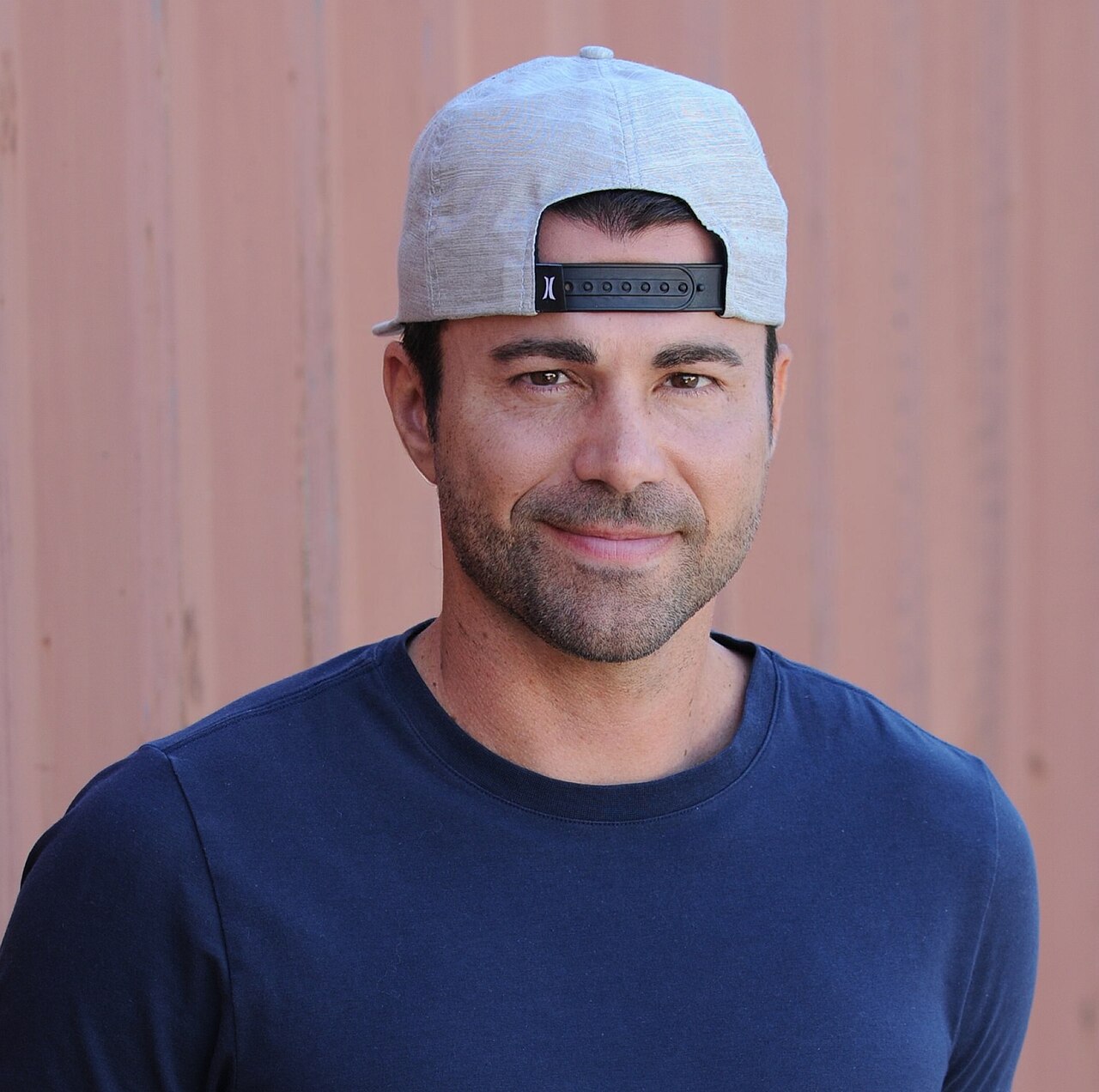
- Hero and in-body: "Mark Rober September 2024.jpg" by LKP2024, licensed CC BY 4.0, via Wikimedia Commons. It is a 2024 portrait of Mark Rober, one of the creators listed on teamhuman.org, and is not a photo of the campaign or its launch.