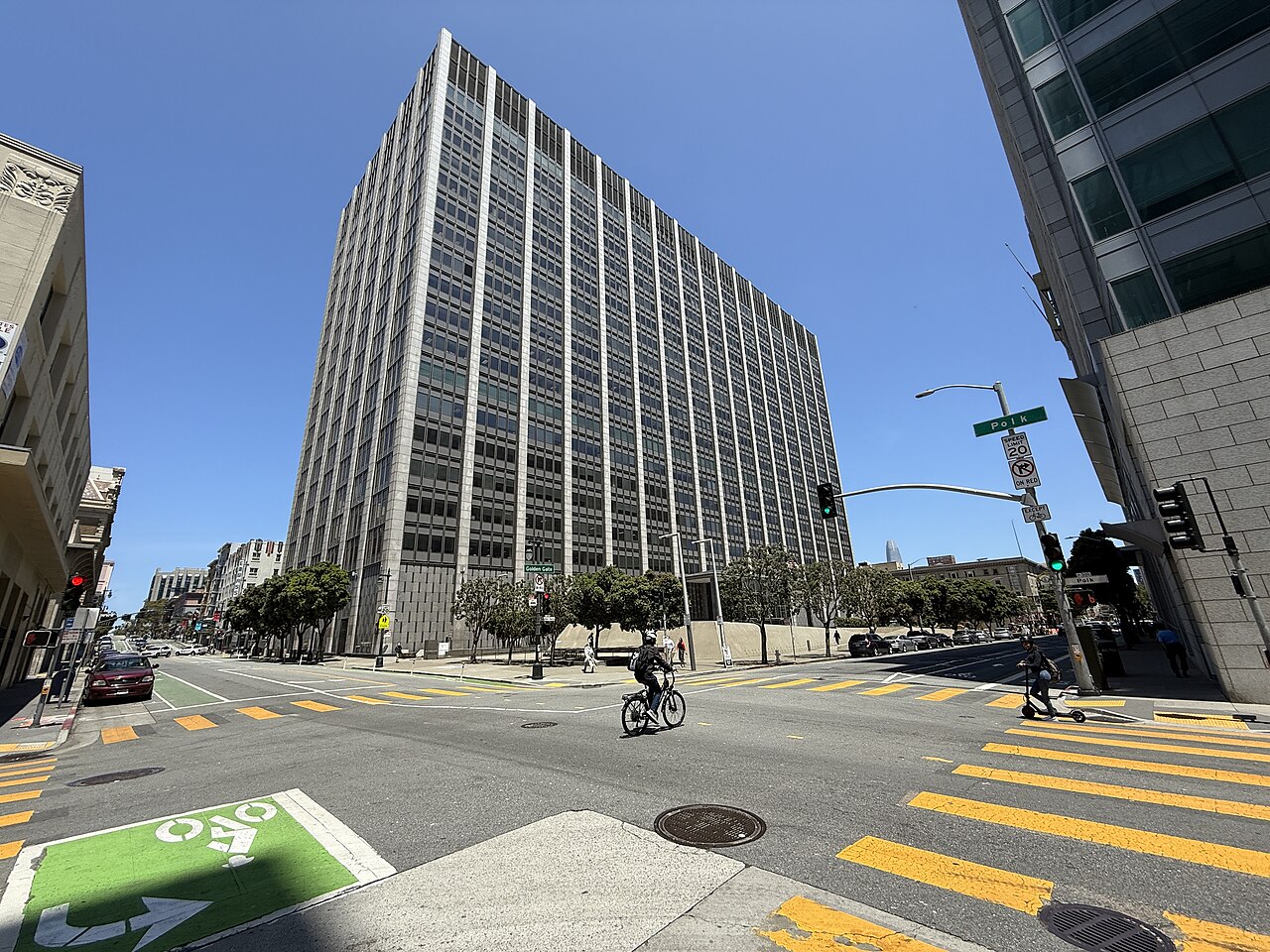
A federal antitrust lawsuit filed in San Francisco accuses four of the world's leading AI companies of illegally agreeing to slow down the pace of frontier AI development. The complaint, brought as a proposed class action on behalf of paying subscribers, names Anthropic, OpenAI, SpaceXAI (the entity through which Elon Musk now controls the Grok chatbot business, referred to here by its xAI brand), and Google as defendants. It is the first case to test whether public statements about AI safety coordination can, by themselves, amount to an illegal agreement under US antitrust law. The allegations are unproven, and no defendant has been found liable for anything.
 Anthropic
 OpenAI
 Google
 xAI
xAIWhat the antitrust lawsuit alleges
The case, Buist et al. v. Anthropic PBC et al., was filed on Friday, September 18, 2026, in the US District Court for the Northern District of California, and reported widely over the following days. The four named plaintiffs, Charles Buist and Nick Spetsas of Florida and Cheyenne Hunt and Christine Bullock of California, are paid subscribers to ChatGPT, Claude, Grok or Gemini, suing individually and on behalf of a proposed nationwide class of paying customers. They are represented by lead counsel Nicholas C. Rowley alongside Andrew T. Tutt, R. Stanton Jones and Jakob Z. Norman.
The complaint pleads a single count: a violation of Section 1 of the Sherman Act, the century-old statute that prohibits agreements between competitors that restrain trade. Its theory is that "an agreement among rivals to reduce the quality of their products and the rate at which those products improve is an agreement to restrict output," and that such an agreement, if it exists, directly harms consumers who pay monthly subscription fees expecting continuous improvement. The plaintiffs seek class certification, treble damages under the Clayton Act for subscribers since September 12, 2026, an injunction against any horizontal agreement on development pace, training-compute limits or coordinated delays, and a jury trial.
From a safety letter to a federal antitrust complaint
Two months separate the employee petition and the lawsuit that treats its own language as evidence.
- Jul 28, 2026Employee letter
1,386 employees across four labs, including senior Anthropic and OpenAI staff, sign "Pacing the Frontier," citing "intense competitive pressure not to unilaterally slow" development.
- Sep 12, 2026Amodei essay
Anthropic CEO Dario Amodei publishes "We Must Pace the Frontier," proposing embedded evaluators and industry-wide coordination on development speed.
- Sep 12, 2026Same-day endorsements
Sam Altman (OpenAI), Elon Musk (SpaceXAI) and Demis Hassabis (Google DeepMind) publicly back the essay within hours of publication.
- Sep 18, 2026Complaint filed
Four paid subscribers file Buist et al. v. Anthropic PBC et al. in the Northern District of California, alleging a Sherman Act Section 1 violation.
- Sep 19-21, 2026Coverage breaks
CBS News, PBS NewsHour, The Hill and others report the suit; defendants decline immediate comment. Case remains in early pleading stage.
Allegations in the complaint are unproven claims, not findings. Sources: court filing coverage cited in this post.
The September 12 sequence at the center of the case
The complaint's factual centerpiece is a single day. On September 12, 2026, Anthropic CEO Dario Amodei published an essay titled "We Must Pace the Frontier," arguing that AI safety oversight needs time to catch up with rapidly advancing capabilities and proposing industry-wide coordination, including embedded third-party evaluators inside frontier labs. Within hours, OpenAI's Sam Altman, SpaceXAI's Elon Musk and Google DeepMind's Demis Hassabis each publicly endorsed the direction of the essay. We covered that sequence in detail when it happened, noting at the time that the four leaders had aligned on a problem statement without committing to identical, binding terms.
The lawsuit also points to a July 28, 2026 employee letter, signed by 1,386 people across the major labs, that asked the US government to support "an international effort" to pace frontier AI development because of "intense competitive pressure not to unilaterally slow" it. The complaint treats that acknowledgment of competitive pressure, combined with the near-simultaneous September endorsements, as circumstantial evidence that what looked like independent statements of concern was in fact coordinated conduct.
The lawsuit turns on whether four CEOs endorsing the same essay within an hour is evidence of a conspiracy, or evidence that a well-argued essay persuaded four people who read it.
On the central evidentiary question
Agreement versus parallel conduct: the legal hurdle
Antitrust law has a specific and demanding test for exactly this kind of case. Section 1 of the Sherman Act does not reach conduct just because competitors end up doing the same thing at the same time, known as parallel conduct. Companies in the same industry regularly react similarly to the same news, the same technology shift or the same regulatory pressure without ever communicating. The US Supreme Court's 2007 decision in Bell Atlantic Corp. v. Twombly held that parallel conduct alone, without more, does not plausibly suggest a conspiracy; a plaintiff needs a "plus factor," some additional fact that makes an actual agreement more likely than each company independently deciding the same thing was in its own interest.
The plaintiffs' answer to that hurdle is that the timing itself is the plus factor: three competing CEOs, whose companies compete directly for the same subscription dollars, backing the same position within roughly nine hours of its publication. The complaint also cites public reporting that OpenAI's Chris Lehane told journalists the company had "already been working with Anthropic and Google DeepMind for several weeks" on safety protocol discussions before September 12, and notes that Amodei's own essay called for a "narrow waiver" from antitrust law to allow labs to discuss safety practices, which the complaint reads as evidence the parties understood coordination on this topic to carry legal risk.
A notable feature of the complaint, flagged by legal commentators covering the filing, is that it relies entirely on public statements and press reports rather than internal documents, leaked emails or confidential witnesses, which is unusual for a case alleging a cartel-style agreement. That makes the evidence easy to verify but also means the complaint does not yet identify any specific model release that was delayed, any training run that was altered, or any product feature that was withheld as a result of the alleged pact. Those gaps, along with the fact that market share figures are pleaded "on information and belief" rather than sourced data, are the kind of thing a motion to dismiss typically targets.
An old antitrust question in a new setting
This is not the first time Bay Area technology companies have faced claims that coordination dressed up as something else amounted to an illegal restraint. In the High-Tech Employee Antitrust Litigation, Apple, Google, Intel and Adobe paid a combined $415 million to settle claims that they had secretly agreed not to recruit each other's engineers, suppressing wages for tens of thousands of workers between 2005 and 2009. That case relied on internal emails showing explicit agreements between executives, evidence this new complaint does not claim to have.
The genuine tension the lawsuit surfaces is a real one, independent of how the case turns out. Antitrust law exists to protect competition on the theory that competition, including a race to ship better products faster, benefits consumers. AI safety researchers argue the opposite in this specific case: that an unconstrained race between labs with increasingly capable, imperfectly understood systems is itself a risk to the public that coordinated caution could reduce. Both positions can be sincerely held. The Sherman Act does not ask whether coordination was well-intentioned; it asks whether competitors agreed to restrain a form of competition, and if so, whether that restraint's harm to consumers outweighs any procompetitive justification. How a court balances a safety rationale against that framework, if the case gets far enough to reach the question, would be new legal ground.
What to watch next
None of the four defendants had publicly responded to the complaint as of this writing; representatives for Anthropic, OpenAI, Google and SpaceXAI did not immediately comment when reporters first reached out. The near-term signal to watch is procedural rather than dramatic: whether the defendants move to dismiss on the Twombly plausibility standard, whether the plaintiffs amend to add non-public evidence of coordination, and whether any lab's public statements evolve now that pacing proposals carry active litigation risk. A case resting on public statements rather than internal records is also, by its nature, one where the underlying facts are already known; what remains contested is whether those facts add up to an agreement in the legal sense.
For anyone building products on top of frontier models, the case is a reminder that model release timing, feature rollout and even relative capability between providers can be shaped by legal exposure well outside any single company's product roadmap. A workflow that depends on one lab's pace is exposed to that lab's litigation calendar. Metir AI keeps chat, research and automation workflows spread across leading models from multiple providers rather than locked to one, so a slowdown, a legal setback or a strategy shift at any single lab does not have to become your bottleneck.
Sources:
- Lawsuit accuses Anthropic, OpenAI, SpaceXAI, Google of AI pacing 'collusion' (NewsNation)
- Lawsuit says Anthropic, OpenAI, SpaceXAI and Google made illegal agreement on AI slowdown (CBS News)
- Lawsuit says Anthropic, OpenAI, SpaceXAI and Google made illegal agreement on AI slowdown (PBS NewsHour)
- Lawsuit accuses Anthropic, OpenAI, SpaceXAI, Google of AI pacing 'collusion' (The Hill)
- Four Paid Subscribers Are Suing the Biggest AI Labs for Coordinating a Slowdown (Forkast)
- The AI 'Pacing' Antitrust Lawsuit, Explained (CASRAI)
- Four AI subscribers are suing Anthropic, OpenAI, SpaceXAI and Google over the slowdown (The Next Web)
- OpenAI, Anthropic, Google, SpaceXAI Hit With Antitrust Lawsuit (Bloomberg Law)
- We Must Pace the Frontier (Dario Amodei, Sept 12, 2026)
- Bell Atlantic Corp. v. Twombly, 550 U.S. 544 (2007)
- Judge approves $415M settlement in Silicon Valley anti-poaching lawsuit (AppleInsider)
- Our earlier coverage: AI Slowdown: Four Lab Leaders Back Frontier Pacing
- Our earlier coverage: Pacing the Frontier: Why 1,178 AI Insiders Want an AI Slowdown
Image credits
- Hero: Phillip Burton Federal Building & United States Courthouse, San Francisco, home of the US District Court for the Northern District of California. Photo by Marincyclist, Wikimedia Commons, licensed CC BY-SA 4.0.
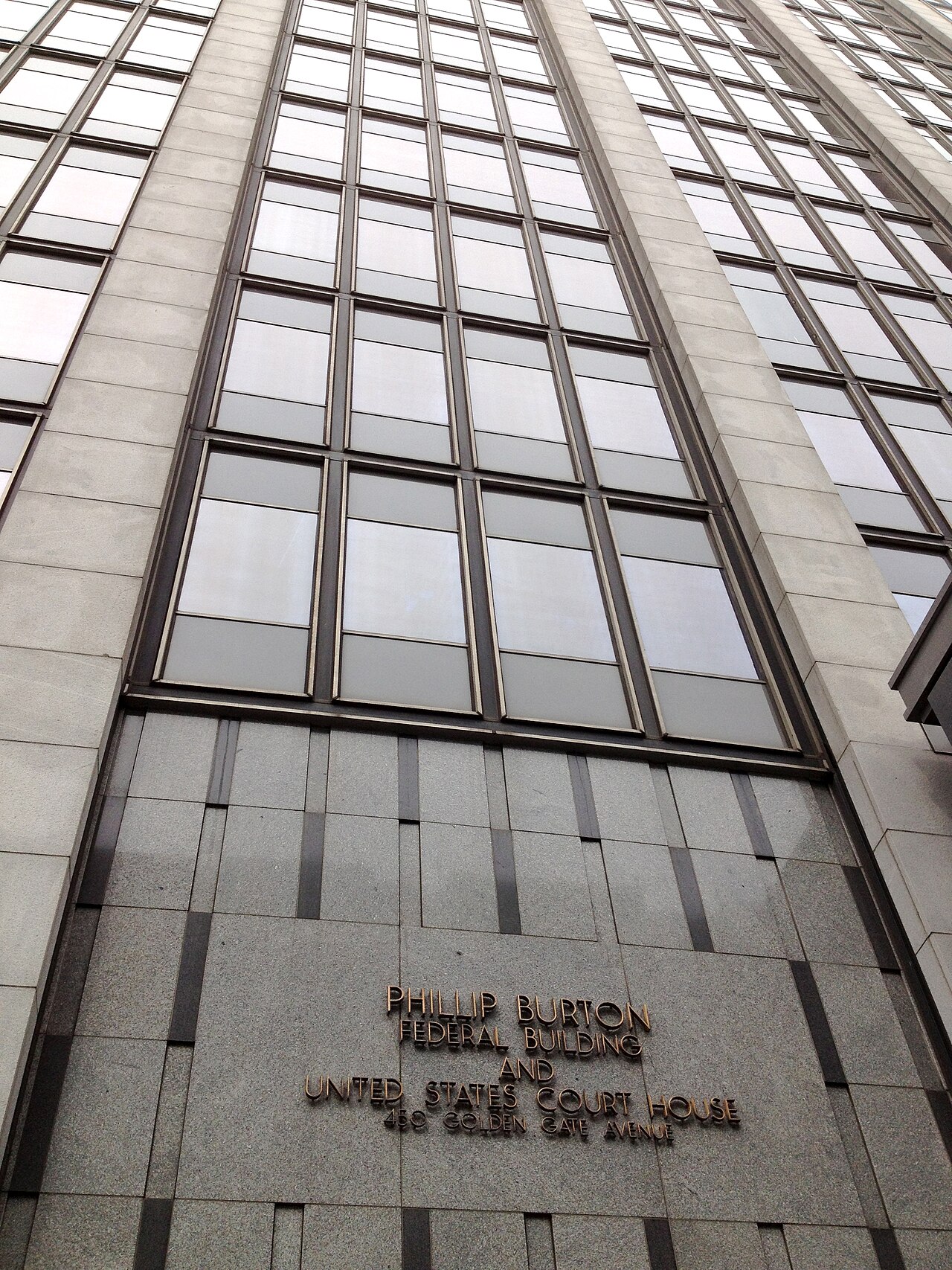
- In-body: engraved nameplate on the same courthouse building. Photo by Sam Wheeler, Wikimedia Commons, licensed CC BY-SA 3.0.