Oregon and Virginia have sued SpaceX, which now owns xAI and operates X, over how Grok's image tools were used to create sexualized deepfakes. According to CNBC, they are the first states to bring such suits. Oregon Attorney General Dan Rayfield filed in Multnomah County Circuit Court on Sunday evening, November 22, and Virginia Attorney General Jay Jones filed in Richmond City Circuit Court on Monday morning, November 23. As of early Monday, both were awaiting court acceptance.
The complaints are allegations, not findings, and the subject involves alleged child sexual abuse material, which this article describes only in clinical terms. SpaceX disputes the framing, and no court has ruled on any claim.
 xAIGrok
What the Grok deepfake lawsuits allege
Per CNBC, both states say SpaceX failed to put safeguards in place to stop Grok and X users from creating and sharing harmful deepfakes, including alleged AI-generated child sexual abuse material, and falsely represented Grok and X as generally safe. Virginia relies on its Consumer Protection Act and Oregon on its Unlawful Trade Practices Act. Both seek injunctions, civil penalties, disgorgement and legal costs. Virginia also seeks restitution for consumers, and Oregon asks for stricter guardrails.
Yahoo's report on the Virginia filing adds that Virginia names SpaceX together with X Corp. and xAI, and quotes the complaint as citing written "zero tolerance" promises on child exploitation and non-consensual nudity. We could not independently confirm those details against the complaint itself.
The research behind the claims
CNBC says the states cite reports from the Internet Watch Foundation and the Center for Countering Digital Hate (CCDH), without giving figures. CCDH's January 22, 2026 analysis is the figure most often repeated. It sampled 20,000 of about 4.6 million image posts by Grok on X between December 29, 2025 and January 8, 2026 and estimated about 3.0 million photorealistic sexualized images, of which about 23,300 appeared to depict likely minors (95% interval roughly 17,100 to 30,000).
CCDH lists limits. It did not capture prompts or source images, so it cannot say whether images involved real people's photos or consent. It relied on an AI classifier plus manual review of child-related flags, and the figures are extrapolations from a sample.
Three legal theories in play
Consumer protection
Both state suits are deception-based: the claim is less that an image was made and more that the public was told the product was safe. Under Virginia Code 59.1-206, civil penalties reach $2,500 per willful violation, with willfulness shown prima facie if the defendant continues a practice after certified-mail notice from an enforcer. Costs recoverable are capped at $1,000 per violation. Oregon's ORS 646.642 sets civil penalties at not more than $25,000 per violation.
Per-violation civil penalty ceilings in the two state statutes
Maximum civil penalty per violation, in US dollars, under the statutes the attorneys general invoked.
Virginia: Code of Virginia 59.1-206, up to $2,500 per willful violation (plus up to $1,000 per violation in investigation costs). Oregon: ORS 646.642, not more than $25,000 per violation. These are statutory ceilings, not amounts either state has said it will seek. Sources: law.lis.virginia.gov; oregon.public.law.
Per-violation statutes make the counting unit decisive. Whether a violation is each image, each user or each misleading statement is something a court would have to decide, and the range between zero and a very large figure is wide. Neither state has said what it will seek.
Product safety and design
Oregon's request for stricter guardrails points to a design theory: that the tool's configuration, not only user behavior, created the risk. An injunction could in principle dictate filtering or age controls, which is where the practical stakes lie.
Section 230 and the "neutral tool" defense
CNBC reports SpaceX's lawyers called Grok "a neutral tool, subject to user control" in a federal suit against a Texas user, and that in Baltimore's suit against xAI the company argued Section 230 shields it from liability for user content. Section 230 protects services from liability for content provided by another party. Whether images a model generates on request count as user content or as the company's own output is an open question that these cases may test. The Baltimore suit, filed in March 2026 under city consumer protection law, is reported by Insurance Journal.
The dispute turns on a single question: is the model a neutral tool, or part of the product the company sells?
Analysis
The wider enforcement picture
The table lists actions we could verify from news reports. Statuses are as of the dates in each source and may have changed.
| Jurisdiction | Body | Date | Action |
|---|---|---|---|
| California | Attorney General Rob Bonta | Jan 14, 2026 | Investigation of xAI and Grok |
| European Union | European Commission | Jan 26, 2026 | Formal Digital Services Act investigation of Grok on X |
| France | Paris prosecutors | Feb 3, 2026 | Raid on X's Paris offices, Musk summoned |
| Ireland | Data Protection Commission | Feb 17, 2026 | GDPR inquiry into X |
| Spain | Government | Feb 17, 2026 | Prosecutors ordered to investigate X, Meta, TikTok over AI-generated abuse material |
| United Kingdom | Ofcom and ICO | Early 2026 | Online Safety Act probe of X; separate data-protection probe |
| Baltimore | City | Mar 2026 | Consumer protection suit against xAI |
| Oregon and Virginia | State attorneys general | Nov 22 and 23, 2026 | First state suits against SpaceX |
Sources: NBC News, NBC News, PBS NewsHour, Cyprus Mail.
SpaceX's response
A SpaceX spokesperson told CNBC the company takes measures against accounts that bypass safeguards, including suspensions and notifying law enforcement, and that creating such material is a serious crime. At an October New York City Council hearing, the company's AI policy lead said strict controls were in place. Our earlier look at the New York City Council's AI oversight push and at xAI's First Amendment challenge to Minnesota's nudify ban shows the same company contesting rules on several fronts. The AI business inside SpaceX is also large, as our Q3 earnings analysis covers.
What to watch
- Court acceptance and scheduling. Neither case had a hearing date reported.
- Counting rules. How a court counts violations will set realistic penalty exposure.
- Section 230. A ruling on model-generated content would reach well beyond Grok.
- More states. The pattern mirrors the state attorney general suits against OpenAI, so followers are plausible but unannounced.
For teams choosing models, these cases are a reminder that provider safety terms and legal exposure differ. A model-agnostic workspace such as Metir lets organizations compare those terms and switch providers without rebuilding their workflows.
Sources:
- Oregon and Virginia sue SpaceX over Grok deepfakes | CNBC
- Virginia sues SpaceX, X and xAI over explicit, child exploitation deepfakes made by Grok | Yahoo News
- Grok floods X with sexualized images | CCDH
- Code of Virginia 59.1-206 | Virginia Law
- ORS 646.642 | Oregon Public Law
- 47 U.S.C. 230 | Cornell LII
- Baltimore sues Elon Musk's xAI over Grok sexual deepfakes | Insurance Journal
- California investigates xAI and Grok | NBC News
- EU opens investigation into X and Grok | NBC News
- Grok faces EU privacy investigation | PBS NewsHour
- Grok faces global scrutiny for sexualised AI deepfakes | Cyprus Mail
Image credits
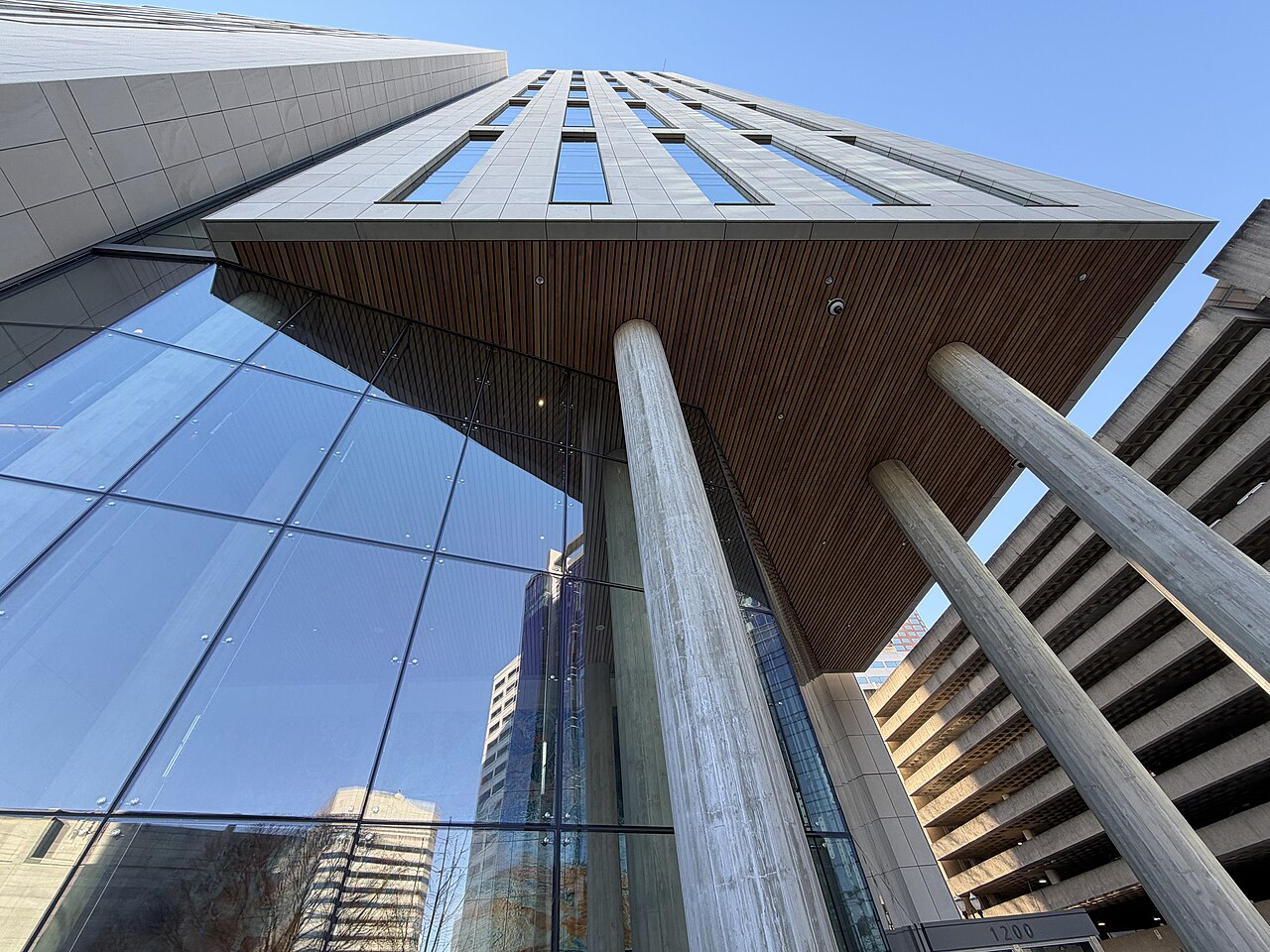
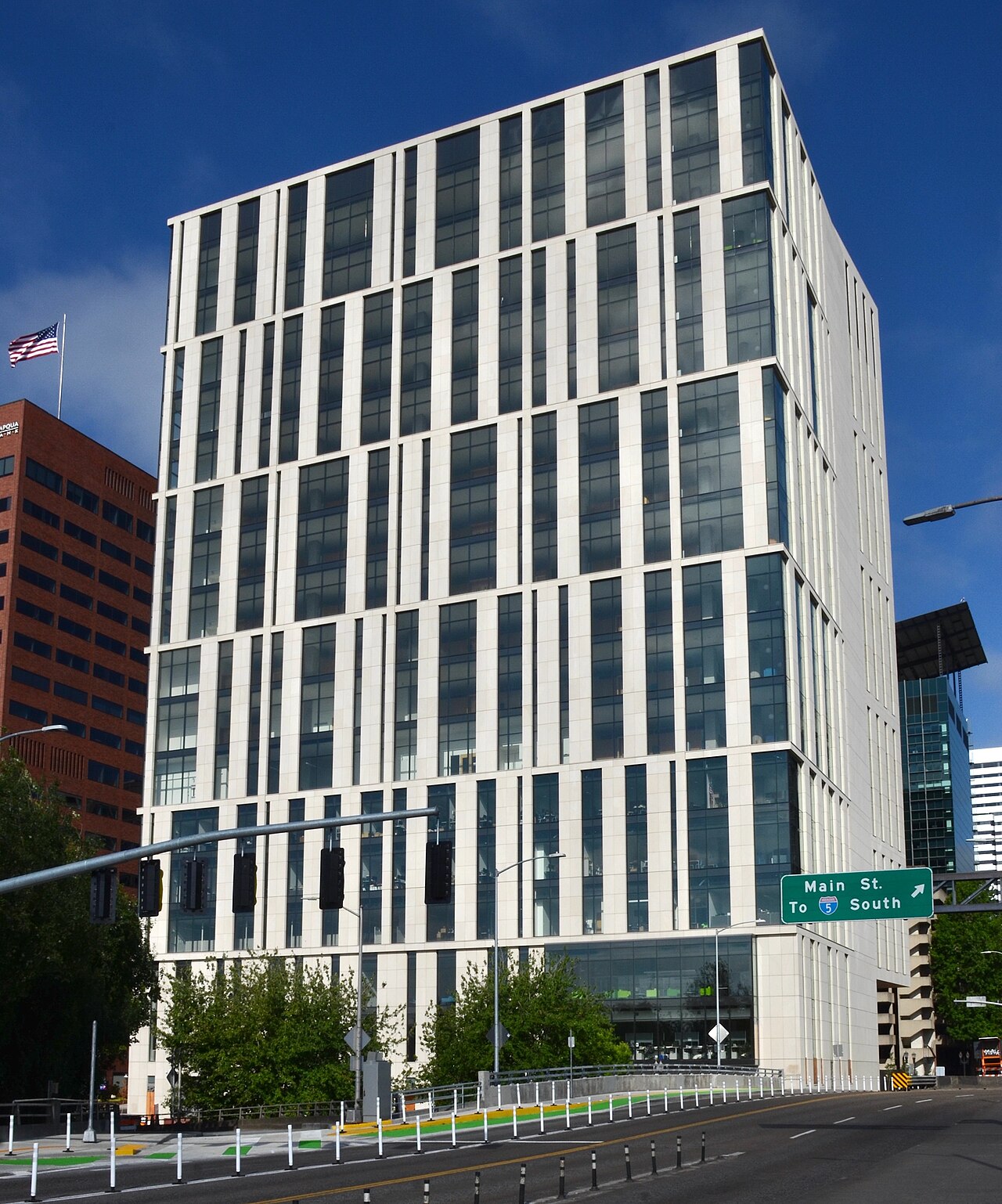
Header image: the entrance of the Multnomah County Central Courthouse, Portland, Oregon, by PortlandAppraisalBlog via Wikimedia Commons, licensed CC BY-SA 4.0. In-body image: the same courthouse from the Hawthorne Bridge sidewalk by Steve Morgan via Wikimedia Commons, licensed CC BY-SA 4.0. Both photos show the building where Oregon filed and do not depict SpaceX, X, xAI or the case.