A federal appeals court has paused Minnesota's AI nudify ban, the first state law of its kind, while xAI's First Amendment challenge moves forward. Reuters reported that the St. Louis-based 8th U.S. Circuit Court of Appeals granted the injunction on October 2, 2026. The ruling does not decide whether the law is constitutional. It decides only whether the law can be enforced while that question is argued. This explainer covers what the statute prohibits, what xAI argued, how the legal standard works and how the federal TAKE IT DOWN Act differs. It is a neutral summary, not legal advice.
 xAIGrok
What the Minnesota nudification ban prohibits
The statute is Chapter 72 of the 2026 Minnesota session laws. It defines to nudify as altering or generating an image or video to depict an intimate part not shown in an original image of an identifiable individual, in a way that appears realistic. A person who owns or controls a website, application, software or other service may not allow a user to nudify an image or video, may not do so themselves and may not advertise such a service.
Three features matter for the legal fight:
- Liability falls on the tool owner. The law targets the service, not the person who types the prompt.
- There is a skill exemption. The bill text exempts services that require the technical skill of a user to nudify an image. The session law describes this as substantial application of individualized technological or artistic skill.
- Penalties are per use. The attorney general may enforce under the state's consumer protection statute, with a civil penalty of up to $500,000 for each unlawful access, download or use, and depicted individuals may sue for damages and injunctive relief.
CBS Minnesota reported that the Senate passed the bill unanimously and all but one House member supported it before it was signed in May 2026, with an effective date of August 1, 2026. The 19th News described it as the nation's first ban on nudification apps.
xAI's First Amendment arguments
According to CBS Minnesota, xAI sued shortly before the law took effect, arguing it "imposes an overbroad, content-based ban on free speech and the tools of visual expression." The Week's summary lists the company's specific objections:
- The law has no exception for artistic, political or journalistic images.
- It has no consent element and no scienter (knowledge) requirement.
- It defines intimate parts broadly, including inner thigh, buttocks, breast, genital area and groin.
- It exposes a company to up to $500,000 per image plus treble and punitive damages.
FourWeekMBA's account adds that xAI argues the law is content based and so warrants strict scrutiny, the most demanding level of First Amendment review. Reuters reported that xAI says Grok Imagine has "rigorous protections" against sexual imagery of real people without consent and that it has begun suing users who try to bypass them.
Minnesota's position, per the same coverage, is that strict scrutiny does not apply and that the law addresses digital sexual victimization. Attorney General Keith Ellison's office said the statute targets AI products that generate sexual images that harm and harass people and "a staggering amount of child sexual abuse material that AI products like Grok Imagine generate." After the ruling his office said it was "disappointed in the Eighth Circuit's decision and respectfully but strongly disagree[s] with it."
The standard for an injunction pending appeal
An injunction pending appeal is governed by Federal Rule of Appellate Procedure 8, under which a party ordinarily asks the district court first. Courts apply the four factors the Supreme Court described in Nken v. Holder:
- Whether the applicant made a strong showing of likely success on the merits.
- Whether the applicant will be irreparably injured without relief.
- Whether relief will substantially injure other parties.
- Where the public interest lies.
This is where the two courts diverged on the reported record. District Judge Donovan Frank denied xAI's request in early September, finding, per Reuters, that xAI had not shown irreparable harm and had delayed filing. The Eighth Circuit then granted the motion with a single line: "Appellant's motion for injunction pending appeal is granted," according to FourWeekMBA. Because no reasoning was published, which factor drove the result is unknown. First Amendment cases often turn on likelihood of success, since courts commonly treat the loss of speech rights as irreparable, but that is general background, not a reading of this order.
Appellant's motion for injunction pending appeal is granted.
The Eighth Circuit's full order, as quoted by FourWeekMBA
How the TAKE IT DOWN Act differs
The federal TAKE IT DOWN Act was signed on May 19, 2025. Wiley's analysis says it criminalizes the nonconsensual posting of authentic intimate images and AI-generated deepfakes on interactive computer services, and requires covered platforms to set up a removal process within one year and remove reported content within 48 hours of a request. The Federal Trade Commission enforces the platform duties, with civil penalties currently up to $53,088 per violation. It passed the Senate unanimously and the House 409 to 2.
| TAKE IT DOWN Act | Minnesota nudification ban | |
|---|---|---|
| Regulates | Publication of intimate images and platform removal after a report | The capability to generate the image at all |
| Trigger | A posted image or a victim's request | A user accessing or using the tool |
| Covered party | Posters and covered platforms | Owners or controllers of the service |
| Enforcer | Federal prosecutors and the FTC | State attorney general plus private lawsuits |
| Status | Platform duties due May 19, 2026 (derived: one year after signing) | Enforcement paused by the Eighth Circuit |
The contrast is the practical point. The federal law reacts to content that exists. Minnesota's regulates the tool before any image is shared, which is why xAI frames it as a restriction on a means of expression. Courts have not yet ruled on that distinction for this statute.
Other state laws and the Grok backdrop
Minnesota is an outlier in method, not in goal. A tracker cited in industry coverage says that as of August 5, 2026 every state except Ohio and New Mexico had a law on sexually explicit deepfakes, which would be 48 states. Most of those laws target people who create or share images, not the companies that build the tools, a figure to treat as a secondary-source estimate.
The dispute sits against a documented controversy. Al Jazeera reported on January 15, 2026 that X restricted Grok from editing images of real people into revealing clothing such as bikinis, limited image generation to paid subscribers and geoblocked some sexual content, while Indonesia and Malaysia had already blocked or banned Grok and regulators including Ofcom and the European Commission were examining the matter. An AI Forensics report sampled about 20,000 Grok-generated images from late December 2025 and early January 2026, finding 53% showed minimal attire and 2% depicted people who appeared to be under 18.
Nudification rules and the xAI challenge
Key dates in order. The law was in force for 62 days (Aug 1 to Oct 2, derived) before the appeals court paused it.
- May 19, 2025TAKE IT DOWN Act signed
- Jan 12, 2026Ofcom opens investigation into X over Grok images
- Jan 15, 2026X announces limits on editing real people into revealing clothing
- May 7, 2026Minnesota nudification ban signed
- May 19, 2026TAKE IT DOWN removal duties due (one year after signing)
- Late Jul 2026xAI files First Amendment suit
- Aug 1, 2026Minnesota law takes effect
- Early Sep 2026District judge denies xAI emergency relief
- Oct 2, 2026Eighth Circuit grants injunction pending appeal
What to watch
- The merits briefing. The injunction preserves the status quo only until the Eighth Circuit rules on the appeal itself.
- Reasoning. A published opinion would show whether the court treated the law as content based and how it handled the skill exemption.
- Copycat bills. Other legislatures may wait for the outcome before drafting tool-level bans.
- Federal enforcement. The FTC's role under TAKE IT DOWN is unaffected by this case.
For teams that choose among image models, the practical takeaway is that provider safeguards and legal exposure for generated imagery are shifting. A model-agnostic workspace such as Metir lets teams compare providers' behavior rather than depend on one.
Sources:
- Reuters via Investing.com, appeals court blocks Minnesota law
- CBS Minnesota
- The Week
- FourWeekMBA
- Minnesota Laws 2026, Chapter 72
- Minnesota HF 1606, first engrossment
- The 19th News
- Nken v. Holder, CourtListener
- Wiley, TAKE IT DOWN Act
- Vorp Labs, deepfake laws by state
- Al Jazeera, Grok restrictions
- AI Forensics, Grok image abuse report
Image credits
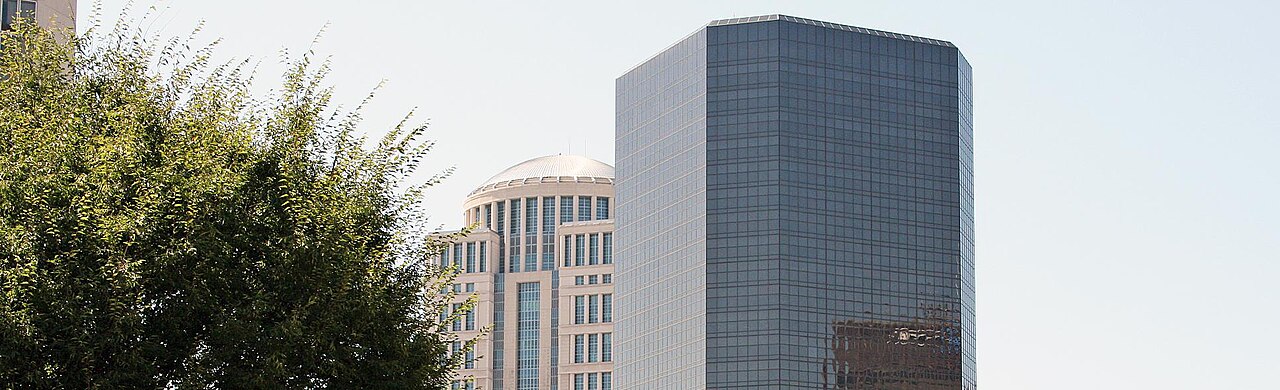
- Thomas F. Eagleton U.S. Courthouse (2013-B), by the United States District Court for the Eastern District of Missouri, public domain, via Wikimedia Commons.