In mid-September 2026, two announcements pointed at the same shift. KT Cloud said it will add about one gigawatt of AI data center capacity in South Korea by 2031, and a small Texas developer, New Era Energy & Digital, kept drawing investors to a planned 1.4-gigawatt site. Both are pitched at the neocloud market, the layer of GPU-rental companies that sits between chipmakers and the customers who train and run AI models. The neocloud gigawatt buildout is often told as a capacity story. It is more accurately a story about power, financing and who is willing to guarantee the rent.
 NVIDIA
What a neocloud actually is
A neocloud rents GPU capacity, usually to AI labs and large technology companies, without running the broad menu of services a hyperscaler offers. One analysis from Measured AI puts six of the best-known neoclouds (Crusoe, Nebius, Nscale, CoreWeave, Lambda and Fluidstack) at a combined valuation above $150 billion, and describes the layer as one that "owns almost nothing": CoreWeave's 49 data centers are, in that analysis, essentially all leased from third parties, and Fluidstack operates five U.S. sites with no owned buildings.
The economics differ from a hyperscaler in three ways. First, the business is asset-light on buildings but heavy on financed chips: landlords such as converted bitcoin miners sign long leases of 10 to 15 years, while the GPUs inside are deployed on contracts of two to five years. Second, margins depend on pricing that has been firming; the same analysis cites one-year GPU rental rates rising roughly 36% between May 2025 and May 2026, from about $1.95 to $2.65 per GPU-hour. Third, customer concentration is high: Microsoft accounted for about 67% of CoreWeave's fiscal 2025 revenue. For a closer look at the financing web behind this, see our earlier pieces on neocloud vendor financing and CoreWeave's debt and credit signals.
KT Cloud: a gigawatt is a schedule, not a switch
KT Cloud's plan shows how a headline number unfolds. The company told its September 15 summit that it targets 1 GW by 2031, with 200 MW confirmed by 2029, phased through Bucheon (2027), Gunsan (2028) and Ansan (2029). Its CEO, Kim Bong-kyun, framed the principle as matching supply to actual demand, and named neocloud operators among its target customers alongside big tech firms and cloud providers.
That phasing is the point. Roughly one-fifth of the promised gigawatt is confirmed with dates, and the rest sits in a longer horizon that depends on land, grid connection and customers actually appearing. Announcing a gigawatt costs little; energizing one takes years.
Investment Grade credit is the price of admission right now. It is not a negotiating point.
Robert West, TRG Datacenters, via Data Center Knowledge
New Era in Texas: power first, tenant later
New Era Energy & Digital's Texas site is planned in three phases of about 200 MW, 450 MW and 750 MW. According to The Motley Fool, the stock rose more than 60% over roughly a month, including a single-day jump of more than 30% after a 20-year power agreement with Vistra's Luminant covering about 200 to 207 MW, with delivery expected in the third quarter of 2027.
New Era's Texas site: three phases to about 1.4 GW
Planned capacity per phase in megawatts. Only Phase 1 has a disclosed power contract so far.
Cumulative: 200 MW, then 650 MW, then 1,400 MW.
The same report is careful about the gaps. New Era has no secured hyperscaler tenant yet, and it estimated roughly $3 billion to $4 billion to build a 200 MW facility against $84.8 million of cash and a $270 million undrawn credit line, so Phase 1 needs outside financing or a partner. Only the first phase has a disclosed power contract. The market is pricing the option on a gigawatt, not a built one.
Why this is really a grid story
Latitude Media's reporting on neoclouds and the grid shows why power sets the pace. TeraWulf, a former bitcoin miner turned landlord, cites capital costs of $7 million to $10 million per megawatt at its Lake Mariner site and is planning a 750 MW campus near Buffalo, New York. Nscale is pursuing Nordic hydropower and an off-grid gas facility in West Virginia. Sightline Climate research quoted there says the vast majority of the more than 100 neoclouds that have emerged are very early-stage or GPU resellers, and most lack power access, current chips or operating experience.
Data Center Knowledge adds the practical detail: liquid cooling adds about $1.5 million to $1.6 million per megawatt upfront, and requirements of 50 MW or more are increasingly common, more than most colocation markets can absorb. Small deals also show the trend at the other end. Hyperscale Data announced in June that its subsidiary Alliance Cloud Services signed a 20 MW agreement with an unnamed California-based neocloud at its Michigan campus, with the customer able to scale to 52 MW and the deployment expected in the fourth quarter of 2026. Whoever holds interconnected megawatts holds the leverage.
The credit-risk debate
Here the optimistic and cautious readings diverge. Data Center Knowledge reported that a well-funded neocloud seeking 2 MW, growing to 12 MW within 18 months, offered a 15-year term and six months of prepayment and still could not close, because colocation providers now screen for creditworthiness rather than price. It describes a deadlock: landlords will not build without signed commitments, neoclouds hesitate without GPU supply and customer contracts, and GPU supply depends on hyperscaler decisions.
Measured AI shows how the market is answering with credit support. Anchor customers such as Microsoft, Google, OpenAI and Anthropic increasingly stand behind obligations lower in the stack, and NVIDIA has offered a $860.3 million five-year rent guarantee for Nscale's Ward County lease and a $6.3 billion rent-back from CoreWeave through 2032. It also notes a duration mismatch: a 10.5-year lease spans roughly three GPU contract cycles, so a tenant must refill a building with newly financed chips three times or more.
Two fair readings follow. The durable case is that leases, guarantees and backlog from investment-grade customers turn a risky layer into financeable infrastructure, and that power and buildings retain value even if chip generations turn over. The overextension case is that guarantees concentrate risk among a few names, that announced gigawatts outrun signed tenants, and that circular arrangements, where suppliers back their own customers, can amplify a downturn. The evidence so far supports both, which is why the stalled deals and the stock rallies can be true at once.
What to take away
The gigawatt figures are best read as options on power, not as capacity coming online. The tests to watch are concrete: signed interconnection and power contracts, named investment-grade tenants, and financing closed before construction. For buyers of AI, the lesson is that compute supply, pricing and providers are shifting quickly beneath the model layer. Staying model-agnostic, as Metir AI does by letting teams switch between Claude, GPT, Gemini and Grok, protects against being tied to any one provider's capacity or financing story.
Sources:
- KT Cloud to add 1 gigawatt of AI data centers within five years | Seoul Economic Daily
- New Era Energy & Digital is up by more than 60% this month | The Motley Fool
- Neoclouds: the AI middle layer | Measured AI
- Neocloud storm gathers as data center deals stall over credit risk | Data Center Knowledge
- Hyperscale Data signs 20MW capacity agreement with neocloud customer at its Michigan data center | Data Center Dynamics
- How AI neoclouds are reshaping the grid | Latitude Media
Image credits
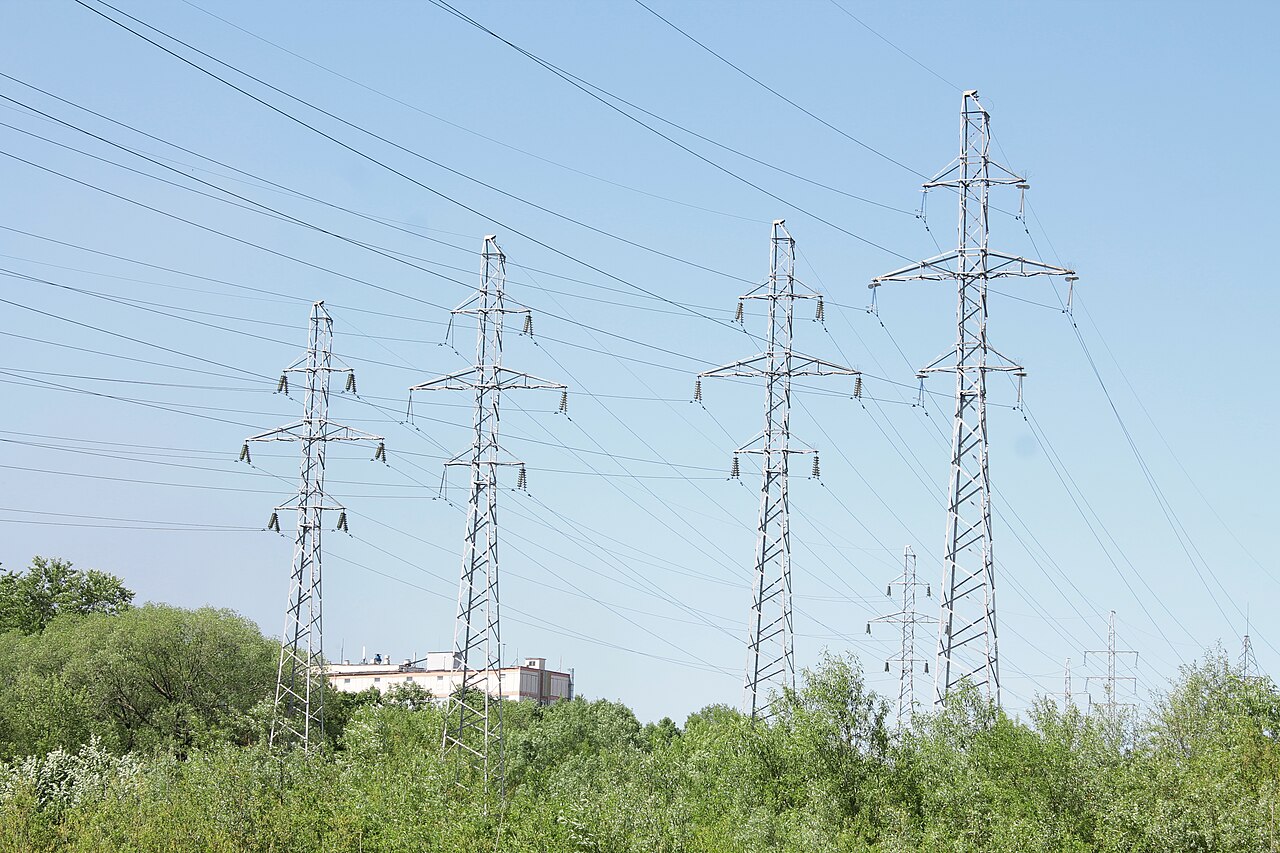
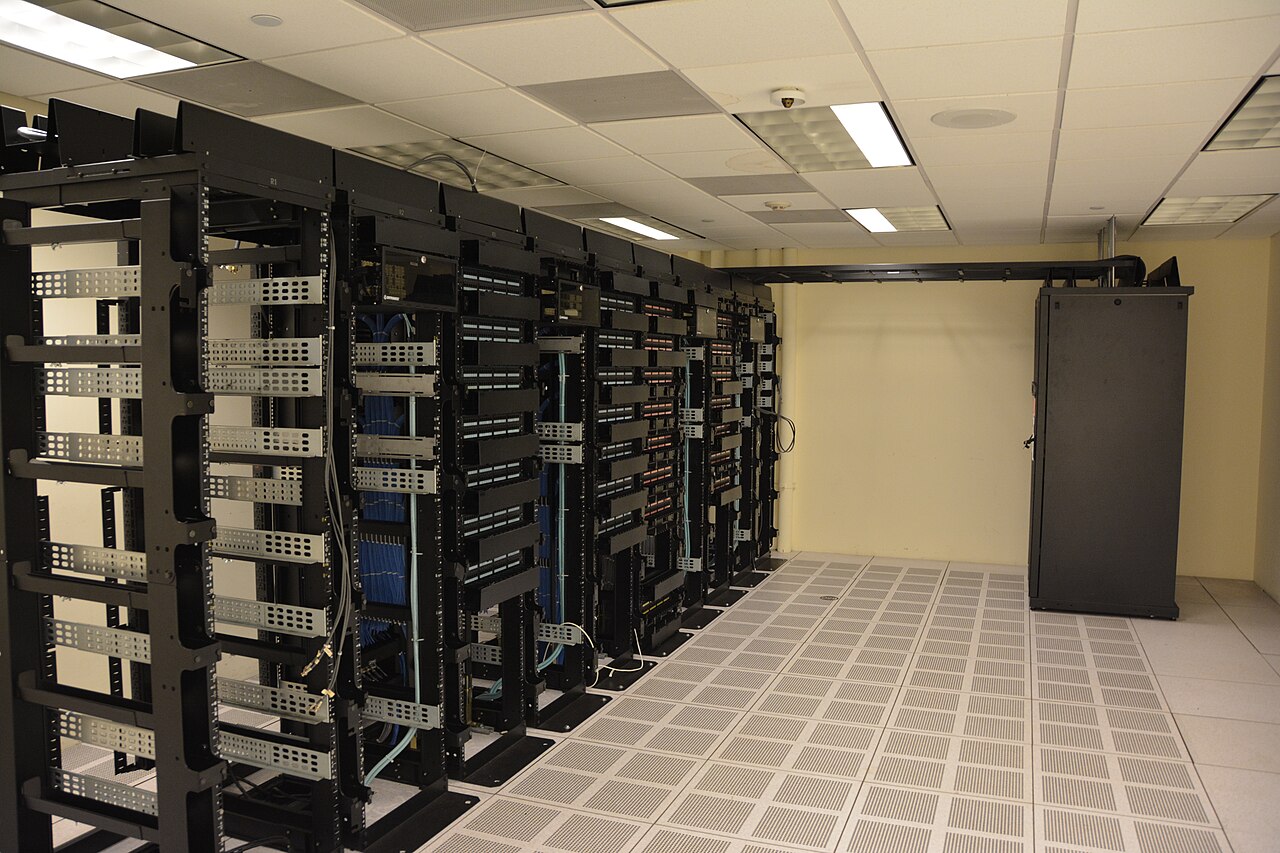
Header image: a row of high-voltage electric transmission towers by Foto3821, via Wikimedia Commons, released under CC0. It is a generic illustration of grid infrastructure, not a specific project. In-body photograph of a data center room by Carl Lender, via Wikimedia Commons, licensed under CC BY 2.0.