On September 30, 2026, AIB Data Centers Inc. (NYSE American: AIB) announced a binding agreement to supply Nebius with 50 MW of critical IT capacity at a data center in the southeastern United States, on an initial 12-year term. The Nebius AIB data center lease is small next to the multi-billion-dollar contracts Nebius has signed elsewhere, but it shows how a neocloud is solving its hardest problem: finding power it can use soon. This article walks through what was disclosed, what was not, and how the deal fits the wider pattern of former crypto miners becoming AI landlords.
 NVIDIA
 Meta
Meta Microsoft
What AIB and Nebius actually announced
The press release, filed with the SEC as an exhibit to a Form 8-K, names Nebius (Nasdaq: NBIS) as the customer and describes 50 MW of critical IT capacity with an initial 12-year term and optional renewals. The capacity is supported by a previously announced 15-year electric service agreement for 65 MW of utility load. AIB said it expects customer prepayments, project-level debt and preferred equity to fund a substantial portion of initial development costs, which it says reduces the need for corporate-level common equity (Stock Titan copy of the release).
AIB used to be called BlockchAIn Digital Infrastructure. It rebranded in June 2026 and is moving from digital-asset infrastructure toward AI and high-performance computing, according to The Energy Mag. The same report says a September Texas acquisition raised AIB's contracted power from 65 MW to roughly 120 MW, with 15 MW in active service and another 40 MW in development. The release itself puts the figure at approximately 120 MW.
Equally important is what the release leaves out. It gives no dollar value, no development budget and no named state, and the trade coverage that reported on the deal also found no delivery dates. Any revenue per megawatt for this lease would therefore be a guess, and this article does not make one.
Time-to-power is the binding constraint on AI infrastructure today, and AIB's existing power position gave us a clear path.
Andrey Korolenko, Nebius, in the AIB press release
Why power, not chips, drives colocation leases
The Nebius quote above explains the structure. A site that already holds a utility agreement can skip the years-long wait for new interconnection. Here the 65 MW electric service agreement exceeds the 50 MW of IT capacity being leased. That gap is normal, because cooling, power conversion and other overhead sit on top of the IT load, though the release does not state the ratio. The 15-year utility agreement outlasts the 12-year initial lease term, so the power right is in place for the full initial period plus part of any renewal.
The prepayment feature matters too. When a tenant pays part of the rent in advance, the landlord can borrow against a contracted cash flow rather than sell new shares. For a small-cap company with roughly 120 MW across all its sites, that is the difference between funding a build with customer money and funding it with dilution. The release says as much, but the size of the prepayments is not disclosed.
How the lease fits Nebius's other deals
Nebius has announced three much larger customer agreements, shown below. Microsoft signed for $17.4 billion over five years, expandable to $19.4 billion in September 2025, tied to a 300 MW campus in Vineland, New Jersey. In November 2025 Nebius disclosed a $3 billion, five-year deal with Meta. In March 2026 it signed a second Meta agreement, five years with $12 billion of dedicated capacity and up to $15 billion of additional purchases, about $27 billion in total, with deliveries starting in early 2027.
Nebius announced customer agreements
Contract value in billions of US dollars. The darker bar is the base figure, the lighter bar is the expandable or contingent portion. The AIB lease is not shown because no dollar value was disclosed.
Sources: Nebius announcements as reported by Futuriom, AI Business and the Nebius newsroom.
Those contracts are for GPU cloud services, where Nebius supplies chips, networking and software. The AIB lease is a different layer. Nebius is renting powered space, which it will presumably fill with its own equipment. The existing Metir analysis of Nebius's roughly $40 billion backlog and Vera Rubin rollout covers how backlog converts to revenue, and our piece on the neocloud grid and gigawatt buildout covers the power constraint in more depth. As a rough scale check, derived arithmetic only, 50 MW is about 17% of the 300 MW Vineland campus. Nebius has also stated a goal of more than 1 GW of power commitments by the end of 2026, per Futuriom, so 50 MW is roughly 5% of that target.
The miner-to-AI-host pivot, and what leases are worth
AIB is one of several companies repositioning bitcoin-era power assets. Cointelegraph noted that IREN signed a $9.7 billion, five-year GPU cloud contract with Microsoft in November 2025, and that HIVE, MARA, Riot and TeraWulf are making similar moves. Cipher Mining's agreement with Fluidstack is the cleanest comparison because it discloses both capacity and value: 168 MW of critical IT load over 10 years for approximately $3 billion, with Google backstopping $1.4 billion of Fluidstack's lease obligations.
Dividing those figures gives roughly $1.8 million per MW per year (derived: $3 billion / 168 MW / 10 years, about $1.79 million). That is one data point for one site and one structure, and it should not be applied to AIB, whose terms are undisclosed. It does show the order of magnitude that long colocation leases can reach, and why a 12-year, 50 MW commitment can matter to a company of AIB's size.
What to watch
- Delivery. Neither company has published an energization or first-capacity date in the sources we reviewed.
- Disclosure of economics. A later filing may state contract value or prepayment size, which would allow a real revenue-per-MW calculation.
- Credit support. Cipher's deal included a Google backstop. The AIB release does not mention a parent guarantee or credit support, and for a long lease with a growing tenant that is a key risk variable.
- Financing close. The release expects prepayments, debt and preferred equity but gives no closing dates for the debt or equity.
- Texas sites. Whether the 55 MW acquired in Texas finds a tenant will show whether the strategy repeats.
For teams that buy AI compute rather than build it, the practical takeaway is that capacity is being assembled from many small pieces of powered real estate. A model-agnostic workspace like Metir lets you follow that shift without tying your workflows to any single provider's hardware.
Sources:
- AIB Data Centers Inc. Form 8-K, Exhibit 99.1 press release | SEC EDGAR
- AIB Data Centers signs 50 MW contract with Nebius | Stock Titan
- AIB Signs 12-Year Deal to Supply Nebius With 50 MW of AI Capacity | The Energy Mag
- Nebius takes 50 MW at AIB Data Centers' southeastern US facility | W.Media
- Nebius' Monster Microsoft Deal Fuels Further Expansion | Futuriom
- Nebius Reveals $3B Deal With Meta | AI Business
- Nebius signs new AI infrastructure agreement with Meta | Nebius newsroom
- BTC miner IREN lands $9.7B Microsoft deal | Cointelegraph
- Cipher Mining Signs 168 MW, 10-Year AI Hosting Agreement with Fluidstack | Seeking Alpha
Image credits
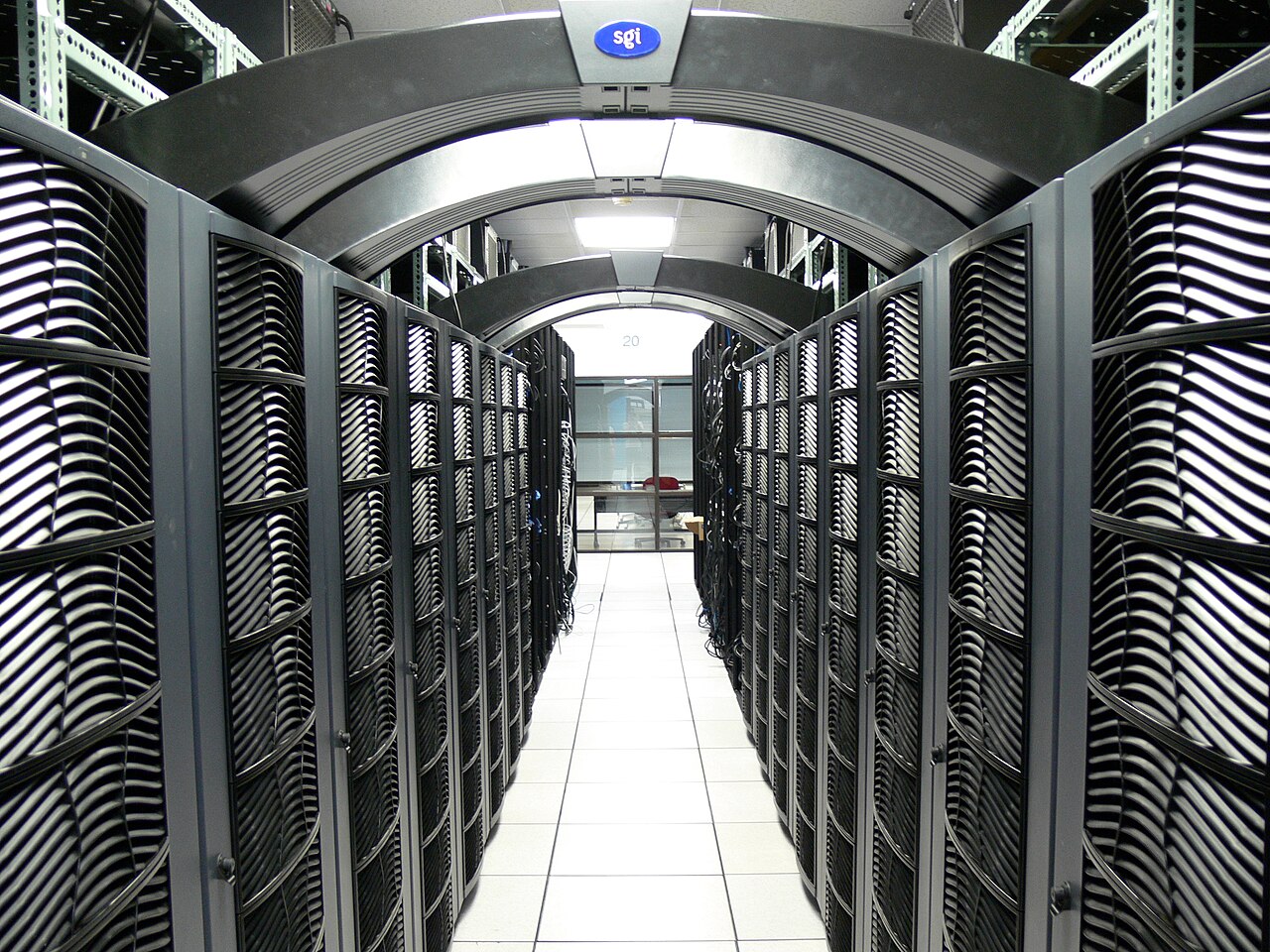
- Data center aisle (illustrative): Virginia Tech - data center.jpg by Christopher Bowns, Wikimedia Commons, licensed under CC BY-SA 2.0.