On October 21, 2026, Mistral AI and NVIDIA announced a collaboration on AI-native engineering workflows, aimed at aerospace, automotive and semiconductor companies. The headline is not a new model. It is a plan to publish open datasets and shared benchmarks for physics models and for AI agents that do computer-aided engineering (CAE) and electronic design automation (EDA) work. This article explains what was announced, how the proposed workflow loops together, and why the evaluation layer may matter more than the models themselves.
 Mistral AI
 NVIDIA
What was announced
According to Mistral's announcement, the two companies are building faster simulation and closed-loop workflows that connect simulation, AI model development and engineering design. The stack named in the post includes Mistral Large 4, Mistral's data-generation and physics-modelling pipelines, NVIDIA CUDA-X libraries and NVIDIA Warp, and NVIDIA Omniverse libraries for GPU-accelerated 3D scene generation and SimReady asset creation.
The evaluation side is explicit. Mistral says it will release:
- Public benchmarks and open datasets for evaluating physics models, so teams can compare accuracy and performance.
- Automated CAD-to-simulation workflow validation.
- Dedicated evaluations of agentic AI in CAE and EDA, measuring tool use, multistep workflow completion, technical correctness, execution time and computational cost.
- Shared standards for agentic and physics AI evaluations, aimed at consistent, reproducible methods.
Neil Ashton, Mistral's VP of Computational Engineering, said "For too long, the pace of engineering has been set by the pace of simulation." NVIDIA's Tim Costa, VP and GM of Industrial and Computational Engineering, said shared industry benchmarks would help build confidence in what AI can do.
For too long, the pace of engineering has been set by the pace of simulation.
Neil Ashton, Mistral AI
The closed loop, explained
Engineering design is iterative. An engineer proposes geometry, runs a physics simulation, reads the result and revises. Each simulation can take hours or days on conventional solvers, which limits how many designs can be explored. The collaboration describes connecting that loop to AI so that models learn from simulation data and agents help drive the next revision.
The closed loop Mistral and NVIDIA describe
Simplified from the announcement. The loop repeats until a design meets its requirements.
Step 1
CAD design
Candidate geometry
Step 2
Simulation
GPU-accelerated physics (CUDA-X, Warp)
Step 3
AI physics model
Surrogate trained on simulation data
Step 4
Design update
Agent proposes the next revision
After step 4, the revised design returns to step 1.
The announcement does not publish speed-up figures, so any claim about how much faster the loop runs would be speculation. What it does specify is where the loop is measured, which is the point of the benchmark plan.
Why the benchmark plan is the substantive part
General-purpose language benchmarks say little about whether an agent can set up a meshing job, choose boundary conditions and interpret a stress field correctly. The five metrics Mistral lists, tool use, multistep completion, technical correctness, execution time and computational cost, map to the ways an engineering agent can fail:
- Tool use. Solvers and CAD packages have strict interfaces. A wrong call produces an error or, worse, a plausible but incorrect run.
- Multistep completion. A workflow may need dozens of dependent steps, so small per-step error rates compound.
- Technical correctness. A simulation that finishes is not necessarily right. Checking it needs reference results, which is why the open datasets matter.
- Time and cost. An agent that reaches the right answer after ten times the compute of an engineer's script may not be useful in practice.
Our own framing, not Mistral's: shared, reproducible evaluation is what lets a buyer in aerospace compare two vendors without running a private bake-off. The related question of surrogate models, AI approximations of physics solvers, is covered in our piece on physics AI surrogate funding.
Background: a longer relationship
Mistral's post notes that the companies previously co-developed Mistral NeMo and are working together through the NVIDIA Nemotron Coalition on a frontier open-weight base model. Mistral Large 4, described as its largest and most capable model, is in public preview with about 1 trillion total parameters and 49 billion active, trained on 3,800 NVIDIA Grace Blackwell GPUs in Mistral-operated European data centres, with weights planned for the end of October. For model details, see our Mistral Large 4 analysis, and for the company's funding and sovereignty positioning, the Series D coverage. Mistral's compute roadmap targets 1 GW of capacity by 2030.
Limits of what is known
- No results yet. The announcement describes plans and tools. It publishes no benchmark scores, speed-up measurements or customer deployments.
- Release timing is unspecified. The post does not give dates for the datasets or benchmark suites.
- Vendor-led standards. Benchmarks co-designed by an infrastructure vendor and a model builder will be most credible if other labs and engineering software firms adopt and audit them. Whether they do is not yet known.
What this means for teams
- Engineering organisations evaluating AI agents should ask for results on shared, reproducible tasks, not demos.
- Open weights, if Large 4 ships as planned, would let regulated industries run models inside their own environments, though the licence terms are the deciding factor and were not stated in this announcement.
- Tooling that keeps evaluation sets and prompts portable across models, as Metir does for general workflows, makes it easier to rerun a new benchmark against several vendors.
What to watch next
- Publication of the datasets and the first scores on the CAE and EDA agent evaluations.
- The Large 4 weights release at the end of October, and its licence.
- Participation by simulation-software vendors and other model labs in the proposed standards.
Sources:
- Mistral AI and NVIDIA: AI for industrial engineering (Mistral AI, Oct 21, 2026)
- Everything That Happened in AI Today, Thursday, October 22 (The Neuron)
Image credits
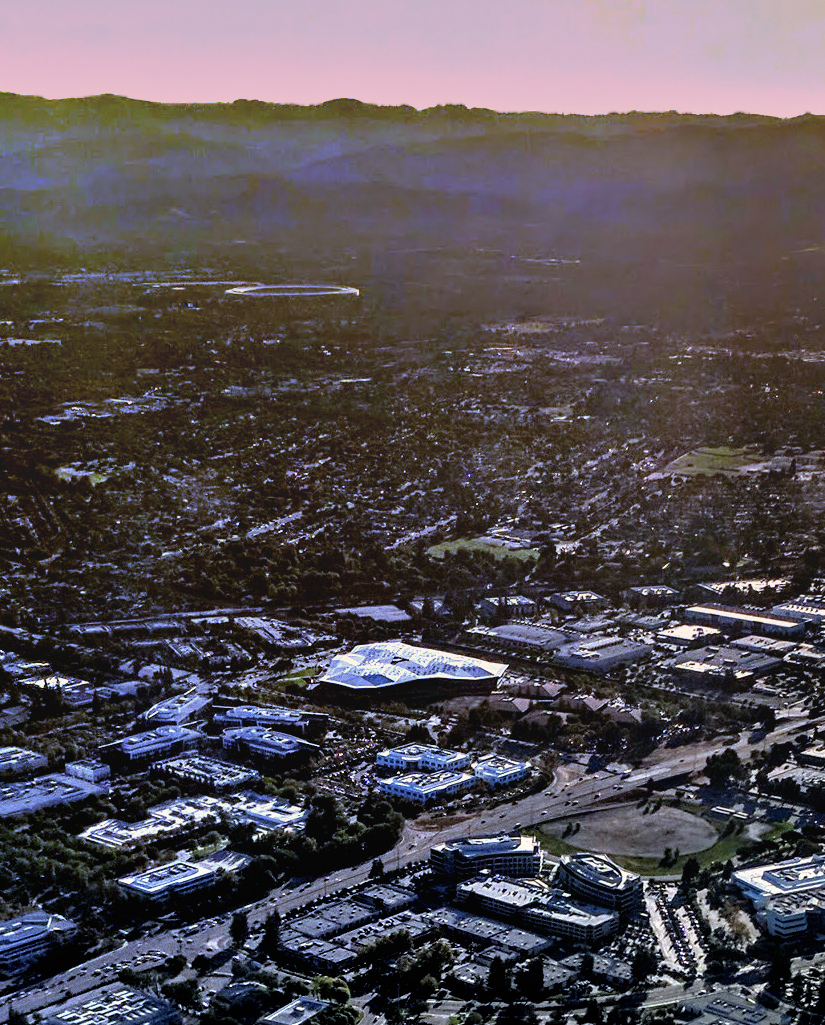
- Hero: aerial view of Nvidia's Endeavor headquarters campus in Santa Clara, California, photographed in 2017, by Dicklyon, CC BY-SA 4.0, via Wikimedia Commons.
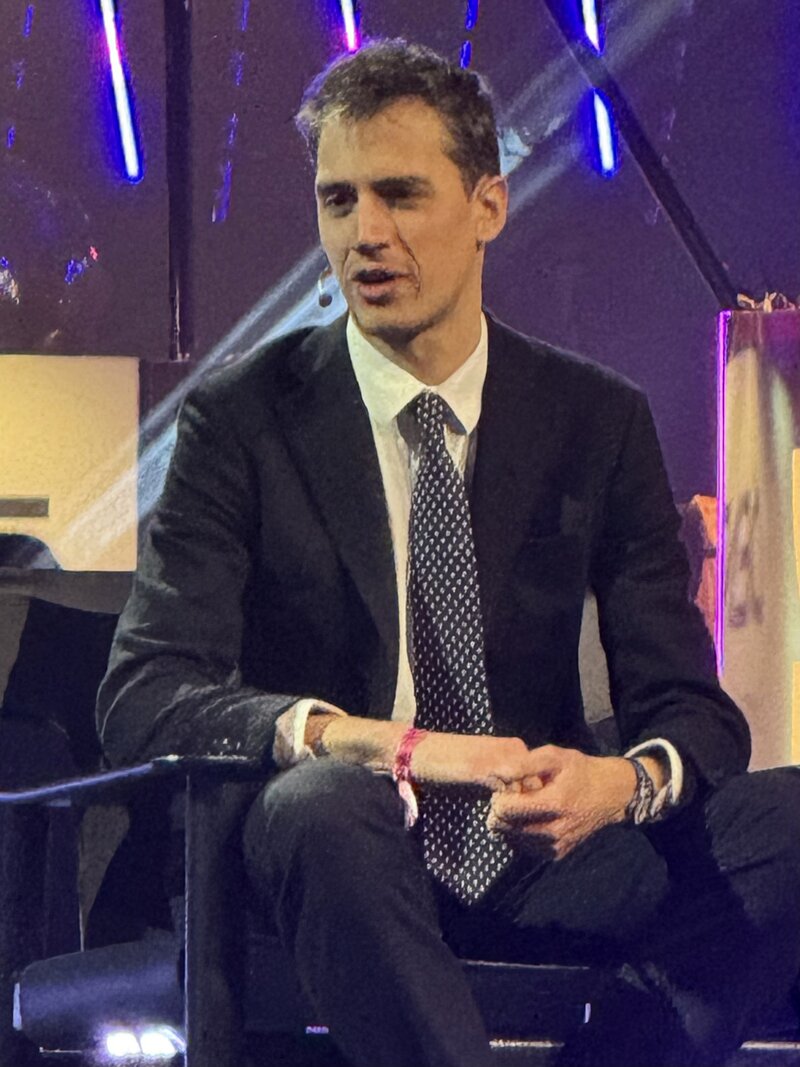
- In-body: Arthur Mensch speaking at Techarena 2026, by Jan2342342423, CC0, via Wikimedia Commons. Both files were reviewed visually before use.