Cambridge-backed Zenithon announced on October 5, 2026 that it has raised $10 million to build what it calls world models for extreme physics, machine learning systems meant to speed up the engineering simulations behind fusion reactors, rockets and semiconductor fabrication, according to EdTech Innovation Hub and Seraphim, one of its investors. The round is small next to the largest AI financings of 2026, but it lands in a category, physics AI built on surrogate models, where a few well-funded companies are competing to replace hours or days of simulation with seconds of inference. This piece looks at what Zenithon says it is building, how surrogate models differ from classical solvers, and how the funding landscape around it is shaping up.
What Zenithon Announced
According to Tech Funding News, which describes the round as a seed, the investors are Backed VC, Lunar Ventures, Seraphim Space, MMC Ventures and SOSV, alongside angels. EdTech Innovation Hub reports that the announcement did not disclose a valuation or formally specify the round type, so the seed label rests on one outlet. The company was co-founded by Alex Higginbottom and Abetharan Antony, a plasma physicist, and emerged from SPARK, the entrepreneurship lab at King's College Cambridge.
Zenithon says its technology can search one million potential design points in the time conventional simulation would take to run one. Tech Funding News adds that the company reports cutting plasma simulation time from months to seconds, that it trains on both simulation and real-world data, and that it already has early customers in fusion energy. Those are company claims. EdTech Innovation Hub notes the performance figures have not been independently benchmarked.
The money is split roughly evenly between hiring and compute, per Tech Funding News, with a plan to release new models every three months and to expand in San Francisco and elsewhere in the United States.
One million design points in the time one conventional simulation takes. The claim is specific, testable and, so far, unbenchmarked.
Reading the Zenithon announcement
Surrogate Models vs Classical Solvers
Classical engineering simulation solves the governing equations of a system numerically. Computational fluid dynamics (CFD) does this for fluid flow and the finite element method (FEM) does it for structures, and each design candidate normally needs its own run. A surrogate model takes a different route: it is a machine learning model trained on the outputs of such solvers, or on measurements, so that a new case is answered by a forward pass through a network rather than a fresh solve.
The trade is cost moved from inference to training. Generating the training data and fitting the model is expensive, and the payoff comes when the same family of problems is queried many times, for example while searching a design space. That explains why the headline claim is phrased as design points searched, not as a faster single run. Architectures used for this include the neural operators covered in our earlier look at Accelerated Understanding, plus graph networks and diffusion models. NVIDIA's open source PhysicsNeMo framework, licensed under Apache 2.0, packages several of these, including Fourier neural operators, MeshGraphNet and Transolver, as ordinary PyTorch modules.
 PhysicsNeMo
The honest limits are those of any learned model. A surrogate is only trustworthy inside the region its training data covers, so most production workflows keep a classical solver nearby to verify the shortlist a surrogate produces. That verification step is a reason surrogate vendors tend to describe themselves as complementing solvers rather than replacing them, though the coverage reviewed for this piece does not spell out each company's workflow.
Why Fusion Is a Natural Test Case
Fusion plasma is expensive to simulate, and there is published precedent for the surrogate approach there. A 2019 paper on QLKNN, from researchers at DIFFER, CEA and others, trained a neural network on 300 million flux calculations from the QuaLiKiz gyrokinetic transport model. The authors report that simulations that take hours were reduced to a few tens of seconds, roughly three to five orders of magnitude faster, with profile discrepancies of 1% to 15% against the traditional approach.
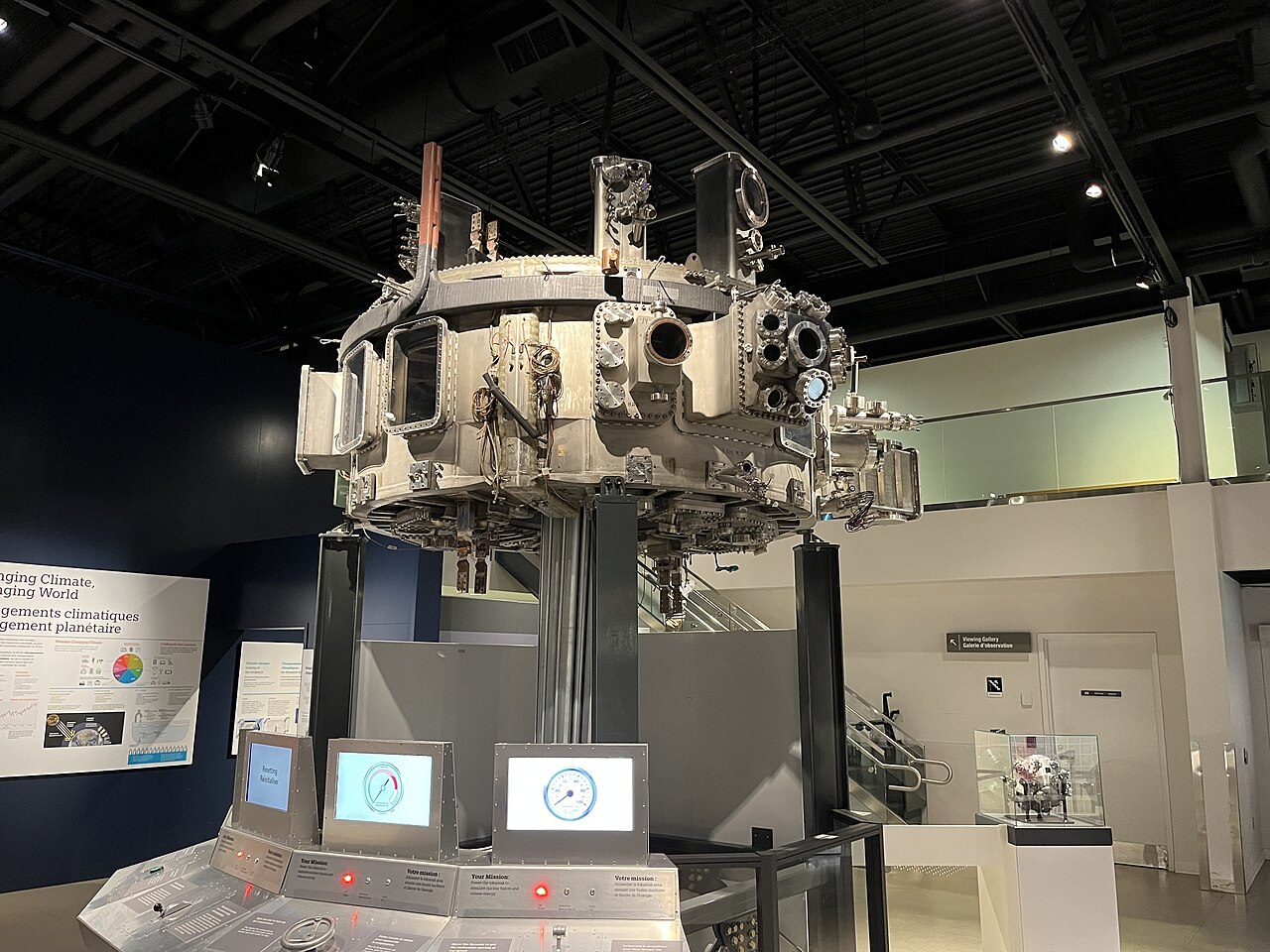
QLKNN is an academic precedent, not Zenithon's method, and the two should not be conflated. It does show the shape of the opportunity: a design loop for a device with many tunable parameters becomes feasible only when each evaluation is cheap. Antony's background in plasma physics, and Zenithon's reported early fusion customers, fit that logic.
The Physics AI Funding Landscape
Zenithon enters a field where larger rounds have already been announced. The figures below are as stated by the companies or the outlets cited.
Physics AI funding rounds
Amount raised in millions of US dollars. Rounds are at different stages, so the bars compare scale, not like for like.
Sources: Zenithon (Seraphim, TFN), Luminary Cloud (SiliconANGLE), PhysicsX (company newsroom, Tech.eu). Hover a bar for round details.
- PhysicsX (London): per its newsroom, the Series B reached more than $155M after a November 19, 2025 extension that added NVIDIA's venture arm NVentures, at a valuation of nearly $1 billion. On June 8, 2026, Tech.eu reported a $300M round at a $2.4B valuation led by Temasek, with total funding to date of about $500M. Tech.eu cites the earlier Series B as $170M, which differs from the company's own $155M-plus figure.
- Luminary Cloud (San Mateo): a $72M Series B on September 15, 2025, led by N47 with Sutter Hill Ventures and NVentures, per SiliconANGLE. It markets cloud simulation up to 100 times faster than desktop alternatives plus a Physics AI effort.
- Zenithon (Cambridge): $10M, with a narrower focus on extreme physics in fusion, aerospace and semiconductors.
Some derived arithmetic, labelled as such. PhysicsX's June 2026 round is 30 times the size of Zenithon's, and its roughly $500M raised to date is about 50 times larger. Two of the three companies list NVentures as an investor, which is consistent with NVIDIA seeding both the software frameworks and the startups that build on its GPUs, though the coverage does not state NVIDIA's strategy.
What to Watch
- Independent benchmarks. Zenithon's million-to-one search claim and the months-to-seconds plasma claim need a named task, a reference solver and a stated error.
- Release cadence. A model every three months gives an early read on whether the approach generalizes beyond fusion into aerospace and chips.
- Valuation signals. Zenithon has not disclosed one. PhysicsX's move from nearly $1B to $2.4B in about seven months is the benchmark investors will compare against.
- Customer disclosure. Named fusion, aerospace or fab customers would show whether surrogates sit in production workflows or remain research tools.
For teams building on AI rather than researching it, physics AI is another reminder that the right model depends on the job. A model-agnostic workspace such as Metir AI is built around routing work to whichever model fits, and specialist simulation models are a likely addition to that mix over time.
Sources:
- Cambridge AI startup Zenithon raises $10m for physics models | EdTech Innovation Hub
- Zenithon Raises $10M For AI Engineering Models | Seraphim
- Zenithon AI raises $10M to build world models for fusion reactors and rockets | Tech Funding News
- PhysicsX announces extension to Series B round | PhysicsX
- PhysicsX raises $300M at $2.4BN valuation | Tech.eu
- Luminary Cloud raises $72M to advance AI-driven physical product design | SiliconANGLE
- NVIDIA PhysicsNeMo | GitHub
- Fast modeling of turbulent transport in fusion plasmas using neural networks | arXiv
Image credits
Header and in-body image: Tokamak de Varennes on display at the Canada Science and Technology Museum, by Maury Markowitz via Wikimedia Commons, released under CC0.