On August 25, 2026, Caltech professor Anima Anandkumar and her co-founder Benedikt Jenik launched Accelerated Understanding Inc., and the number in every headline was arresting: an AI model that ingested five trillion data points in a single prompt during testing, described by the company as roughly five million times what the flagship models from Anthropic and Google can take in. Just as striking was the architecture underneath it. The model does not use Transformers, the design that powers essentially every large language model in production today. It uses neural operators, a different mathematical framework that Anandkumar helped pioneer. The launch is worth understanding precisely, because the eye-catching numbers mean something narrower, and more interesting, than a first read suggests.
Transformers and Neural Operators Are Not the Same Kind of Tool
The most important thing to get right is that a neural operator and a Transformer solve different problems, so comparing their input sizes directly is misleading. A Transformer works over discrete tokens, the word-pieces of text or code, and its context window measures how many of those tokens it can attend to at once. A neural operator works over continuous functions, the temperature across a map, the stress across a turbine blade, the electromagnetic field across a chip. It learns the mapping from one physical field to another, and it is designed to be resolution-independent, meaning it can take in dense, high-dimensional simulation and sensor data that a token-based model would choke on.
Two architectures, two different jobs
Why comparing their input sizes directly is misleading: they consume fundamentally different kinds of data.
"Five trillion data points per prompt" describes field data sampled at high resolution, not five trillion words of text.
Read in that light, "five trillion data points in one prompt" is not a language model with a context window five million times larger than the competition. It is a different class of model absorbing a different class of data: the fine-grained numerical output of physical systems, where five trillion values might describe the state of a simulation, not five trillion words of prose. That reframing does not diminish the claim. It sharpens it. Anandkumar's bet is that for science and engineering problems, the whole token-and-Transformer paradigm is the wrong tool, and that a model built natively for continuous physical data can be far more efficient at the tasks that matter in those domains.
The claim is not a bigger language model. It is a different kind of model, built for the continuous data that language models were never designed to handle.
Reading the Accelerated Understanding launch precisely
Why Physics AI Is a Real Category
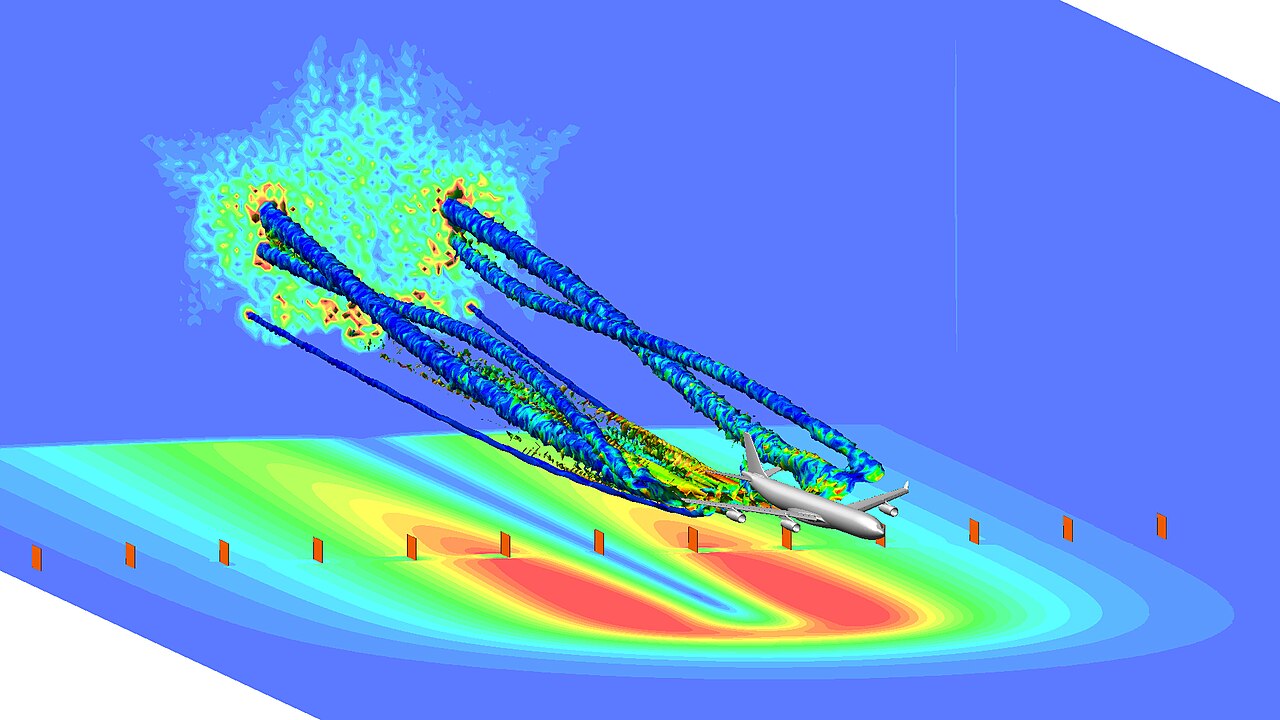
The reason this is more than a research curiosity is that a large share of the world's most valuable computational problems are physics problems, and they do not look like text. Chip design involves simulating electromagnetic and thermal fields across a layout. Weather prediction is the numerical evolution of atmospheric fields. Robotics requires modeling contact forces and dynamics in real time. Geological analysis maps subsurface structure from sparse, noisy measurements. These are exactly the domains Accelerated Understanding names as its targets, and they share a property: the data is continuous, high-dimensional, and governed by known physical laws. Neural operators were built for this shape of problem, and on several published benchmarks in fluid dynamics and related fields they have been dramatically faster than traditional numerical solvers.
None of that makes physics AI a replacement for a language model, and some of the coverage framing this as a ChatGPT rival misreads it. A neural operator will not draft your email or write your code. The interesting question is not whether it beats GPT at general tasks, which it is not built to do, but whether a specialized architecture can decisively beat both general models and classical solvers on a valuable, well-defined scientific workload. If it can, it establishes that the industry's convergence on one architecture for everything was a phase, not an endpoint.
 GPT
GPTThe Prometheus Rejection Is Part of the Story
The founders arrived at this launch by turning something down. According to multiple reports, the pair walked away from an offer tied to the Bezos-backed Project Prometheus that included a $1 million to $2 million salary, a 35% stake, and $2 billion in committed Series A and B financing. Prometheus went on to close a $12 billion Series B in June. Choosing to build independently instead, with compute supplied through partnerships rather than a mega-round, is a statement about control over the technical direction. It is also a reminder that in the current talent market, a differentiated architecture bet can be worth more to certain researchers than a very large check attached to someone else's roadmap.
That independence cuts both ways for an outside observer. It signals conviction, but it also means there is no disclosed funding figure, no independent benchmark, and no shipped product yet to evaluate. Anandkumar declined to discuss funding. The five-trillion figure is a company test result, not a peer-reviewed result. The honest assessment is that this is a credible team making a serious, well-grounded bet in a real category, at the earliest possible stage, and the proof will be in independent evaluations on named tasks rather than in launch-day numbers.
What It Signals About the Model Landscape
Where physics AI aims, and language models do not
The named target domains share a property: the data is continuous, high-dimensional, and governed by known physical laws.
Simulating electromagnetic and thermal fields across a layout to optimize designs.
Modeling contact forces and dynamics fast enough to act in real time.
Evolving atmospheric fields, a classic continuous-field problem.
Mapping subsurface structure from sparse, noisy measurements.
These are simulation problems, not text problems, which is the case for a purpose-built architecture.
Step back and Accelerated Understanding is one data point in a broader pattern: the space of AI architectures is diversifying, not consolidating. World models, diffusion systems, state-space models, and now a well-funded push into neural operators are all arguments that different problems want different foundations. For the general-purpose language tasks most software touches, Transformers remain dominant and are getting cheaper. For simulation-heavy scientific and engineering work, a different lineage may win. The likely future is not one architecture but a portfolio, matched to the shape of each problem.
That is the quiet, practical implication for anyone building on AI rather than researching it. The right model for a task is a moving target, and the set of candidate models is getting more varied, not less. A platform that stays model-agnostic and routes each job to the best available option, the way Metir AI spreads work across providers instead of committing to one, is positioned to fold in a genuinely better tool when one arrives, whether it is the next Transformer or something that abandons Transformers entirely. The teams most exposed to a shift like this are the ones that hard-wired themselves to a single architecture at a single moment.
What to Watch Next
The meaningful milestones are specific and testable. Watch for an independent benchmark on one of the named domains, chip design, weather, or robotics, where a neural-operator model is measured against both a general foundation model and a classical solver on the same task. Watch for a disclosed customer or partnership that puts the model into a production workflow rather than a demonstration. And watch whether the five-trillion-data-point claim is restated in terms a reviewer can reproduce. The launch established that a serious team believes the Transformer is not the last word for scientific AI. Whether that belief becomes a product is the story worth following from here.
Sources:
- Accelerated Understanding Unveils Non-Transformer Physics AI Handling 5 Trillion Data Points Per Prompt | AI Weekly
- The AI founders who walked away from Bezos-backed Prometheus to model the universe | Rappler
- Research duo unveils independent AI model after turning down Project Prometheus pitch | Crypto Briefing
- This AI visionary is betting on physics instead of building another ChatGPT | Business Today
- Geometric Operator Learning with Optimal Transport | arXiv
Image credits
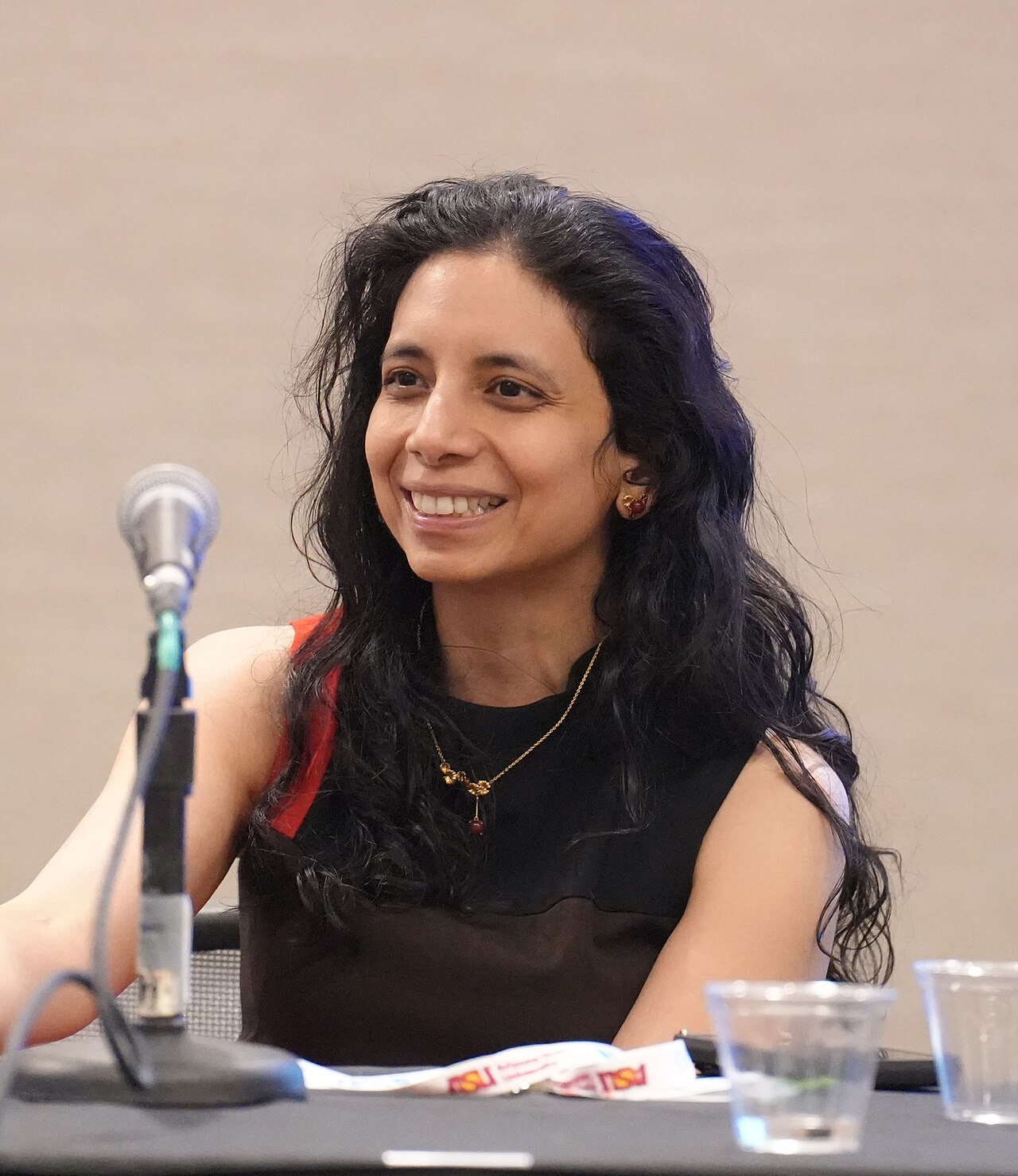
Header image: Anima Anandkumar speaking at the AAAS 2026 meeting, by Runawaymo via Wikimedia Commons, licensed under CC BY-SA 4.0. In-body image: a computational fluid dynamics simulation of aircraft wake turbulence, by Deutsches Zentrum fuer Luft und Raumfahrt (DLR) via Wikimedia Commons, licensed under CC BY 3.0 DE.